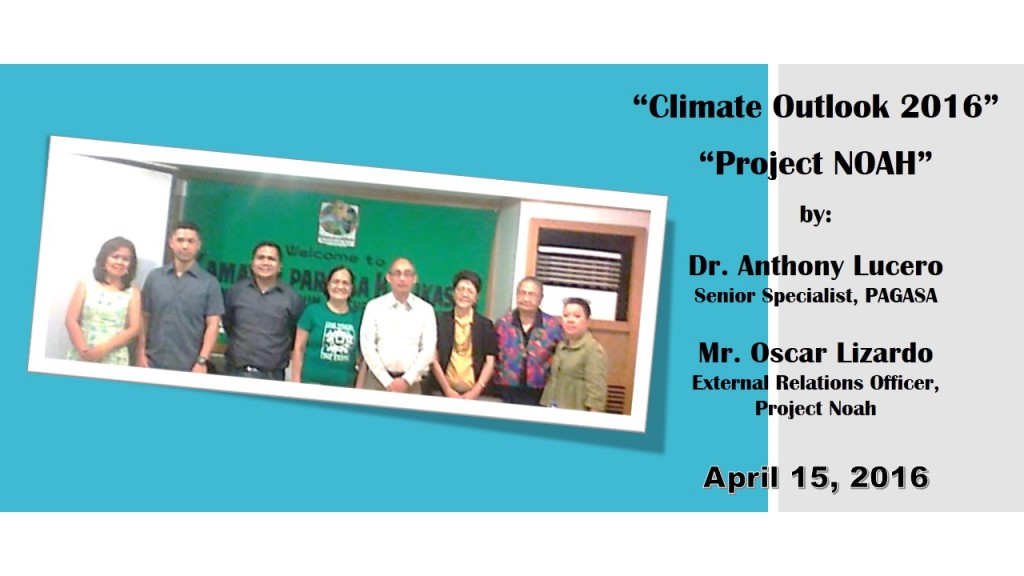
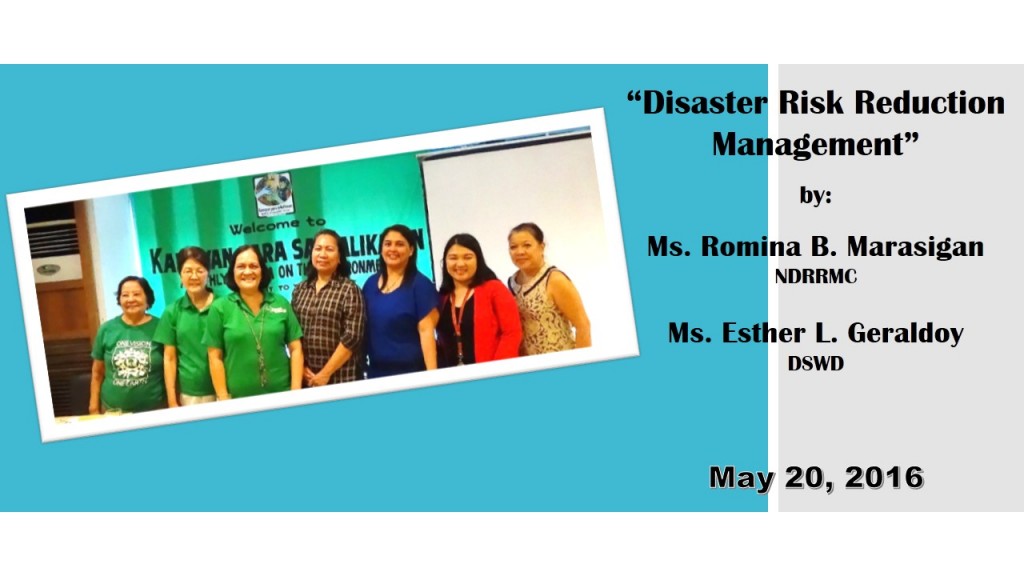
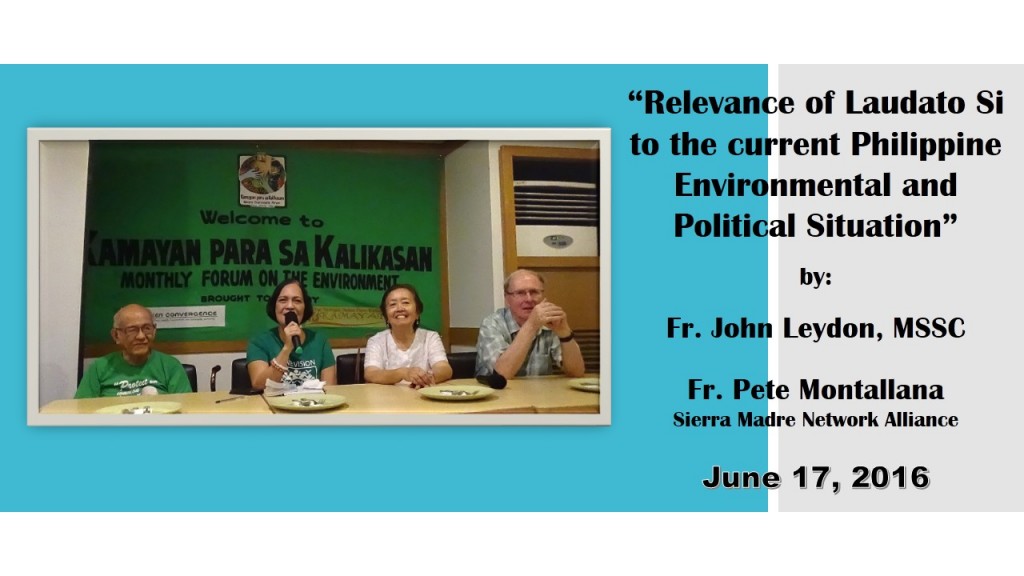
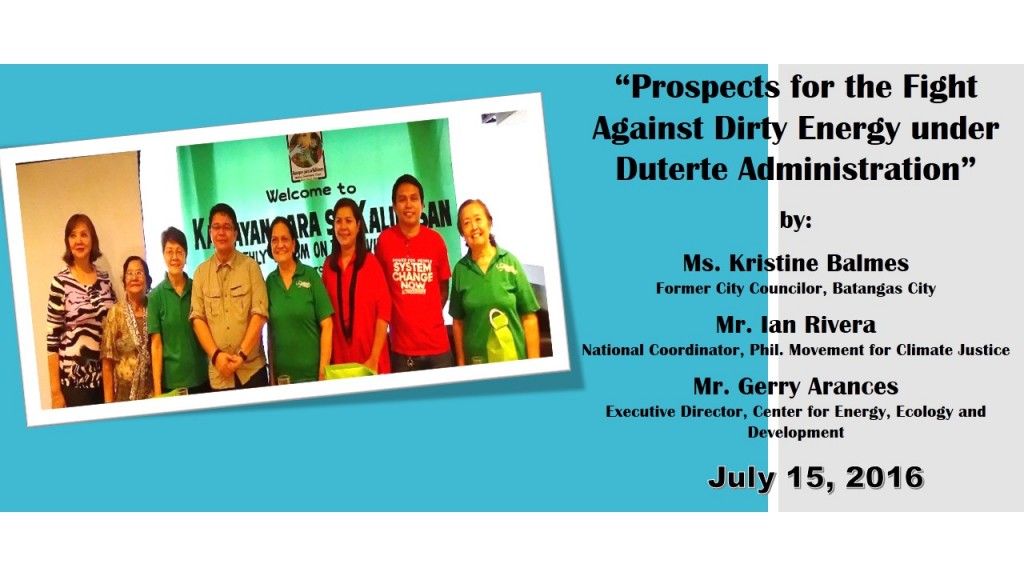
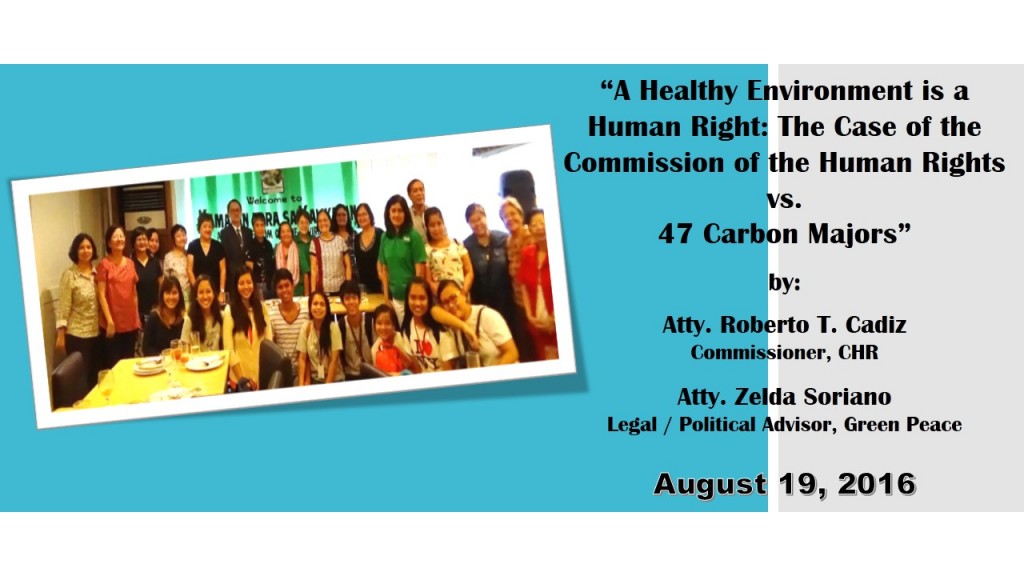
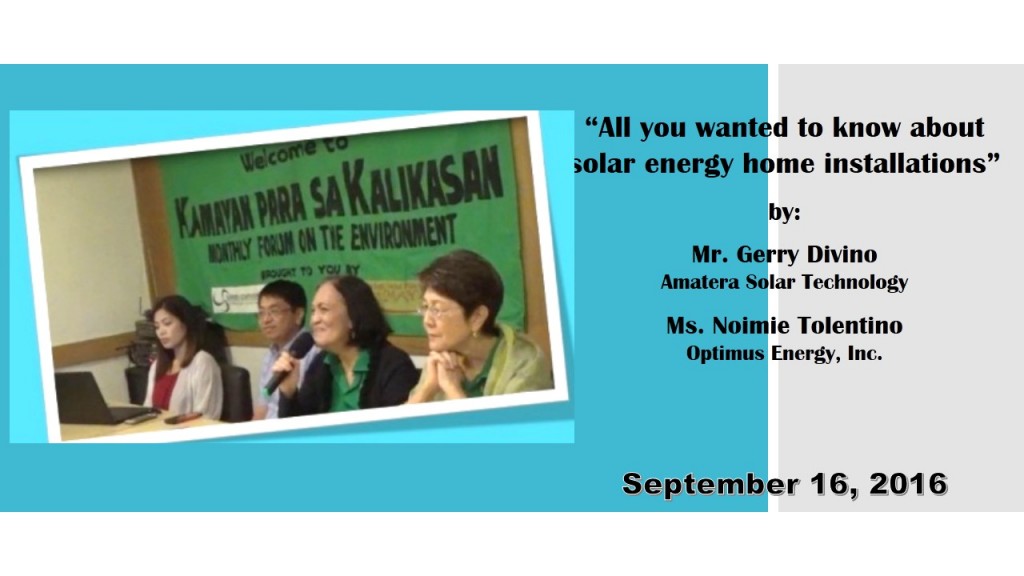
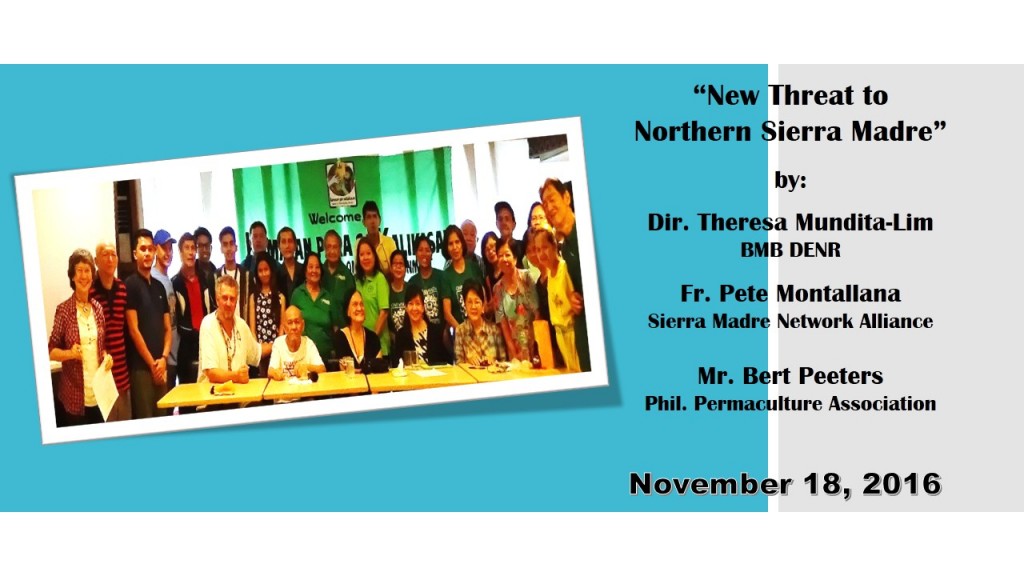
What’s Happening in Green Convergence: 2017

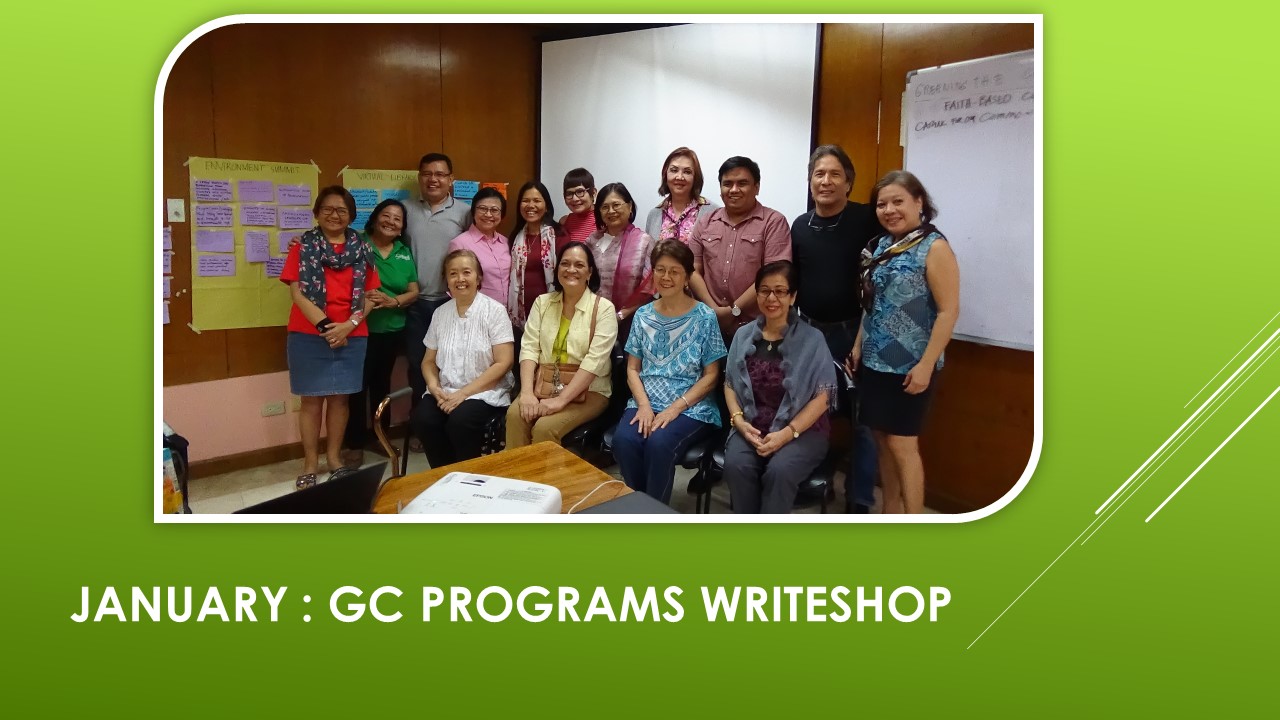
JANUARY 2017: A WRITESHOP, DAY 1- PRRM AND                         DAY 2-UNIVERSITY HOTEL

Slide2

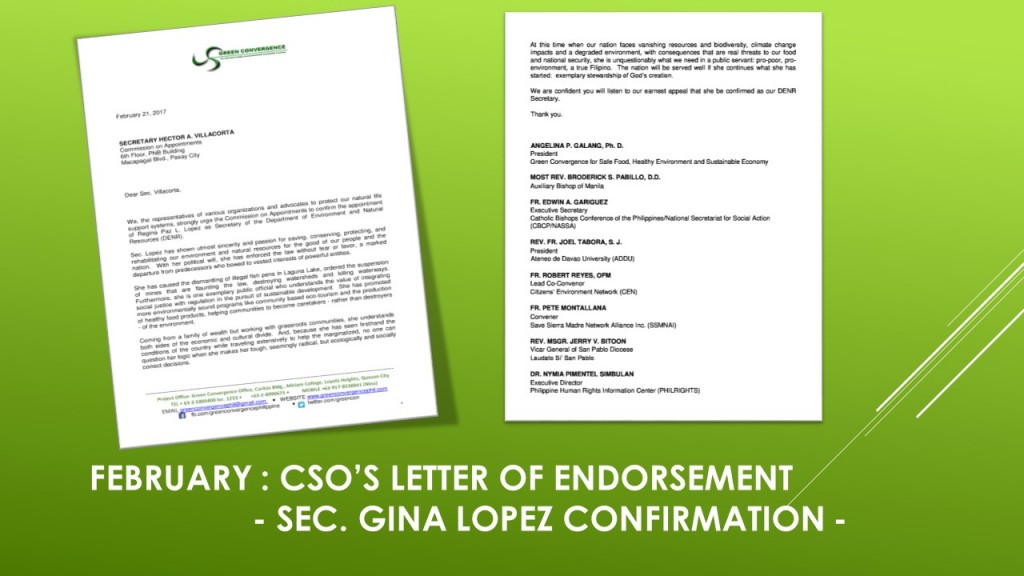
FEBRUARY 2017: LETTER OF ENDORSEMENT TO CA, SENATE AND CONGRESS

Slide3

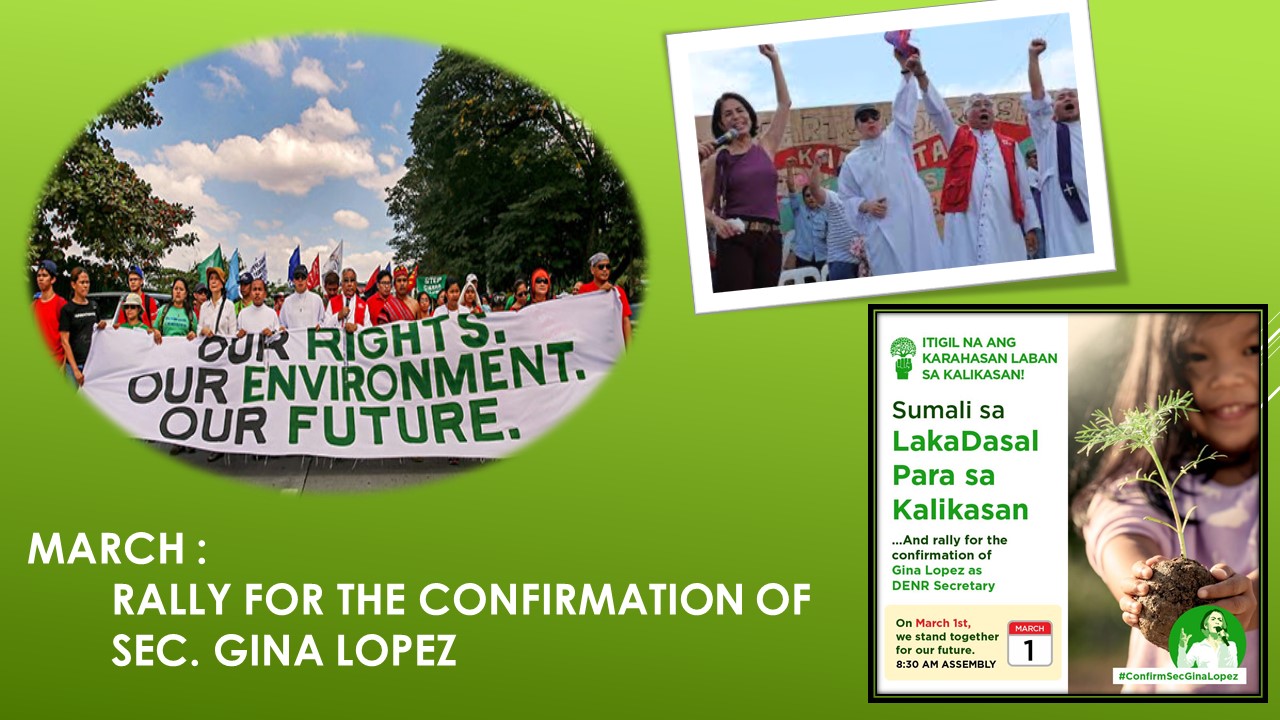
MARCH 2017: A MARCH TO SENATE

Slide4

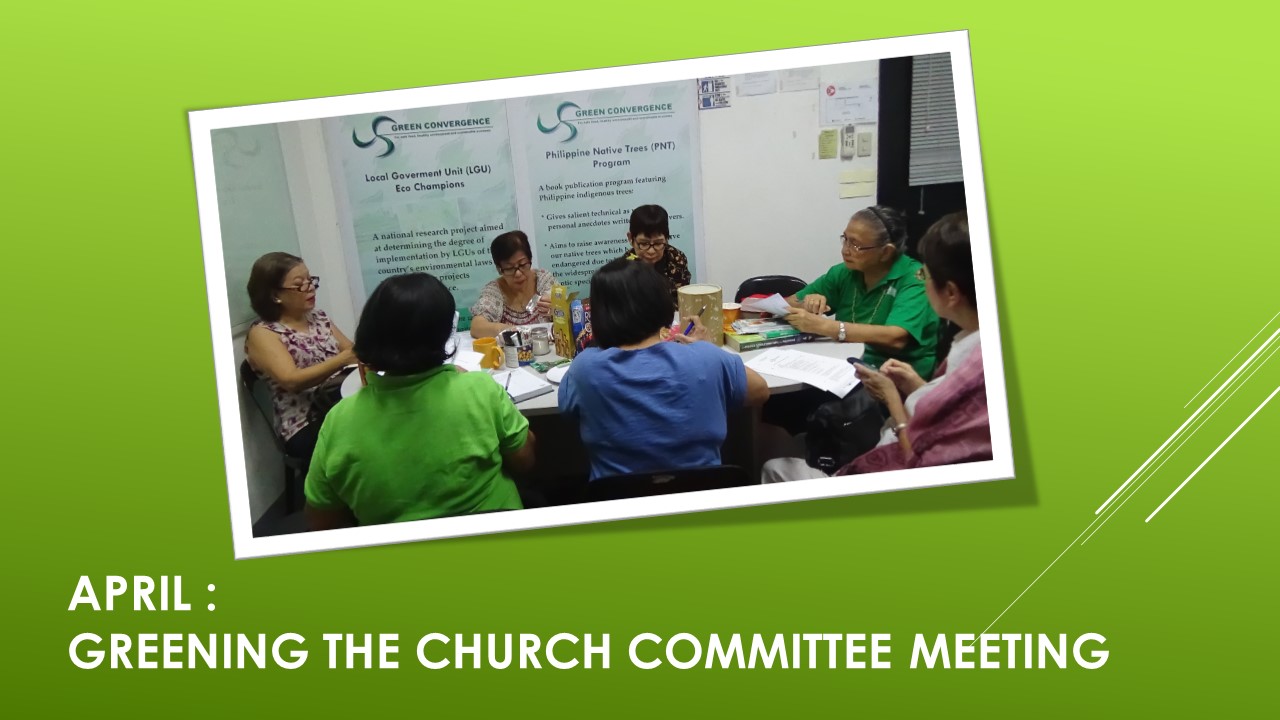
APRIL 2017: GC’S GREENING THE CHURCH ADVOCACY

Slide5

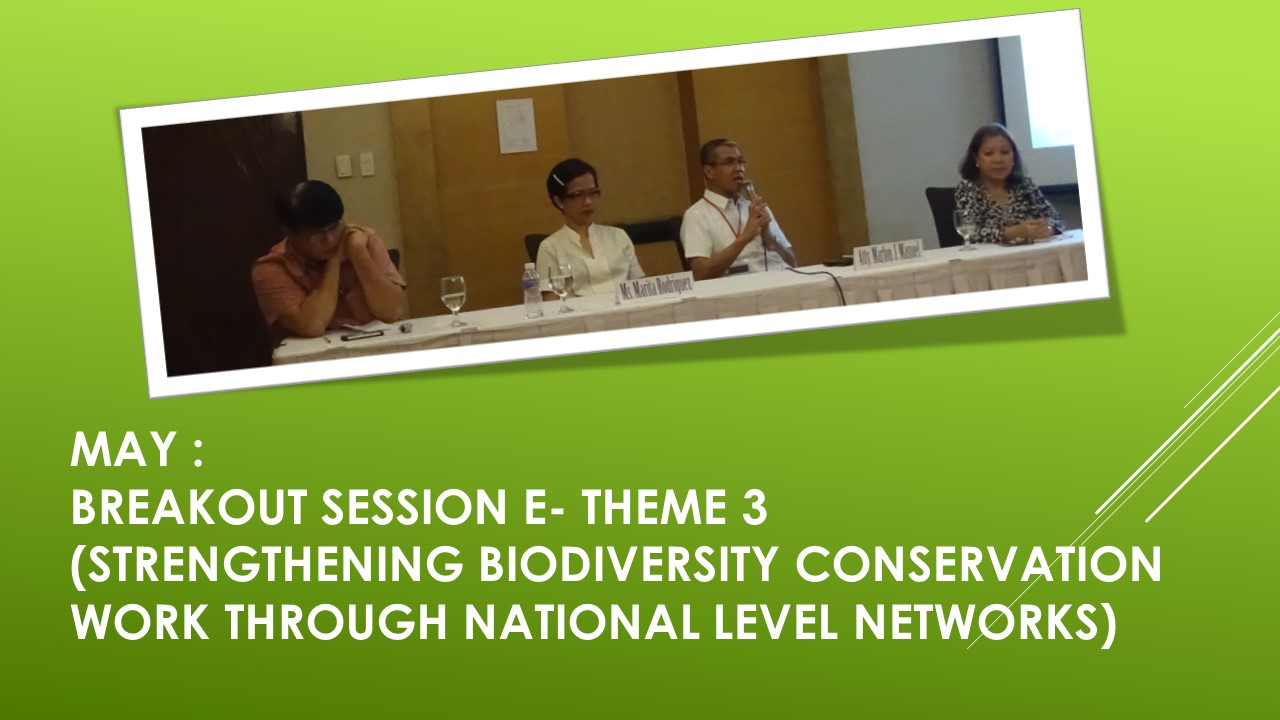
MAY 2017: FIRST NATIONAL BIODIVERSITY CONGRESS, 23TH MAY 2017, CROWNE PLAZA HOTEL

MS. MA. TERESA M. OLIVA, EXECUTIVE DIRECTOR, GREEN CONVERGENCE (SPEAKER)

Slide 6

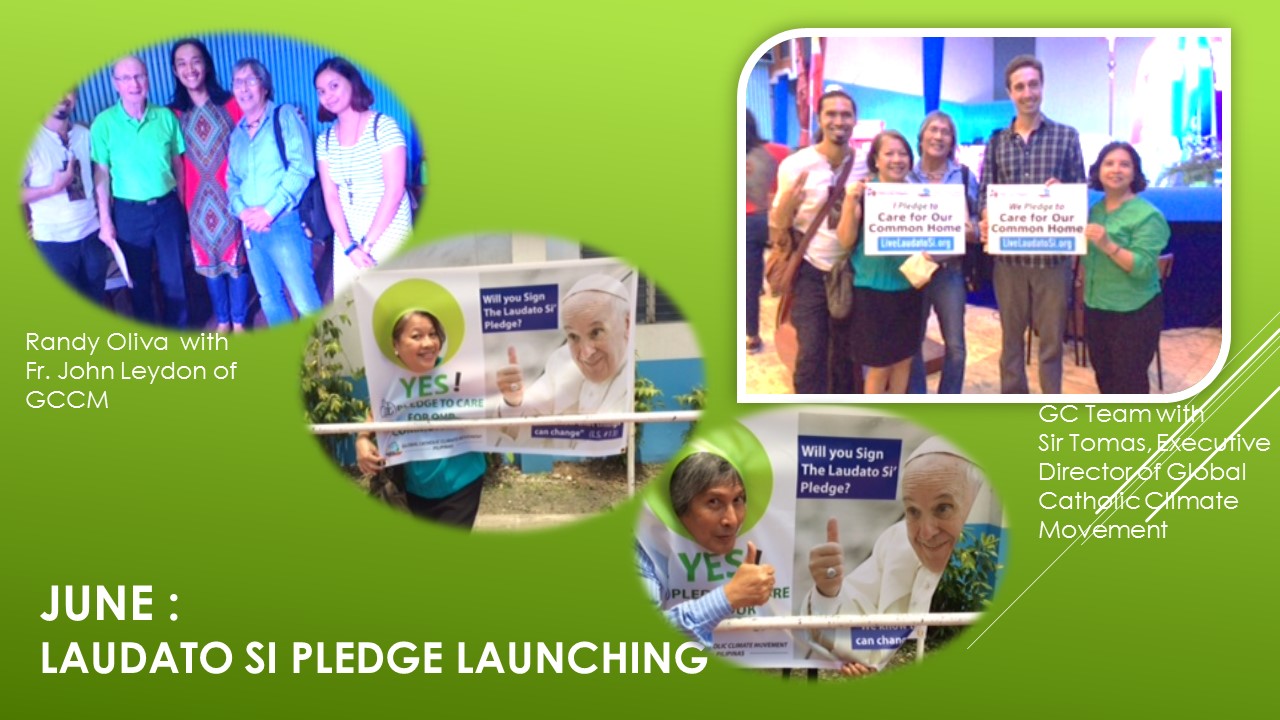
JUNE 2017: LAUDATO SI PLEDGE LAUNCHING, 18TH JUNE 2017, LA CONSOLACION COLLEGE, MANILA

Slide 7

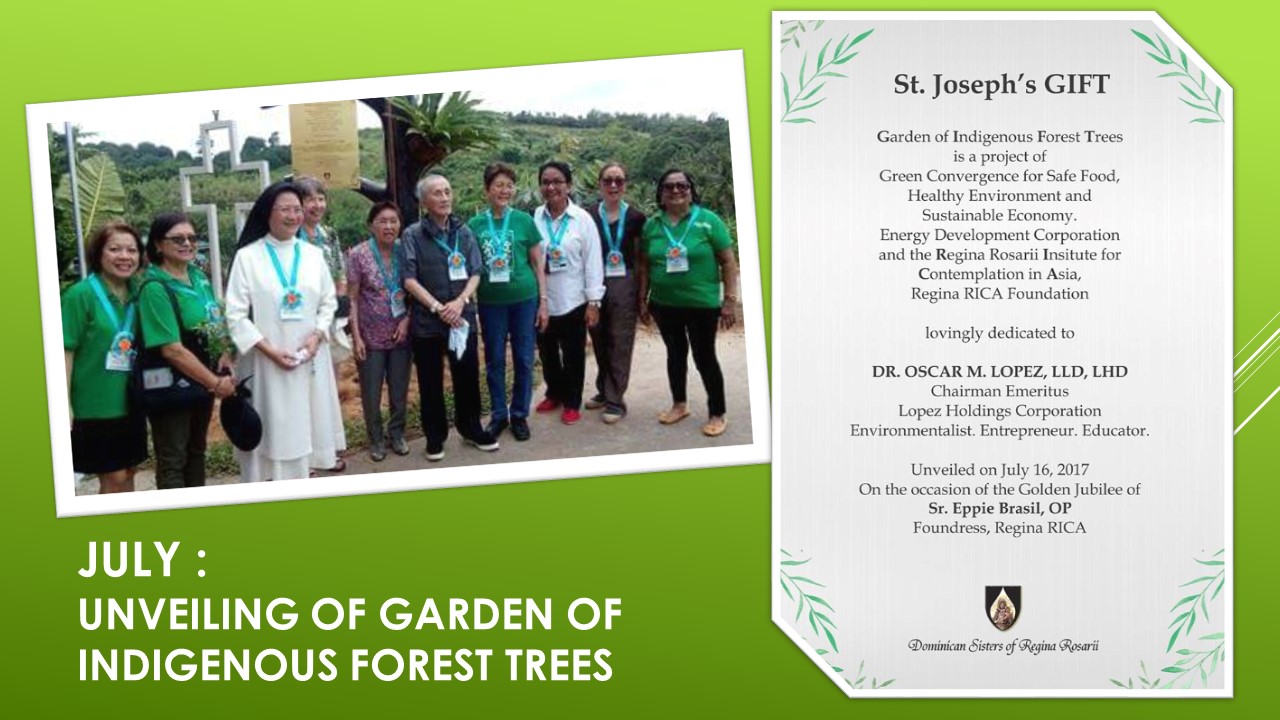
JULY 2017: UNVEILING: GARDEN OF INDIGENOUS FOREST TREES, 16TH JULY 2017, REGINA RICA, TANAY RIZAL

Slide 8

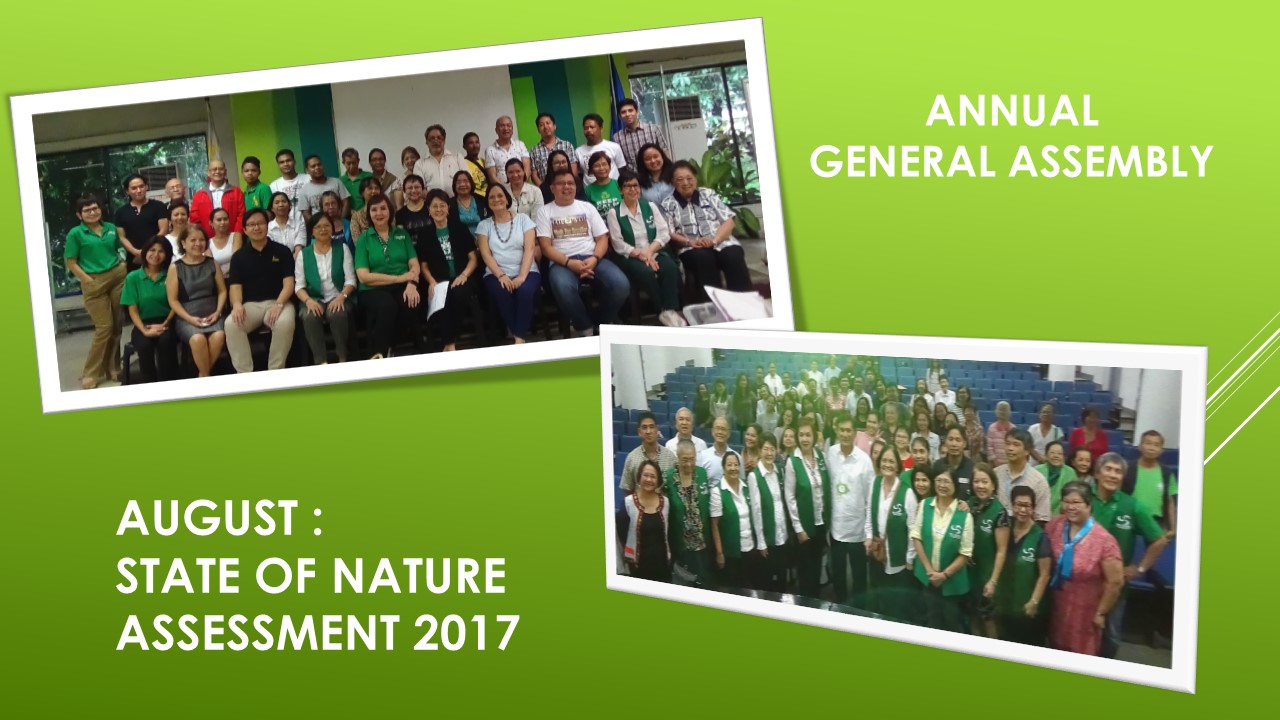
AUGUST 2017: STATE OF NATURE ASSESSMENT”OUR LAND, OUR LIFE”-11TH OF AUGUST, LITTLE THEATRE MIRIAM COLLEGE and ANNUAL GENERAL ASSEMBLY 22ND OF AUGUST-ENVIRONMENTAL STUDIES INSTITUTE, MIRIAM COLLEGE

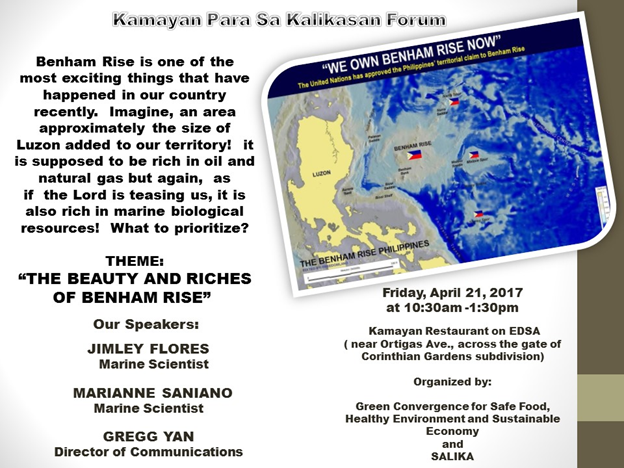
The Oceans are in Trouble : Protecting Benham Rise

The oceans are in trouble, as ocean explorer, film maker and conservation advocate Alexandra Cousteau puts it.

A team of marine scientists found a dazzling array of soft and hard corals, fish, algae, and sponges in Benham Bank,during a week-long expedition in May 2016. They observed one hundred percent coral cover in several sites, with an impressive field of plate corals.

We saw terraces of corals, as far as the
eye could see. It’s so exciting to know that
we have such a vast and pristine coral reef
ecosystem within Philippine territory

said Marianne Pan-Saniano, marine scientist at Oceana Philippines.

Benham Bank key to food security.

Oceana senior advisor Alexandra Cousteau urged the government to ensure that the marine resources documented by scientists during the 2016 expedition would be protected from commercial exploitation even before their uses are fully known.

The rich biodiversity in Benham Bank – Benham Rise’s shallowest area – could aid in ensuring the country’s food security, according to a marine scientist.

“What’s amazing about Benham Bank is its coral coverage. The region offers a huge potential for food resources and is different from the typical corals that we see,” said marine scientist Marianne Pan-Saniano of Oceana Philippines.


You must be logged in to view this content. Free Virtual Library Registration Here


Education for Sustainability by Rev. Brother Armin Luistro

Magandang hapon po sa inyong lahat. It gives me much pleasure to join you this afternoon but first a correction, I am not a presidentiable, so don’t ask me difficult questions.

It is a privilege to join you this afternoon, especially in the presence of Chief Justice, the greenest of them all, sturdy, Reynato Puno. He will share with us the most important jurisprudence that will keep you out of jail so I hope my message will keep you inspired all the way to whatever keeps you passionate.

Upon the invitation of one of my greatest idols, Nina Galang, who has been a real advocate of the environment many years ago when it was not yet a part of the lingo of many men and women, when no one yet was talking about it seriously. Thank you, Nina, for leading us through those very difficult years.

I enjoy joining you because first of all I come from a green school and I love the color green. But one of the advocacies that I share with you, coming from the education sector, is actually an advocacy that I have no choice but to actually support. So I was asking myself, why am I addressing you this afternoon coming from the education sector? The real answer is that there is no education unless we start with an education for sustainable living in an environment that nurtures our young people. I cannot think of any presidential platform or program that is not embedded and standing on an environmental program. After all whatever economic benefits we aspire to give our people, today and in the future, we’ll have to survive in an environment that allows us to be sustainable here and through the next generations of Filipinos.

Thank you for inviting me here also because I know that in this hall many of you are very familiar. Several of you have partnered with DepEd on many small and big programs. However, when I look at the profile of those who are here today and those who attended in the last 3 days, I realized that some of the most committed and passionate Filipinos are here. People who have given themselves, their whole being to an advocacy that maybe at one time or another has not been fully understood by our own people, has been dismissed, set aside, or thrown under the rug.

When I look at you and the panel of speakers who have graced this hall, I realized the most committed Filipinos are actually here with sheer passion, a lot of heart but with so much hope in a land that carries maybe some of the most beautiful scenes and

ecosystems in the whole world. You are the face and the heart of environmental sustainability in the Philippines. Many of you have been doing this for years, not without scars and many times, despite the bureaucracy in the government. So thank you very much for leading the way.

I was going to say that all the presidential candidates were invited for one reason or another. You may be disappointed that they are not here, but from another angle, you can look at it this way, why ask the person on top to lead? You have shown us that a real advocacy can start from the bottom and that there is real strength in the advocacy towards sustainable environment and a sustainable Philippines. Don’t look elsewhere; don’t even look at the President of the Republic of the Philippines. You have been the leaders all throughout these years. Hang on and claim that leadership.

But I have a concern and maybe a challenge for these many groups, if you look also at the landscape of environmental advocacy in the Philippines, there are many small groups and many countless advocacies all related to the environment. Each one of you is connected with at least one and some of you struggling in several, which are part of the light and the shadow of environmental advocacy in the Philippines. Many good hearted souls, many small initiatives, the question is will we be able to sustain it? If you ask me, one of the biggest challenges is what you are actually facing today. I was asking myself, why is this the first Philippine Summit on the environment? Shouldn’t we have done this many decades ago?

One of the challenges, at least from my perspective of environmental advocacy in the Philippines is to be able to connect every single one of those initiatives and to bring together good, kind-hearted, passionate advocates of the environment towards one green convergence. Sometimes Filipinos are good in starting initiatives. We run out of steam, ala ningas kugon, because we are unable to connect and secondly, like real Filipinos we are unable to agree on a common platform, a common synergy that will bring us together.

One of my hopes is that this first summit will bear fruit in a real green convergence where we don’t always have to agree with everything but if we identify the top priorities where each one of us will have a niche or a share to contribute then maybe our advocacies will be a little more sustainable.

I have not had the chance to review the recommendations that will be presented to you towards the end of this summit. One of my ulterior motives is to be able to push for a secretariat or at least a clearing house where people like me or ordinary Filipinos can access so that we could be in touch with your networks and make it easy for us to connect an advocacy that is closest to us. Sometimes when we meet, people would wish to support an advocacy. It is difficult to look for a common clearing house where I could go through a menu list of things and events I can support. From the point of view of DepEd, it will be one marvelous gift that you could give to the nation if you could give such a portal, hopefully, if not at least a physical secretariat with people who can actually connect us with programs that we could pursue together with all of you.

I come here this afternoon to also propose, since it is close to Valentine, a special love affair between you and your advocacy and DepEd. The bureaucracy of DepEd has 46,000 schools. Name me one barangay in the Philippines where there is no public school.

Do you want to source a native tree that you can only find in the Mountain Province or Benguet? You don’t know anyone in that place. If you connect with DepEd, I can tell you one principal or teacher who knows how to source a rare endangered native tree. Do you want to do trekking along the coast lines most visited by typhoons? And maybe you don’t know anyone in that area. I can give you a school. You have to sleep in a classroom setting, bring in your own tent, and maybe toilet paper, but our schools are welcoming sanctuaries where you and your advocacies will always find a warm home. But more than just an infrastructure, if you map the 46,000 schools in the Philippines, every single one of the issues, concerns, anxieties related to the environment are actually experienced, day in or day out, by our students and teachers. Volcanic eruption, forest fires, flooding, tsunami, name it we have it in our log book. If you wish to connect with real people who know the environment, you know that you have a friend and a contact in DepEd.

But DepEd, being the biggest bureaucracy like this summit, is also much challenged by the same light and shadow of the volume that we have. For example, many years ago, every school in the department is supposed to have a “Gulayan sa Paaralan” project. I actually go in my surprise visits to public schools, to the so called, Gulayan sa Paaralan. I go during school days and I go during summer days, I go during days when the principal is there, and during Fridays when they are out of the school and I realized that a program like Gulayan sa Paaralan started as a very good initiative. The question is the same question you are facing today, how do I sustain it?

Why is it that some schools, even in urban centers, are able to push to continue even during the dry summer months and have crops that yield harvest from their Gulayan sa Paaralan initiative? Why is it that there is a school somewhere in Iloilo, where the Gulayan sa Paaralan initiative, which is a small little garden in the back of the school, has become the actual vegetable garden of the whole barangay? So much so that even on weekends, the mothers and surprisingly even the fathers, come to school not to pick up their children but to actually pick leaves and harvest crops from the school.

Part of what we need to do is to put together and assess, maybe monitor, these small initiatives, not only from DepEd but from even all the NGOs gathered here and put together in a book the big question of sustainability. I’ve been telling our principals, if I give you a seed money of Php10,000 this year, can you assure me that Gulayan sa Paaralan becomes an income generating project so that at the end of the school year, you will have enough and will not ask for a second tranche to support your next gulayan?

I realized that part of the target is that we have been teaching our students and our schools to do the planting but we have not successfully connected them with the community outside and made that deep connection between the hard work of planting and the income generation that is a requirement of any sustainable project. If we keep our environmental advocacy confined to one small setting and not connected with the bigger world outside as in the lessons of an ecosystem, nothing will really work. It will be a good initiative, but it will never ever survive.

The good thing with the department is that we are the favorite target for any societal problem. You see a student using a Philippine map to mop the floor, and what news do you get from the television and radio anchors, “Tell DepEd to put in their curriculum, respect for the flag.” To any societal problem, the knee-jerk response is to put in the

curriculum.

That is well and good but I have learned a lesson from the ecosystem that once you confine those lessons to a small limited parochial setting and you do not provide a bigger environment where they can be moved from a nursery into the real world where there is no support system, nothing is really sustainable much like NGO initiatives. We need, and the biggest challenge for us is to connect and to come together and to tell graduates of schools after we train them in the values that will sustain the environment.

Now move from school to a corporate setting. Is there a framework? Is there a sustainable environment in the corporate setting where those values taught in school can be practiced, and from the corporation, into the bigger world of the local community?

One of my dreams is that if I have 46,000 schools and Ime Sarmiento gives me a list of the 3,600 native trees, I will be able to map for every school the native trees that I want our students to collect and to grow in a nursery and if I can connect with the secretariat of this green convergence, then I will put that in a website where any single one of the 3,600 native trees can be sourced from at least one of our 46,000 public schools. Now I was thinking, I can only do that and make it sustainable if people who wish to plant native trees will also be willing to pay the students who will do the seedlings and grow them.

After my 140 days in DepEd, I wish I could join you in your many advocacies. I wish part of what we could do together is to actually connect with the many programs that a bureaucracy like the DepEd can actually do.

Our teachers are great men and women but only very few are known. Most of them only land in the national news as “nagtitinda ng longganisa” or “nangungutang ng 5/6” but I don’t know if you have heard teacher William Moraca. I don’t know if you have ever been to Barrio San Jose, General Santos. You’d have to walk around 8 hours to go to Klolang Elementary School.

Klolang means freedom. They use it as their peg to say that Klolang Elementary School is free from water and free from electricity because they have no water and they have no electricity.

We assigned teacher William to the school. He was a frustrated engineer. Aside from teaching students in a classroom, he researched and researched after school hours on how he can bring power and water to the school. He developed a wind power generator and brought the first powered lamp to the school. Since he was generating more power than the school needed, he connected the houses of the sitio around the school; but he was not happy with that. After, he did more research and started a magnetic-field-run water system, pumping water into the school. Since he had more water than the school needed, all the houses around the school area started to draw water from the school community. That little initiative started many other advocacies.

From planting to an ecotourism program that has now become an income generating program for the school. I’d love to get you to walk 8 hours to visit Klolang Elementary School and see wonder teacher William, who now has been promoted as principal and is threatened to be transferred to a bigger school. Thankfully he refused. The

real story is the barangay wrote me a long letter saying that their hero should not be removed from the school because he is the only one, not even government, who brought water and electricity to their Klolang Sitio.

Dear friends, I share with you this wonderful story because I am so sure that many of you, in the little initiatives that you have started, have also a thousand stories to tell. We need those good stories to share with everyone else and as we end our green convergence tonight, know that you have a department that will continue to work with you and walk with you in the days to come. We are offering our hand in marriage, to you and your network. Do contact us. We’ll be happy without a dowry to join you in our search for a better Philippines.

Maraming salamat po.
Bamboo Production or Propagation of Bamboo

The continued destruction of our forests has brought about the increasing demand for bamboo in the local and international market. The world bamboo market is currently worth 10 billion dollars per year. Bamboo is not only a high-yield renewable resource, it sequesters 400 percent more carbon dioxide and generates 35 percent more oxygen than an equivalent stand of trees. It serves as an erosion control agent and has a high water storage capacity. Bamboo is used for making beer; a source of raw material for making bags, bamboo water, pulp for paper, and bamboo fiber. It is a source of lumber or construction materials, medicine, food and biofuel.

Bamboo is also being promoted for ecotourism and the arts. Unfortunately, the bamboo industry is underdeveloped. The government has issued several policies and interventions to boost the production of bamboo and strengthen the bamboo industry in the country.

You must be logged in to view this content. Free Virtual Library Registration Here

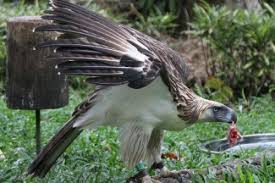
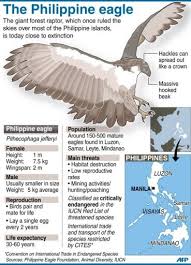
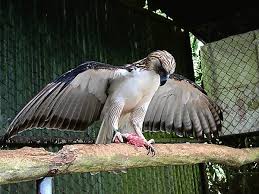
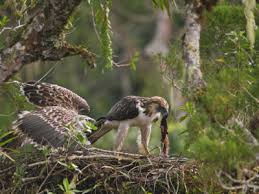
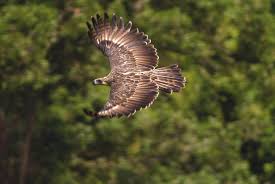
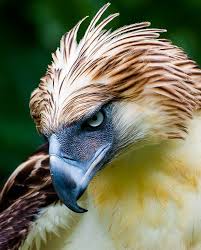
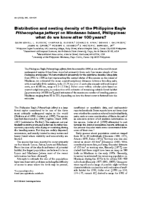
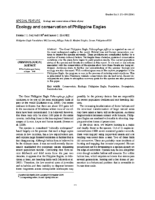
Critically endangered: The Philippine Eagle – What Do We Know After a 100 years

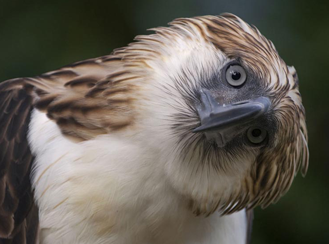
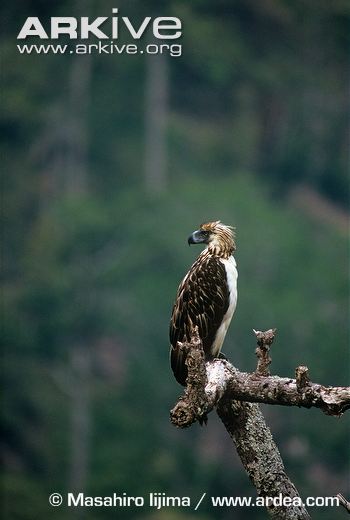
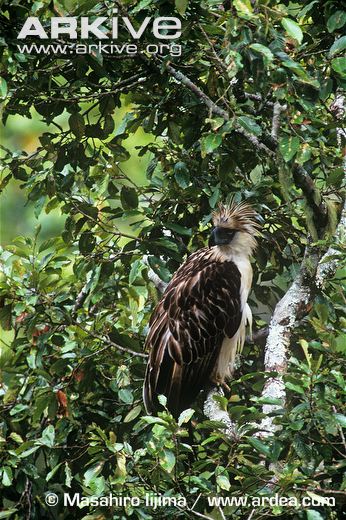
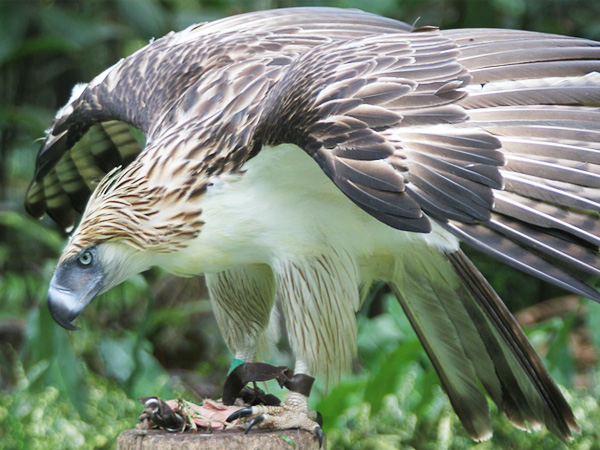
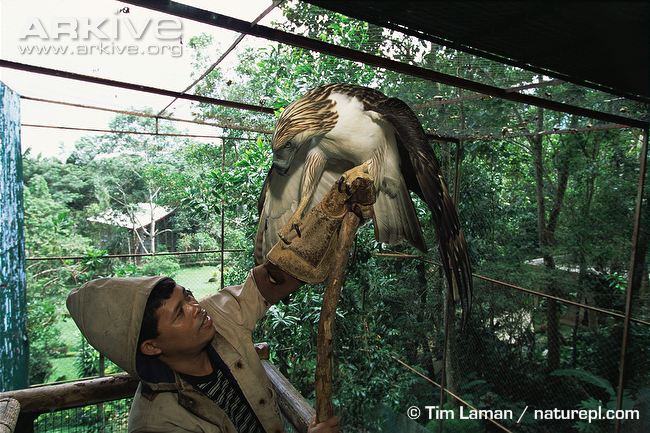
The Philippine Eagle is a giant forest raptor endemic to the Philippines. It is considered to be one of the three largest and most powerful eagles in the world. Unfortunately, it is also one of the world’s rarest and certainly among its most critically endangered vertebrate species.

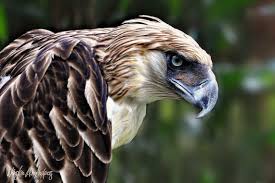
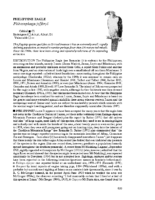
The Philippine eagle also known as the monkey-eating eagle is the world’s largest eagle, and one of the most threatened raptors. The male and female Philippine eagle are similar in appearance, possessing a creamy white belly and underwing, whilst the upper parts are a rich chocolate-brown, with a paler edge. The long feathers of the head and nape form a distinctive, shaggy crest and are creamy-buff in color with black streaks. Philippine eagle chicks have white down, and juveniles are similar in appearance to adults but have white margins to the feathers on the back and upper wing. The Philippine eagle has heavy, yellow legs with large, powerful claws, and the large, deep bill is a bluish-grey

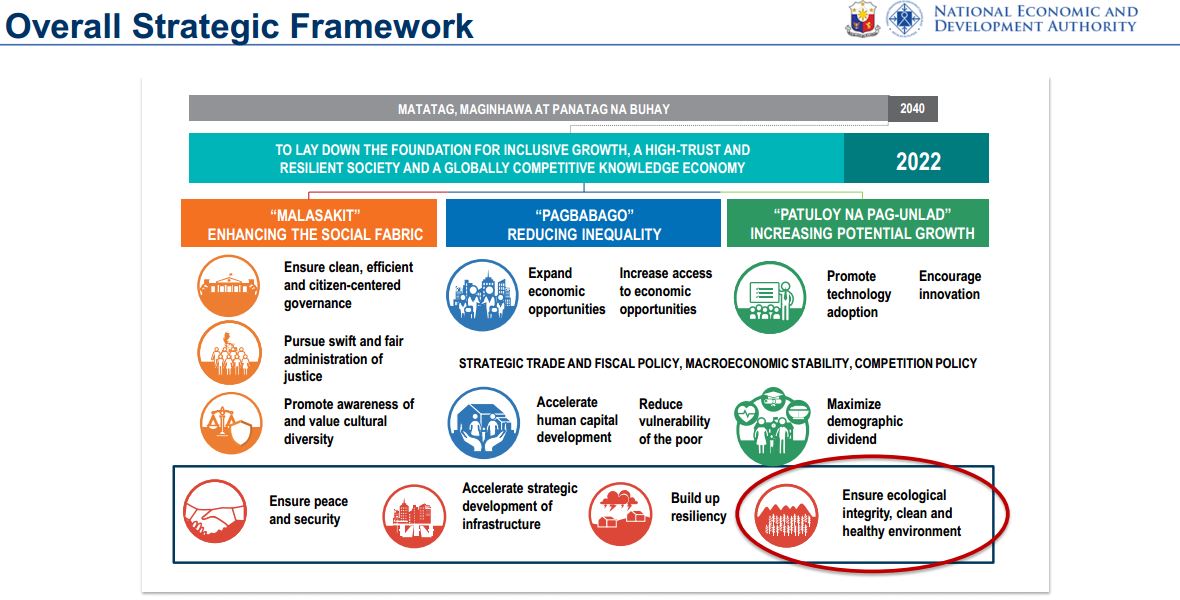
Ensuring Ecological Integrity, Clean and Healthy Environment

Priority Strategies

Subsector Outcome 1: Sustained Functioning of Ecosystem Services

  1. Intensify sustainable management of natural resources through adoption of ridge-to-reef approach and integrated area development

    • Reverse the loss of forest cover through sustained rehabilitation of degraded forest lands including critical watersheds & major river basins
    • Complete delineation of final forest limits and delineation/delimitation and zoning of watersheds and municipal waters
    • Effectively manage the protected areas and enforce law against illegal trade of wildlife species
    • Improve land administration and management (i.e. enhance access to land information, management of conflicts)
    • Strengthen enforcement of laws and management of coastal and marine
      areas
    • Complete Identify strategic economic zones for production of fish and
      other marine products
    • Intensify research on the country’s biodiversity including terrestrial and
      coastal and marine habitats and resources
    • Improve the management of priority inland wetlands and caves
    • Identify innovative sustainable financing schemes for resource
      management
    • Improve self-sufficiency in the country’s wood and non-timber requirements and making the forestry sector a significant contributor to the economy
  2. Expand development of resource-based enterprises/industries

    • Promote sustainable forest-based (timber and non-timber) and sustainable marine-based industries [refer to AFF and I&S Chapters]
    • Develop system for access and benefit sharing of wealth from genetic resources
    • Improve system of collection and increase share from appropriate fees and fines in areas covered by tenure (e.g. foreshore lease areas, SAPA, etc)
    • Promotion and development of ecotourism and cultural sites [refer to AFF, I&S, and Cultural Awareness Chapters]
  3. Mainstream ecosystem values into national and local development planning

    • Develop policy for Payments for Ecosystem Services (PES) and polluters pay
    • Institutionalization of natural resources monitoring
      system and environment and natural resources
      accounting

Subsector Outcome 2: Improved Environmental Quality

  1. Strengthen enforcement of environmental laws

    1. Air Quality Management
      • Promote environmentally-sustainable transport including clean fuels  and mass transport system
      • Strengthen enforcement of anti-smoke belching campaign and  vehicle emission testing
      • Increase quantity and efficiency of air quality monitoring stations
    2. Water Quality Management
      • Improve wastewater management by increasing the number of domestic and industrial wastewater treatment facilities in water districts/LGUs
      • Identify pollutants in priority river systems and implement appropriate management interventions
    3. Land Quality Management
      • Promote sustainable land management (SLM) to contribute to land degradation neutrality (i.e. soil fertility, soil & water conservation technologies, etc.)
      • Improve management of wastes including solid, toxic and hazardous wastes
      • Transform abandoned mines/mined-out areas into final land use beneficial to communities through implementation of environmental
        management plans
  1. Promote Sustainable Consumption and Production (SCP)

    • Establish sustainable market for recyclables and recycled products;
    • Develop, promote and transfer cleaner production technologies, including water and energy-efficient practices (e.g. rainwater catchment facility, cleaner fuels and engine, energy efficient facilities/green buildings) [cross refer to I&S, Infrastructure, STI Chapters]
    • Strengthen certification and establish information systems for green products and services
    • Promote green procurement in both private and public sectors;
    • Promote environmentally-sustainable transport (EST) including mass transport system [cross refer to I&S, Infrastructure, STI Chapters]
  2. Subsector Outcome 3: Increased adaptive capacities and resilience of ecosystems

    1. Strengthen implementation of CCA and DRR, particularly at the local level across sectors.
      • Develop, maintain and make available and accessible climate and geospatial information and services, including integrated risk information system in a standardized format/scale
      • Develop data protocol to facilitate access and sharing of available scientific researches/studies, geospatial information and climate projection
      • Continue to mainstream CC and DRRM in national and local development plans and policies and education system (cut across Chapters of the PDP)
      • Promote climate-resilient structures and designs following established measures and standards by DPWH, HLURB, DILG, DSWD and other government agencies (refer to infrastructure Development, AFF, I&S, Building Resiliency and Social Protection Chapters)
      • Identify technological and research priorities and capacity needs on CC and DRRM (refer to Expanding Economic Opportunities in Industry, STI, and Infrastructure Development Chapters)
      • Strengthen access to existing CC and DRRM financing and risk transfer mechanisms including promotion campaign (refer to Social Protection Chapter)
      • Promote preparation of business continuity planning (refer to I&S Chapter)
    2. Strengthen implementation of response, recovery and rehabilitation efforts.
      • Strengthen mechanism to conduct the Post/Rapid Disaster Needs Assessment (P/RDNA)
      • Revisit existing policies on post disaster housing and resettlement programs including those related to land development (refer to Social Protection Chapter)
    3. Strengthen Monitoring and Evaluation of effectiveness of CC and DRRM actions
      •  Identification of more appropriate indicator to measure adaptive capacity and resiliency (including indicator of resiliency of natural resources/ecosystems) vis-à-vis SDGs and SFDRR (cut across Chapters of the PDP)
      • Development of database that would measure emission reduction per sector (including aviation and maritime)

National Catholic Reporter’s Global Sisters’ Report

Safer and climate-resilient communities

Recently, I took six graduate students in Climate Change and Disaster Risk Reduction Management (DRRM) from the Philippine Women University (PWU) for a site visit to Payatas, Quezon City, an urban resettlement area. I have gone to the area before and trained some of the groups there in environmental leadership, but this time being with the students, it turned out to be a very different kind of engagement.

Payatas is one of the most densely populated areas in Manila where the incidence of poverty is quite high. It is also the site of the controversial and biggest garbage dump serving various cities in metro Manila. According to Professor Ebinezer Florano, the Payatas area has served as an open dumpsite for metro Manila since the 1970s, accepting a record 3,000 tons of solid waste daily in 1993. The dumpsite has been ordered to be closed repeatedly under the Ecological Solid Waste Act (RA 9003), however, it continues to remain open. Garbage scavengers form the informal waste sector and continue to make their livelihood there.

All six women students are candidates for the Masters of Science in Environmental Management of the Philippine Women University. We went to Payatas to learn about the community based disaster risk reduction management (CDRRM), a program implemented by a grassroots organization who call themselves UMAKAP (Ugnayan ng Mamamayan Para sa Kaunlaran ng Payatas.Translation: Citizens Movement for Payatas Development). It is composed mostly of women and a few men who participated in the disaster and risk management training for two years.

According to history, Payatas had several disasters; the most severe happened on July 10, 2000, where a portion of the dumpsite caved in. The massive landslide of 50 feet of solid waste was caused by continuous rain brought on by two consecutive high category typhoons — Kirogi and Kai-tak (locally named Ditang and Edeng, respectively). The landslide, specially termed, “trash-slide” by locals, covered several shanties at the foot of the dumpsite and claimed an undetermined number of lives. According to reports, at least 300 adults and children had been buried under a mountain of waste. This event became a national embarrassment for the Philippines as a country where most of the population lives in destitute poverty.

The controversial and biggest garbage dump, which serves various cities in metro Manila. (Provided photo)

The government, church and civil society organizations have been partnering to help this community, including the Simbahang Lingkod ng Bayan (SLB), a social advocacy group of the Philippine Jesuits. I am a climate change adaptation consultant for SLB, which has been training the group and its members in community-based disaster risk reduction since 2014.

The women shared their experience of floods, fires and “trash slides” — and their daunting anxiety over a methane explosion from a mountain of garbage which is continuously increasing in volume, even though the dumpsite was ordered to be closed about two years ago. UMAKAP members think that the increase in volume is because of the planned expansion of current “waste-to-energy” project operating in the dumpsite.

The women from the community took our group to visit the area next to the garbage mountain. The students were stunned at the situation they witnessed. Three of the students who are government employees of the Environment Management Bureau were upset. As it turned out, we could not walk further to get near the garbage mountain and the creek to check the area that UMAKAP members complain has a discharge with black leachate. Two men in yellow shirts guarding the garbage dump area stopped us and warned not to take photos. There was an eerie feeling of fear among us and the UMAKAP women. During the debriefing, one of the students suggested that the issue must be reported to the Department of Environment for an environment audit.

The women have learned a lot from previous disasters in the dumpsite, and these experiences made them prioritize training in disaster risk mitigation and management. They partnered with SLB to do capacity training in community-based disaster-risk reduction training. For two years they have been working on this and have developed their disaster-risk reduction manual and emergency procedures.

Map showing the reservoir, top left, and dump site of Payatas. (Provided graphic)

The group not only succeeded in disaster- and risk-reduction management but also addressed the poverty and lack of livelihood of the community. The women have established a small store that sells rice and gives credit to the members on a trust basis. Acknowledging the importance of alternative medicine during disasters, the group initiated an organic herbal and medicinal garden. First aid medication will be readily available during times of disaster. They have plans to develop organic vegetable gardens to alleviate incidences of hunger.

I have been inspired by how these women are leading in the fight for their communities’ future in a climate-changing world. Women and local communities are the key to mitigating disasters and the key to the success in community based disaster risk reduction programs. They are prime movers in ecosystem rehabilitation and environment conservation.

Back in the classroom, I asked the students to write a reflective report on the Payatas visit. Some of them mentioned that visiting Payatas opened their eyes to the importance of their studies and how in the future they can help build sustainable communities. They also found out that political will is needed to address Payatas’ problem and that local communities have the power to choose a healthy environment for themselves.

Meanwhile, the women of Payatas continue to fight the corporate greed of those behind the Payatas landfill, exposing the environmental dangers by sharing their stories and not being afraid to tell the horror of how these corporations and local leaders profit from waste instead of reducing it. Their fear is not enough to silence them to fight for their environment.

As Pope Francis calls for all Catholics and Christians to exercise their work of goodness and mercy by protecting the environment, the story of the women and men in Payatas serves as an example of how in our daily lives we can fight for a clean and safer environment.

[Maryknoll Sr. Marvie Misolas is currently serving in the Philippines after mission work in Taiwan for many years. She studied Environment and Peace at the University for Peace in Costa Rica, specializing on Climate Change and related issues. She is now based in Manila where she teaches, works with climate vulnerable communities and advocates for the care of the environment in collaboration with other environmental networks.]

What’s Happening in Green Convergence: 2016

January 2016: Preparation for the 1st Philippine Environment Summit 2016-Promotion

slide1 slide2

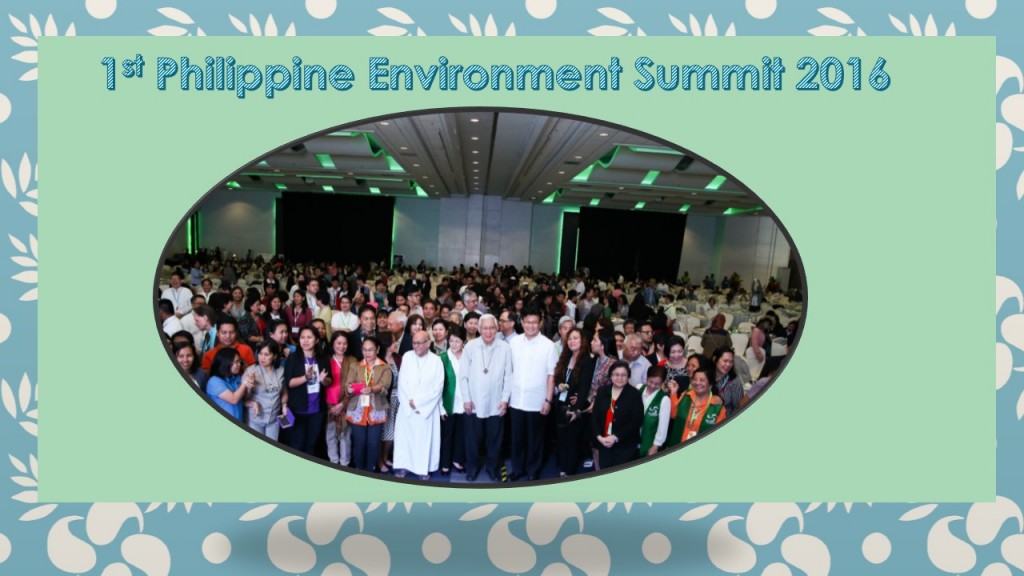
FEBRUARY 9-11, 2016: 1ST PHILIPPINE ENVIRONMENT SUMMIT, SMX CONVENTION CENTER, PASAY CITY

slide3

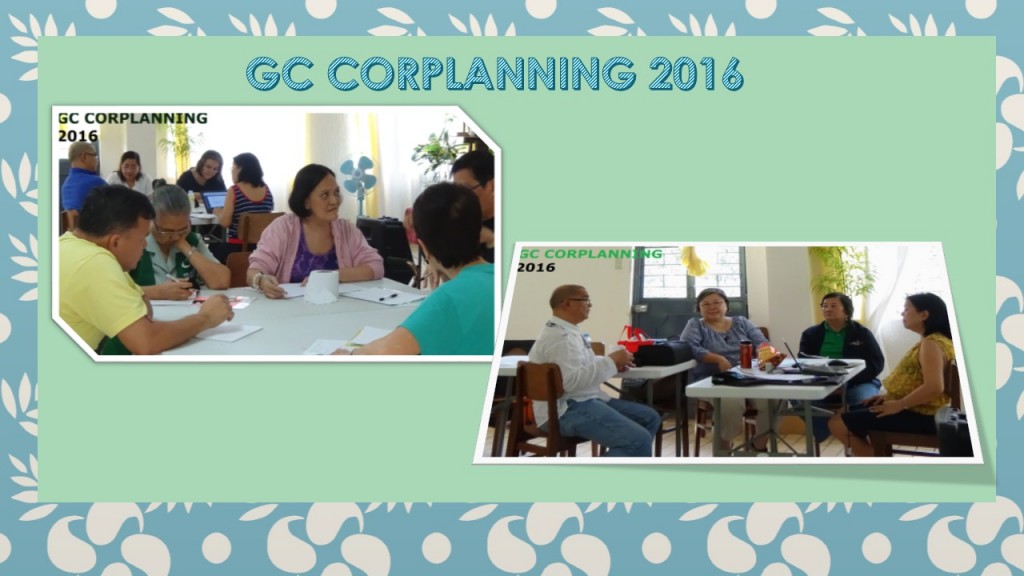
  MARCH 31 – APRIL 1, 2016: GC CORPLANNING, DAUGHTERS OF CHARITY, TAGAYTAY CITY
slide4
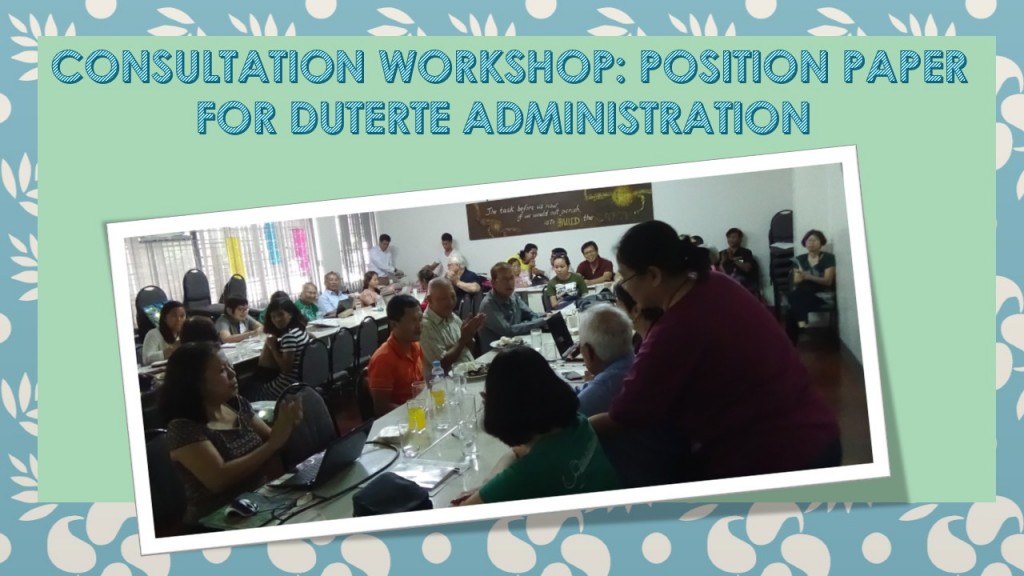
MAY 25, 2016: CONSULTATION WORKSHOP: POSITION PAPER FOR DUTERTE ADMINISTRATION, MMJ SEMINAR ROOM, MIRIAM COLLEGE, QUEZON CITY

slide6

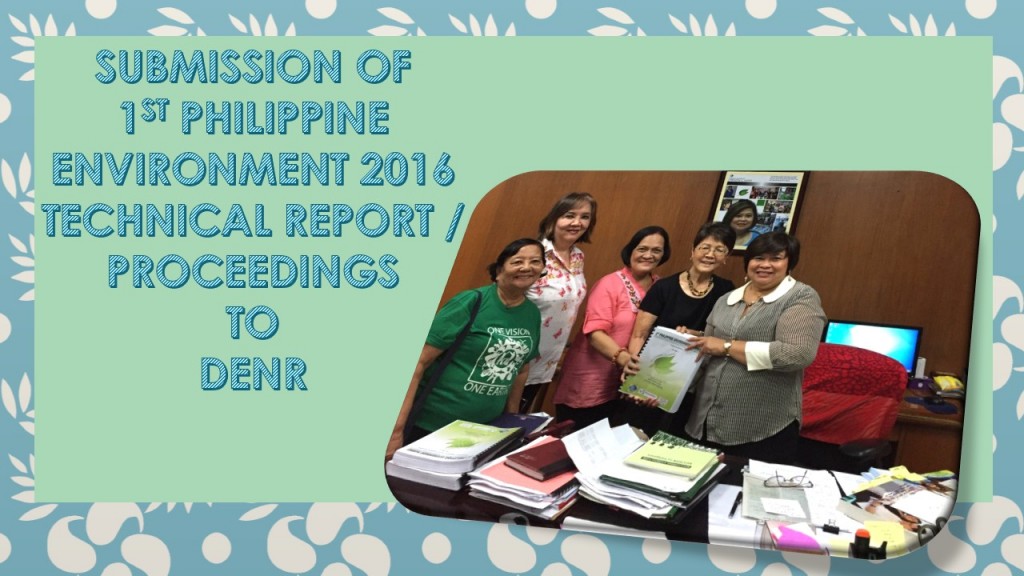
JUNE 2016: SUBMISSION OF TECHNICAL REPORT/PROCEEDINGS TO DENR-GC’s PARTNER IN 1ST PHILIPPINE ENVIRONMENT SUMMIT 2016

slide7

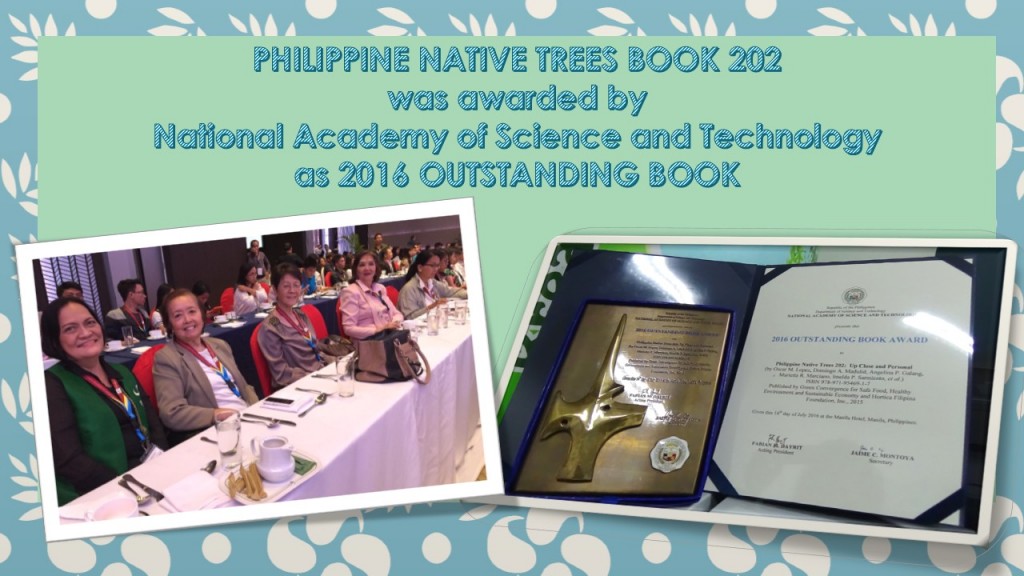
JULY 14, 2016: PHILIPPINE NATIVE TREES BOOK 202 AWARDED AS 2016 OUTSTANDING BOOK BY NATIONAL ACADEMY OF SCIENCE AND TECHNOLOGY, MANILA HOTEL

slide8

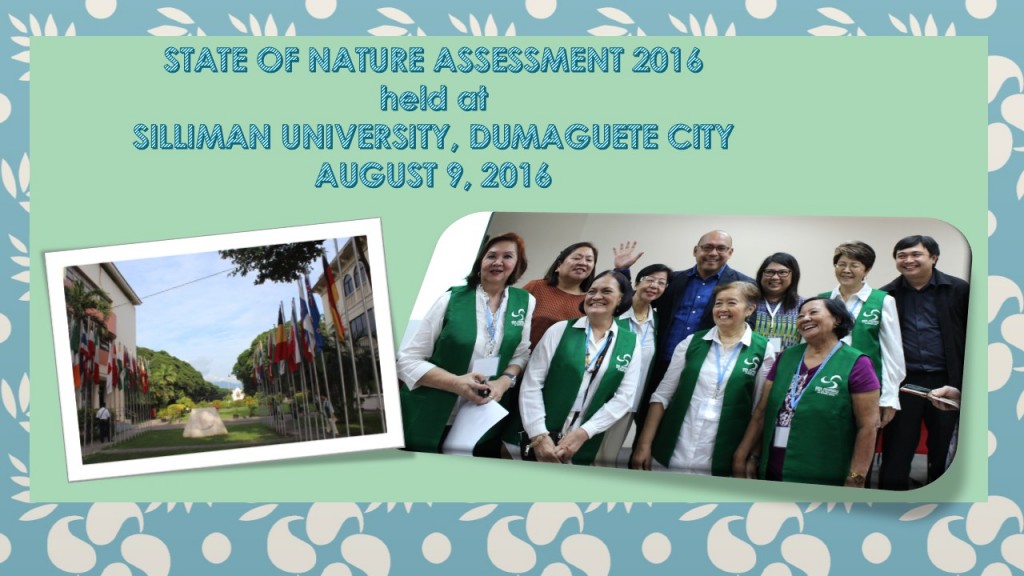
AUGUST 9, 2016: STATE OF NATURE ASSESSMENT 2016, SILLIMAN UNIVERSITY, DUMAGUETE CITY

slide9

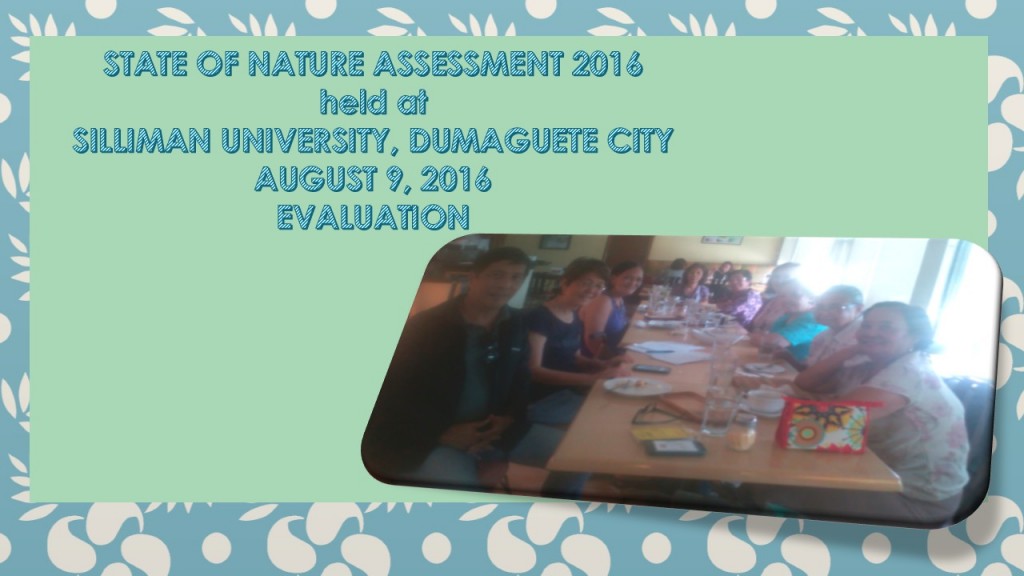
AUGUST 17, 2016: STATE OF NATURE ASSESSMENT 2016 EVALUATION, ICINGS, QUEZON CITY

slide10

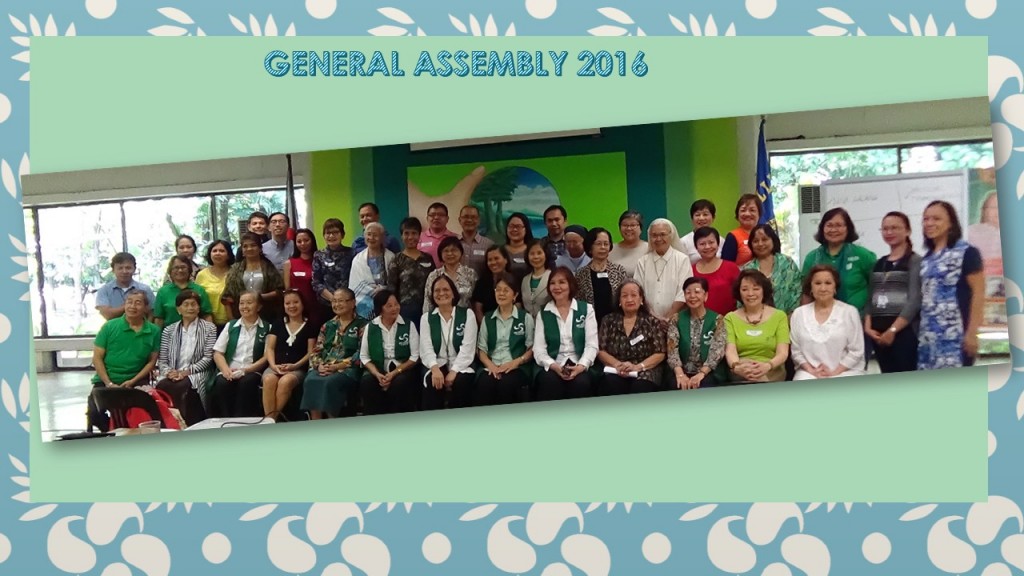
AUGUST 30, 2016: gc general assembly, environmental studies institute, miriam college, quezon city

whats-happening

whats-happening

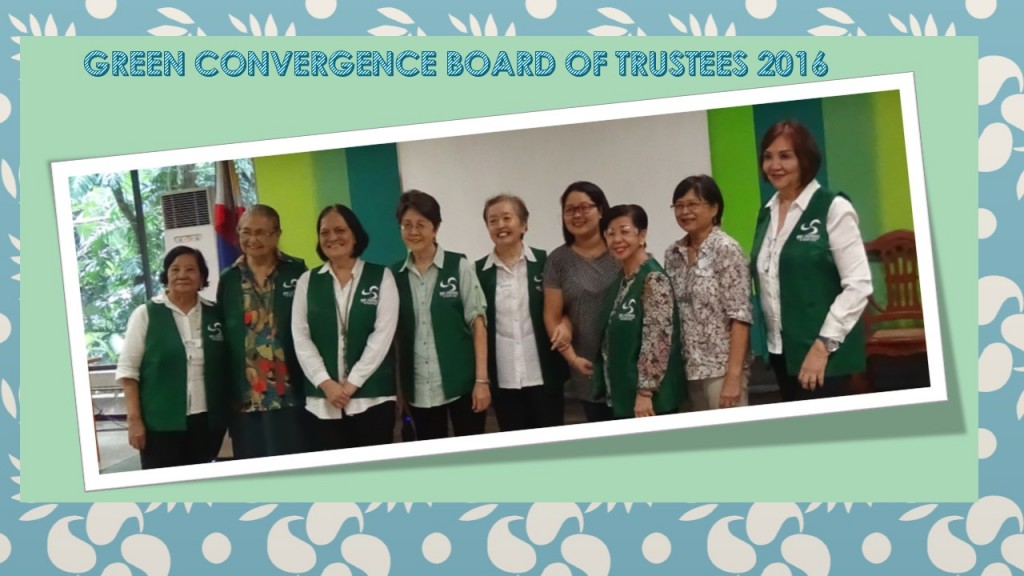
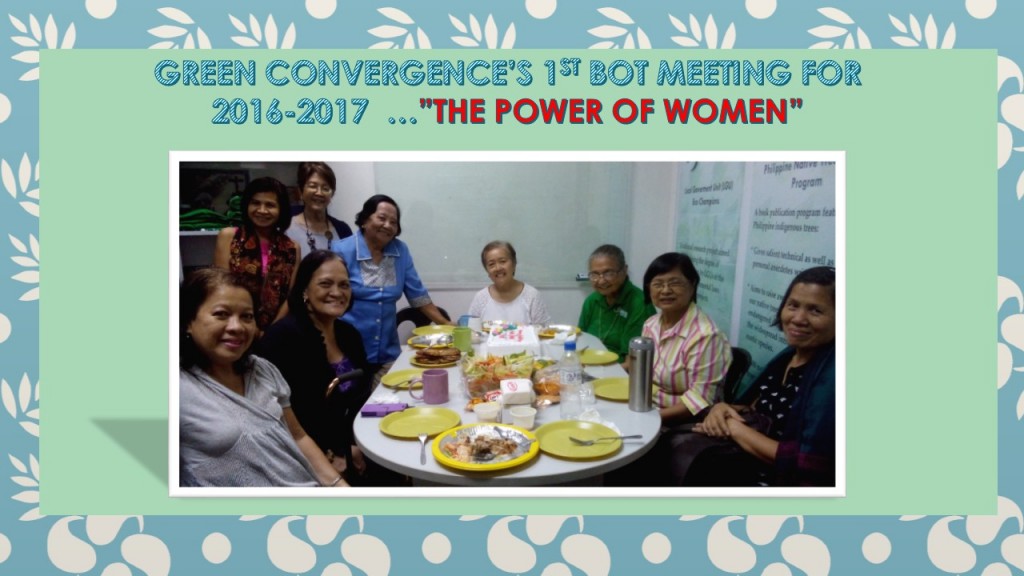
SEPTEMBER 7, 2016: GREEN CONVERGENCE BOT MEETING, project office-PERLAS RM.,CARITAS HALL, MIRIAM COLLEGE, QUEZON CITY

slide-11

OCTOBER 10, 2016: gc BOT WITH MS. IMELDA SARMIENTO- PROJECT OFFICE, PERLAS RM.,CARITAS HALL, MIRIAM COLLEGE, QUEZON CITY

slide-12-pntb

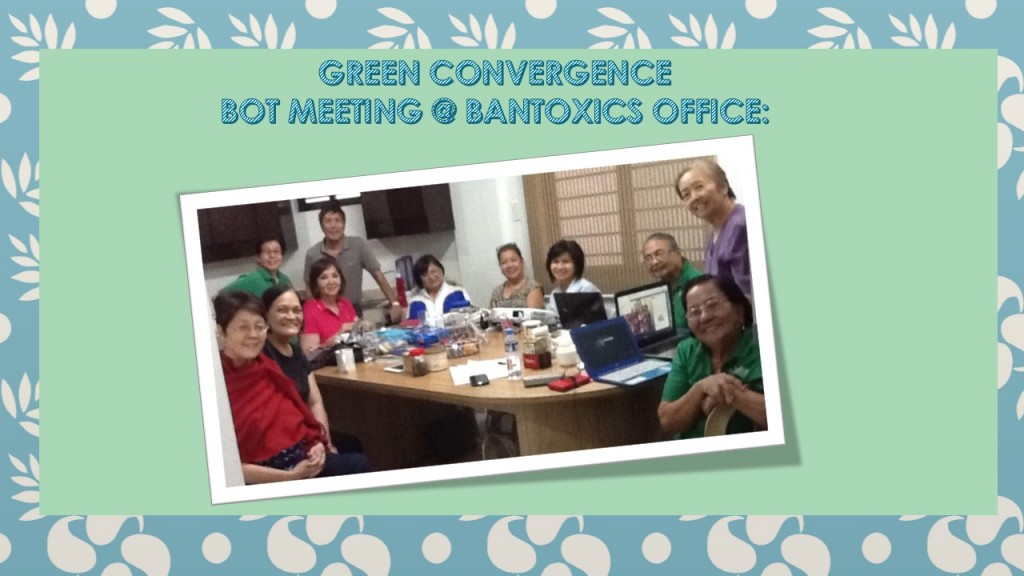
NOVEMBER 11, 2016: GC BOT MEETING AT BANTOXICS OFFICE-sikatuna village, quezon city

nov

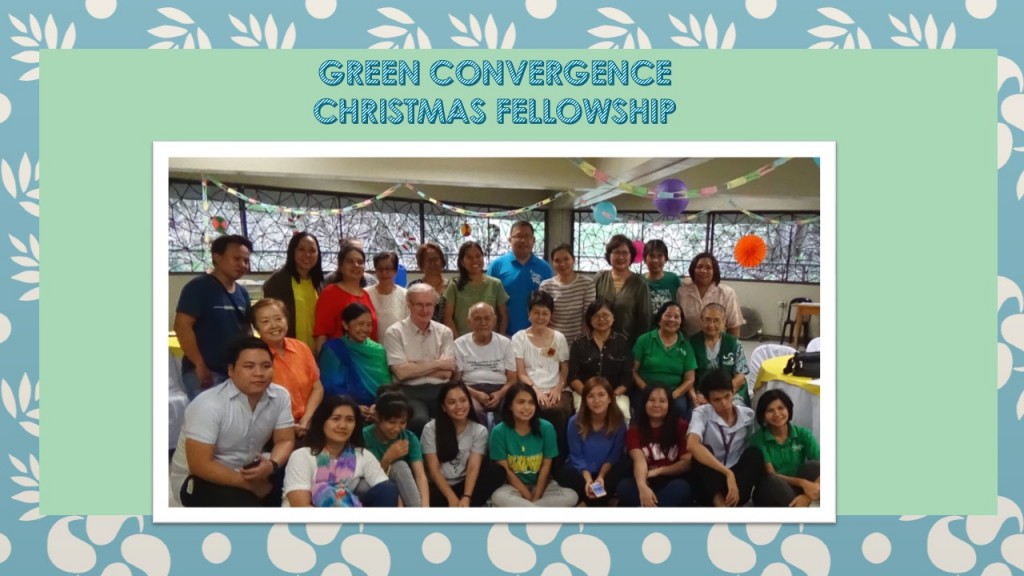
DECEMBER 12, 2016: CHRISTMAS FELLOWSHIP AT ESI, MIRIAM COLLEGE, QUEZON CITY

dec