Responsible Mining: Possible?

There are existing laws and efforts by government to address these concerns but how effective have they been in guarding communities and the environment?  There is what we call responsible mining.  What is this? Can this be the answer we all are looking for?

Resource Persons: Mining Issues in Palawan by Atty. Grizelda “Gerthie” Mayo-Anda (Founder Environmental Legal Assistance Center, Inc. -ELAC); Effectiveness of Philippine Mining Laws by Mr. Bernie Larin (Campaign Officer, Alyansa Tigil Mina -ATM), and the Reactor: Ms. Judy Ladisla (OIC, Caves, Wetlands and Other Ecosystems Biodiversity Management Bureau, Dept. of Environment and Natural Resources)

First Balfour Suppliers Training Program

Starting the session were Green Convergence Convenor Dr. Angelina Galang, Executive Director Ma. Teresa Oliva , and Project Leader Milagros Serrana who first discussed the seven environmental principles namely Balance of Nature, Diversity and Stability, Interdependence, Change, Materials Cycles, Finiteness of Resources, and Stewardship. These principles were laid down to promote a sense of urgency in addressing the climate crisis by determining its causes, effects, and mitigation strategies—ultimately inspiring those in attendance to take action and become part of the solution.

While the construction industry has been pivotal to the advancement of nations for centuries, its growth has considerably heightened its environmental impact. The built environment is responsible for 39% of global annual carbon emissions. This figure comprises both operational carbon, the ongoing carbon emissions from its day-to-day use, and embodied carbon—all the emissions from producing materials, from the energy used to extract and transport raw materials as well as emissions from manufacturing processes.

The speakers highlighted the importance for suppliers to understand and acknowledge that there is a finite supply of resources. Therefore, companies should prioritize procuring materials that are eco-friendly, renewable, and locally-sourced to mitigate further damage to the environment. Additionally, implementing strategies and practices to reduce, reuse, and recycle construction wastes can help in this effort. A presentation on Climate Change 101 through First Philippine Holdings Chief Sustainability Officer Ms. Agnes C. de Jesus provided valuable insights into sustainable practices and the critical role of the construction industry in combating climate change.

To help the suppliers in further evaluating the impact of their operations, the need to quantify their carbon emissions was highlighted. According to the World Economic Forum, “any route to net-zero requires clear thinking and thorough accounting, beginning with accurate measurements of all carbon sources in order to ultimately reduce, reuse and recycle wherever possible.” The AAB Calculator, evaluated by the Philippine Climate Change Commission, will allow the vendors to calculate how much GHG they produce therefore giving them the data to determine strategies for carbon reduction.

First Balfour Head of Procurement Edwin Alberto P. Constantino, in his message to the suppliers present in the event, also shared, “Humans have the biggest effect on climate change and the environment. It is high time that we start taking better care of the world by becoming more responsible in the use of its resources and by avoiding activities that contribute to its degradation. This is a task that cannot simply be left in the hands of a single entity, First Balfour, the Lopez Group, or even the government. Rather, it will take all of our combined efforts to stop climate change and take better care of mother earth so we can preserve it for future generations. And the time to start is NOW.

The path towards carbon neutrality will definitely take decades before we can see change but heading towards a greener supply chain is a step in the right direction. The construction industry is at a critical juncture, with an urgent need to address its significant contribution to global emissions. First Balfour, true to its mission of forging collaborative pathways for a decarbonized and regenerative future, will continue to influence industry players and take the lead in taking concrete steps toward a cleaner future.

Impacts of Development Projects on Indigenous Peoples

The Indigenous People represent nearly 14% of the country’s
population. They are among the poorest and the most disadvantaged social group in the country
A more substantial implementation of the law is still sought, as the Indigenous Peoples of the Philippines continue to live in geographically isolated areas with lack of access to basic social services and few opportunities for widespread economic activities, education or political participation.
How can we help them?

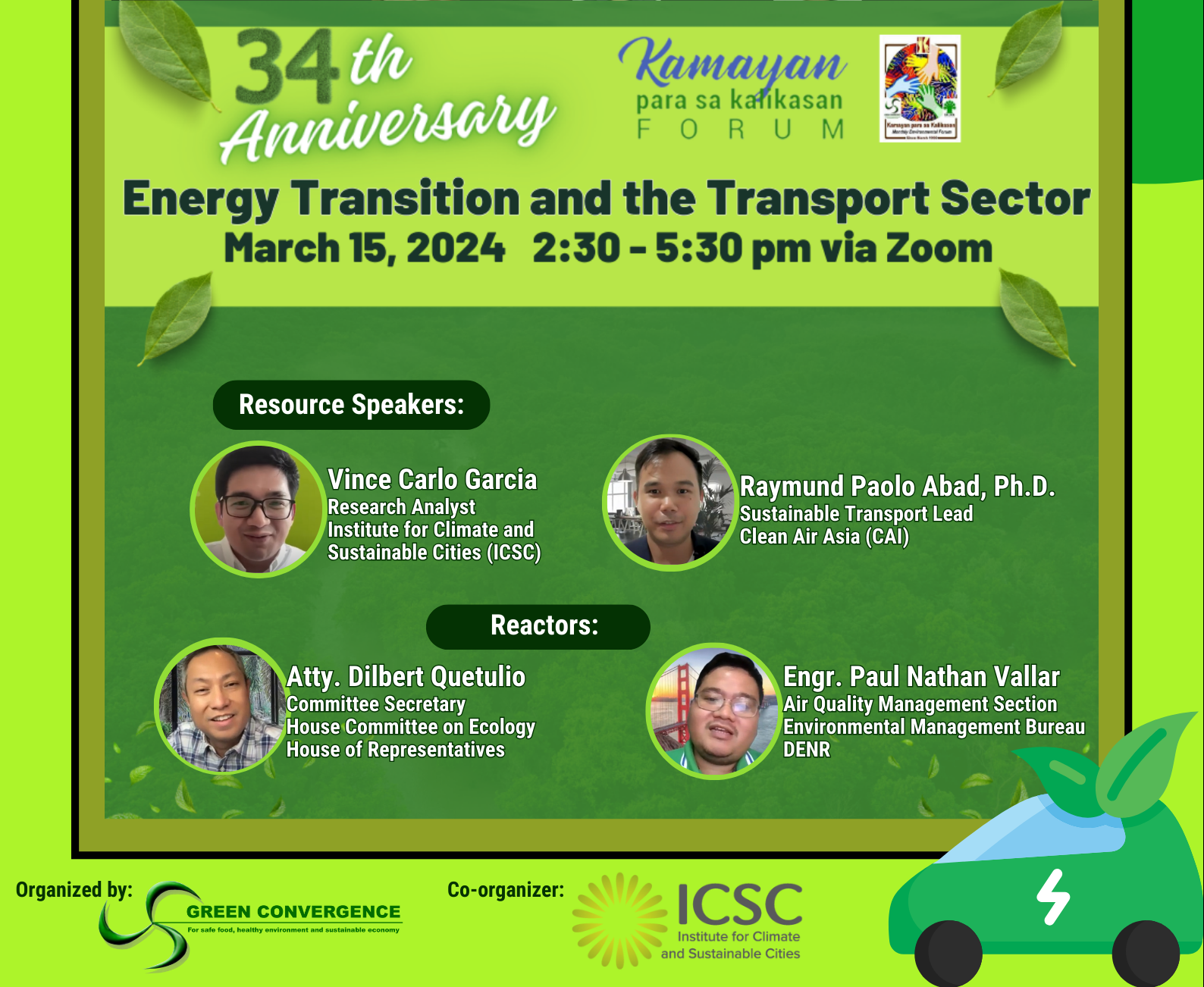
Energy Transition and the Transport Sector

Brief History of Kamayan

The three ‘founding fathers” were journalists and broadcasters Vic Milan and Ed Aurelio or Ding Reyes, and restaurateur Vicvic Villavicencio of Triple V, the well-known group of Kamayan, Saisaki and Dad’s Restaurants.  All three were Earth and Nature lovers. Vic Milan and Vicvic were scuba divers exposed to Nature’s beauty and bounty, while Ding, who was my younger brother, was – among many other things – an artist who drew inspiration and creativity from God’s creation. In 1990, unhappy about the lack of attention and action on the worsening state of the environment, they hatched a plan to hold a monthly forum to educate journalists on pressing environmental issues, in hopes that this would open up media space for such issues and attract public interest.  Thus, in March 1990, Kamayan Para sa Kalikasan was born, with a roomful of journalists in attendance at Vicvic’s Kamayan Restaurant on EDSA.  It was held there regularly  every 3rd Friday of the month for more than 3 decades except for one or two occasions of extreme flooding and – if I remember right – one Good Friday. (Can’t compete with that, of course!) Free lunch was always provided, sponsored by the restaurant.

The good news is, it worked!!! Before long, articles on the environment slowly found more and more space in both broadcast and print media. Then reporters took environmental beats, green columnists sprouted, and news on the environment got on the front page.

Subsequently, the forum was opened up to the general public so that it could reach more people directly. Students, teachers, various organizations, faith-based groups and would-be environmentalists came to learn and discuss solutions to the planet’s challenges. Organizations and shared campaigns came into being after some fruitful discussions.

Alas, the founding fathers were all called home to God’s bosom one after the other. When my brother Ding who was the main forum organizer was taken ill in 2012, he entrusted its sustainability to Green Convergence. And GC has, to this day, continued their legacy.

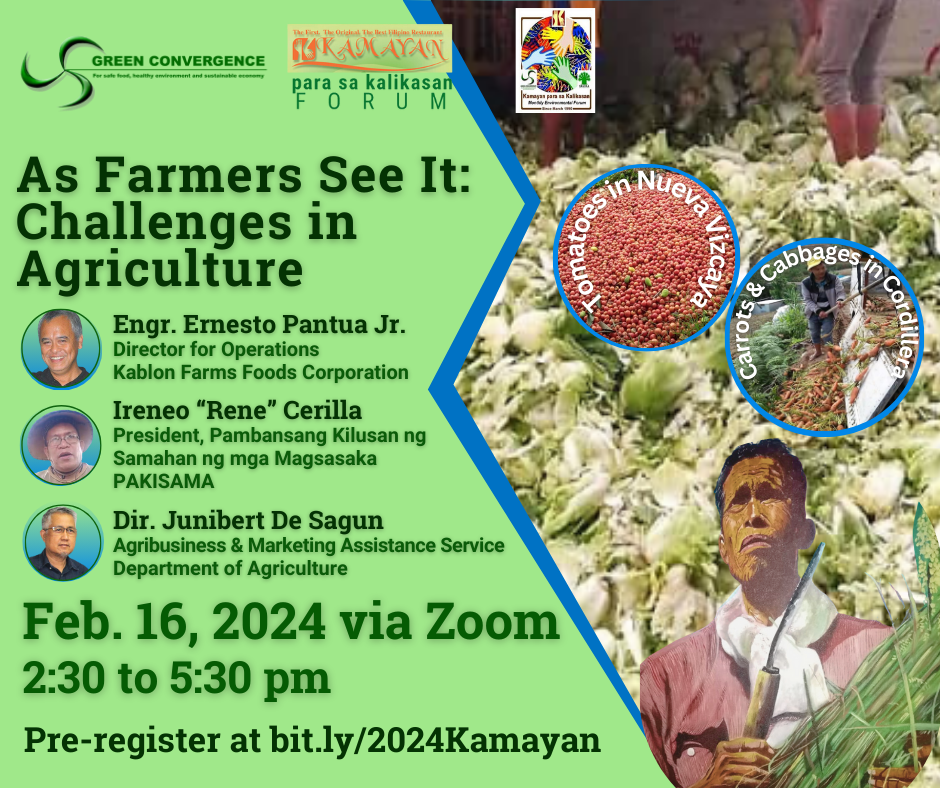
As Farmers See It: Challenges in Agriculture

The objective of this forum are: (1)Be aware of the challenges faced by farmers that compel them to throw away their produce; (2.)Listen to various recommendations and initiatives on how these challenges can be addressed; and, (3) Gain insights from the presentations and exchanges and get motivated to act and be involved in alleviating the challenges faced by farmers.

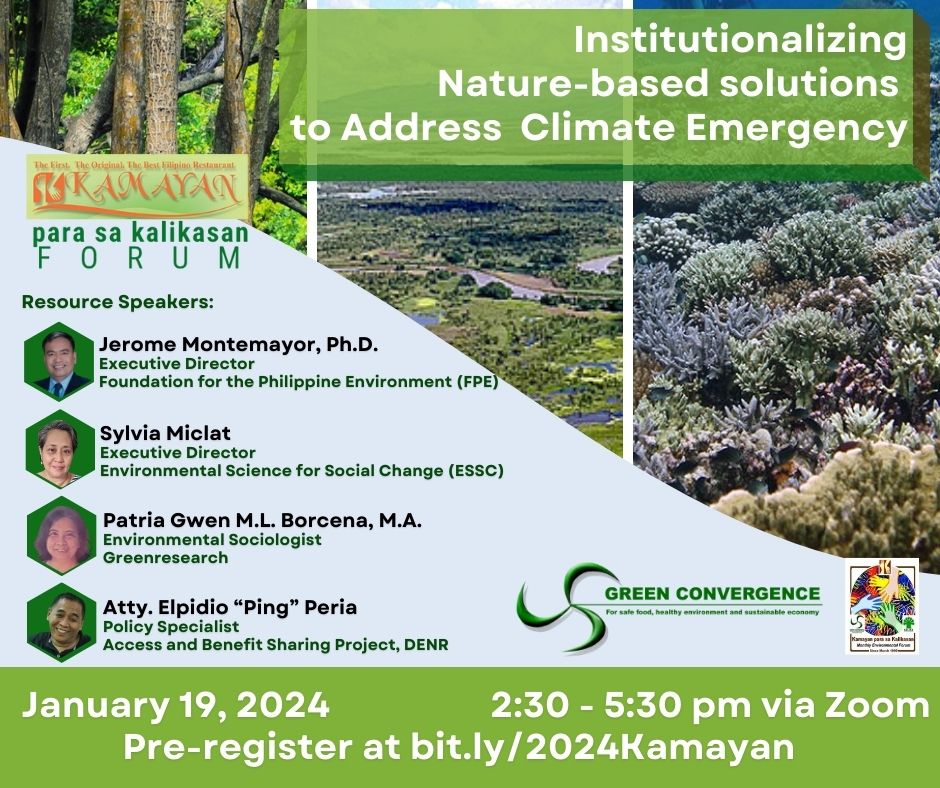
Institutionalizing Nature-based Solution to Address Climate Emergency

Through this webinar, Green Convergence (GC), provides a stimulating discussion on how nature-based Solution can be institutionalized. To broaden awareness of how Nature-based solutions, as a framework, addresses the biodiversity crisis while
accelerating climate transformation and to gain insights from the presentations and exchanges and get motivated to act and be involved in the Philippine’s move towards integrating Nature-based solutions in its Climate Change mitigation programs.

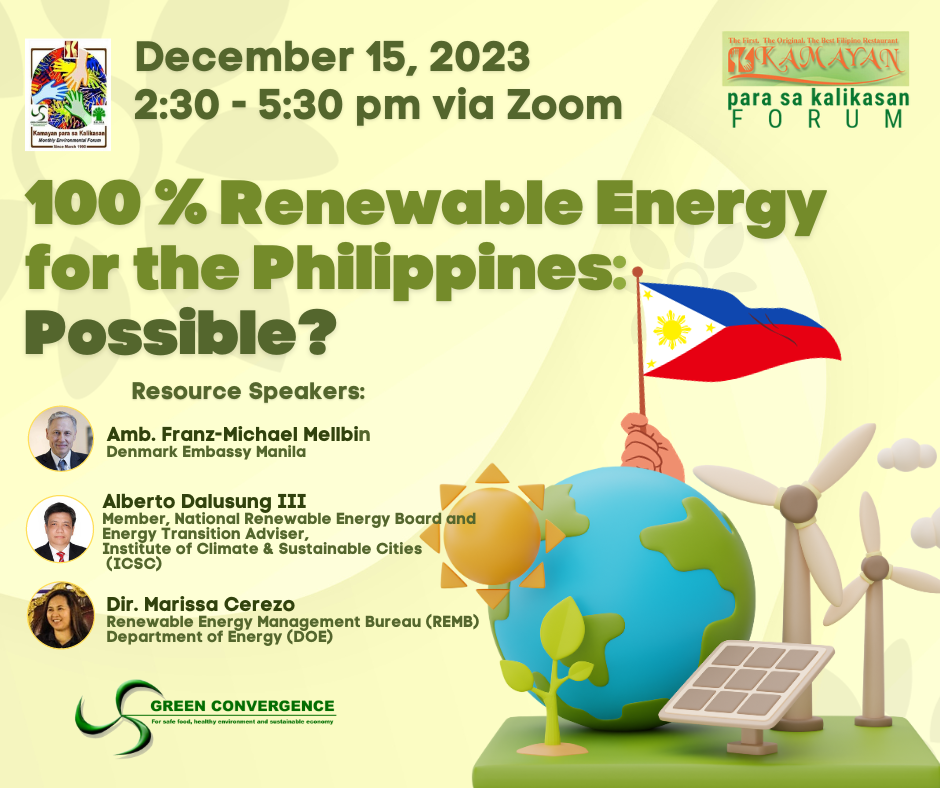
100% Renewable Energy for the Philippines: Possible?

The goal of our Kamayan episode this December is for participants to be aware of how renewable leading countries transitioned to renewable energy and their existing programs;  gain insights from the presentations and exchanges and get motivated to act and be involved in the Philippine’s move towards transitioning to renewable energy.

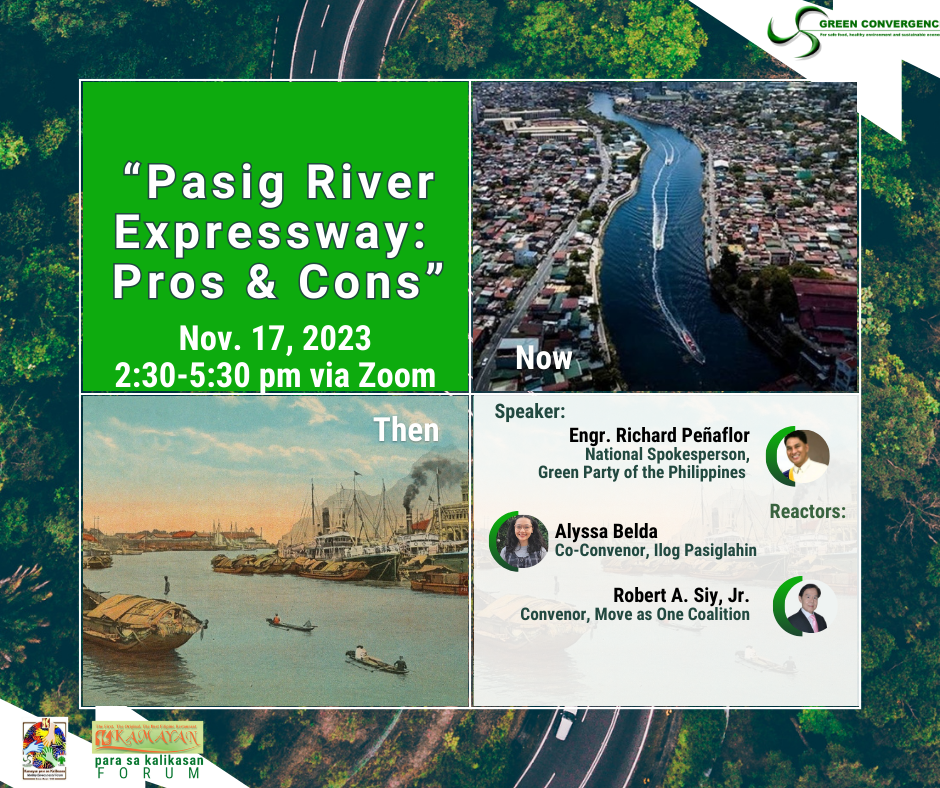
Pasig River Expressway: Pros & Cons

The planned Pasig River Expressway (PAREX) aims to contribute to the efficiency of our country’s transportation system.  It is a six-lane elevated infrastructure to be built on top of the Pasig River. However, various groups and individuals disagree due to its perceived negative impact on public mobility, heritage, environment and public health.

Tune in to our 401st episode:

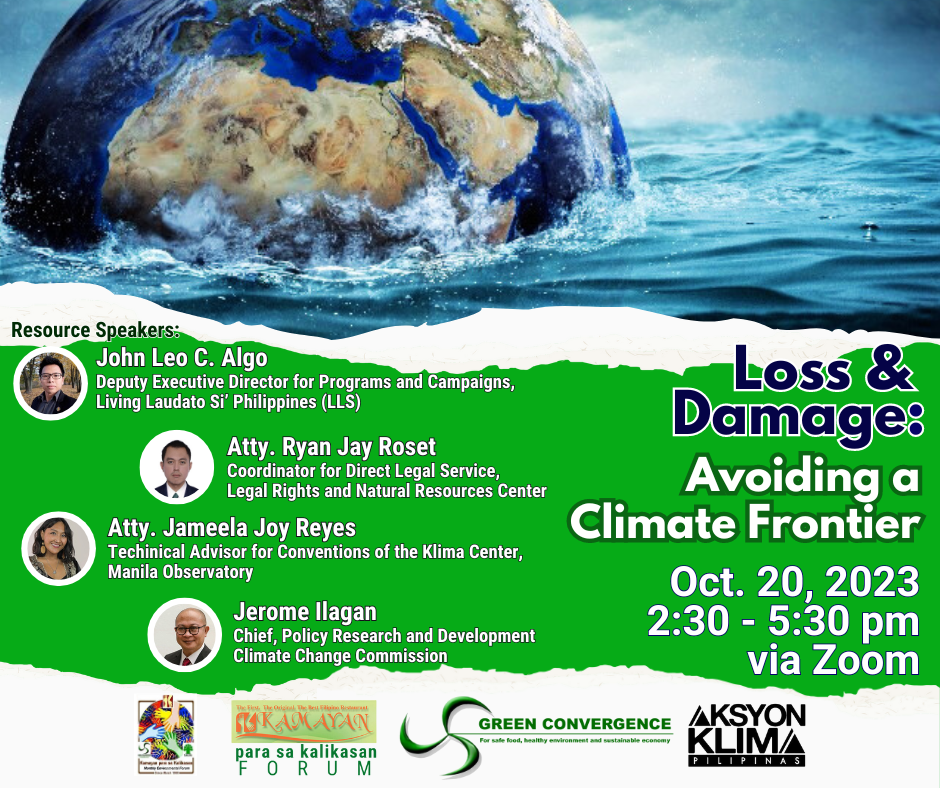
Loss & Damage: Avoiding a Climate Frontier

Loss-and-damage (L&D) is one of the most critical and urgent issues to address regarding the climate crisis. The impacts and risks of this crisis are becoming increasingly past the current capacities of mitigation and adaptation, placing millions of lives in short and long-term danger.

The urgency of addressing L&D has been recognized through the perspectives of science, faith, and governance. Scientists worldwide have consistently warned the world of the shrinking window to drastically reduce greenhouse gas emissions and avoid even more destructive climate change impacts that lead to more L&D. With half of the global population considered as highly-vulnerable, the stakes keep getting higher every passing year.

In recognition of this reality, developing countries like the Philippines have been championing scaling up L&D-related solutions, which culminated in the milestone decision at the 2022 UN climate negotiations to establish funding arrangements against L&D. Yet implementing this decision will be entirely different from making it.

On the 10th year since the landfall of super-typhoon Yolanda in the Philippines, it is timely for Filipino civil society and community representatives to reflect on the lessons learned from the catastrophe, the challenges they continue to face due to the climate crisis, and what must be done to further enable the Philippines to avert and/or minimize L&D at the national and local levels.

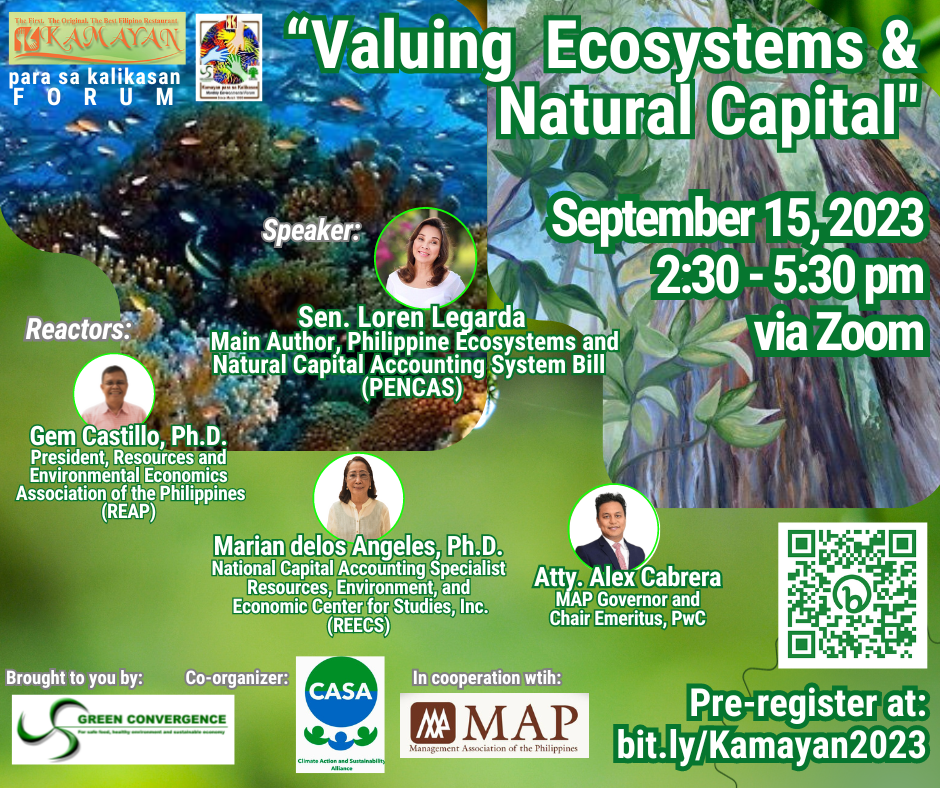
Valuing Ecosystems & Natural Capital

Conventional national income accounting systems measure economic performance by determining the value of goods and services produced in a country and aggregating them to develop economic indicators, such as the GNP and GDP.

Senate Bill 9, otherwise known as the Philippine Ecosystem and Natural Capital Accounting System (PENCAS) will include what was formerly considered “externalities,” not valued as capital, in the national income accounts.

Filed by Sen. Loren Legarda the bill aims to incorporate both environmental and non-environmental inputs to allow policymakers to make relevant laws and programs necessary for national development.

For Sen. Legarda “Good housekeeping requires that you work on what you have and not live beyond your means. It is the same for national patrimony. Not taking into account how much we have and how to allocate it drives our ecosystems to ruin,”

Co-organized by Climate Action and Sustainability Alliance, in cooperation with Management Association of the Philippines and Kamayan Restaurant.