
POSITION PAPER ON MANILA BAY BEAUTIFICATION
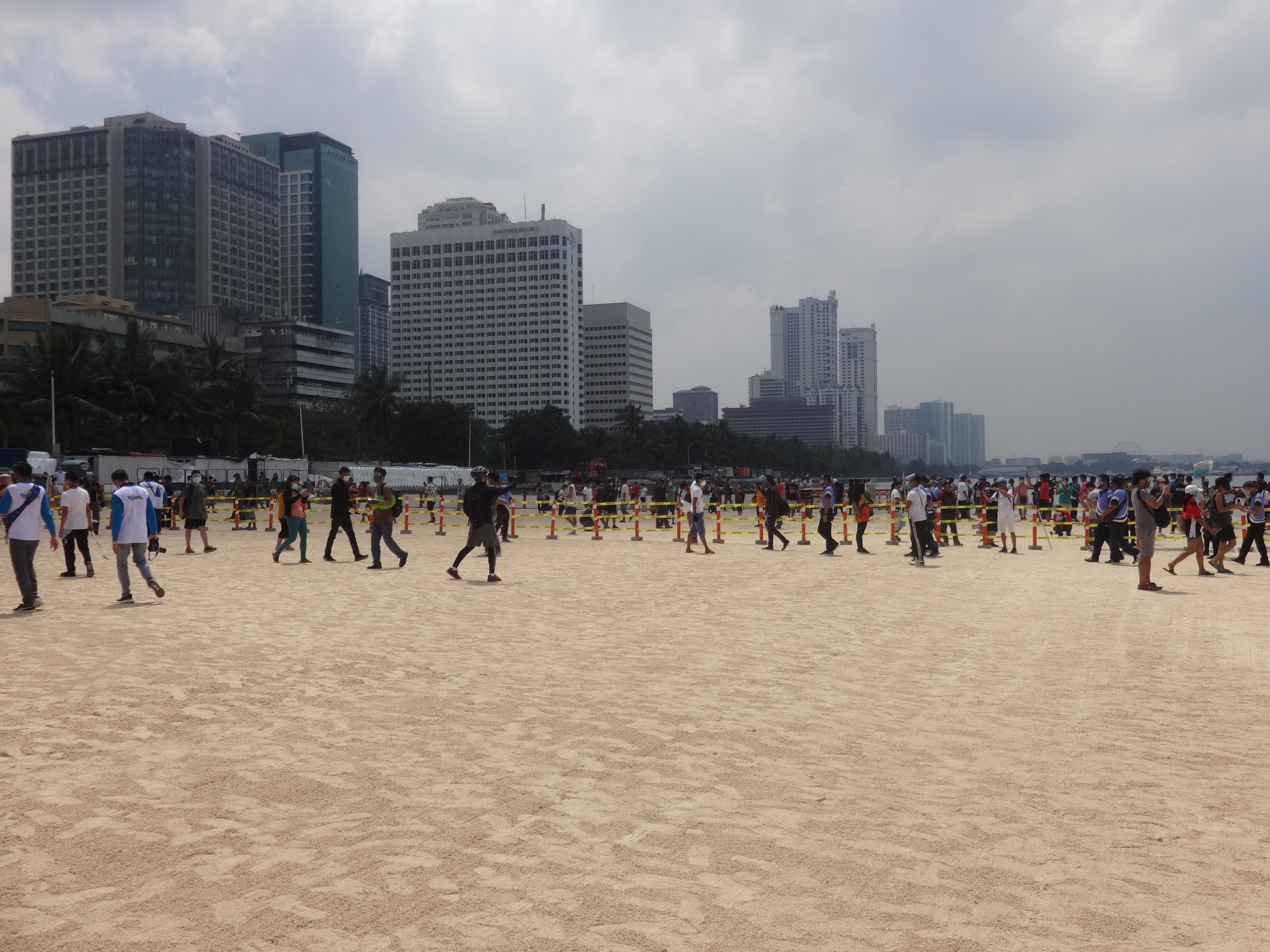
All human activities have an impact on nature to a greater or lesser extent. Whether an activity should be undertaken depends on the balance between cost and benefit. This is the rationale for the Environmental Impact Assessment Law (EIA). An EIA is required of any activity that is environmentally critical or in an environmentally critical area. In the case of the Manila Bay beautification, do the benefits outweigh the environmental and economic cost? The cost includes the destruction of part of a mountain, the emission of large amounts of carbon dioxide from the fuel used to quarry, transport, pulverize and spread the dolomite. There is supposedly also a downside on health, that dolomite is harmful to our lungs. Economically, the cost is huge; almost P400 million which makes it scandalously expensive especially when the amount could have been used for essential needs of our people.
What is/are the benefits? Hardly any; a half-kilometer of white sand which, in fact, will be easily eroded away by the next strong typhoon.
The Supreme Court mandamus prescribed the rehabilitation of Manila Bay which meant removal of solid waste, dredging the toxic silt and ensuring that the Bay will henceforth be free of solid and liquid pollution. The mandamus did not call for the Bay’s artificial beautification, if it can even be called beautification.
Beaches are formed from the interaction of land and water. Sand is deposited on the coastal area either delivered by rivers or from some sources nearby. White sand is formed from the fine particles of coral which come from a coral reef nearby and deposited on a particular stretch by the wind and waves. A beaches formed by the dumping of material from just anywhere is not sustainable.
Had EIA been properly done, the dolomite should have remained in Cebu where it belongs.
Access the Position Paper here:
Postion Paper on Manila Bay Beautification