
GREEN SONA 2025 “ECOSYSTEMS INTEGRITY: A MUST FOR PHILIPPINE SUSTAINABILITY

The State of Nature Assessment is an annual review of the developments in the Philippine environmental scene.  Also known as the Green SONA (GSONA), it is organized by Green Convergence for Safe Food, Healthy Environment, and Sustainable Economy, or simply Green Convergence (GC). The holding of GSONA started in 2006, and was held for the first few years at Miriam College’s Environmental Studies Institute. Later, the Board of Trustees of GC decided to hold it alternately in the country’s main islands of Luzon, Visayas, and Mindanao. Its goal is to gather information, analyze the various compounding factors that contribute to the environmental problems, increase awareness of these issues, and surface solutions that are holistic and ecologically sound. GSONA has become a well-sought event for environmentalists from the academe, civil society, people’s organizations, and the private sector for its in-depth and comprehensive discourses on the causes, effects, and solutions to the pressing environmental issues.

GSONA 2025 was held in Baybay City, Leyte, with the theme “Ecosystems Integrity: A Must for Philippine Sustainability.” The event was made possible through the support of the First Philippine Holdings (FPH), Forest Foundation Philippines (FFP), Foundation for the Philippine Environment (FPE), Lasallian Institute for the Environment, and the Office of Congressman Carl Nicolas Cari of Leyte’s 5th District. It was held from September 3 to 4,  at the RDE Hall of the Visayas State University (VSU).

Ms. Graciela Castillo, Assistant Corporate Secretary of Green Convergence, and Mr. Victor Neri, Information Officer of Visayas State University served as Masters of Ceremonies for the two-day event.

Day 1: September 3

OPENING CEREMONIES

GSONA 2025 opened with a prayer led by the VSU Choral, who also sang the Philippine National Anthem,  “Sama-Sama” and “Piliin mo ang Pilipinas”.

Engr. Gretel A. Cabrito, City Environment and Natural Resources Officer (CENRO) of Baybay City, welcomed the participants on behalf of Baybay City Mayor Jose Carlos Cari. He shared the ordinances and actions adopted by the City to preserve its environment, and expressed his hope that the event will spark action towards a greener and healthier environment.

Dr. Moises Neil V. Seriño, VSU Vice President for Administration and Finance, welcomed the participants on behalf of  Dr. Prose Ivy Guasa Yepes. He shared VSU’s vision to become a global green university and the various steps VSU has taken to reduce its greenhouse gas emissions, including the implementation of car- and motorless day. He encouraged the participants to make the gathering a space for meaningful dialogue, collaborative action, and renewed commitment to safeguarding the environment.

Prof. Victoria M. Segovia, President of Green Convergence, also welcomed the participants. She gave a brief background on GC and the GSONA, highlighting its achievements in empowering people to resolve environmental problems, and remembering the GC Trustees who have passed on to eternal life. She then gave the rationale for the year’s theme, and walked the participants through the activities of the two-day event. Reminding everyone that this year’s GSONA is celebrating the Season of Creation (September 1 to October 4).  She prayed that the participants would be inspired to take concrete actions and become catalysts for change within their communities.

DISCUSSION ON REGIONAL ISSUES

Atty.Forester Dario Suarez, DENR Region VIII Asst. The Regional Director for Management Services gave an overview of the current environmental status of the region. He said that the region is affected by rain-induced landslides and flooding; threatened by illegal logging, fuelwood collection, slash and burn farming, and wildlife hunting; mineral mining; and poor land use practices. It is also plagued by improper waste disposal that pollutes both land and water. Air pollution is now experienced in the growing cities of Tacloban, Ormoc, Baybay, Maasin, and Calbayog. The region is much affected by climate change that brings about droughts and typhoons. He discussed the seven strategic thrusts of DENR which are (1) to adopt a climate-risk lens in national planning and policy; (2) increase forest covers; (3) conserve protected areas and biodiversity resources; (4) imrprove air and water quality, and waste management; (5) ensure water security and resilience in high-water stressed areas; (6) sustainably and responsibly manage mineral resources; and (7) promote effective land management and governance.

Ms. Carmi C. Garado-Macapagao, President of Homonhon Environmental Advocates and Rights Defenders (HEARD), said that Homonhon Island is ravaged by mineral mining. Used to be rich in biodiversity with clean potable waters, the island is now suffering from massive pollution. The quality of air, land, and water have greatly deteriorated as 83% of the island has been declared as mining sites. With no declared watershed area for Homonhon, the DENR approved mining activities above the community’s water source. The community has to buy mineral water at PhP80/gallon from mainland Guiuan due to the absence of potable water in the area. The sources of livelihood (e.g. calamansi farms, fishing, farming) were affected. Mining did not bring about progress in its 41 years of existence as the LGU received its share of excised tax only last year. She shared several intervention projects in the area and gave a list of recommendations on how to deal with mining projects.

Ms. Victoriana Entero, President of Naungan-San Juan Mangrove Planters Association, shared how her association maintains a well-governed organization and how it was able to obtain accreditation from the Naungan-San Juan LGU. NSJMPA has conducted an information-education campaign and adopted a benefit-sharing scheme for its members. While focused on mangrove planting, it diversified to bamboo plantation, seedling production, and mud crab fattening with the help of DENR and other institutions. It was able to rehabilitate at least 20 hectares of mangroves after Typhoon Yolanda hit in 2013 through the support of international agencies like Oxfam. NSJMPA is now into the co-management of mangrove forests with the Ormoc Philippine Coast Guard.

UPCYCLING TO ADDRESS SWM ISSUES

The Executive Vice President of Alpha Distinct Development Solutions Inc. (ADDSI), Ms. Michelle Bautista-Tañada said that upcycling provides opportunities that uplift and support underprivileged and marginalized communities, while helping LGUs address their solid waste management problems. Ms. Tañada estimated Region 8 plastic waste at 92 tons/day. According to her, upcycling through the use of ADDSI technology can transform these into useful, marketable products, thereby creating income opportunities while reducing pollution. She discussed the steps in building a plastic waste infrastructure in communities – (1) install proper collection bins in strategic areas; (2) use upcycling machines and proven recycling technology; (3) partner with experts in product design and marketing; and (4) engage communities in segregation and collection. Among the ADDSI upcycled products are benches, slides, signage, tables, retractable tents, tiles, bags, jewelry, and decor. ADDSI has a pilot project in the City of Mati (Davao Oriental) aptly called “Gawaing Matino at Wasto”. The City now has bin-bikes that integrate sustainable designs such as solar-powered lights and an umbrella. It trained the community in basic waste management, engaged the youth on circular solutions, supported clean-up drives, held interactive activities for children to raise environmental awareness early, and donated upcycled coolers, trash bins, and convertible tables.

PANEL DISCUSSION ON NATIONAL SITUATION

Mr. Daniel Arias, the Alyansa Tigil Mina’s Campaign Officer for Visayas, said that under the current administration of President Ferdinand R. Marcos, Jr, mining has been revitalized. The passing of Executive Order No. 18 opened green lanes for strategic investments, including mining and renewable energy projects. The permitting process and digitalization have been fast-tracked to two years. The SB 2826 and HB 8937 created an Enhanced Mining fiscal regime, which returned the Philippines to the Extractive Industries Transparency Initiative mode. As of 30 June 2025, 709 mining contracts and permits were approved, 49 of which are in Region 8. The Philippine Government considers the mining industry as a pillar for inclusive and resilient growth, as there is now an urgent demand for critical minerals (e.g., nickel, chromite, copper) as the world transitions to clean energy. Yet, studies have shown that the mining industry’s contribution to the country’s GDP is less than 1%; it destroys 18% to 20% of the economy coming from agriculture, forestry, water resources, and fisheries; it contributes less than 0.5% to total employment; and there are uncollected taxes from mining companies amounting to at least PhP 1 Billion.

Dr. Renezita Sales-Come , VSU Dean of the Faculty of Forestry and Environmental Science, gave a brief update on the status of Philippine forests and reforestation, with a focus on rainforestation as a strategy. According to her, as of 2021, there are 7.22 M hectares of forests covering 24% of the country’s land area, less than 1% of which is primary. The target of 28.5% by 2030 has been achieved through the various strategies, including the National Greening Program (2011-2016) and the Enhanced NGP (2016-2018), and the Community-Based Forest Management Program. She shared that rainforestation has been adopted as a reforestation strategy by the DENR in 2004 (Memorandum Circular 2004-06), as it recognized the importance of planting native trees. She said that rainforestation is a banner program of VSU, with its former President, Dr. Paciencia Milan’s as the pioneer. VSU has an ongoing E-GNP, which will end in 2028. Through the project, two million hectares have been planted with  1.7 billion seedlings from 2011 to 2020. It targets to cover 7.1 million hectares of unproductive, denuded, and degraded forestlands nationwide. Rainforestation is now implemented nationwide by farmers, communities, academe, and LGUs.

Roberto “Ka Dodoy” Ballon, a Trustee of Foundation for the Philippine Environment, shared the story of his barangay’s coastal ecosystem management efforts. Located in the Municipality of Kabasalan (Province of Zamboanga Sibugay),  shared that his barangay experienced poor fish catch after the mangrove forest was transformed into fishponds. The connection of mangroves to fish catch was realized by the community, who then initiated mangrove planting activities. Without external funding, the people’s initiative restored the forest, which then slowly increased marine productivity. With the support of the Foundation for the Philippine Environment  (FPE), the 50 hectares of forest expanded to 7,000 hectares. Fishing time was reduced from eight to three hours, with a catch of at least 15 kilos per trip. The community also started culturing lapu-lapu and talaba, which further increased the people’s income. This has resulted in increased consumption and increased volume of waste, which necessitated urgent intervention. A reward system was adopted together with an intensive information-education drive targeting the youth. This transformed the mindset and behavior of the people, so that until now, despite the absence of a quarterly raffle, the community has remained clean with a well-managed solid waste system.

EXPERIENCE IN ADDRESSING CLIMATE CHANGE

Ms. Ingrid Macabare, Environmental Specialist II and Officer-In-Charge of the Environment and Natural Resources Office of the City Government of Ormoc, shared the City’s experience in addressing climate change. Quite vulnerable to disasters, the LGU sought technical and financial support from national and international agencies. Through DENR’s Project TRANSFORM (Transdisciplinary Approach for Resilience and Environmental Sustainability through Multistakeholder Engagement), the LGU was able to carry out trainings/programs on biodiversity profiling, greenhouse gas inventory, financial literacy, disaster risk management, and nature-based solutions. In conjunction with this, the City initiated and has been actively implementing several adaptation and mitigation initiatives under the Environment and Natural Resources Office. The four ENRO Sections focused on the management of (1) solid waste; (2) watershed and wildlife; (3) pollution control; and (4) mineral and land. These enabled the City to have a robust garbage management system with 100% collection; institutionalize a Trash Trap Program that prevents garbage from reaching Ormoc Bay; prohibit the sale and distribution of single-use plastics; hold regular clean-up drives; suspend gravel quarrying; and closely monitor mining activities. Its information-education campaigns enhanced public engagement and understanding, which led to better community response and resilience. Overall, the City has shifted from a Materials Recovery Facility to a Materials Recovery System. This shift will be further enhanced by the City’s recently developed  Circular Economy Portfolio.

HIGHLIGHTS OF THE OPEN FORUM

The forum was well-participated with concerns raised on the effectiveness of the incentive-based system to improve waste management, temperature tolerance of native trees, the possibility of an endemic species becoming invasive when transferred to another region,  and the effect of wounding on trees.

The incentive-based system in Zamboanga Sibugan was effective as it was carried out with a massive information-education campaign, targeting the youth. Parish Priests were also involved as they incorporate the value of stewardship in their homilies.

There is no study yet on the temperature tolerance of native trees as this entails the use of sophisticated equipment. However, with funding from the National Research Council of the Philippines, reliable data sets to determine the native trees’ response to temperature changes may be obtained in due time.

One region’s endemic species have not been reported to have become invasive after translocation in another region of the country. However, the endemic species’ growth and developmental requirements may affect its survival when transplanted to another region.

Nailing of signage on trees may or may not affect the trees. It really depends on the thickness of the bark and the state of the tree. If the nail does not reach the vascular tissues, the wound will have no effect. If the tree is “ringed” to remove the vascular tissues, the tree will slowly die.

Removing the nails is advisable to prevent accidents, e.g., the nail injuring people who accidentally bump into it

GREEN SONA 2024 RESOLUTIONS

The Green SONA 2024 resolutions were presented by Dr. Cecilia Gascon, President of the Philippine Network of Educators for the Environment and a Trustee of Green Convergence. It was amended and approved by the participants.  It declared the GSONA participants’ collective commitment to protect, conserve, and restore the ecosystems of Region VIII and the entire Philippines. Guided by ecological principles, they pledged to transform our way of life—consumption, governance, and development—toward a sustainable and resilient future. The group affirmed and committed to 24 concrete and data-driven actions. It was resolved further that the Resolution be forwarded to the DENR, LGUs, Academic Institutions, Department of Education, Commission on Higher Education, and Civil Society Organizations for adoption and action.

Day 2: September 4

Day two started with an opening prayer and a recap of day one by the emcees, Ms. Graciela Castillo and Mr. Victor Neri.

The first part of the day two program was the workshop on Ako Ang Bukas (AAB): “Quantum Leap Now to Climate Neutrality 2050,”  a whole-of-nation advocacy program by Green Convergence that enjoins all sectors to measure their carbon footprint, reduce their emissions, and increase sinks to mitigate climate change.

After the AAB workshop, lunch break, and awarding of plaques to sponsors and partners, the program continued with an orientation on Philippine Native Trees (PNT). Green Convergence’s PNT program is a book project that documents indigenous trees through technical descriptions and personal anecdotes, with its first three volumes featuring over 370 native trees and 10 palms in total. It also includes PNT Books for children, designed to nurture awareness and appreciation among the youth for the country’s native trees.

WORKSHOP ON AKO ANG BUKAS (AAB)

Dr. Angelina P. Galang,  Program Director of the AAB Program and Founding Trustee of Green Convergence, opened the workshop with her talk, “Climate Change, the Ecological Paradigm, and the Seven Environmental Principles,” which she described as having a global scope following the previous day’s regional and national discussions. She emphasized the need for an ecological paradigm, a mindset that respects and listens to nature, and continued on to enumerate the seven environmental principles or EPs. There are (1) nature knows best, (2) all forms of life are important, (3) everything is connected to everything else, (4) everything changes, (5) ours is a finite earth, (6) everything must go somewhere, and (7) nature is beautiful and we are the stewards of God’s creation. Except for EPs 4 and 7, these principles were adopted from American biologist Barry Commoner. Using an anecdote about her “kasambahay” who unknowingly overconsumed water and energy while complaining about the heat, Dr. Galang illustrated how everyday actions contribute to climate change. She traced humanity’s evolution from hunting and gathering to modern industrialization, showing how each stage deepened environmental degradation and contributed to issues such as plastic pollution, biodiversity loss, reclamation, and consumerism. Through audience participation, she linked these problems to the environmental principles, emphasizing that human-induced changes are rapid compared to nature’s slow and small shifts. She concluded by reminding participants that while human progress is irreversible, sustainability requires mindfulness and harmony with nature to achieve the global goal of climate neutrality by 2050.

Agnes de Jesus, Chief Sustainability Officer of First Philippine Holdings and Business Task Force Head of the AAB program, delved deeper into climate change and the importance of using tools such as carbon footprint calculators as the first step toward climate action. She described climate change as a long-term, human-induced shift in weather patterns caused by GHG emissions from industries and daily activities, noting that the Philippines’ main emission sources are energy, agriculture, waste, and industry. De Jesus highlighted the urgency of meeting the Paris Agreement’s goal of limiting global warming to 1.5°C amid rising national temperatures that have reached up to 57°C in recent years, stressing that the country only has five to six years left before reaching its carbon budget limit. She explained that while the Philippines has yet to set a net-zero target, new goals will be discussed in COP 30, and government policies, including SEC requirements on carbon emissions reporting, are already pushing companies to act. Introducing the AAB GHG calculator, she explained how it localizes emission tracking across various sectors and guides users through identifying emission sources (Scopes 1–3), setting boundaries, and estimating outputs. She shared case studies from government, corporate, and community-level trainings, showing how the tool can lead to effective interventions. Concluding her talk, De Jesus emphasized the global decarbonization goal of a 45% emission reduction by 2030 and net zero by 2050, discussed the mitigation hierarchy (avoid, minimize, reduce, remove, and offset) and ended with the AAB call for a “quantum leap to climate neutrality 2050” by singer-songwriter Joey Ayala.

Prof. Milagros “Miles” S. Serrana, Program Leader of the AAB Program, facilitated the workshop on the AAB greenhouse gas (GHG) emissions calculators, building on the concepts discussed by Dr. Galang and Agnes de Jesus. She guided participants through the AAB household GHG calculator web app, explaining how to set proper boundaries, input accurate activity data, and interpret results. Participants then used the web app to compute their own carbon footprints in a “mini game,” where a VSU Economics student won for having the lowest footprint at 61 kgCO₂e. Prof. Serrana next demonstrated the AAB entity-level GHG calculator using sample university data, clarifying how to categorize emissions under Scopes 1, 2, and 3. She reminded participants to acknowledge AAB when using the entity-level calculator for their own institutions or organizations.

ORIENTATION ON THE PHILIPPINE NATIVE TREES

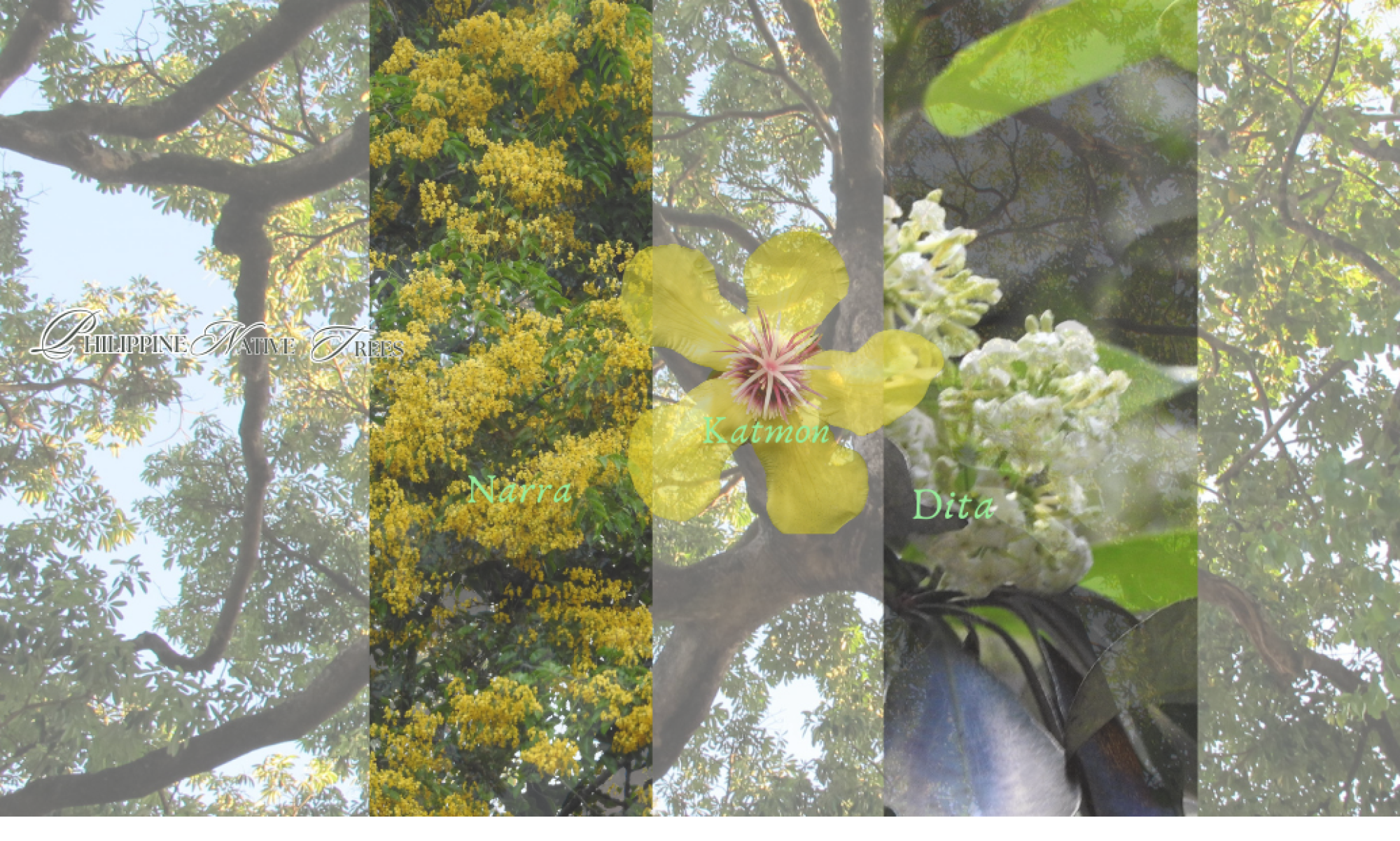
Imelda “Ime” Sarmiento, Program Chair of Philippine Native Trees Program, presented “3,600 Philippine Native Trees: Our Natural Heritage,” emphasizing that heritage includes what we inherit, value, and preserve for future generations—particularly our natural heritage of native trees. She highlighted the Philippines’ extraordinary biodiversity, with 3,600 native tree species (67% endemic), surpassing the combined numbers of the UK, USA, and Canada. Sarmiento explained the vital ecological roles of trees and underscored the importance of planting native species, warning that introducing alien trees can harm ecosystems. She shared inspiring stories, such as a “Dita” tree that saved families during Typhoon Ondoy, and debunked misconceptions about “native” species, revealing that many familiar trees and even the national flower, Sampaguita, are non-native. Advocating for decolonizing the nation’s appreciation of local flora, she encouraged the creation of Gardens and Living Museums of Native Trees. Finally, she invited everyone to support native tree planting, share personal stories through Green Convergence’s Philippine Native Trees books, and continue its legacy, and ultimately, value God’s creations as part of preserving our natural heritage.

Jayson Mansibang, Biologist from the University of the Philippines – Diliman and the Jose Vera Santos Memorial Herbarium, discussed “Lost Species: A Conservation and Research Priority in the Philippine Botany.” He began with the “lost spoon” story—symbolizing the legacy of Filipino botanists like Dr. Benito Tan and Mr. Leonard Co—and connected it to the loss of the Bureau of Science Herbarium during World War II, which destroyed invaluable plant specimens and records. Mansibang explained that “lost species” are taxa not documented for a long time, creating a paradox in rediscovery and conservation, similar to Schrödinger’s cat. He also described the Wallacean shortfall, which is defined as gaps in data on species distribution, and stressed the urgent need for taxonomic research, recollection fieldwork, and collaboration with local scientists to recover missing information. He emphasized that taxonomy is the foundation of all biological sciences, and without proper naming, forestry and ecology lose accuracy. Mansibang highlighted rediscovery success stories and challenged participants to locate long-lost Philippine trees such as Syzygium leytense, Wenzelia brevipes, and Heptapleurum leytense. He concluded with key reminders such that every species matters, citizen scientists play a vital role in rediscovery, and lost species present valuable research and conservation opportunities.

TREE PLANTING ACTIVITY

Green SONA 2025 culminated with a tree planting activity. It was led by Dr. Renezita S. Come, the Dean of the Forestry and Environmental Science of the Visayas State University, along with the VSU forestry students. One hundred Philippine native trees were planted in an adjacent community of the University by the event organizers and participants. Native tree planting is a key component of Green SONA and is meant to offset the carbon emissions released because of the event, i.e., greenhouse gases from the organizer and participants’ travel to and from the venue, waste produced, and electricity consumed, among others.

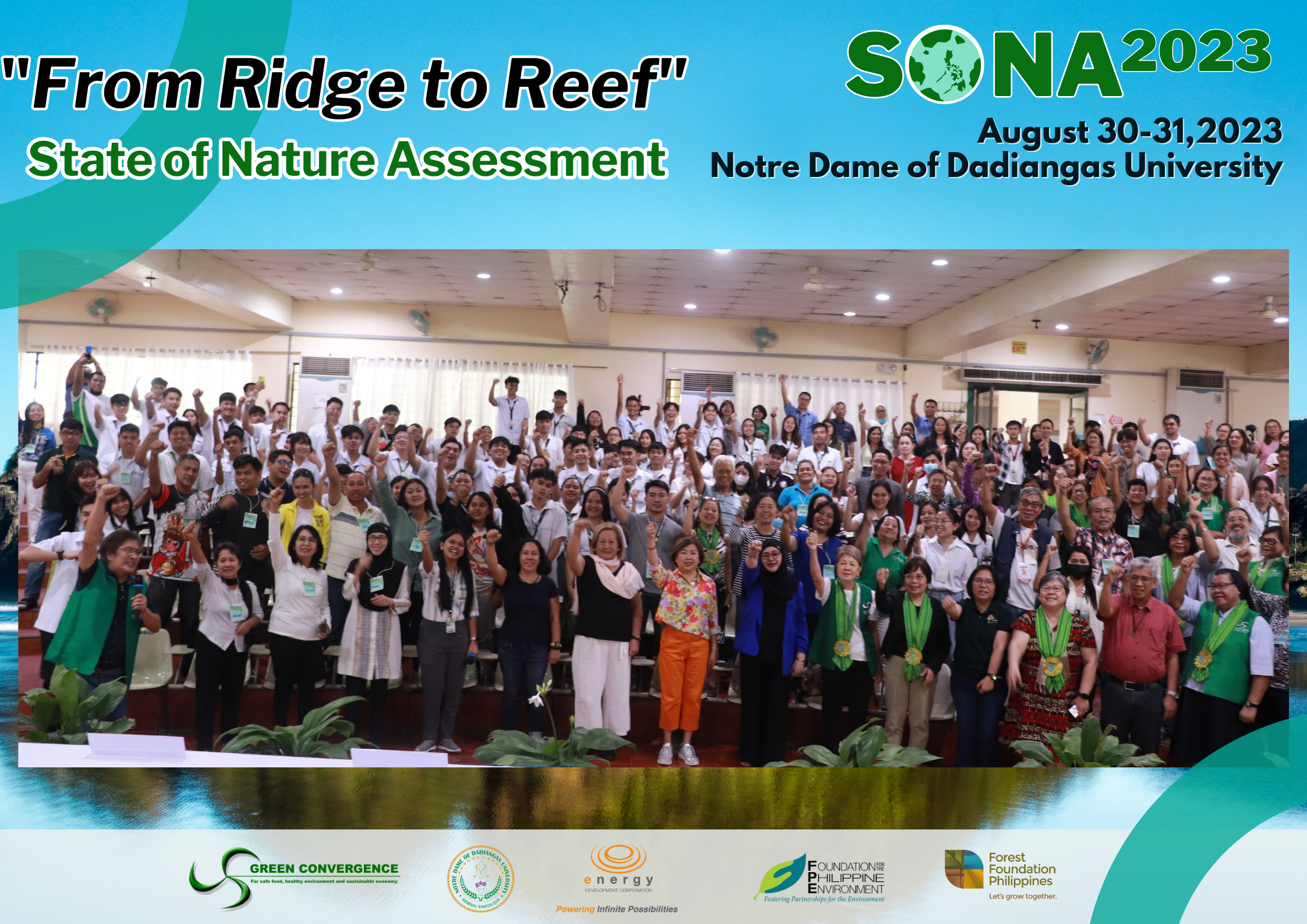


State of Nature Assessment 2024: “Climate Change: Challenge to Sustainability”

DAY ONE

August 28, 2024 | Student and Alumni Center, Tarlac Agricultural University | Camiling, Province of Tarlac, Philippines

Live streamed on the Green Convergence official Facebook page

Tarlac, Philippines – As the world grapples with the accelerating impacts of climate change, the 2024 State of Nature Assessment (Green SONA 2024) convened on August 28-29, 2024, at the Student and Alumni Center of Tarlac Agricultural University (TAU). The event, with its theme “Climate Change: Challenge to Sustainability,” brought together environmental experts, government officials, industry leaders, and community stakeholders to confront the critical challenges posed by climate change and to explore sustainable solutions essential for the Philippines and beyond.

The Philippines: A Frontline Nation in the Climate Crisis

The Philippines, an archipelago of over 7,000 islands, has become a global focal point in the climate crisis. With its susceptibility to stronger typhoons, severe flooding, prolonged droughts, and disruptions in food and water supply, the country stands on the frontlines of climate change. These environmental challenges threaten to derail the nation’s development goals, making sustainable development an urgent national priority. The Green SONA 2024 was convened as a response to these dire circumstances, aiming to foster discussions and actions that can guide the Philippines toward a sustainable future.

An Assembly of Minds and Visionaries

Organized by Green Convergence for Safe Food, Healthy Environment, and Sustainable Economy (Green Convergence), Green SONA 2024 serves as an annual platform where diverse sectors come together to review environmentally significant events, share insights, and promote practices that align with the principles of sustainable development. This year’s event, held in the heart of Tarlac, marked a significant convergence of minds dedicated to addressing the climate crisis.

The event’s success was bolstered by the collaboration of key partners, including the Tarlac Provincial Government, Tarlac State University (TSU), Tarlac Agricultural University (TAU), the Southeast Asian Regional Center for Graduate Study and Research in Agriculture (SEARCA), and the Energy Development Corporation (EDC). These institutions, known for their commitment to environmental conservation and sustainable development, played pivotal roles in ensuring the event’s relevance and impact.

Welcome and Orientation

Victoria M. Segovia, President of Green Convergence, welcomed the participants and provided an orientation to the program. She highlighted the critical role of the Green SONA in addressing the environmental challenges facing the nation, particularly in the context of climate change. Her remarks underscored the event’s mission to bridge the gap between awareness and action, encouraging participants to engage actively in the discussions and to be catalysts for change within their communities.

Keynote Addresses

The session proceeded with two keynote addresses, each offering unique perspectives on the climate crisis.

The first keynote, delivered by Hon. Maria Antonia Yulo-Loyzaga, Secretary of the Department of Environment and Natural Resources (DENR), was pre-recorded and presented as “Climate Change: The Philippine Story.” Secretary Yulo-Loyzaga emphasized the Philippines’ vulnerability to climate change and the urgent need for comprehensive strategies that encompass both mitigation and adaptation. She highlighted ongoing government efforts, including the enhancement of disaster risk reduction frameworks and the promotion of green energy initiatives.

The second keynote, titled “Moral Choices in a Warming World,” was delivered by Teddy Baguilat, Jr., President of Angat Kalikasan Pilipinas. Baguilat challenged the audience to consider the ethical dimensions of climate action, stressing the importance of moral responsibility in the fight against climate change. He called for a collective commitment to environmental justice, particularly in protecting marginalized communities that are disproportionately affected by climate-related disasters.
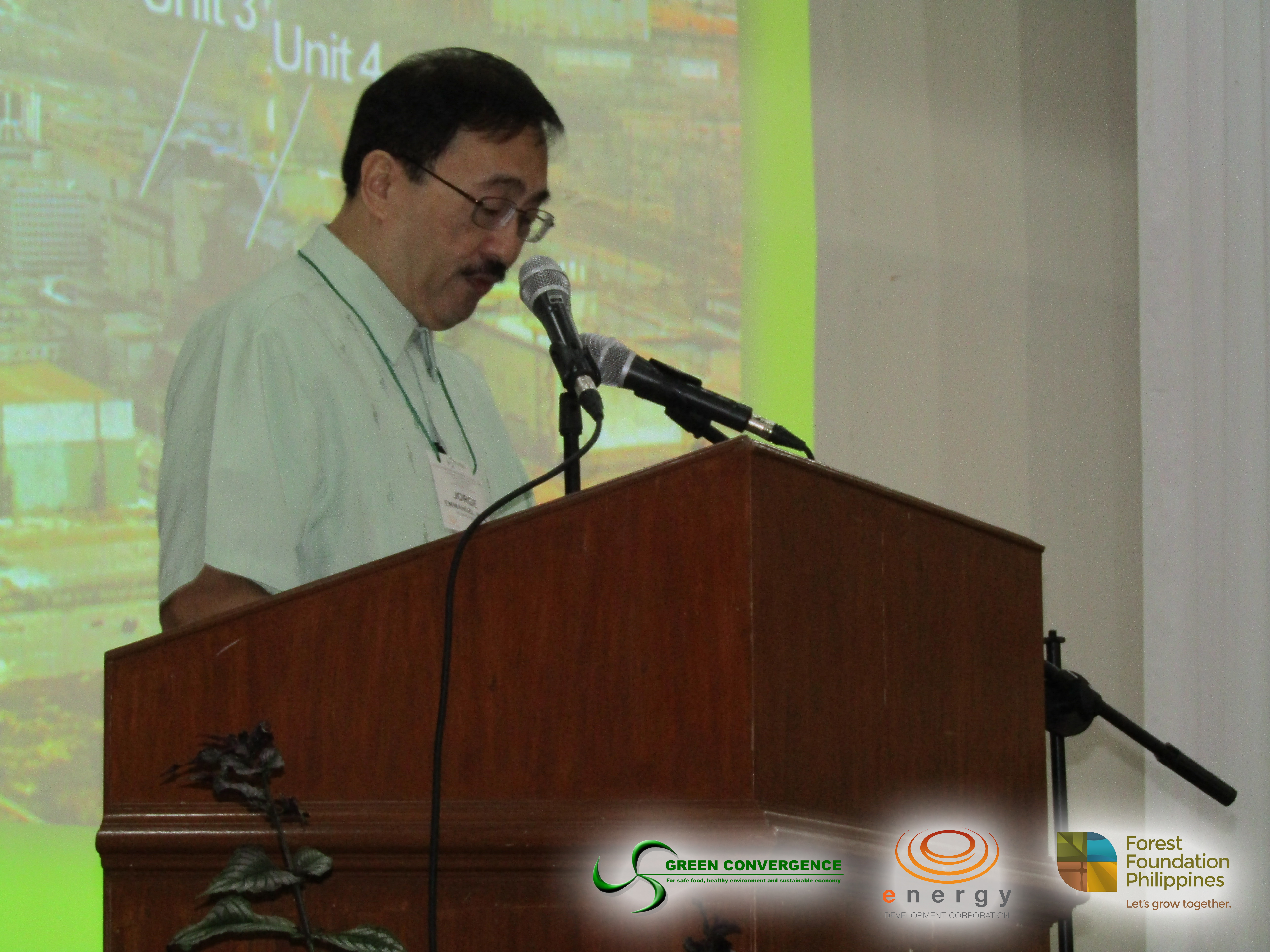
Panel Session on Concerns on Resource Sustainability

The panel session on concerns regarding resource sustainability featured in-depth discussions led by experts on critical environmental issues.

Dr. Guillermo Tabios III, Professor Emeritus at the Institute of Civil Engineering, University of the Philippines, opened with a focus on “Flood & Watersheds.” He highlighted the crucial role that watersheds play in flood management and emphasized the need for integrated approaches that consider both environmental and human factors. Dr. Tabios discussed recent studies on flood patterns in the Philippines, noting how deforestation and land conversion adversely affect watershed health and increase vulnerability to flooding. His presentation underscored the importance of preserving natural watersheds and implementing sustainable land use practices to mitigate flood risks.
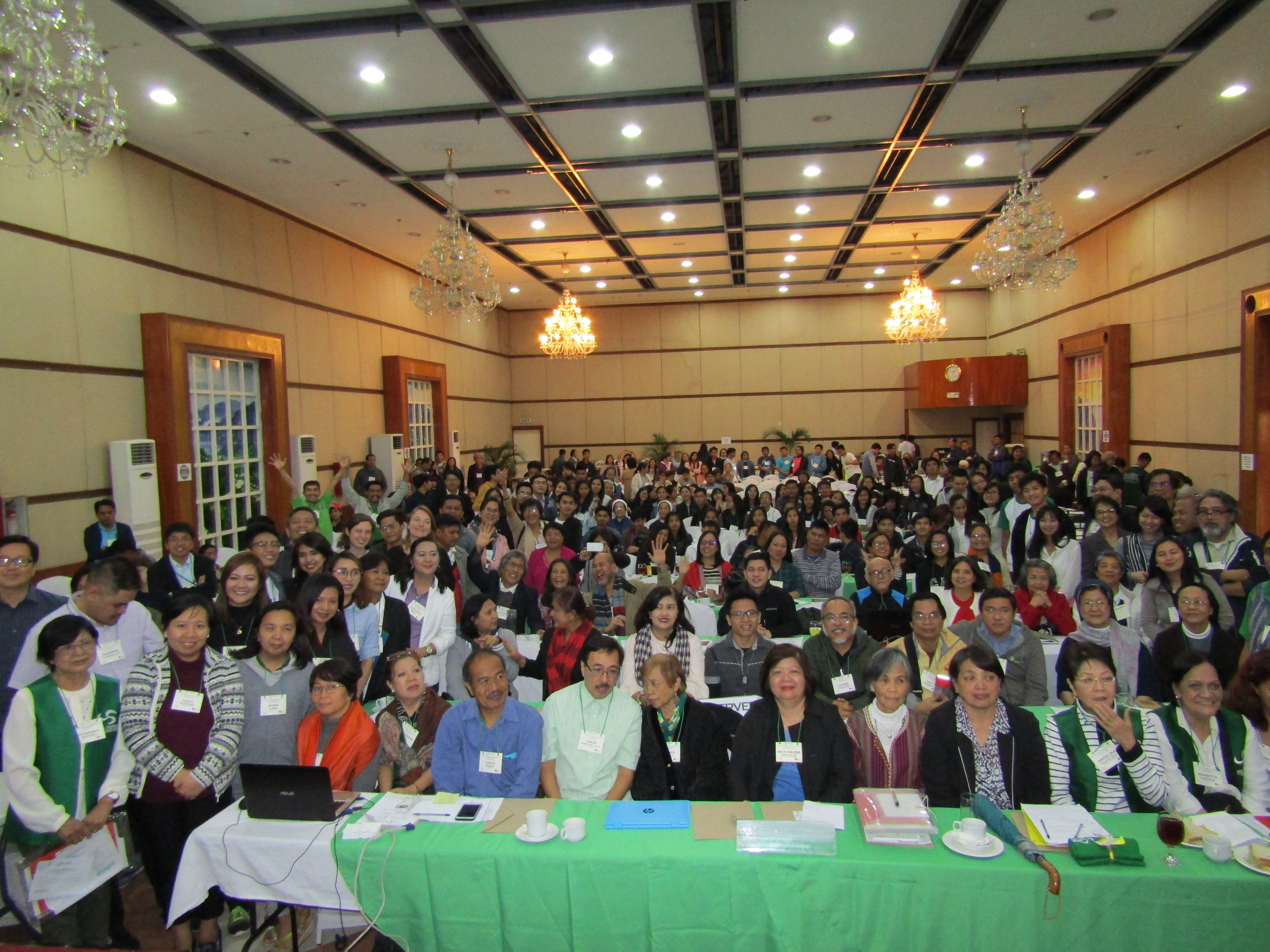
The session then moved to “Drought & Food Security,” with insights provided by Joyce Anna O. Manuel, an Instructor at the College of Agriculture and Forestry, Tarlac Agricultural University. Manuel delved into the growing threat that droughts pose to the Philippines’ food supply, exacerbated by climate change. She discussed how shifting climate patterns are impacting agricultural productivity and stressed the necessity of adopting climate-resilient farming practices. Manuel also highlighted the innovative techniques local communities are employing to adapt to these changes, such as diversifying crops and improving water management strategies to ensure food security.

Celia Esteban from the Provincial Environment and Natural Resources Office of Tarlac Province led the discussion on “Waste Management.” Esteban addressed the formidable challenges associated with managing waste in a rapidly urbanizing nation. She pointed out the environmental consequences of improper waste disposal, including pollution and public health risks. Advocating for stronger enforcement of environmental regulations, Esteban emphasized the adoption of sustainable waste management practices like recycling and composting. She argued that both community-level initiatives and industrial practices must evolve to better handle waste sustainably and efficiently.

The morning session concluded with an engaging open forum, facilitated by Dr. Nova Ramos of SEARCA. This forum allowed participants to interact directly with the panelists, posing questions and sharing their own experiences and viewpoints. The dynamic exchange fostered a collaborative atmosphere, with participants expressing both concerns and optimism about the future of environmental sustainability in the Philippines. The open dialogue highlighted the importance of community involvement and cross-sectoral collaboration in addressing the multifaceted challenges posed by climate change and resource management.

Launching of Philippine Native Tree (PNT) Children’s Books

The afternoon session of the Green SONA 2024, continued the momentum from the morning by featuring the highly anticipated launching of the Philippine Native Tree (PNT) Children’s Books. Dr. Angelina P. Galang, Program Director of Ako ang Bukas, opened the event with a brief introduction to the initiative, outlining its importance in promoting environmental awareness and appreciation of native Philippine trees among young readers. She emphasized the role of education in nurturing a love for nature and instilling a sense of responsibility for environmental stewardship from an early age.

The ceremonial unveiling of the PNT Children’s Books was led by Victoria M. Segovia, President of Green Convergence; Joan Arbolado, Institutional Development lead of the Foundation for the Philippine Environment (FPE); and Gloria “Baby” Manalang-Angara, a respected figure in environmental advocacy. Each of these leaders underscored the significance of such literary contributions in fostering a deeper connection between children and the rich biodiversity of the Philippines.

The collection of books features engaging stories and vibrant illustrations, each focusing on a different native tree species and the environmental themes surrounding them. “The Tindalo House (Ang Bahay na Tindalo),” written by Gabriela Lee and illustrated by Hansel Dimapilis, presents a magical narrative.

Treesure Hunting: The Search for the Endangered Palawan Narig (Puno ng Yaman: Ang Paghahanap sa Nanganganib na Palawan Narig),” written by Carla M. Pacis and illustrated by Alexandra R. Broekman, follows a thrilling quest.

“Little Api and the Strong Wind (Si Munting Api at Hanging-Lakas),” written and illustrated by Ina Reyes de Vera, shares a story of resilience and nature.

Tata Oskie and His Magnificent Malabulak (Si Tata Oskie at ang Marilag na Malabulak),” written by Melissa Salva and illustrated by Ulap Namnama Z. Miguel, narrates a tale of heritage and community.

The Puhung Monster Tree (Puhung, ang Halimaw na Puno),” written by Gidget Jimenez and illustrated by Gregg Louise, captivates with folklore and environmental lessons.

To bring these stories to life, Ma. Teresa Oliva, Executive Director of Green Convergence, narrated “Little Api and the Strong Wind,” captivating the audience with her engaging storytelling and bringing the illustrations and characters vividly to life. Her narration emphasized the educational and emotional impact of the stories, inspiring both children and adults in attendance to foster a greater appreciation for the natural world.

The launch of the PNT Children’s Books was more than a celebration of literary creativity; it was a call to action for environmental consciousness and preservation. Through these beautifully crafted stories, children are encouraged to explore and cherish their natural heritage, ensuring that the legacy of the Philippines’ native trees continues to thrive for generations to come. The event highlighted the critical role that storytelling and education play in cultivating a sustainable future, demonstrating the power of literature to inspire change and protect the environment.

Panel Session on Responding to the Challenges

The afternoon panel session, Responding to the Challenges, focused on practical solutions through a series of panel discussions. This session brought together experts from various fields to share innovative approaches and success stories in sustainable practices, particularly emphasizing community engagement and technology-driven solutions.

Dr. Krishna V. Buenaventura, Acting PG ENRO, representing Hon. Susan A. Yap, Governor of the Province of Tarlac, kicked off the session with an overview of Tarlac Rewilding & Ecological Enrichment and Sustainability (TREES). Dr. Buenaventura emphasized the importance of rewilding initiatives to restore natural habitats and enhance biodiversity. He highlighted how these efforts contribute to ecological balance, mitigate climate change, and promote sustainable land use practices in Tarlac.

Michelle B. Tañada, Executive Vice President and Chief Basurera of Alpha DDSI, and President of Balikatan sa Kaunlaran, followed with a discussion on upcycling. Tañada, who also serves as the National Foundation Director of the National Council of Women of the Philippines (NCWP), highlighted the transformative potential of upcycling, which involves repurposing waste materials into new, higher-value products. She shared successful initiatives led by her organization, emphasizing how upcycling not only reduces waste but also fosters creativity and entrepreneurship within communities. Tañada illustrated the importance of integrating upcycling into broader environmental strategies, presenting it as a viable solution for waste management and poverty alleviation.

Next, Conchita Palencia, a leader from the Province of Isabela and a key figure in the Green Ladies Association (PIGLAI), took the stage to discuss the role of household cooperatives in promoting sustainable living. As a Director of the NCWP, Palencia shared her experiences in mobilizing women and families to form cooperatives focused on sustainable practices, such as organic farming, waste segregation, and community gardening. She argued that cooperatives empower households to take collective action, fostering resilience and self-sufficiency in the face of environmental challenges. Palencia’s presentation underscored the need for stronger support systems and capacity-building programs to expand the reach and impact of household cooperatives across the country.

The discussion then shifted to agriculture, with Bernice Darvin, a Program Specialist at SEARCA, presenting on carbon-neutral farming. Darvin introduced the concept of carbon-neutral farming, which aims to balance carbon emissions with carbon sequestration to achieve a net-zero carbon footprint. She shared insights from SEARCA’s initiatives in promoting sustainable farming practices that not only reduce greenhouse gas emissions but also enhance soil health and biodiversity. Darvin emphasized the importance of adopting agroecological principles and integrating carbon management strategies into agricultural policies to ensure food security while mitigating climate change.

Following Darvin, Christian D. Robillos, Assistant Director of the SMART Agricultural Center at Tarlac Agricultural University, discussed the role of technology in modernizing agriculture through SMART (Specific, Measurable, Achievable, Realistic, and Time-bound) Agriculture. Robillos showcased cutting-edge technologies, such as precision farming tools, remote sensing, and data analytics, that are transforming the agricultural landscape. He argued that these technologies could significantly improve productivity and resource efficiency while minimizing environmental impacts. Robillos called for increased investment in agricultural research and the development of farmer training programs to ensure that these innovations are accessible and beneficial to all farmers, particularly those in rural areas.

Dr. Alma M. Corpuz, Associate Dean of Tarlac State University, led the panel on enhanced environmental education and awareness. Dr. Corpuz highlighted the critical role of education in shaping environmental consciousness and driving collective action toward sustainability. She presented various educational initiatives implemented at Tarlac State University, including curriculum integration of environmental studies, community outreach programs, and partnerships with local governments and NGOs. Dr. Corpuz argued that education is the cornerstone of sustainable development, as it equips individuals with the knowledge, skills, and values needed to address environmental challenges effectively. She called for the expansion of environmental education programs at all levels, from primary schools to universities, to build a culture of sustainability across generations.

The final panelist, Agnes C. de Jesus, Chief Sustainability Officer of First Philippine Holdings Corporation (FPH), discussed the company’s commitment to regenerative practices and sustainability. De Jesus outlined FPH’s “Regenerative Path” initiative, which focuses on restoring ecosystems, enhancing biodiversity, and creating long-term value for both the environment and society. She highlighted FPH’s efforts in renewable energy, sustainable infrastructure, and community development, positioning the company as a leader in corporate sustainability in the Philippines. De Jesus emphasized that businesses have a critical role to play in the transition to a sustainable economy, urging other corporations to adopt regenerative practices and contribute to national and global sustainability goals.

The comprehensive panel session showcased a variety of strategies and success stories that addressed the multifaceted challenges posed by climate change and environmental degradation. Each speaker brought unique insights and practical solutions, reinforcing the importance of collective action and innovative thinking in achieving sustainable development.

Special Message: The Importance of Climate Initiatives

Following the panel discussions, a special message was delivered by Hon. Susan A. Yap, Governor of the Province of Tarlac. Governor Yap highlighted the importance of initiatives geared towards addressing climate change, noting that local governments play a crucial role in implementing sustainable practices at the grassroots level. She praised the efforts of Green Convergence and its partners in organizing the Green SONA 2024, emphasizing that such events are vital in raising awareness, building partnerships, and driving collective action against the climate crisis. Governor Yap reaffirmed her administration’s commitment to environmental stewardship and sustainable development, encouraging all sectors of society to join hands in this crucial endeavor.

Tree Planting Ceremony: A Symbol of Commitment

The day concluded with a symbolic tree planting ceremony at the TAU area, led by Green Convergence, Tarlac Agricultural University, and Tarlac State University students. The tree planting served as a powerful reminder of the need for concrete actions to complement discussions and plans. Participants, including students, faculty, and community members, planted native trees in designated areas, contributing to the university’s reforestation efforts. This act of planting trees was not only a gesture of commitment to environmental conservation but also a practical step towards enhancing the region’s biodiversity and resilience against climate change.

DAY TWO

August 29, 2024 | Student and Alumni Center, Tarlac Agricultural University | Camiling, Province of Tarlac, Philippines

Live streamed on the Green Convergence official Facebook page

Tarlac, Philippines – On August 29, 2024, the State of Nature Assessment 2024 took place at the Student and Alumni Center of Tarlac Agricultural University in Camiling, Province of Tarlac, Philippines, with the event being live-streamed on the Green Convergence official Facebook page. The day’s proceedings were emceed by David D’Angelo, Trustee of Green Convergence, and Cheska Santos, Professor at Tarlac State University. The College of the Holy Spirit led the opening prayer and the Philippine National Anthem, setting a solemn and respectful tone for the event. Dr. Angelina P. Galang, Program Director of Ako ang Bukas, then introduced the Ako ang Bukas Movement, emphasizing its mission and vision for environmental sustainability. Following this, an environment and climate change awareness workshop engaged participants, leading to a comprehensive plenary session encouraging active participation and discussion on critical ecological issues.

“From Ridge to Reef” State of Nature Assessment (SONA) 2023

SONA 2023 will be a 1 1/2-day affair in General Santos City in Mindanao.  Our main partner will be Notre Dame of Dadiangas in General Santos City.  Our target audience will be students but other sectors – government, business, Church, NGOs, will be invited too.  Around 200-300 participants make up our SONA audience.  Funds will be raised from funding agencies as well as from sponsors and advertisers.

The major environmental issues identified to be tackled are those related to mining, Sarangani Bay, watersheds, and landfills.

With the pandemic over, the government is looking to mining as a main driver of the economy; sadly, Congress has not passed the bills which would have reformed the mining industry to be more advantageous to the nation.  Mining in Tampakan will be a main target because it is one of the biggest gold-copper mine in the world and the Sangguniang Panlalawigan of South Cotabato had reversed the past moratorium on open pit mining.

Sarangani Bay is another main concern as its biodiversity is threatened by pollution.  Watersheds in the area are denuded threatening water supply and other life-support systems. These seascape and landscape issues are common throughout the Philippines since our country is islandic and mountainous. What are the regional and national situation?

Landfills are seen as the panacea to solve solid waste pollution.  Unfortunately, the concept has been misunderstood and implementation of the Solid Waste Management Act leaves much to be desired.  SONA 2023 will examine the local and national scene.

Discussions on these issues will be on Day 1.

Day 2 will be devoted to strategies to address environmental issues in general and climate change specifically.  It will start with an interactive session with the youth followed by presentations on Renewable Energy adaptation with focus on the Mt. Apo geothermal power plant, the Laudato Si program for schools and Ako ang Bukas, a whole-of-nation approach to address climate change.

Official SONA 2023 Proceeding

Presentations

Resolutions

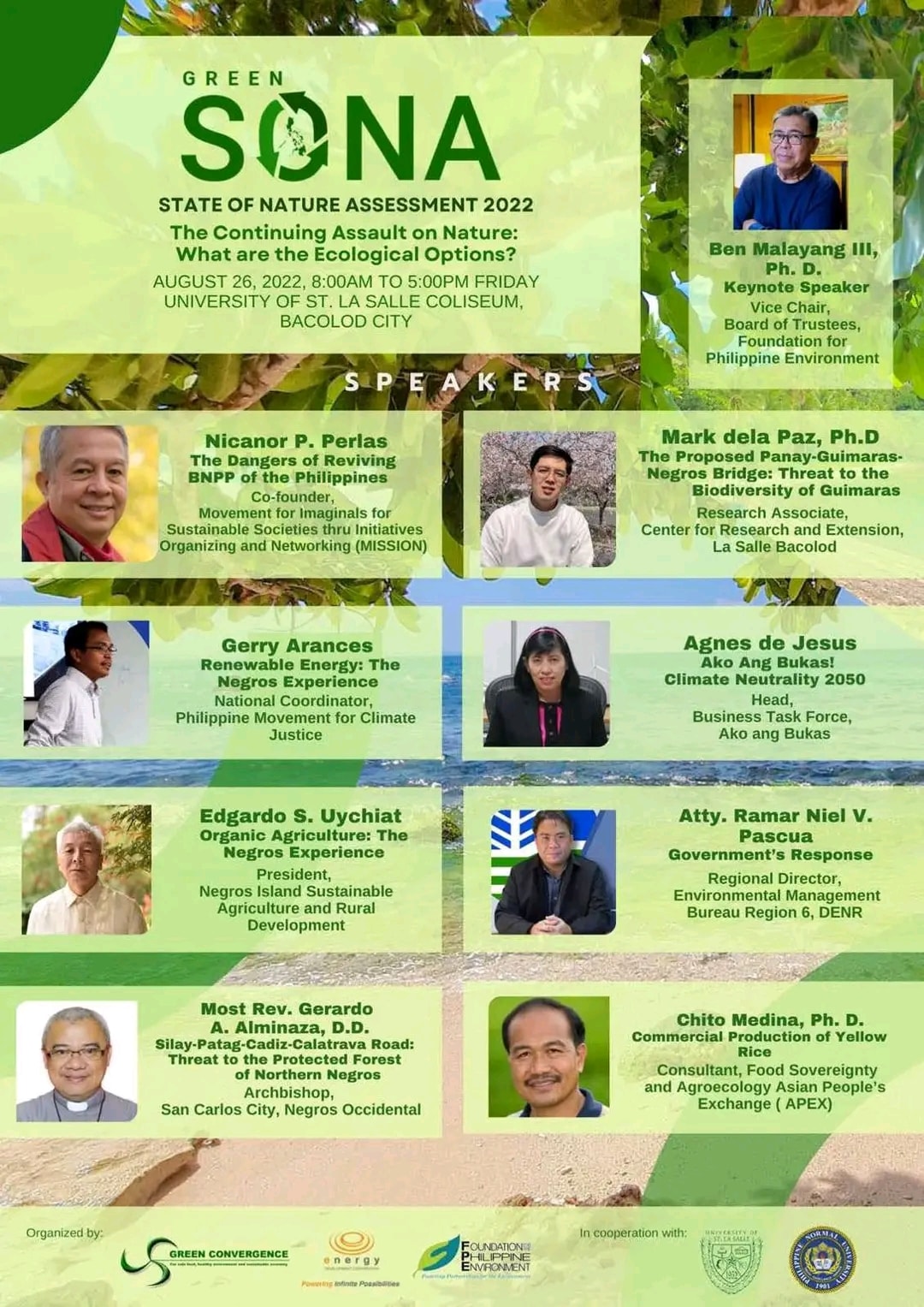
State of Nature Assessment 2022: “The Continuing Assault on Nature: What are the Ecological Options?”

The State of Nature Assessment (Green SONA) is a review of the past year’s developments in the Philippine environment scene.  Green SONA has been held in different parts of the country since 2016, organized by Green Convergence for Safe Food, Healthy Environment, and Sustainable Economy. Its objective is to increase awareness of different national and local environmental issues and awareness that solutions are mutually beneficial at both levels.  

Green SONA 2022 is planned to be held in Bacolod City on August 26, 2022, partnering with the University of St. La Salle Bacolod, Philippine Normal University Visayas, the Social Action Center of the Diocese of Bacolod, among others that will be invited into the partnership.     

Amidst the fears spawned by the global threats of Covid-19 and climate change, the Philippines has had its share of worrying environmental developments in the past year.  Since the Malampaya gas fields will be exhausted in a few years’ time, there are business plans to increase port facilities in Batangas which might greatly impact the Verde Island passageway, the center of marine biodiversity in the world. Moreover, President Duterte signed the executive order which includes the nuclear option in the energy mix for our country. Genetically Modified Yellow Rice was approved for commercial farming. The latter two technologies are precisely rejected by Green Convergence’s Unity Principles. 

Bacolod is a fortuitous choice for Green SONA 2022 because Negros Island is a showcase of alternatives to the above technologies.  Negros is the center of renewable energy and is a leader in organic agriculture in the Philippines. The experience of Negros can greatly influence national policies. 

The Western Visayas Region has its own share of environmental issues, among which are infrastructures that threaten important ecosystems: the Patag-Calatrava Road that runs through the protected forest in Northern Negros, and the proposed Panay-Guimaras-Negros bridge which threatens the critically endangered dolphins in the Iloilo-Guimaras Strait.  Since the biodiversity in other parts of the country is similarly imperiled, a discussion on this will likewise be nationally relevant.   

Further, through Green SONA 2022, we hope to instill commitment at the individual level through the movement Ako ang Bukas which aims for the Philippines to join the global effort to arrive at climate neutrality by 2050.

Official SONA 2022 Proceeding

State of Nature Assessment 2020 Resolutions

STATE OF NATURE ASSESSMENT
Krisis: COVID at Kalikasan
August 21, 2020

RESOLUTIONS

Whereas the Philippines is a country gifted with rich natural resources considered as among the most remarkable in the world and has unique topographies teeming with biodiversity;

Whereas the rich geographical ecosystems of the Philippines provide ecological services to the people and protect them and other life forms from the impact of climate change;

Whereas our country’s characteristic of being mountainous mitigates impacts of stronger typhoons brought about by climate change;

Whereas the world, the Philippines not exempted, is now challenged with COVID-19 pandemic that has claimed lives and drastically affected economy due to the imposition of needed lockdowns and community quarantine to prevent community transmission of the disease;

Whereas the use of disposable protective gadgets such as face masks, face shields, personal protective equipment (PPE) have been mandated as precautionary measures to manage community transmission of COVID-19;

Whereas municipal and medical wastes are increasing due to the disposal of protective gadgets against COVID-19;

Whereas the increasing volume of waste generated, consequently increased disposal fees, thereby diverting hospital budget to address COVID-19;

Whereas healthcare facilities have existing protocols that have been proven effective in the management and disposal of infectious waste way before COVID-19;

Whereas waste collectors, as frontliners, need provision for hazard pay and guaranteed availment of regular employee benefits, considering their work exposure in the disposal of infectious waste;

Whereas talks in Congress have been ongoing to use incineration to address the mounting volume of infectious waste;

Whereas RA 8749 or The Philippine Clean Air Act of 1999 bans incineration due to the emission of dioxin and other toxic substances that pose hazards to health and ecosystems;

Whereas RA 8749 mandates instead the use of non-burn technologies to address infectious waste;

Whereas mining projects that were suspended or cancelled by then Secretary Gina Lopez due to environmental violations or non-compliance with contractual obligations, are now recommended to be re-opened as part of the economic recovery/stimulus program in response to COVID19;

Whereas the impact of mining on the environment and human lives has been proven to be devastating and threatens our geographic ecosystems, biodiversity and watersheds that protect us from the impact of climate change and provide good quality of life for all;

Whereas a better normal must be conceptualized to ensure the health of people, other creatures, and that of our ecosystems, to bring about an ecological sustainable environment for present and future generations to enjoy;


We, the participants of the 2020 State of Nature Assessment with the theme, “Krisis: COVID at Kalikasan” held this August 21, 2020 via Zoom, call on the government to:

CRITICALLY evaluate and RE-THINK the re-activation of mining sites all over the country;

REJECT the idea that mining and river-dredging are stimulus activities for economic recovery amid COVID-19;

BAN open-pit mining as promised by President Duterte since 2016;

ENACT the Green Bills pending in Congress including new laws on Minerals Management, Sustainable Forest, National Land Use, Indigenous Conservation Areas, Freedom of Information and Defending Human Rights Defenders;

STOP any plan to legalize the use of incineration;

PROMOTE instead zero waste lifestyle;

BAN single-use plastics and OPT for reusable and washable PPEs;

ENFORCE the ban on incineration found in Section 20 of RA 8749 or Philippine Clean Air Act of 1999 and instead MANDATE the use of non-burn technologies to address and manage infectious waste;

CREATE a comprehensive database on best practices in treating special wastes with the use of non-burn technologies;

EMPOWER and ASSIST the health care industry and people to practice and promote ecological solid waste management through strict compliance of segregation at source, and environmentally-friendly management of infectious waste;

MANDATE hazard pay and regular employee benefits (SSS, Philhealth, Pag-ibig) to waste collectors of infectious waste;

PROVIDE people-centered, environment-friendly and country-based programs and solutions to address COVID-19;

For our part as members of civil society, we resolve to:

ENSURE that natural environment is not compromised and human lives not endangered;

SUPPORT local government units that oppose mining;

OPPOSE the implementation of environmentally destructive projects such as the use of incineration and continued operations of large-scale mining, and other environmentally destructive projects;

LOBBY for the government to adopt an ecological paradigm in conceptualizing a  “Better  Normal” plan to ensure that similar occurrences of this pandemic are avoided or managed properly ensuring no additional health hazards to people and the environment;

PROMOTE Laudato Si as blue print for moving forward to a better normal;

RAISE AWARENESS among the people especially the youth, for them to become champions of ecological sustainable development;

PROMOTE behavioral change and create a culture that promotes care for the environment;

UNITE to protect the environment and SYNERGIZE our actions that are socially inclusive, economically sustainable, and environmentally beneficial; and lastly,

AFFIRM God’s gift of life and UPHOLD the integrity of creation.

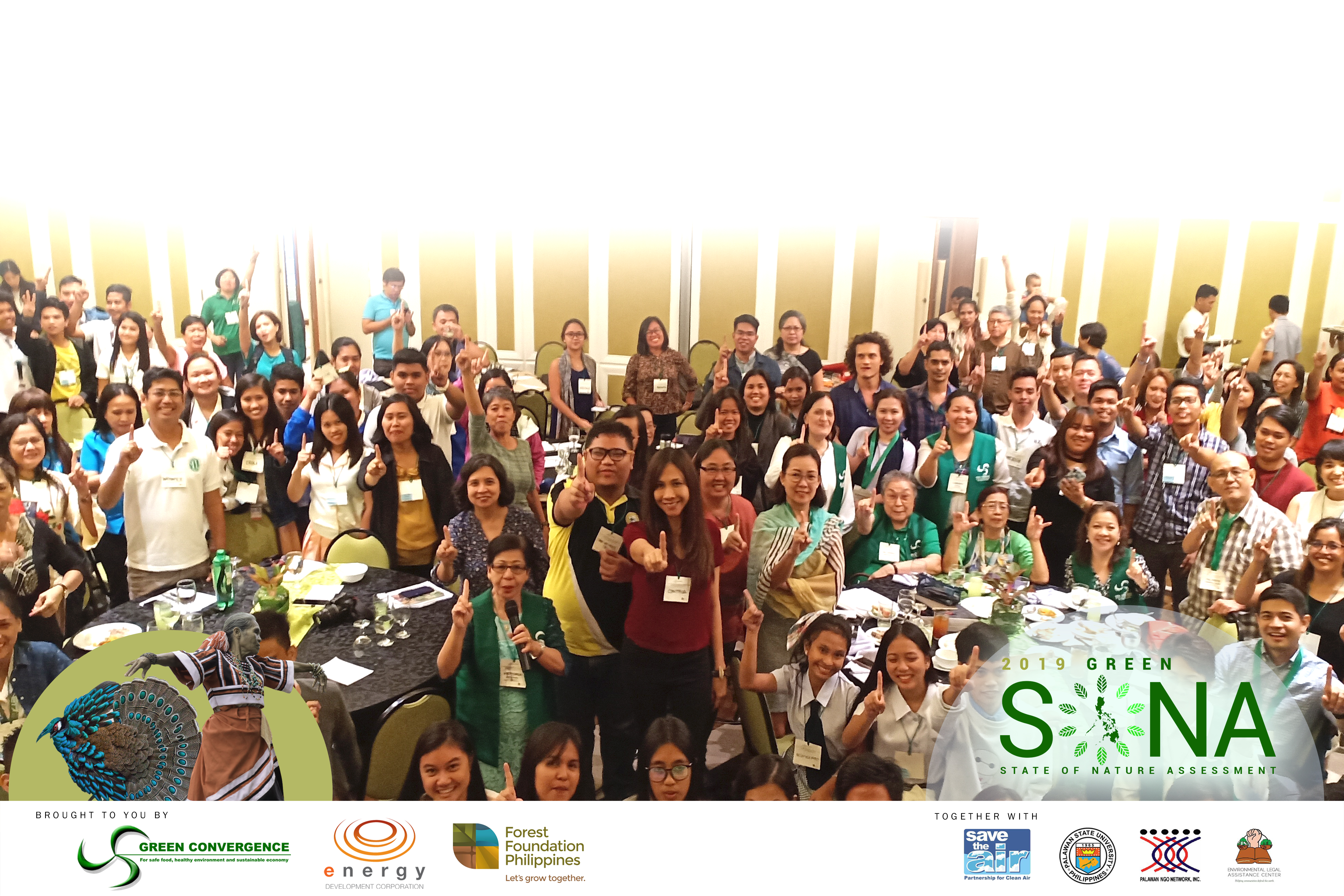
Philippine environmental defenders converged in 2019 Green SONA

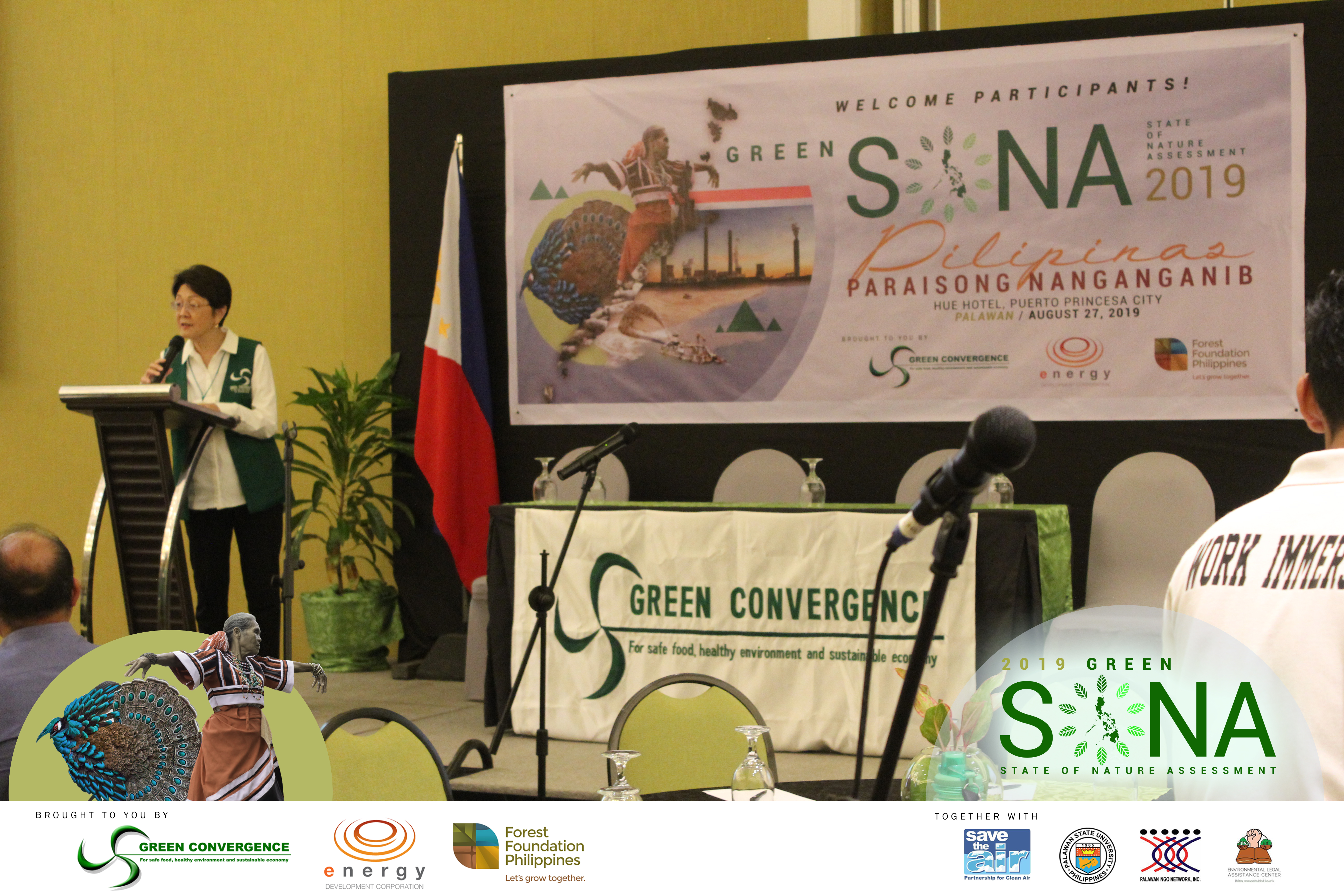
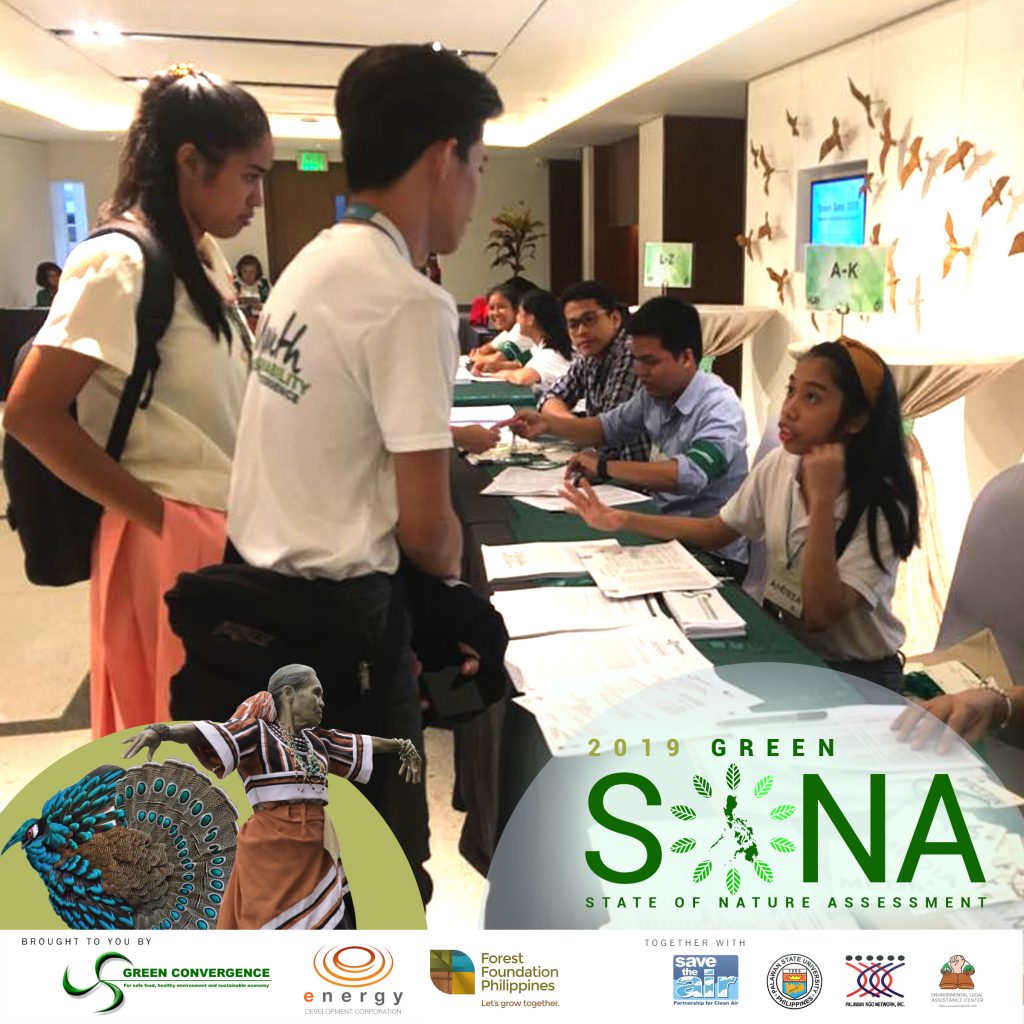
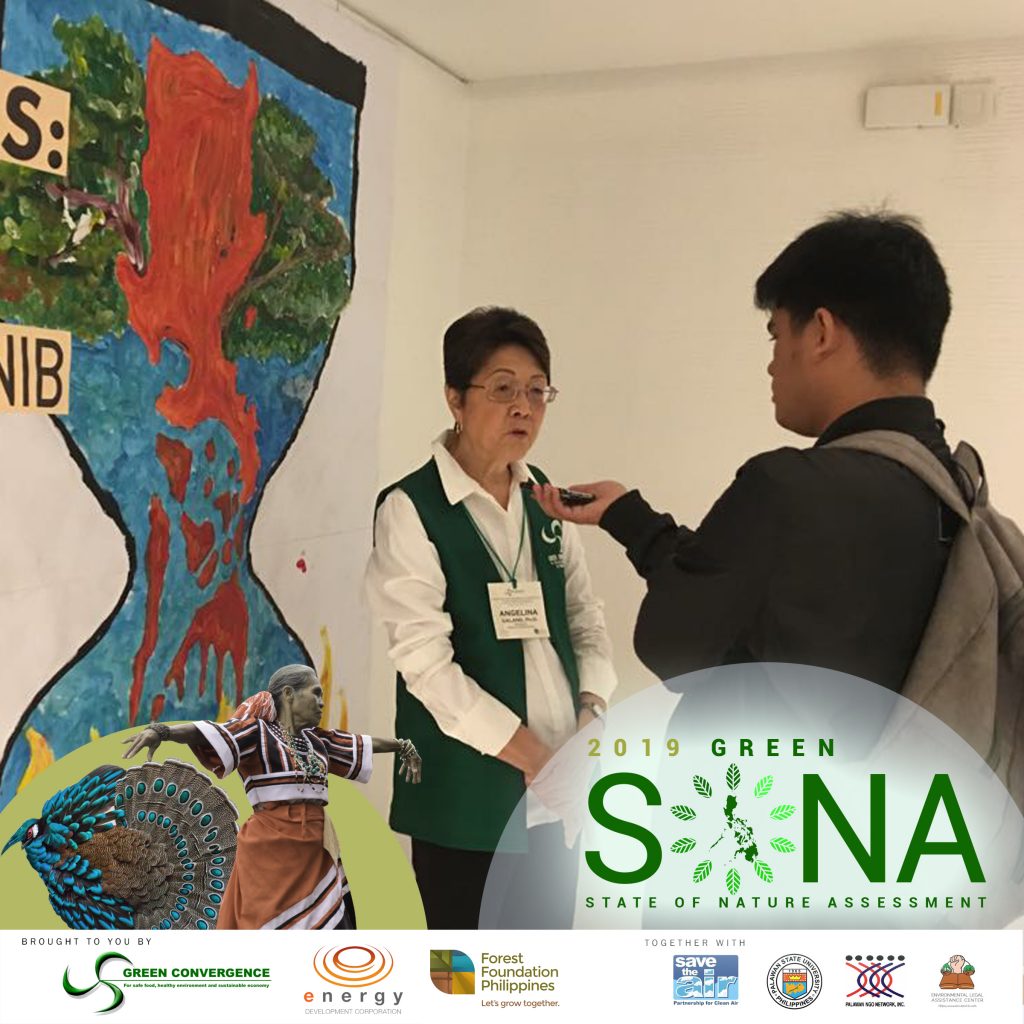
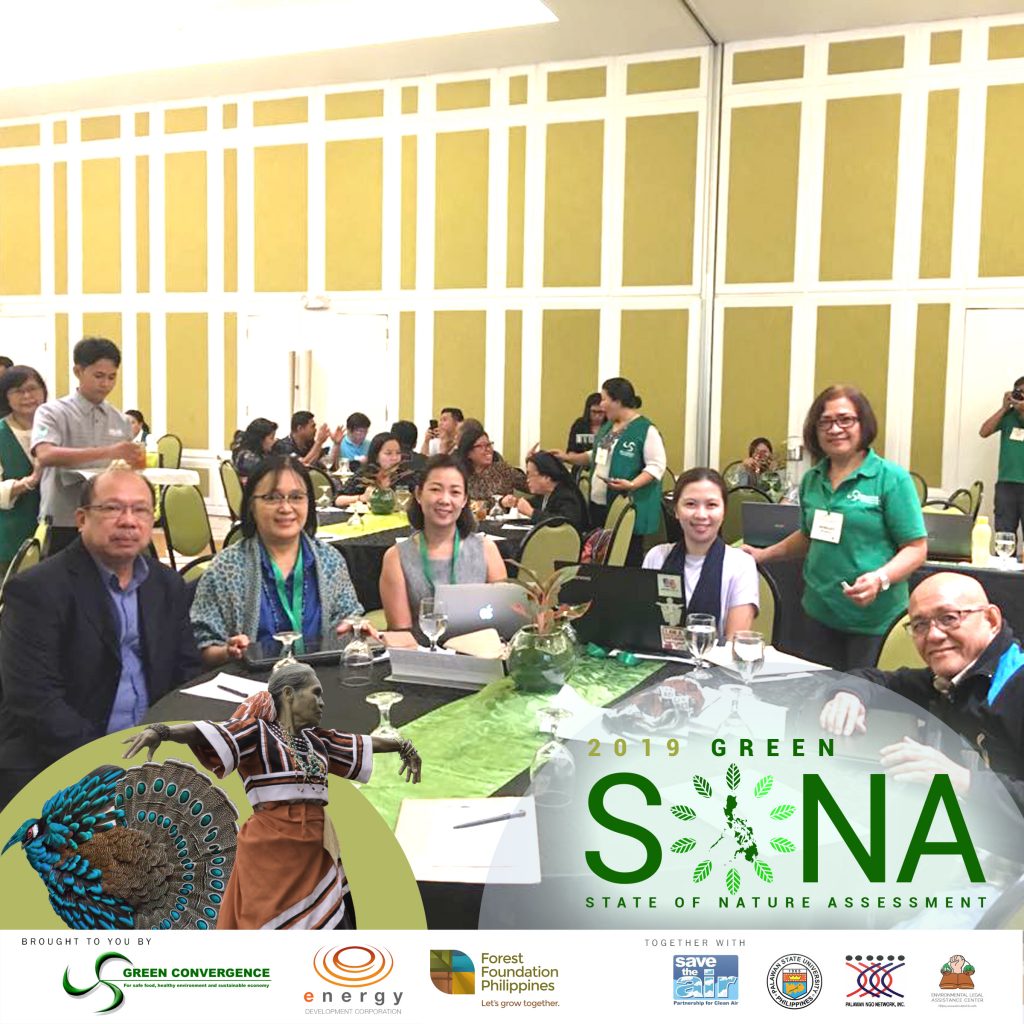
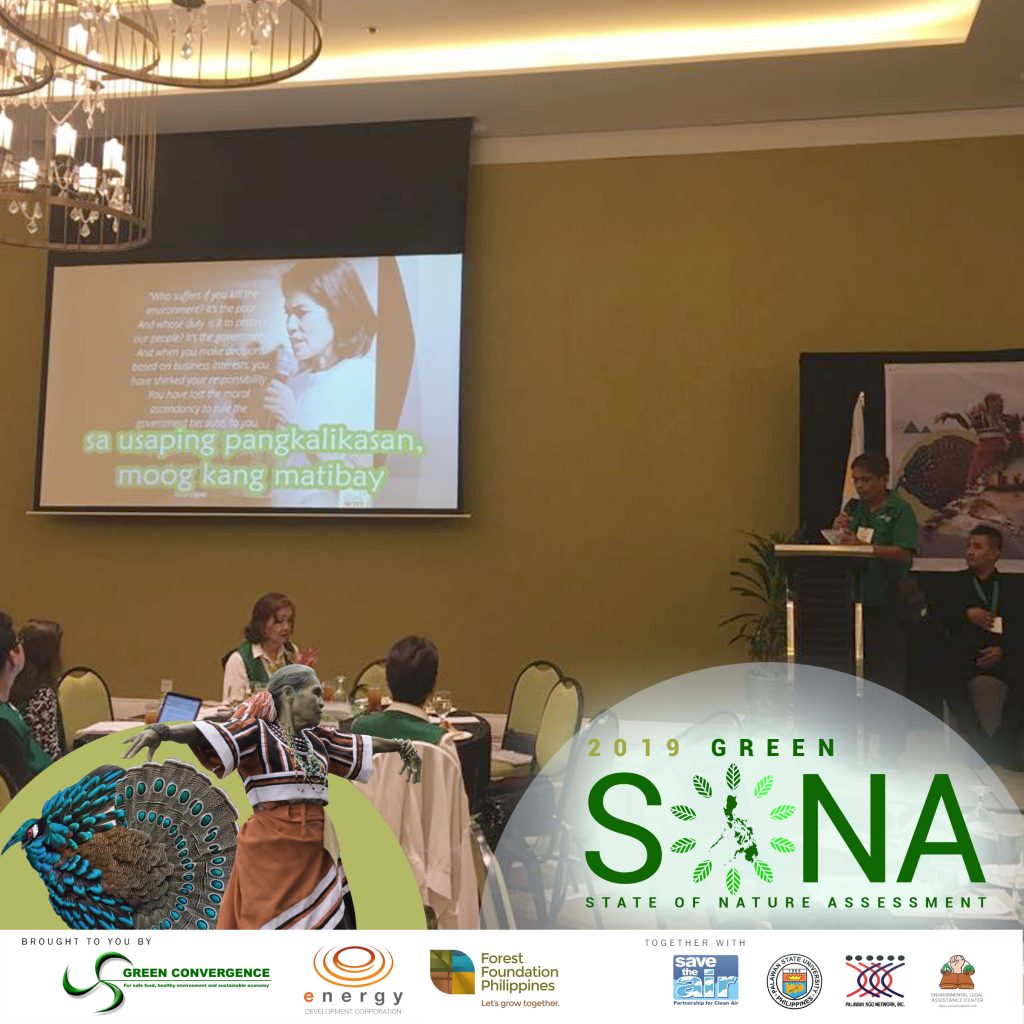
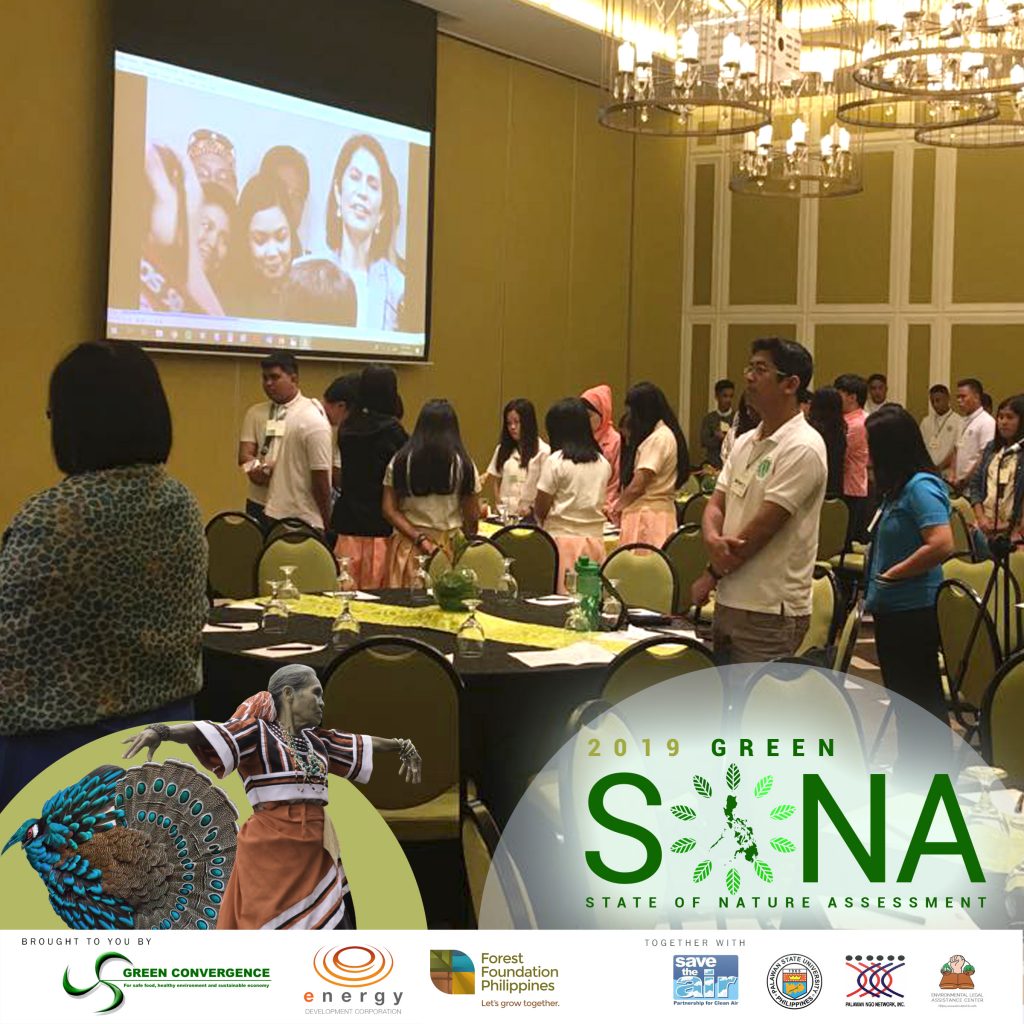
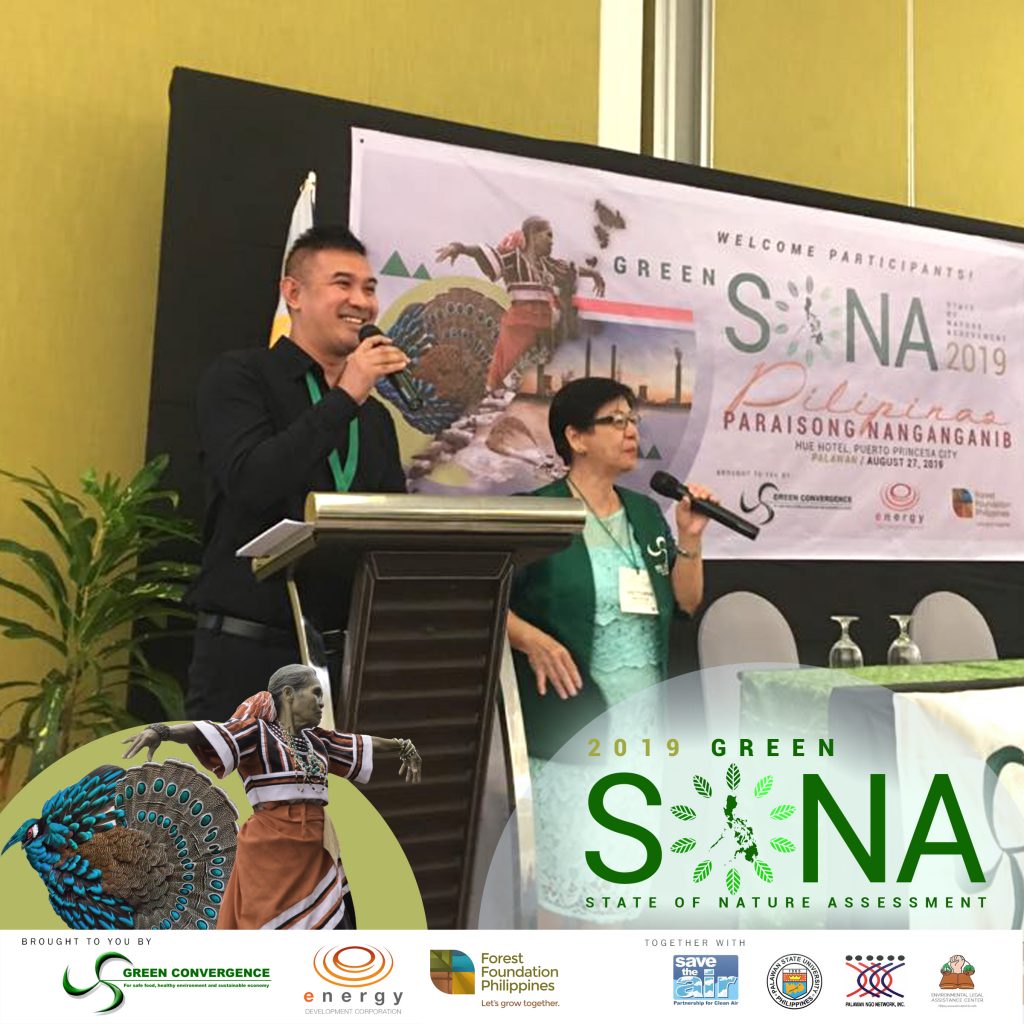
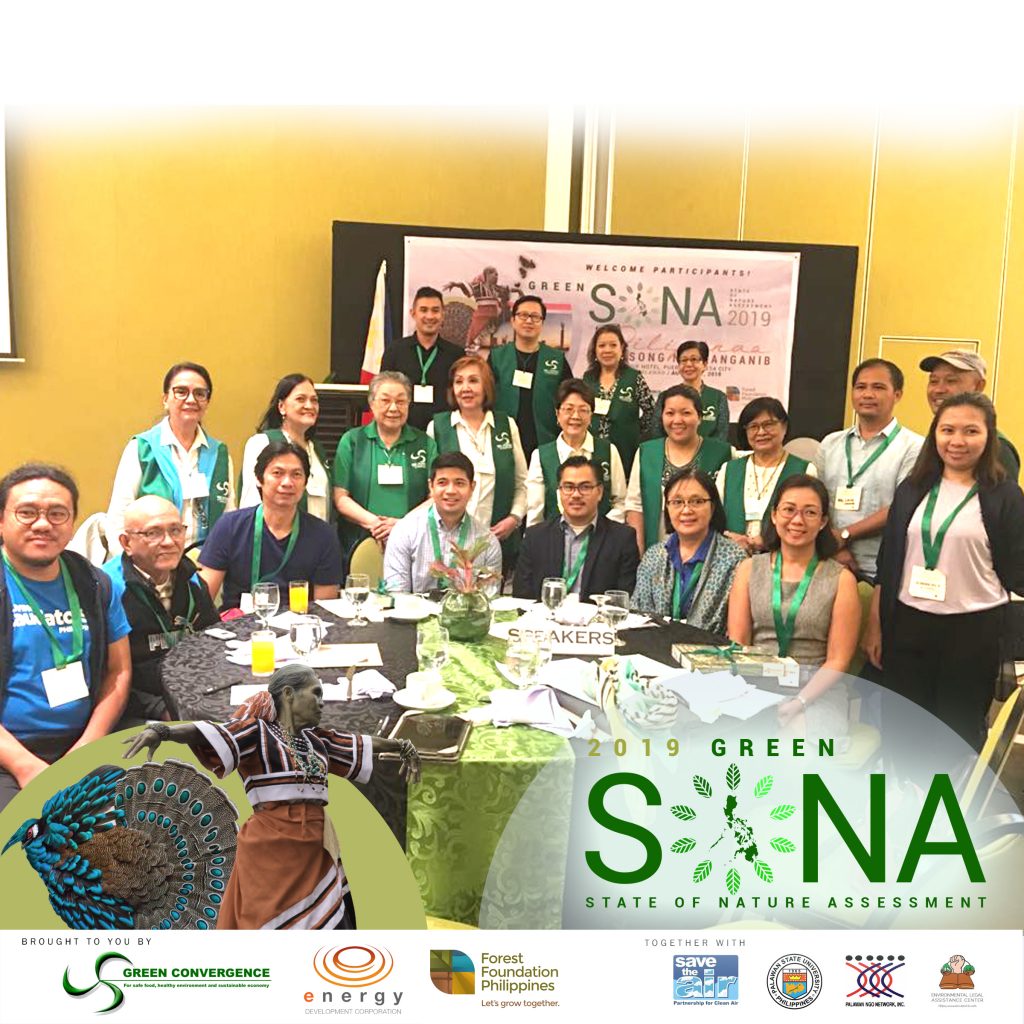
Green Convergence together with the Energy Development Corporation (EDC) and the Forest Foundation Philippines, and with the support of Partnership for Clean Air, Palawan State University, Palawan NGO Network, Inc. (PNNI), and the Environmental Legal Assistance Center (ELAC) held the 2019 State of Nature Assessment (#GreenSONA): Pilipinas, #ParaisongNanganganib at the Hue Hotel, Puerto Princesa City on August 27, 2019. An environmental tour in three learning sites in Puerto Princesa City, namely, Bacungan Mangrove River, Puerto Princesa City Landfill, and PNNI Office was conducted after the event on August 28, 2019.

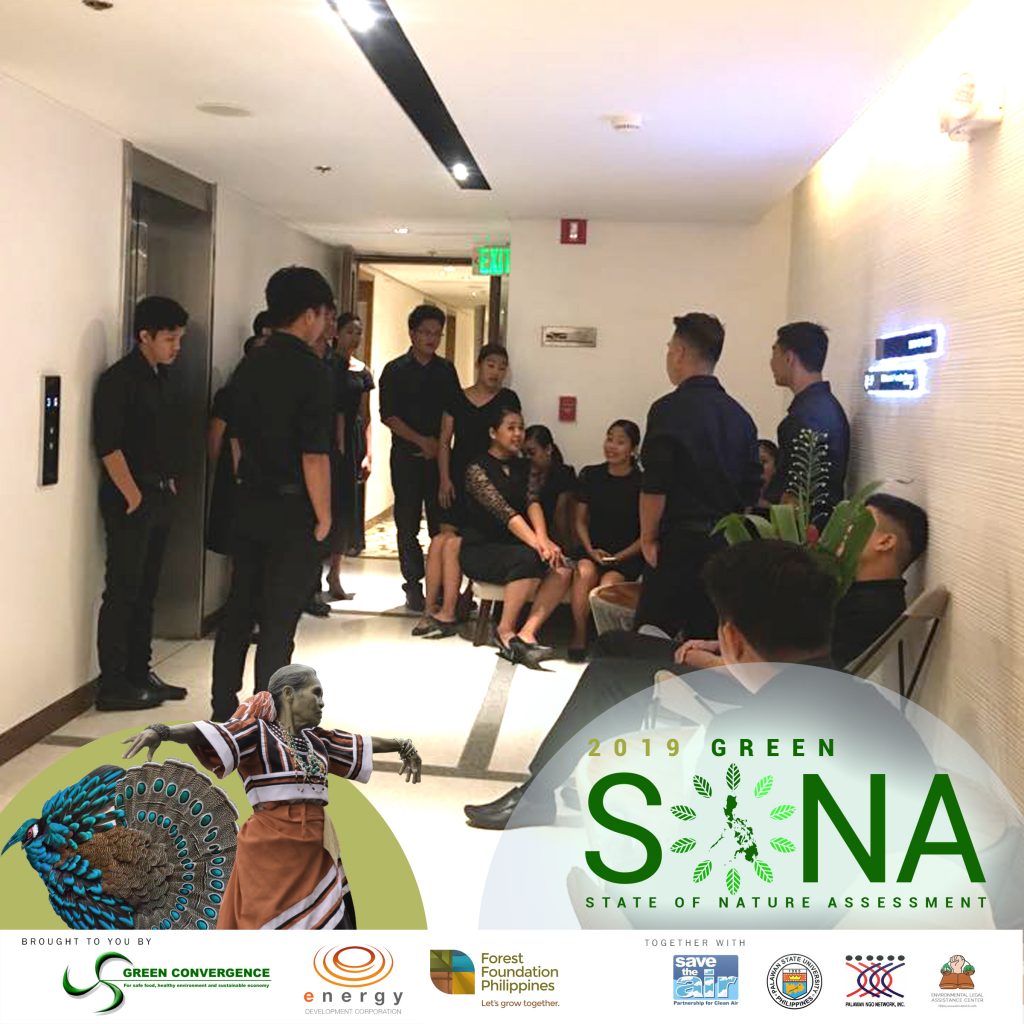
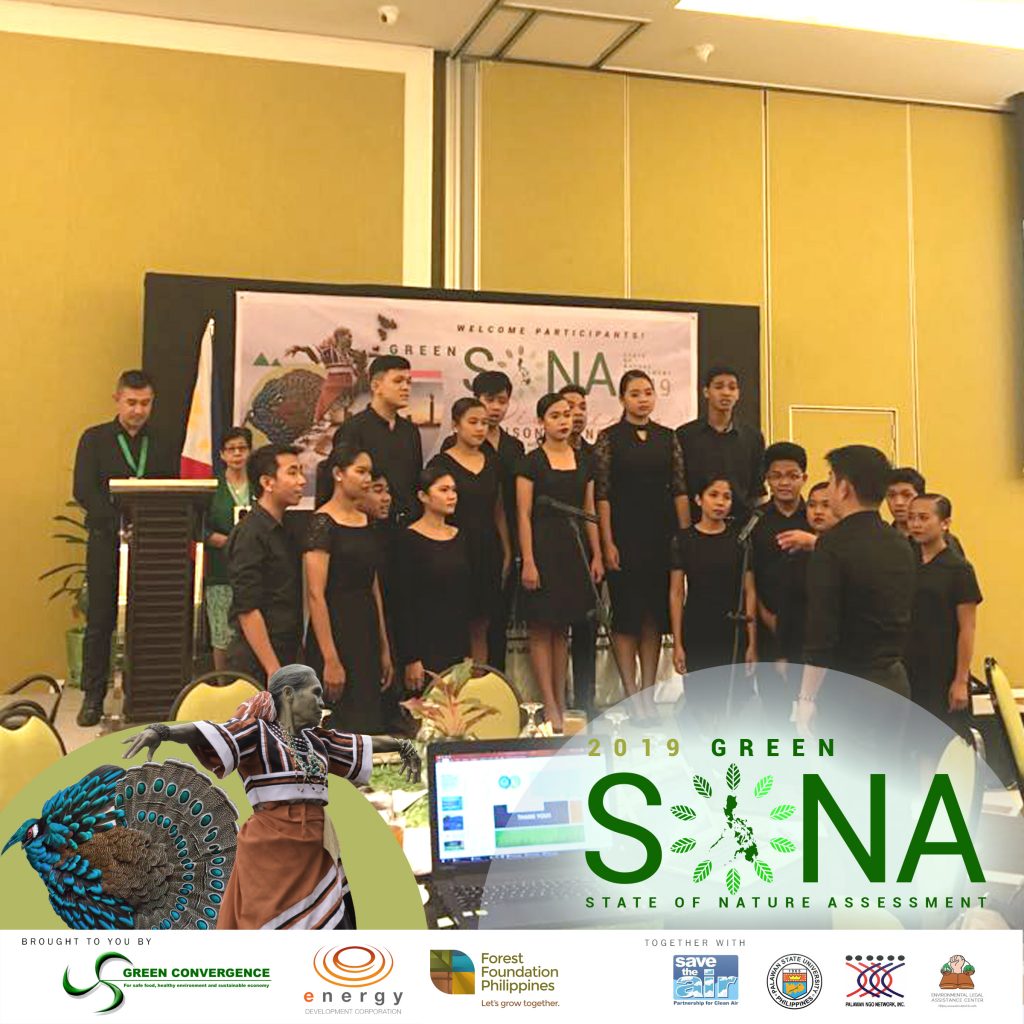
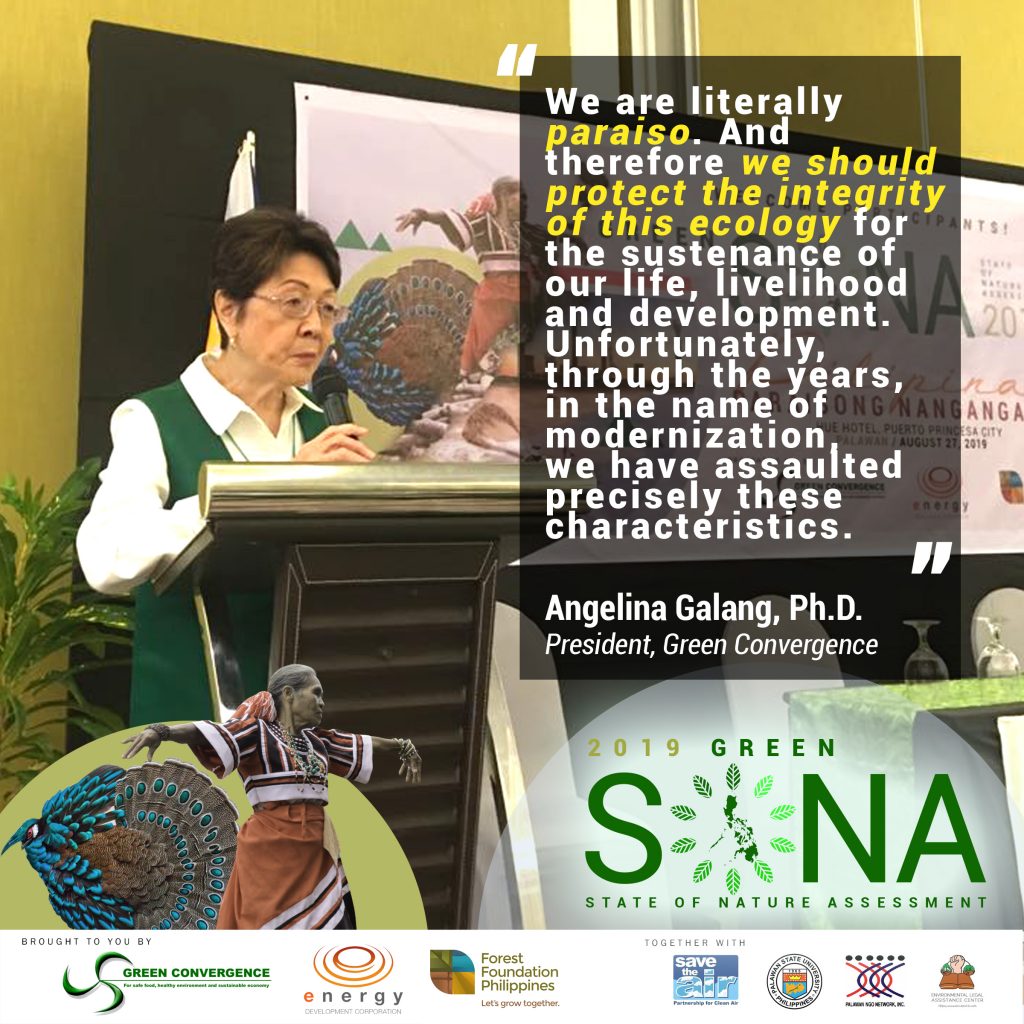
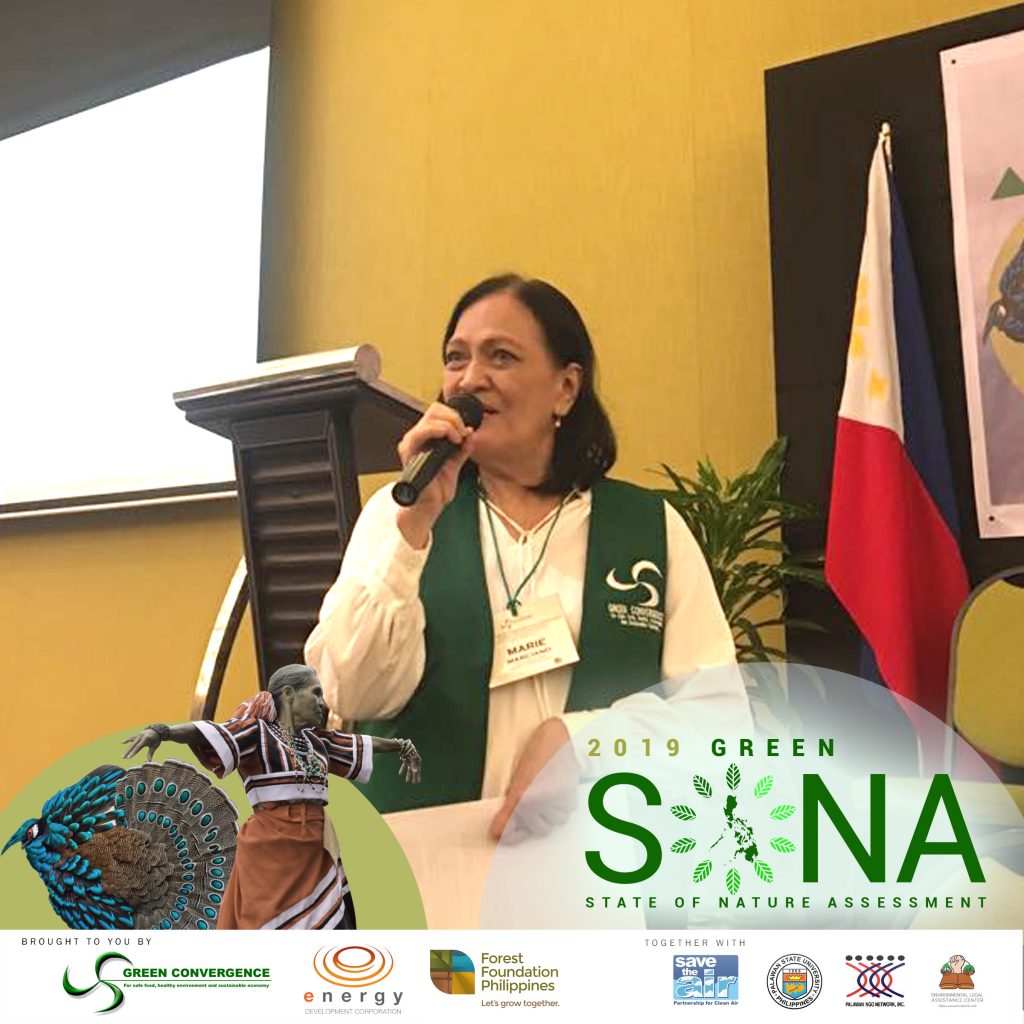
The Green SONA commenced with the National Anthem and Invocation led by singers from the Palawan State University. An opening number featuring songs in Cuyonon and Filipino languages were also performed by the group. Their performances were shortly followed by an orientation to the Green SONA by Green Convergence President Angelina P. Galang, Ph.D. In her message, she emphasized that “We are literally paraiso. And therefore we should protect the integrity of this ecology for the sustenance of our life, livelihood and development. Unfortunately, through the years, in the name of modernization, we have assaulted precisely these characteristics.”

Green Convergence President Angelina P. Galang, Ph.D. orients everyone about what the annual State of Nature Assessment or Green SONA is all about.


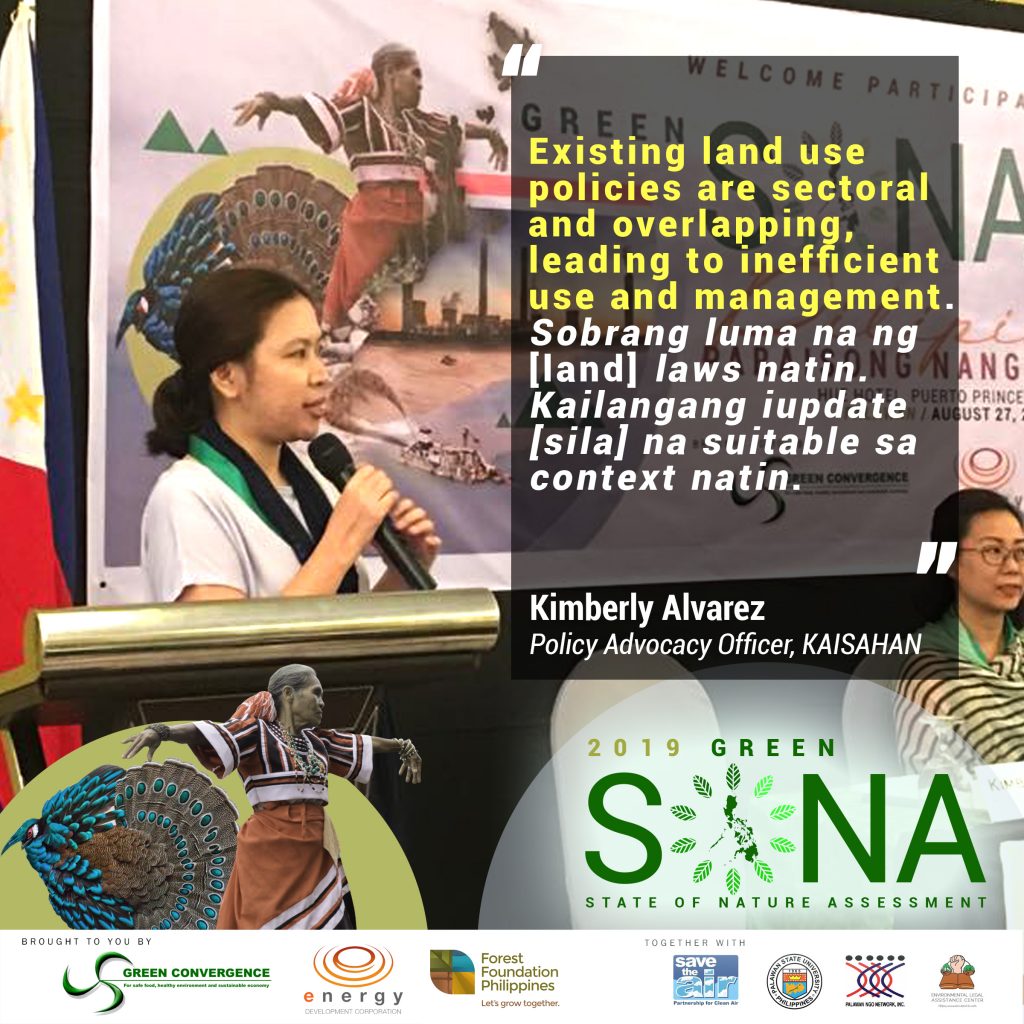
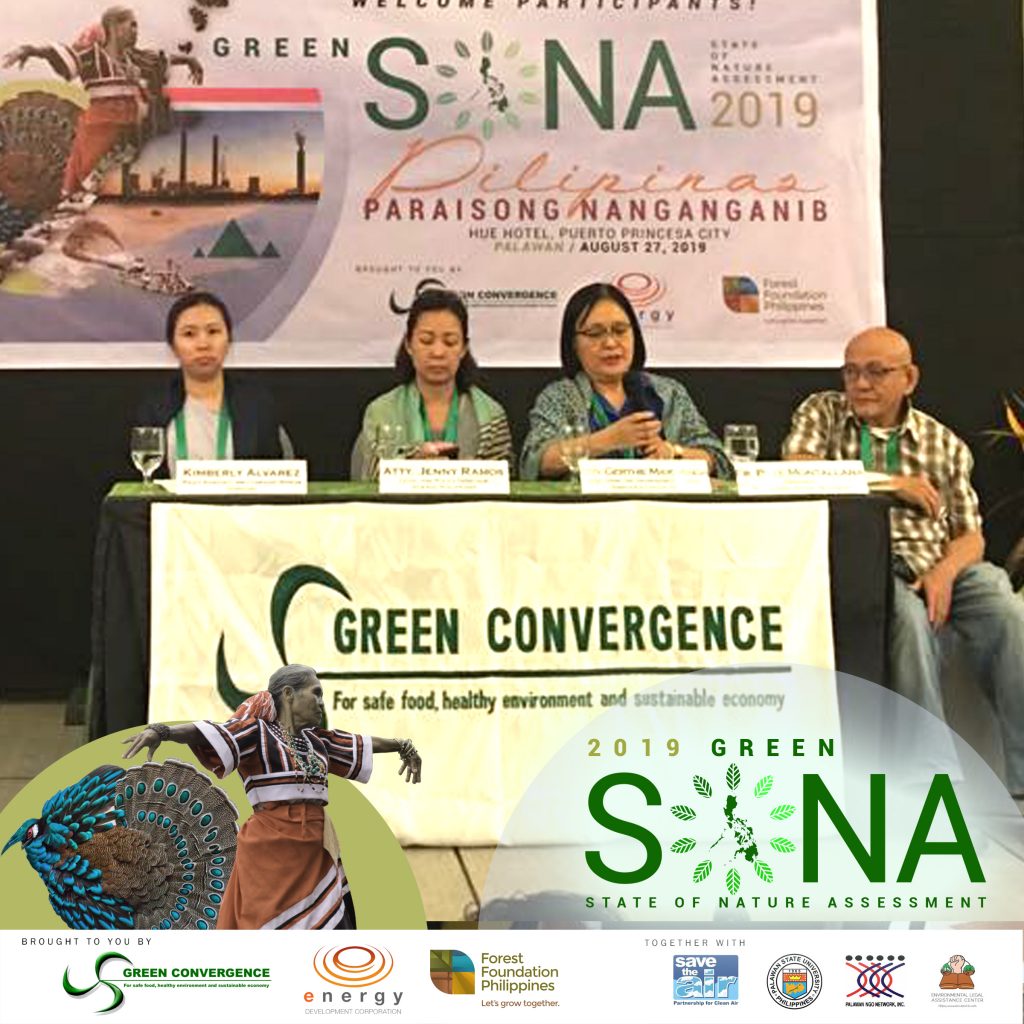
The first part of the annual assessment of the national environment dealt with its threats. Kimberly Alvarez, Policy Advocacy Officer of Kaisahan tungo sa Kaunlaran ng Kanayunan at Repormang Pansakahan or Solidarity Towards Countryside Development and Agrarian Reform (also known as Kaisahan) discussed the negative implications brought about by the lack of land use policy in the country. She mentioned, “Existing land use policies are sectoral and overlapping, leading to inefficient use and management. Sobrang luma na ng [land] laws natin. Kailangang iupdate [sila] na suitable sa context natin.”

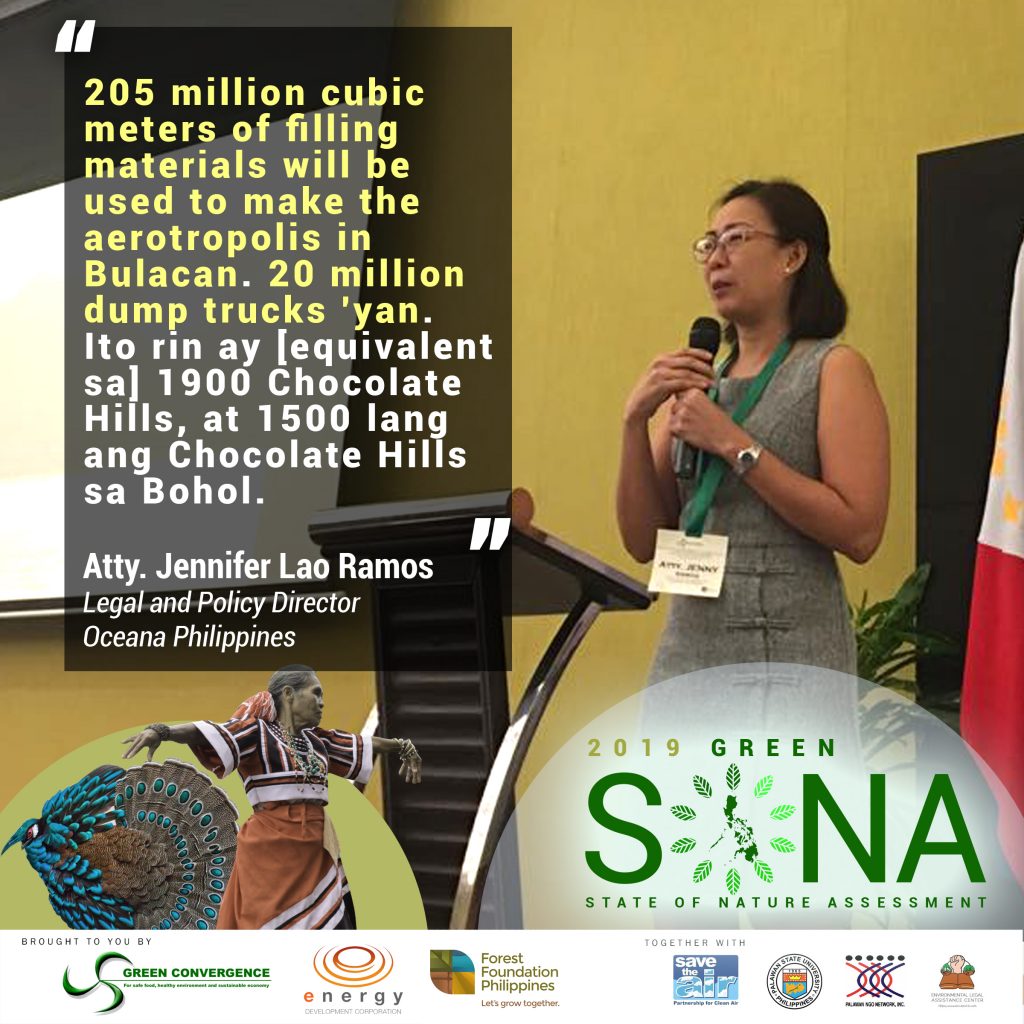
Alavarez’ report was followed by Atty. Jennifer Lao Ramos’ presentation on the impacts of reclamation activities to marine biodiversity. She stressed that reclamation should not be the operative word used for the activity, and it must be “dump and fill.” She cited the planned aerotropolis in Bulacan as an example, “205 million cubic meters of filling materials will be used to make the aerotropolis in Bulacan. 20 million dump trucks ‘yan. Ito rin ay [equivalent sa] 1900 Chocolate Hills, at 1500 lang ang Chocolate Hills sa Bohol.”

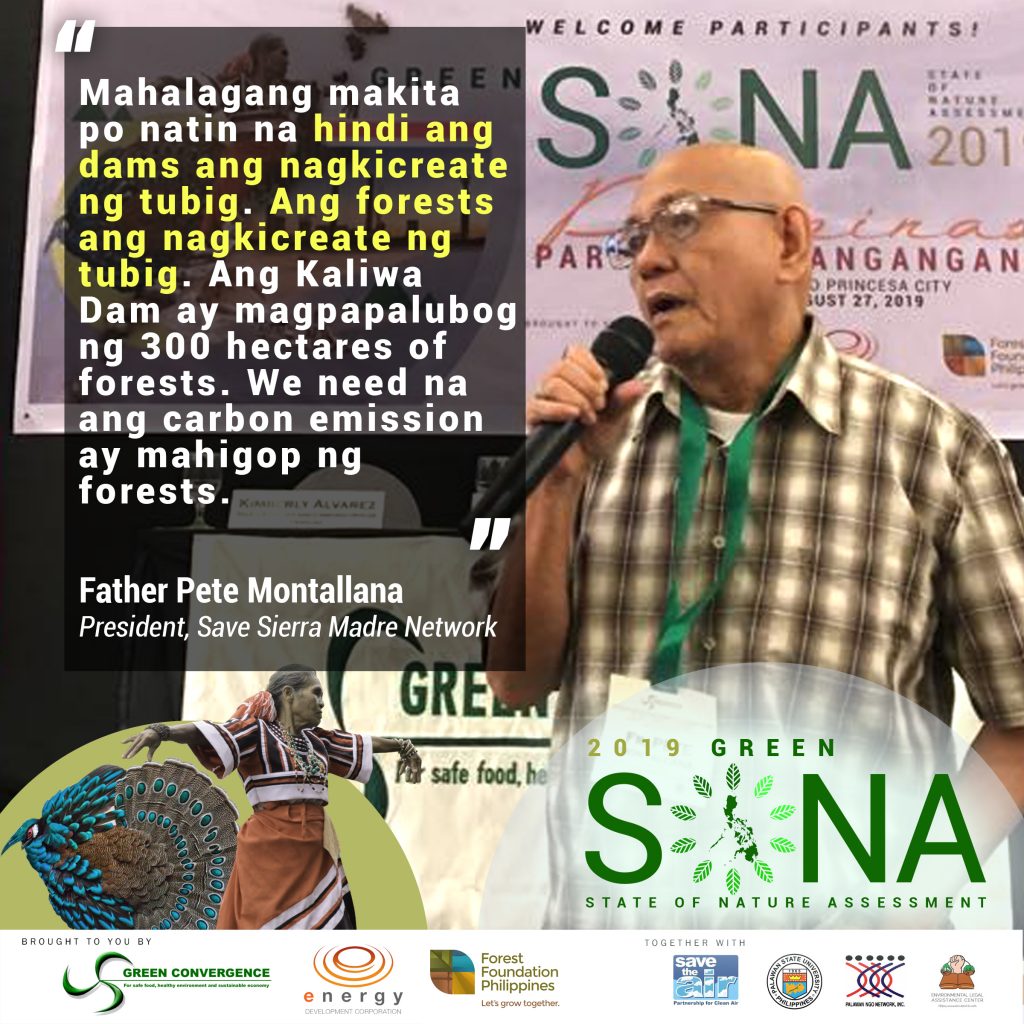
Father Pete Montallana, Executive Director of Save Sierra Madre Network, on the other hand, was the one to talk about the dangers with large dams, with focus on the controversial Kaliwa Dam to be built in the Sierra Madre Mountain Range region. He reminded the audience that, “Mahalagang makita po natin na hindi ang dams ang nagkicreate ng tubig. Ang forests ang nagkicreate ng tubig. Ang Kaliwa Dam ay magpapalubog ng 300 hectares of forests. We need na ang carbon emission ay mahigop ng forests.

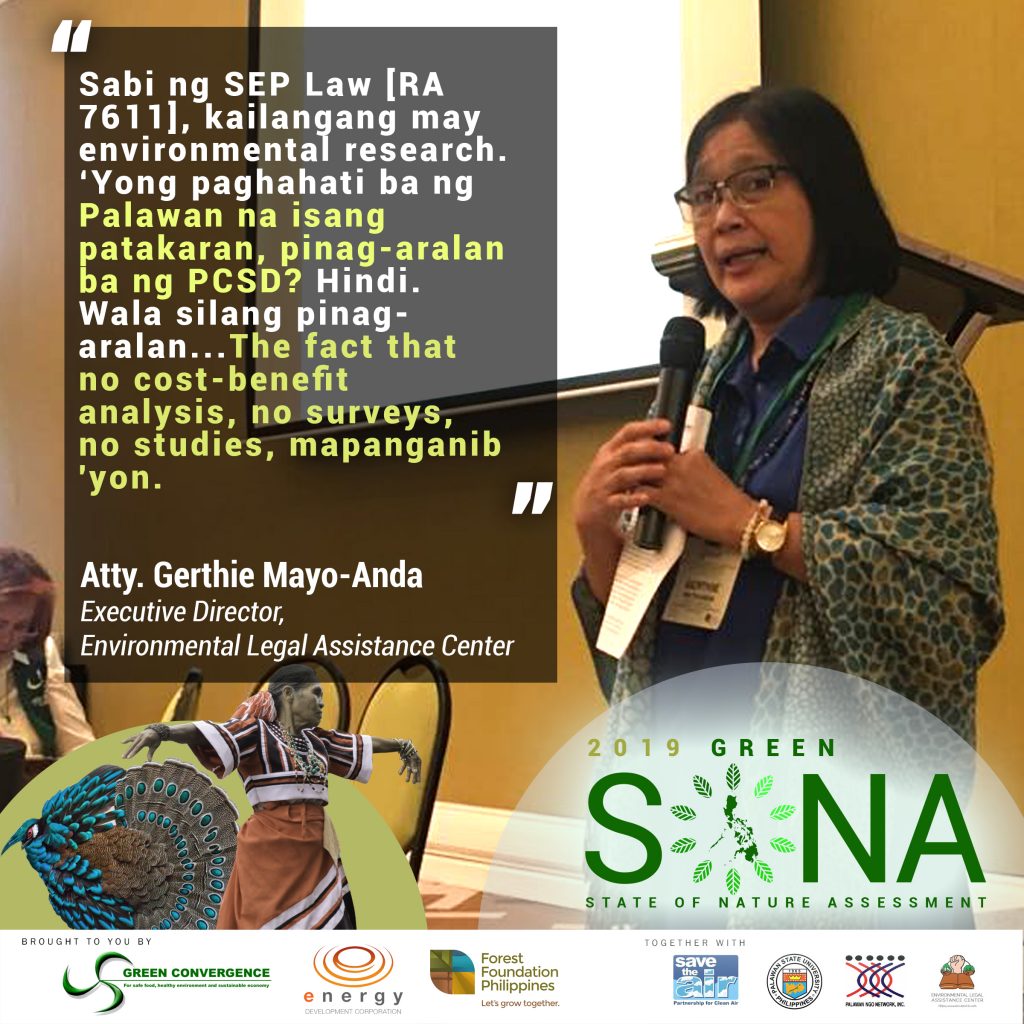
The session then moved to talk about an important local issue in Palawan that can affect the environment in a national scale. Atty. Gerthie Mayo-Anda, Executive Director of the Environmental Legal Assistance Center on the division of Palawan into three separate provinces emphasized, “Sabi ng SEP Law [Strategic Environment Plan for Palawan o RA 7611], kailangang may environmental research. ‘Yong paghahati ba ng Palawan na isang patakaran, pinag-aralan ba ng PCSD [o Palawan Council for Sustainable Development]? Hindi. Wala silang pinag-aralan…The fact that no cost-benefit analysis, no surveys, no studies, mapanganib ‘yon.” She further exclaimed that the division will turn Palawan into a lost ecological frontier.

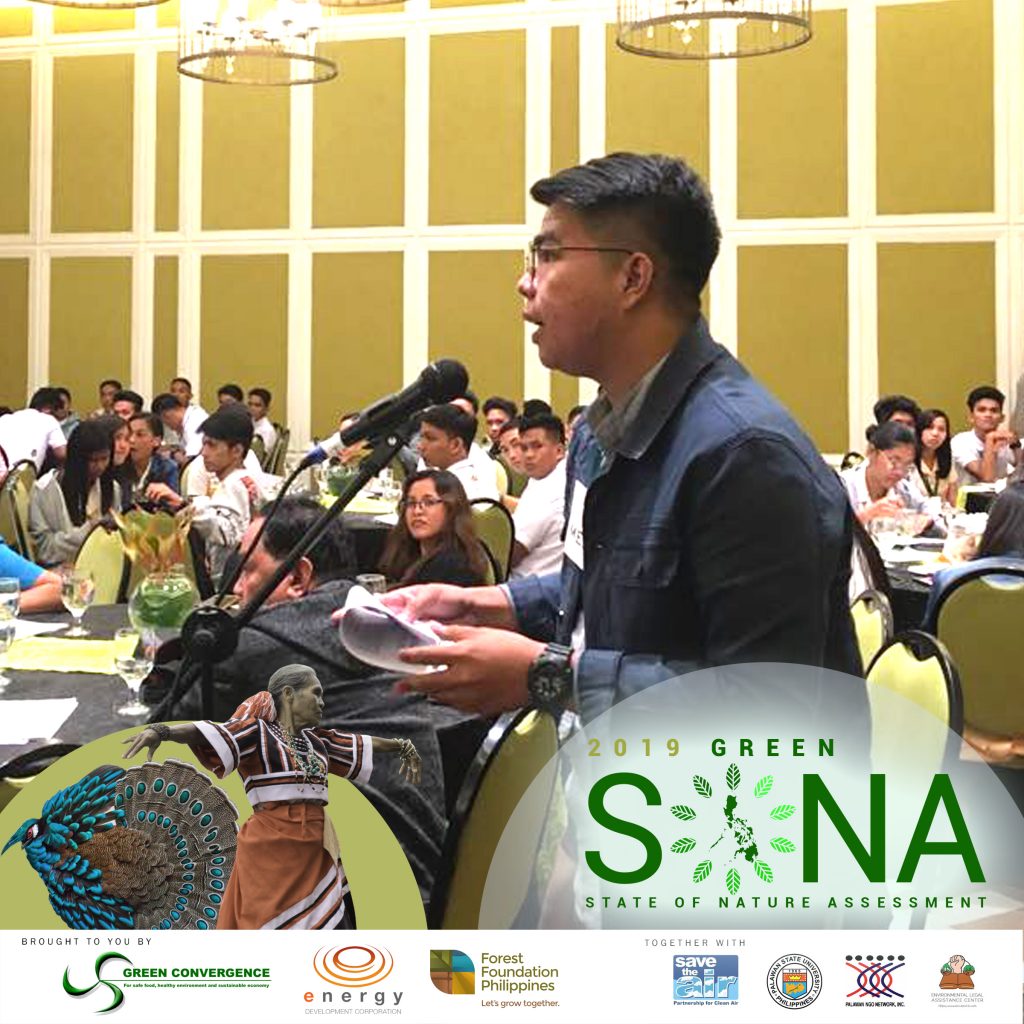
An open forum was held after the first four speakers delivered their talks.

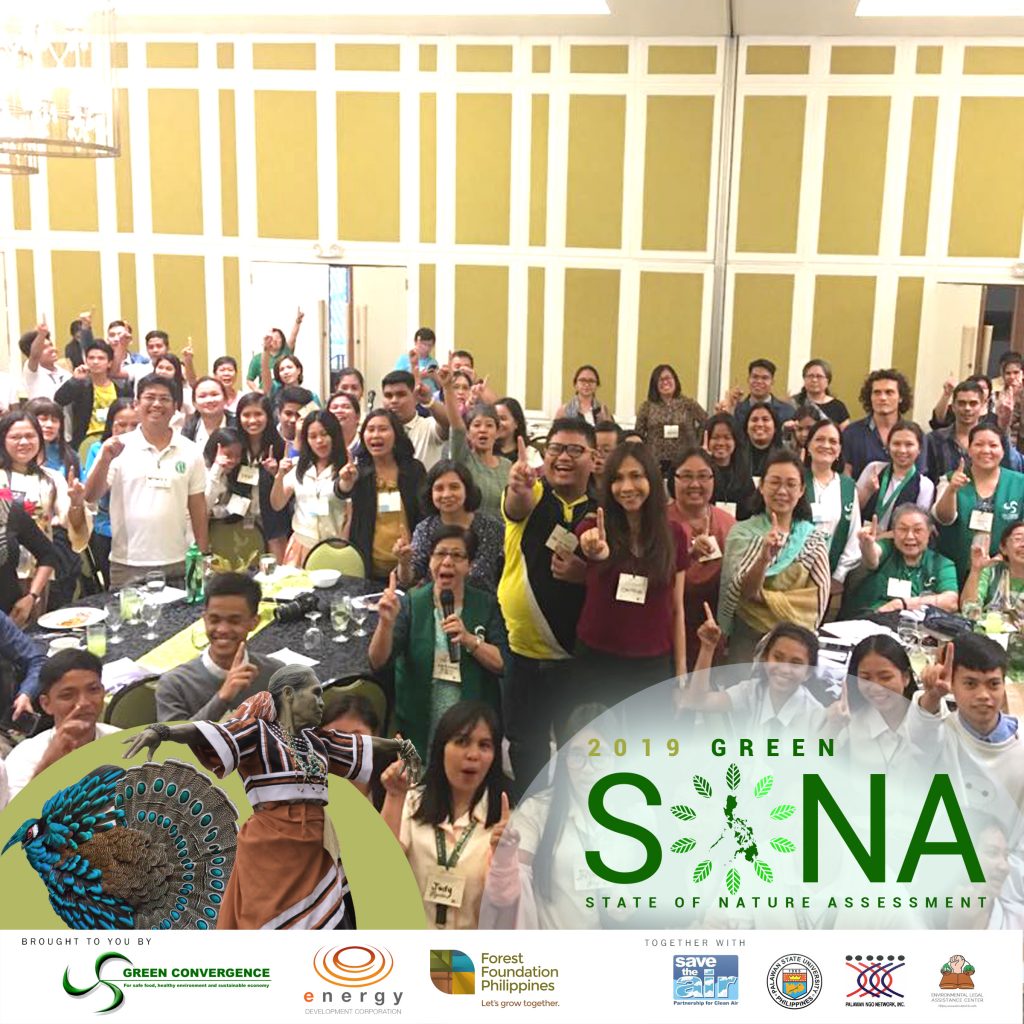
Participants of Green SONA 2019 shout, “One Palawan!” in support of the ongoing campaign of the province’s environmental defenders to protect the nationally significant ecosystem of Palawan from greedy political ambitions of some.


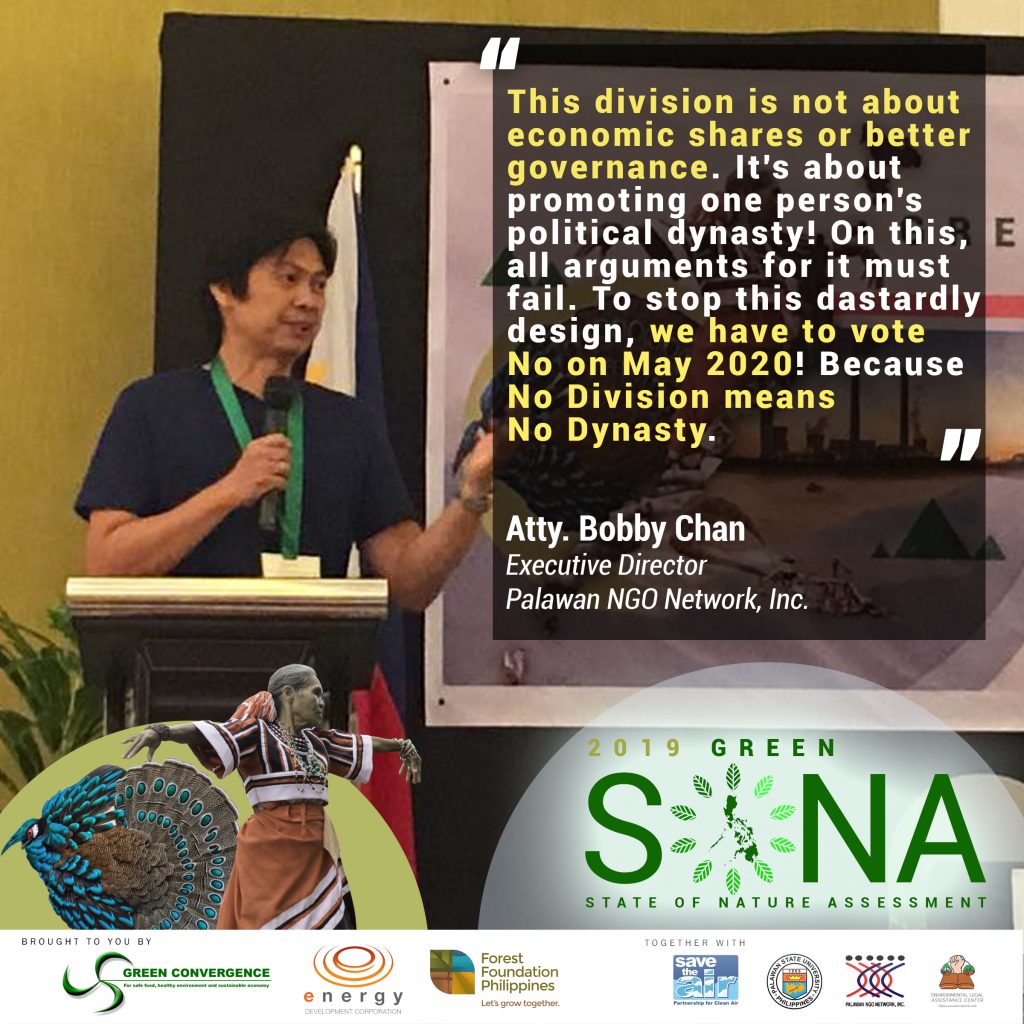
For the second part of the assessment, the environmentalists then evaluated the status of government programs related to the environment. Prominent Executive Director of PNNI, Atty. Bobby Chan was tasked to talk on the status of the enforcement of the Expanded National Green Program and Forest Laws in the Philippines. He reminded the participants that any policy will not be successful if the personal interests of a few overwhelm the interests of the public. He connected his presentation with the division of Palawan and said, “This division is not about economic shares or better governance. It’s about promoting one person’s political dynasty! On this, all arguments for it must fail. To stop this dastardly design, we have to vote no on May 2020! Because no division means no dynasty.”

Energy Development Corporation’s Assistant Vice President Miko de Vera shared the advocacy of his company to promote renewable sources for the country’s energy needs. Unfortunately, many barriers have to be overcome. He pointed out that, “The good news is, in many parts of the world, coal plants are being shut down. The bad news is, in the Philippines, we’re going for the opposite direction.”

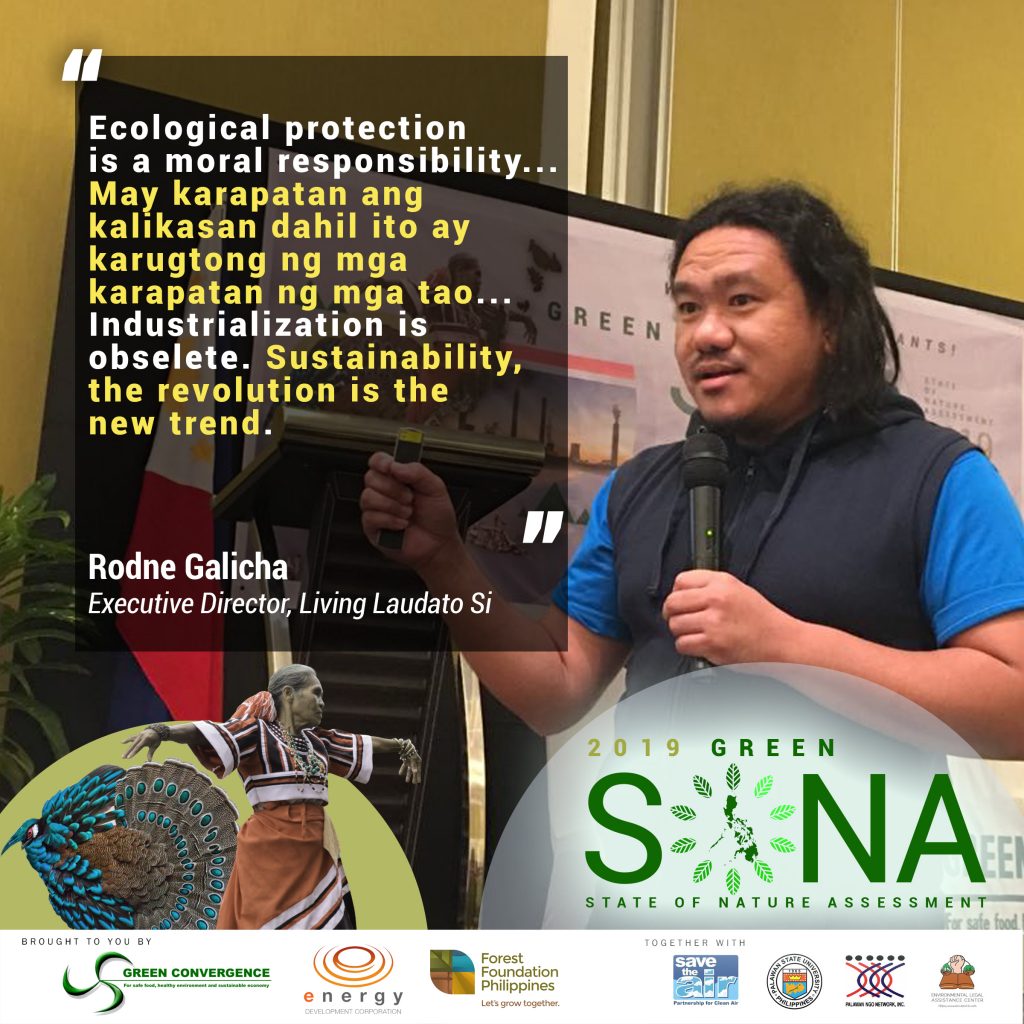
Finally, for the last report on the state of the Philippine environment, Living Laudato Si Executive Director Rodne Galicha encouraged the audience that should divest from companies and institutions that contribute to the further destruction of the environment. He noted that, “Ecological protection is a moral responsibility…May karapatan ang kalikasan dahil ito ay karugtong ng mga karapatan ng mga tao…Industrialization is obselete. Sustainability, the revolution is the new trend.”

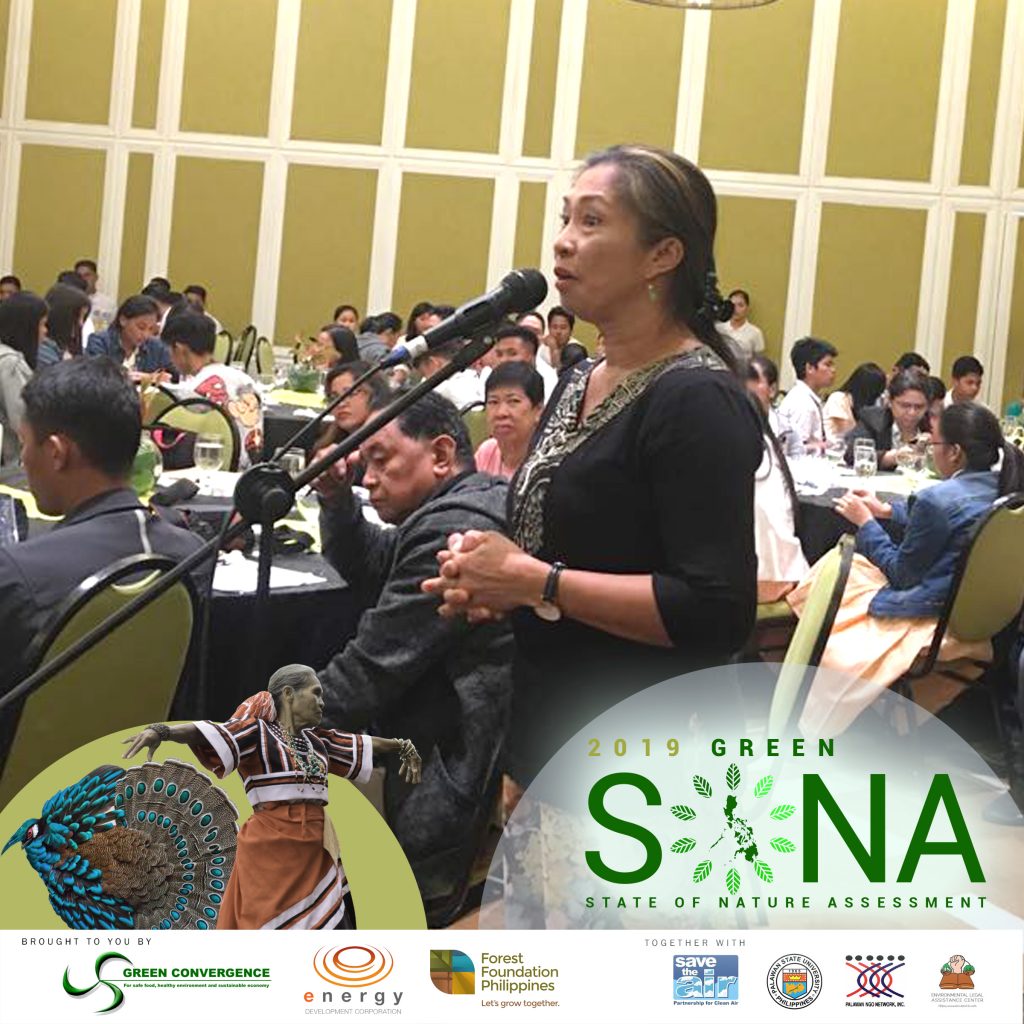
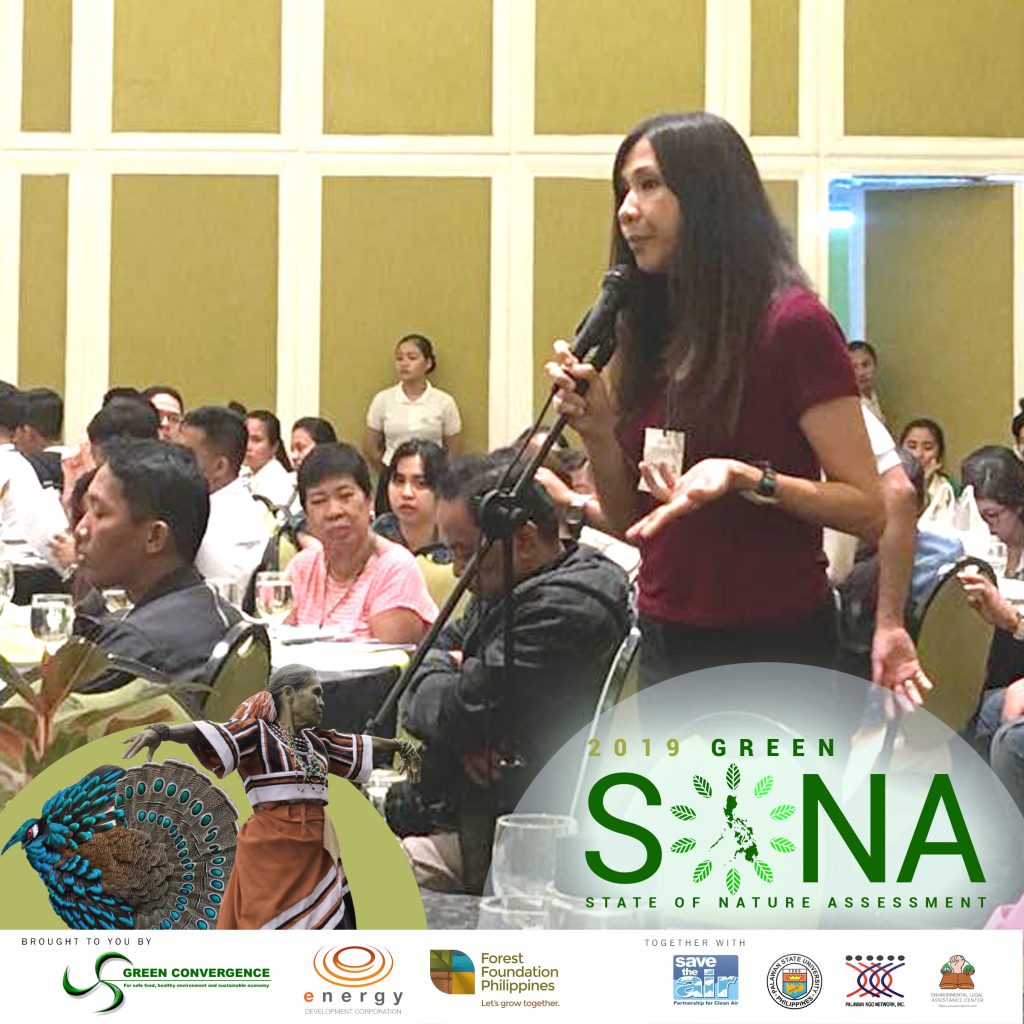
Similar to the first part of the assessment, an open forum followed the speeches of the speakers. After this, Department of Environment and Natural Resources (DENR) MIMAROPA Regional Executive Director Henry Adornado, Ph.D. was asked to react to the reports and assessments delivered by the speakers, as well as the questions raised by the members of the audience. He assured everyone that, “In every management plan that we do, we [will] ensure that NGOs are invited.”

Upon the presentation of Imelda Sarmiento, Green Convergence Philippine Native Trees Program Head, of the Children’s Book Project featuring the Philippine native trees, Green Convergence Vice President delivered the resolutions of the annual Green SONA. It was immediately followed by a closing message by Atty. Louie Cascara, Legal Counsel of Palawan State University who spoke in behalf of the University President Ramon Docto, Ph.D

Green SONA 2019 was hosted by Victoria Segovia, a member of the Board of Trustees of Green Convergence, and Cris Ecaldre, a Faculty member at the Palawan State University. Green SONA is an annual gathering of the members of civil society organizations, the academe, the Church, the media, the indigenous communities, and other sectors to assess the state of the Philippine environment.

You must be logged in to view this content. Free Virtual Library Registration Here

Environmental groups renew call for sustainable dev’t paradigm in PH

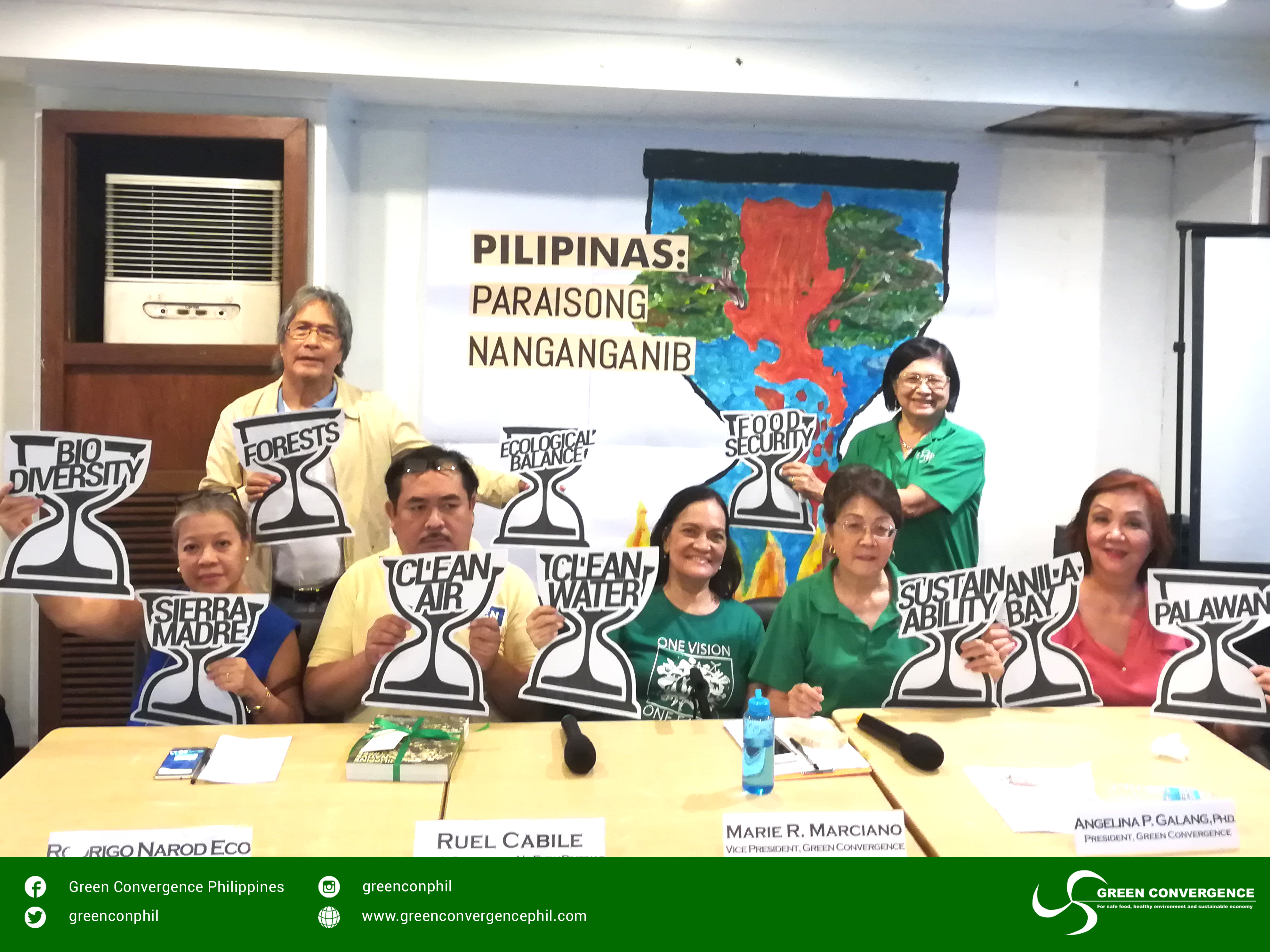
Environmental Coalition Green Convergence held the 353rd installment of the monthly Kamayan Para sa Kalikasan Forum about the pressing environmental concerns that the Philippines is facing on August 16, 2019 (Friday) at Kamayan Restaurant, EDSA, Mandaluyong City.

“There are programs of the government which Filipinos should be deciding on. But in the recent past, we are suddenly confronted with actions of China and with intrusions of the Chinese who are putting up or will be involved in mega projects in our country,” asserts Dr. Angelina Galang, President of Green Convergence.

Galang mentioned (1) the absence of a national land use policy, (2) large-scale reclamation activities especially in Manila Bay, (3) the construction of large dams especially the Kaliwa Dam, and (4) the division of Palawan into three separate provinces as actions of the government that are of urgent environmental concern.

These are also topics to be discussed in the upcoming annual State of Nature Assessment (Green SONA) with the theme “Pilipinas, Paraisong Nanganganib” to be held on August 27, 2019 at the Hue Hotel, Puerto Princesa City, Palawan, she explained.

The repercussions of large-scale reclamation to the country’s environment was further discussed by Rodrigo Narod Eco, a researcher from UP Diliman.

“There is no such as a natural disaster,” Eco asserted, “a natural phenomenon only becomes a disaster if it intersects with human activities,” implying that reclamation in Manila Bay will lead to disasters.

If reclamation activities continue in Manila Bay, “Dagdag harang sila sa tubig! ([Reclaimed lands] are added barriers to the flow of water!),” he remarked. This is especially dangerous if a 4-meter high storm surge hits the area.

Biodiversity in Manila Bay will also be negatively affected, considering that fish eggs and larvae of major fish species for food can be found in its shallow waters. Proposed land reclamation projects are exactly in these areas which could endanger the metropolis’ food security.

Eco called for rehabilitation of the Manila Bay, not reclamation for it will not only affect the marginalized communities in the area, such as the fisher folks and the urban poor, but also the entire metropolitan populace.

On the other hand, No Burn Pilipinas Regional Campaigner Ruel Cabile presented the myths of waste-to-energy through incineration and provided suggestions to achieve sustainability by properly managing municipal wastes.

A tribute to environmental champion and founder of Concerned Citizens Against Pollution (COCAP), the late Ester Perez de Tagle was also given. Perez de Tagle advocated against the Japan-Philippines Economic Partnership Agreement (JPEPA) in 2006 and for the promotion of the Euro-4 fuel in the country.

Since March 1990, Kamayan Para Sa Kalikasan Forum has become an institutionalized platform that enables NGO and government representatives, the media, students, teachers, church groups, and concerned citizens to discuss pressing environmental issues in the country. This month’s forum is organized by Green Convergence and is supported by Kamayan Restaurant EDSA with the assistance of the Forest Foundation Philippines.

You must be logged in to view this content. Free Virtual Library Registration Here

Thermal waste-to-energy tech, unsafe says environmental scientist

Plastic trash.


BAGUIO CITY – An environmental scientist and former United Nations Development Program (UNDP) consultant said the waste-to-energy (WtE) program promoted by the government is unsafe for the public and environment.

In his talk during the State of the Nature Assessment at Albergo Hotel, Baguio City on August 20, Dr. Jorge Emmanuel, underscored that the people’s health and environment must come first when considering technologies for power generation.

“WtE does not make waste disappear but turns them into toxic ash and pollutants in the air,” he said, adding that, “toxic particulates and gases are concentrated to pollution reduction devices that also require special handling and disposal.”

Emmanuel, who worked as the Chief Technical Advisor of the UNDP on Global Healthcare Waste Projects explained “clean incinerators” are fallacies. He added that the government’s promotion of WtE runs contrary to Clean Air Act (RA 8749) and the law on solid waste disposal (RA 9003g) that prohibits use of incinerators.

He said toxic pollutants are released in varying levels overtime including the deadly dioxin variety — 2,3,7,8-tetrachloro-dibenzo-p-dioxin — and he claims that “[the government] has no capability to continuously monitor dioxins in the environment.”

Environmentalists and many scientists here and abroad have criticized thermal waste treatment and disposal facilities billed as WtE as nothing new, but incinerators attached to boilers and turbines to harness the generated heat to produce power.

There are currently 12 WtE plants in Northern Luzon with a capacity of 87 megawatts according to the Department of Energy December 2017 record. Two are located in Region 1.

The Pepsi Biomass Plant in Rosario, La Union managed by Sure PEP, Inc. is installed but not operational and non-compliant with its reporting obligation based on DoE’s latest report.

A facility set to rise in Brgy. Nagpanaoan, Santa, Ilocos Sur costing P1.16 billion will generate 10MW. Upon operation, the plant will employ 30 individuals and consume 86 tons and 200 tons of municipal solid waste and agricultural waste respectively.

In his first State of the Nation Address, President Duterte said his administration will pursue waste-to-energy technology for power generation and waste management program. The Department of Environment and Natural Resources (DENR) in August 2017 called WtE a “win-win solution” and “smart alternative” to the country’s garbage problem.

Legalizing the use of incinerators is also on the way in the House of Representatives through House Bill 6893 which seeks to amend RAs 8749 and 9003. When passed, the legislation will allow the use of thermal and other treatment technologies to dispose or utilize municipal and hazardous wastes for fuel.  (TNM/Sherwin De Vera)

Green SONA tackles “environmental monsters”

By SHERWIN DE VERA via Northern Dispatch Weekly

BAGUIO CITY — Environmental advocates across the country gathered at Hotel Albergo in this city on Monday, August 20, for the annual State of the Nature Assessment (Green SONA) organized by Green Convergence (GC). This year’s theme, “Environmental monsters are back; Superheroes needed!” underscored the call for action to protect the environment.

FIGHT THE ‘MONSTERS’. Institutions and environmental advocates converged at Hotel Albergo in Baguio City on August 20 for the State of the Nature Assessment or Green SONA, an annual activity organized by Green Convergence. Delegates cropped a resolution affirming their commitment to fight “environmental monsters” promoted by the government. Photo by Sherwin De Vera

The group’s president, Dr. Angelina Galang, said the activity does not only provide venue to review the state of the environment but also explain why there are technologies that environmental advocates reject.

Speakers discussed the dangers posed by genetically modified organisms (GMO), incineration and nuclear power, and large-scale mining and giant dams to the ecosystem. They also explained the flaws of present environmental laws and government programs related to their topics.

Unsafe power sources

“The environment and people’s health take primacy over the planned revival of the Bataan Nuclear Power Plant, and the use and promotion of waste-to-energy (WtE),” stressed Dr. Jorge Emmanuel.

He shared studies made by international institutions and by the panel of experts commissioned by the Philippine government from 1986 to 1992. The findings said BNPP is unsafe and dangerous for operation, and too costly to repair.

Emmanuel added that management of radioactive waste from nuclear power plants remains to be a top problem and threat worldwide.

He also criticized the government’s promotion of WtE that runs contrary to Clean Air Act (RA 8749) and the law on solid waste disposal (RA 9003) pointing WtE is actually incineration, prohibited under the two legislations.

Emmanuel a former Chief Technical Advisor of the United Nations Development Program on global health-care waste projects underscored that WtE plants produce a variety of pollutants, such as dioxins, that include 2,3,7,8-tetrachloro-dibenzo-p-dioxin, known as the most toxic compound.

He said dioxin levels released in varying levels over time and the government “has no capability to continuously monitor dioxins in the environment.”

Go organic

Instead of encouraging commercialization of genetically modified organisms (GMOs), the government should instead seriously promote organic agriculture. This was the theme discussed by Dr. Chito Medina of Magsasaka at Siyentipiko para sa Pag-unlad ng Agrikultura (MASIPAG).

“Organic farming does not only focus on the being technical of ‘being organic’ but should consider the issue of social justice,” said Medina, adding, “the problem is organic farming is still budding in the country yet the government is already nipping it down by stressing more on regulations.”

He said there are already 62 GMOs approved for commercial use since December 2002 but only two seeds for commercial planting, Bt Corn and RR Corn, were given the go signal so far. Others are contained in imported consumer products and animal feeds use in large farms.

“The problem with GMOs besides health safety is its narrow genetic adaptation instead of targeting it to adapt to broader environmental challenges,” explained Medina in mixed English and Filipino.

Citing studies conducted worldwide, Medina elaborated the detrimental health and environmental effects of Bt and RR Corn. He explained that chemicals found in GM crops cause tumors, cancers, autism, birth defects and other diseases.

His institution is also fighting the approval of golden rice for commercial production. The GM crop designed to produce beta-carotene is set for final field testing in San Mariano, Isabela and Batac, Ilocos Norte.

He said proponent conducted no tests to ascertain the crop’s safety, only field trials for its agronomic traits that also failed to produce favorable results.

Continuing forest lost

The head of Forest Foundation Philippines (FFP), Atty. Jose Canivel, discussed the situation of the country’s forest cover and reforestation efforts.

“We are planting billions worth of seedlings under the National Greening Program (NGP) but we continue to lose our old growth forest, and mature and seed bearing native trees,” the lawyer said.

He lamented that despite having more than 3000 woody plants in the Philippines, the Department of Environment and Natural Resources is mainly planting Mahogany, Gmelina and Falcata, all introduced and exotic species.

Canivel also shared that according to their study, seedlings utilized for the program mainly comes from six large nurseries mostly owned by individuals with connections in the department.

A key problem, according to him, is the absence of a forest management framework. Forest policy that is in effect is Presidential Decree 705 that focuses mainly on the creation and management of forest for industrial purposes.

FFP has lobbied for the Forest Resources Management Bill since the 13th Congress, but it has yet to pass the committee level.

“What we have been lobbying for 20 years is for us to have an appropriate forest policy for our present condition,” he said.# nordis.net

Federalism a major threat to the environment

By KIMBERLIE NGABIT-QUITASOL via Northern Dispatch Weekly

BAGUIO CITY — The Duterte administration’s push for a federal form of government is seen as among the major threats to the environment by green groups who spoke about mines, giant dams and forests at the State of Nature Assessment 2018 on August 20.

“For us charter change and federalism poses the biggest threat to environmental justice,” said Jaybee Garganera of Alyansa Tigil Mina (ATM).

Garganera spoke about how large corporate mines destroyed forests, mountains and rivers; and displaced indigenous communities, and that the present congress cannot be trusted to change the Constitution.

Garganera said this congress rejected the appointment of Gina Lopez as secretary of the Department of Environment and Natural Resources (DENR). He pointed out that many lawmakers have interests in mine corporations or were supported by mining firms during their campaign, including members of the Commission on Appointments.

“Our environmental problem is not a technical problem, not a financial problem even, it is a problem of political will,” Garganera said.

He said that the 10 months of Lopez as DENR secretary proved that environmental law can be strictly implemented if there is political will.

“These people who rejected the appointment of a DENR secretary who had the balls to implement environmental laws, this congress will change the constitution towards federalism,” he said.

Garganera further pointed out that in the draft federal constitution, environmental protection was delegated to the federated regions, which he said is problematic given the existense of political dynasties. “What do we expect when we let political dynasties decide on logging, mining and other extractives?” he said. He added that with the political record of these dynasties, the environment is in big danger.

Garganera also said that in the proposed federal constitution, a phrase ‘as provided by law’ was added to the 60-40 equity rule on foreign ownership provided under the present constitution. He said that with this phrase, congress can later enact a law that would reverse this protectionist provision.

Garganera said that under a federal government, the federated regions will scramble for resources for their states. He said the regions will now invite investors that would include mines, dams, plantations and other extractive industries.

“We join the concern on the new form of political governance being pushed today,” said Atty. Jose Andres Canivel executive director of the Forest Foundation Philippines.

Canivel talked about the state of the country’s forests and he identified the push for federalism as among the major threats to the remaining forests. He said that in the proposed federal constituion, forest management, protected areas and indigenous people concerns are also delegated to the federal regions. “For us it is a difficult situation,” he said.

Canivel cited as example Mount Apo, a protected area because it is a source of energy, home for IPs and habitat of the Philippine eagle. He said Mt. Apo spans three regions. “How will they manage it?” he said. “We asked this question to the members of the constitutional commission and to DILG as well and they told us to offer a suggestion instead,” he added.

Canivel said the proponents of federalism should have thought of this before pushing for a change in the form of government.

Canivel said that their successful forest restoration and protection projects are in IP ancestral lands. “In our experience IPs are doing a better job at forest management,” he said.

Based on the mapping of the Philippine Association for Inter-Cultural Development (PAFID), the remaining forests in the country are within IP ancestral domains, which are also the same areas where mining operations and applications are. PAFID has mapped out the agricultural areas, protected areas, mining operations and applications, remaining forests, IP ancestral domains and important bird areas in the country. Interestingly, the maps showed that mining operations and applications overlap with protected areas, IP ancestral domains and remaining forest areas. # nordis.net