Climate change, carbon footprint calculation seminar-workshop concludes, ecological literacy highlighted

Green Convergence (GC), through its Ako Ang Bukas (AAB) Advocacy Program, concluded the seminar-workshop on greenhouse gas (GHG) themed “Climate Change and Your Carbon Footprint” on September 29, at the National Museum of Fine Arts in Manila. The first session was held last July 21, 2025.

Opening the session, Senior Museum Researcher of the National Museum of the Philippines (NMP) Zoology Division Rolly C. Urriza acknowledged that the partnership for the seminar-workshop, as well as the collaboration with the participants from different sectors, is a step towards awareness in order to create informed decisions for the environment.

With the seminar-workshop being an extension of the Katumbalikwasan exhibition, National Coordinator of Aksyon Klima Pilipinas (AKP), John Leo Algo, explained the meaning behind the term “katumbalikwasan,” which was coined to redefine resilience in the Filipino context, emphasizing the interconnectedness of climate, nature, and people.

The exhibition was launched last April 28, 2025, and can be viewed at the National Museum of Natural History.

Moreover, as one of the sponsors of the seminar-workshop, Philippine Business for Social Progress (PBSP) Program Officer Hanna Relanes also reiterated in her remarks the importance of exploring green solutions and other decarbonization efforts not only to manage risk, but also reduce costs.

As one of the sponsors as well, Philippine Network of Educators on Environment (PNEE) President and GC Trustee Dr. Cecilia Navasero-Gascon talked about ecological literacy by applying Bloom’s Taxonomy to understand climate change and reduce carbon footprint.

Deriving from David Orr’s definition, ecological literacy is ‘not just about understanding the environment but about acting on that understanding; knowing how the world works, then using the knowledge to make choices that preserve its well-being.’

Navasero-Gascon shared that, though there is awareness on environmental issues, the Philippines still has a gap in terms of integrating climate change in the education systems, hence the difficulty in making and implementing informed decisions.

According to her, Bloom’s Taxonomy can be a framework to promote ecological literacy, designed to move learners from just mere knowledge to actual action—from remembering, understanding, applying, analysing, evaluating, all the way to creating.

“Climate change is no longer a distant threat, it is a present reality that touches every part of our lives—from the food we eat and the air we breathe, to the security of our communities and the future of our children,” Navasero-Gascon expressed.

Within the scope of the ecology, AAB Program Director and GC Trustee Dr. Angelina Galang kickstarted the session proper with a discussion of the seven environmental principles and their fundamental link to GHG accounting.

She stressed that humanity’s growing disconnect from nature has influenced today’s crises—from biodiversity loss to waste mismanagement and deforestation.

Tracing human cultural evolution from hunting and gathering all the way to globalization, she warned that rapid human-driven changes are worsening climate change, urging people to rethink their impact and question whether a sustainable balance with nature is still possible.

First Philippine Holdings (FPH) Chief Sustainability Officer Agnes de Jesus then discussed climate change in-depth—its impacts and how GHG accounting can help mitigate these.

De Jesus highlighted the Philippines’ commitment to reducing emissions under the Paris Agreement and introduced the AAB calculators as practical tools to help households and organizations understand and track their carbon footprint, mentioning also the pending requirement for enterprises to report on their carbon emissions in a few years time.

She also discussed GHG emission boundaries, the mitigation hierarchy and strategies, and natural and manmade carbon offsetting as key steps toward meeting the 2030 and 2050 climate goals—linked to offsetting is her discussion on how carbon dioxide is absorbed by trees.

Furthermore, de Jesus debunked climate myths such as climate change being nature’s process and not manmade, a few degrees of temperature not being a big deal, climate action solely being the government’s duty and not every individual’s, and climate solutions being expensive which disregard cheaper clean options.

These myths are then said to result in maladaptation of climate actions, harming the environment and impacting climate change more than resolving the issues.

Discussing the roles of the museums in addressing climate change, NMP Zoology Division Senior Museum Researcher Merlyn F. Geromiano shared their commitment to education and raising public awareness through learning sessions, community engagement and safe spaces, research and knowledge creation, sustainable practices and leadership and policy advocacy and global partnerships through multistakeholder collaborations, preservation of heritage and biodiversity at risk, and ultimately, inspiring action and change.

Linking these, Geromiano reiterated the importance of the use of a carbon footprint calculator to raise awareness about climate change, hence the partnership with AKP and GC through the AAB advocacy program for the Katumbalikwasan exhibition.

Lastly, AAB Program Leader Milagros Serrana led the workshop on the AAB entity and household-level GHG calculators. She walked through the household calculator web app, then the excel-based entity-level calculator.

With the use of prepared dummy data for schools and a manufacturing company, she demonstrated how to input data and how the calculator presents graphically the results which show the users’ hotspots. Participants, mostly from the academe and businesses, were able to collaborate on the workshop activities to altogether understand the AAB calculators’ use.

NMP’s OIC-Director II Maileen P. Rondal of the National Museum of Natural History then closed the seminar-workshop with a reflection that the connection between humanity and nature is inseparable, hence the need for stewardship rather than exploitation.

“Together, our small conscious decisions can lead to significant impacts. Together we can be part of the solution,” Rondal concluded.

Ako Ang Bukas (or “I am the future”) is a movement with a central campaign, “Quantum Leap NOW: Climate Neutrality 2050.” It seeks to involve all sectors and levels of society nationwide in taking urgent, concerted action to address the climate crisis facing the country and the world.

Be part of a bigger change by signing the pledge and joining the AAB program through this link: bit.ly/AKOANGBUKAS. Moreover, calculate your carbon footprint using the AAB household GHG calculator through this link: aab-household-ghg.web.app.

Dangers of mining, threats on mangroves, and more: Kamayan’s September forum echoes issues raised in Green SONA 2025

Green Convergence shed light on some issues raised in the recently concluded State of Nature Assessment (Green SONA) 2025 held in Leyte, for the 423rd Kamayan Para Sa Kalikasan forum, “Beyond the Green SONA: Voices, Visions, and Commitments,” held on September 19 via Zoom and Facebook livestream.

In her opening remarks, Green Convergence President Victoria Segovia expressed thanks towards partners and sponsors who made the 20th Green SONA a success, while previewing highlights of the conference, as well as the tree planting initiated annually to offset the carbon footprint produced in conducting the event.

The Green SONA 2025 was co-organized with the Visayas State University (VSU) and sponsored by the First Philippine Holdings, Lasallian Institute for the Environment, Forest Foundation Philippines, Foundation for the Philippine Environment, and Leyte 5th District Rep. Carl Nicolas Cari, with VSU’s official student media organization, Amaranth, as media partner and the University Integrated Media and Public Affairs as the technical organizing partner.

Environmental state of Region 8

Briefing participants of the environmental state of Region 8 where the Green SONA 2025 was held, a recorded discussion of Atty. Dario Suarez, Assistant Regional Director for Management Services of the Department of Environment and Natural Resources Region 8 (DENR 8), was shown in the forum.

Atty. Suarez described Eastern Visayas as one of the most disaster prone regions in the Philippines, facing issues such as landslides, flooding, biodiversity loss, illegal logging, mining, quarrying, and siltation risks, major foreshore and coastal infrastructure, solid waste management, water and air pollution, and climate change impacts.

With this, the DENR 8 formulated seven strategic thrusts, such as (1) adopting climate risk lens in national planning and policy, (2) increasing forest covers, (3) conserving protected areas and biodiversity resources, (4) improving air and water quality and waste management, (5) ensuring water security and resilience in high water-stressed areas, (6) sustainably and responsibly managing mineral resources, and (7) promoting effective land management and governance.

Among the projects detailed by Atty. Suarez was the National Natural Resource Geospatial Database, which monitors forest covers, river basins, mangrove areas, as well as the projects under the region’s jurisdiction.

Region 8 has also adopted the National Greening Program and, upon its implementation, an increase of 15% in forest covers has been observed. Forest protection programs and policies were also mentioned on avoided deforestation, rainforestation, and forest fire protection.

On mining, Atty. Suarez said that the mining industry in the region contributes 1.41 billion pesos in gross domestic product (GDP), with around 2,000 employees. Policies on land ownership to manage land disputes are also enforced.

DENR’s Project TRANSFORM is also set to be replicated in Eastern Samar after its launch in Ormoc City. Project TRANSFORM aims to alleviate poverty through green and blue economy jobs, promote multistakeholder collaboration to address climate change impacts, and more.

Effects of mining in Homonhon Island

Pondering further on mining in the region, Carmi Macapagao, President of the Homonhon Environmental Advocates and Rights Defenders (HEARD), shared the effects of mining operations in Homonhon Island, in Guiuan, Eastern Samar.

Homonhon Island is described to be an agriculture-rich and water-rich island, home to diverse species of flora and several endemic and critically endangered animal species. It also is recognized as a historical site where Ferdinand Magellan first landed.

This island is however threatened by mining, with active operations in five out of eight barangays. With an estimated land area of 10,500 hectares, 6,479 hectares are bound with a Mineral Production Sharing Agreement (MPSA), 2,000 hectares are with the Environmental Protection Agency, and 200 hectares with the Philippine Mining Development Corporation.

MPSA is a contract that allows companies to explore and utilize mineral potential areas, but enclosed with corporate responsibilities such as including shares for the affected communities—which were said to be unobserved.

Suffering mining operations for over 41 years, Macapagao said that there have been no significant changes in the community.

Mine dust has covered the island, water sources are contaminated, there is insufficient power supply, roads are not smooth, there are land use conflicts causing division of community, and classes are disrupted.

Macapagao showed the mining situation surrounding Homonhon National High School. “Paano mo ibibigay ‘yan [safe, healthy, and conducive area for learning] sa mga kabataan kung ‘yun ‘yung nakapaligid sa kanya—maingay na heavy equipment at alikabok—na sobrang nakakaistorbo sa klase nila?” she stressed.

All these impacts continuously impose health risks, inadequate regulatory enforcement displaying a need for stronger legal framework, economic dependency on mining causing residents to choose between economic survival and environmental preservation, and a call for community resilience and advocacy.

Nationwide issues on mining

In line with this, Daniel Arias, Campaign Officer for Visayas of Alyansa Tigil Mina (ATM), provided a nationwide perspective of the effects of mining operations.

Arias briefed the situation of mining under the administration of President Ferdinand Marcos Jr., emphasizing the lack of consultation with directly affected communities due to the fast-tracking and digitalization of the permitting process. Mentioned also were bills like the Enhanced Mining Fiscal Regime wherein only 2% of mining taxes were approved.

On the other hand, a ‘positive’ outcome is the country’s return as a member of the Extractive Industries Transparency Initiative (EITI), which is a multistakeholder initiative revolving around taxing mining companies and reviewing violations.

Furthermore, Arias laid out that the government says there is a ‘huge and urgent’ demand for critical minerals and that the country can supply these as the world transitions to clean energy, however the chambers and the Mines and Geosciences Bureau do not say that mining contributes less than what is exhibited.

He detailed that mining only contributes less than 1% to the country’s economy in GDP, is only less than 0.5% of total employment, and is seen to destroy 18%-20% of the economy, coming from agriculture, forestry, water resources, and fisheries. Arias also said that Bantay Kita reported uncollected taxes from mining amounting to no less than 1 billion pesos.

Violence towards environmentalists, Indigenous Peoples, and women fighting against destructive mining, plantations, and land-grabs was also emphasized as a major issue, making the Philippines one of the most dangerous places in Asia for environmental and human rights defenders.

With these issues on mining at-hand, ATM forwards their calls for a moratorium to stop destructive extractive activities, a reimposition of a ban on open-pit mining, a repeal of the Philippine Mining Act and legislation of Alternative Minerals Management Bill, and the enactment of the Environmental and Human Rights Defenders Bill.

Ang kalikasan ay kailangan nating proteksyunan dahil ito ay magbibigay sa atin ng masaganang bukas. Samantala, ang minahan, sila ang nagpapalala ng krisis sa klima, sa pagkasira ng ating kalikasan, at ang siyang magdudulot sa atin papuntang kadiliman,” Arias expressed.

Blessings of mangrove rehabilitation

On mangrove rehabilitation, Roberto “Ka Dodoy” Ballon, Trustee of the Foundation for the Philippine Environment, shared community initiatives that enabled regeneration of natural resources and mangrove ecosystems health through his recorded discussion.

Ballon said that they have successfully planted 50 hectares of mangroves without a single centavo from government agencies, as a way to address the loss of fish observed for two decades since the 1970s, which affected their livelihoods.

As of date, they have planted a total of 7,000 hectares of mangroves and have established several aquacultures for different marine resources.

Recognizing also the effects of poor solid waste management in fisheries, they have bred initiatives such as raffle draws to proactively engage the communities in addressing issues on waste. These initiatives have been awarded locally and internationally in the past years and have been adopted in other communities.

Ballon also reminded that rehabilitation of mangrove ecosystems are important to ensure food security and build resilience against climate change, given that out of 1,493 municipalities, 832 are coastal, and 60% of the total population are fishermen—yet they are one of the most resource and access-deprived.

Concluding his talk, he then reminded the youth to safeguard the future, especially through continuous mangrove rehabilitation, for the integrity and dignity of the country’s fishermen. “At the end, sinasabi ko, an abundant, clean, healthy, and safe environment for the people and for the next generations,” Ballon added.

Executive Director of Green Convergence, Tessa Oliva, then wrapped up the Kamayan session with a run through of the Green SONA 2025 resolutions, which collated calls and recommendations for the DENR, local government units, academic institutions, civil society organizations and advocacy groups, as well as for the whole Filipino nation to address.

The next Kamayan session will be held on October 17, 2025.

Kamayan Para Sa Kalikasan is a monthly initiative organized by Green Convergence that enables non-government organizations (NGOs) and government representatives, the media, students, teachers, church groups, and concerned citizens to discuss, analyze, and create solutions to pressing environmental issues in the country.

For those interested to be a member of Green Convergence, visit these links to register: bit.ly/gcindividual or bit.ly/gcnetorg.

PART 1

PART 2

PART 3

PART 4

GREEN SONA 2025 “ECOSYSTEMS INTEGRITY: A MUST FOR PHILIPPINE SUSTAINABILITY

The State of Nature Assessment is an annual review of the developments in the Philippine environmental scene.  Also known as the Green SONA (GSONA), it is organized by Green Convergence for Safe Food, Healthy Environment, and Sustainable Economy, or simply Green Convergence (GC). The holding of GSONA started in 2006, and was held for the first few years at Miriam College’s Environmental Studies Institute. Later, the Board of Trustees of GC decided to hold it alternately in the country’s main islands of Luzon, Visayas, and Mindanao. Its goal is to gather information, analyze the various compounding factors that contribute to the environmental problems, increase awareness of these issues, and surface solutions that are holistic and ecologically sound. GSONA has become a well-sought event for environmentalists from the academe, civil society, people’s organizations, and the private sector for its in-depth and comprehensive discourses on the causes, effects, and solutions to the pressing environmental issues.

GSONA 2025 was held in Baybay City, Leyte, with the theme “Ecosystems Integrity: A Must for Philippine Sustainability.” The event was made possible through the support of the First Philippine Holdings (FPH), Forest Foundation Philippines (FFP), Foundation for the Philippine Environment (FPE), Lasallian Institute for the Environment, and the Office of Congressman Carl Nicolas Cari of Leyte’s 5th District. It was held from September 3 to 4,  at the RDE Hall of the Visayas State University (VSU).

Ms. Graciela Castillo, Assistant Corporate Secretary of Green Convergence, and Mr. Victor Neri, Information Officer of Visayas State University served as Masters of Ceremonies for the two-day event.

Day 1: September 3

OPENING CEREMONIES

GSONA 2025 opened with a prayer led by the VSU Choral, who also sang the Philippine National Anthem,  “Sama-Sama” and “Piliin mo ang Pilipinas”.

Engr. Gretel A. Cabrito, City Environment and Natural Resources Officer (CENRO) of Baybay City, welcomed the participants on behalf of Baybay City Mayor Jose Carlos Cari. He shared the ordinances and actions adopted by the City to preserve its environment, and expressed his hope that the event will spark action towards a greener and healthier environment.

Dr. Moises Neil V. Seriño, VSU Vice President for Administration and Finance, welcomed the participants on behalf of  Dr. Prose Ivy Guasa Yepes. He shared VSU’s vision to become a global green university and the various steps VSU has taken to reduce its greenhouse gas emissions, including the implementation of car- and motorless day. He encouraged the participants to make the gathering a space for meaningful dialogue, collaborative action, and renewed commitment to safeguarding the environment.

Prof. Victoria M. Segovia, President of Green Convergence, also welcomed the participants. She gave a brief background on GC and the GSONA, highlighting its achievements in empowering people to resolve environmental problems, and remembering the GC Trustees who have passed on to eternal life. She then gave the rationale for the year’s theme, and walked the participants through the activities of the two-day event. Reminding everyone that this year’s GSONA is celebrating the Season of Creation (September 1 to October 4).  She prayed that the participants would be inspired to take concrete actions and become catalysts for change within their communities.

DISCUSSION ON REGIONAL ISSUES

Atty.Forester Dario Suarez, DENR Region VIII Asst. The Regional Director for Management Services gave an overview of the current environmental status of the region. He said that the region is affected by rain-induced landslides and flooding; threatened by illegal logging, fuelwood collection, slash and burn farming, and wildlife hunting; mineral mining; and poor land use practices. It is also plagued by improper waste disposal that pollutes both land and water. Air pollution is now experienced in the growing cities of Tacloban, Ormoc, Baybay, Maasin, and Calbayog. The region is much affected by climate change that brings about droughts and typhoons. He discussed the seven strategic thrusts of DENR which are (1) to adopt a climate-risk lens in national planning and policy; (2) increase forest covers; (3) conserve protected areas and biodiversity resources; (4) imrprove air and water quality, and waste management; (5) ensure water security and resilience in high-water stressed areas; (6) sustainably and responsibly manage mineral resources; and (7) promote effective land management and governance.

Ms. Carmi C. Garado-Macapagao, President of Homonhon Environmental Advocates and Rights Defenders (HEARD), said that Homonhon Island is ravaged by mineral mining. Used to be rich in biodiversity with clean potable waters, the island is now suffering from massive pollution. The quality of air, land, and water have greatly deteriorated as 83% of the island has been declared as mining sites. With no declared watershed area for Homonhon, the DENR approved mining activities above the community’s water source. The community has to buy mineral water at PhP80/gallon from mainland Guiuan due to the absence of potable water in the area. The sources of livelihood (e.g. calamansi farms, fishing, farming) were affected. Mining did not bring about progress in its 41 years of existence as the LGU received its share of excised tax only last year. She shared several intervention projects in the area and gave a list of recommendations on how to deal with mining projects.

Ms. Victoriana Entero, President of Naungan-San Juan Mangrove Planters Association, shared how her association maintains a well-governed organization and how it was able to obtain accreditation from the Naungan-San Juan LGU. NSJMPA has conducted an information-education campaign and adopted a benefit-sharing scheme for its members. While focused on mangrove planting, it diversified to bamboo plantation, seedling production, and mud crab fattening with the help of DENR and other institutions. It was able to rehabilitate at least 20 hectares of mangroves after Typhoon Yolanda hit in 2013 through the support of international agencies like Oxfam. NSJMPA is now into the co-management of mangrove forests with the Ormoc Philippine Coast Guard.

UPCYCLING TO ADDRESS SWM ISSUES

The Executive Vice President of Alpha Distinct Development Solutions Inc. (ADDSI), Ms. Michelle Bautista-Tañada said that upcycling provides opportunities that uplift and support underprivileged and marginalized communities, while helping LGUs address their solid waste management problems. Ms. Tañada estimated Region 8 plastic waste at 92 tons/day. According to her, upcycling through the use of ADDSI technology can transform these into useful, marketable products, thereby creating income opportunities while reducing pollution. She discussed the steps in building a plastic waste infrastructure in communities – (1) install proper collection bins in strategic areas; (2) use upcycling machines and proven recycling technology; (3) partner with experts in product design and marketing; and (4) engage communities in segregation and collection. Among the ADDSI upcycled products are benches, slides, signage, tables, retractable tents, tiles, bags, jewelry, and decor. ADDSI has a pilot project in the City of Mati (Davao Oriental) aptly called “Gawaing Matino at Wasto”. The City now has bin-bikes that integrate sustainable designs such as solar-powered lights and an umbrella. It trained the community in basic waste management, engaged the youth on circular solutions, supported clean-up drives, held interactive activities for children to raise environmental awareness early, and donated upcycled coolers, trash bins, and convertible tables.

PANEL DISCUSSION ON NATIONAL SITUATION

Mr. Daniel Arias, the Alyansa Tigil Mina’s Campaign Officer for Visayas, said that under the current administration of President Ferdinand R. Marcos, Jr, mining has been revitalized. The passing of Executive Order No. 18 opened green lanes for strategic investments, including mining and renewable energy projects. The permitting process and digitalization have been fast-tracked to two years. The SB 2826 and HB 8937 created an Enhanced Mining fiscal regime, which returned the Philippines to the Extractive Industries Transparency Initiative mode. As of 30 June 2025, 709 mining contracts and permits were approved, 49 of which are in Region 8. The Philippine Government considers the mining industry as a pillar for inclusive and resilient growth, as there is now an urgent demand for critical minerals (e.g., nickel, chromite, copper) as the world transitions to clean energy. Yet, studies have shown that the mining industry’s contribution to the country’s GDP is less than 1%; it destroys 18% to 20% of the economy coming from agriculture, forestry, water resources, and fisheries; it contributes less than 0.5% to total employment; and there are uncollected taxes from mining companies amounting to at least PhP 1 Billion.

Dr. Renezita Sales-Come , VSU Dean of the Faculty of Forestry and Environmental Science, gave a brief update on the status of Philippine forests and reforestation, with a focus on rainforestation as a strategy. According to her, as of 2021, there are 7.22 M hectares of forests covering 24% of the country’s land area, less than 1% of which is primary. The target of 28.5% by 2030 has been achieved through the various strategies, including the National Greening Program (2011-2016) and the Enhanced NGP (2016-2018), and the Community-Based Forest Management Program. She shared that rainforestation has been adopted as a reforestation strategy by the DENR in 2004 (Memorandum Circular 2004-06), as it recognized the importance of planting native trees. She said that rainforestation is a banner program of VSU, with its former President, Dr. Paciencia Milan’s as the pioneer. VSU has an ongoing E-GNP, which will end in 2028. Through the project, two million hectares have been planted with  1.7 billion seedlings from 2011 to 2020. It targets to cover 7.1 million hectares of unproductive, denuded, and degraded forestlands nationwide. Rainforestation is now implemented nationwide by farmers, communities, academe, and LGUs.

Roberto “Ka Dodoy” Ballon, a Trustee of Foundation for the Philippine Environment, shared the story of his barangay’s coastal ecosystem management efforts. Located in the Municipality of Kabasalan (Province of Zamboanga Sibugay),  shared that his barangay experienced poor fish catch after the mangrove forest was transformed into fishponds. The connection of mangroves to fish catch was realized by the community, who then initiated mangrove planting activities. Without external funding, the people’s initiative restored the forest, which then slowly increased marine productivity. With the support of the Foundation for the Philippine Environment  (FPE), the 50 hectares of forest expanded to 7,000 hectares. Fishing time was reduced from eight to three hours, with a catch of at least 15 kilos per trip. The community also started culturing lapu-lapu and talaba, which further increased the people’s income. This has resulted in increased consumption and increased volume of waste, which necessitated urgent intervention. A reward system was adopted together with an intensive information-education drive targeting the youth. This transformed the mindset and behavior of the people, so that until now, despite the absence of a quarterly raffle, the community has remained clean with a well-managed solid waste system.

EXPERIENCE IN ADDRESSING CLIMATE CHANGE

Ms. Ingrid Macabare, Environmental Specialist II and Officer-In-Charge of the Environment and Natural Resources Office of the City Government of Ormoc, shared the City’s experience in addressing climate change. Quite vulnerable to disasters, the LGU sought technical and financial support from national and international agencies. Through DENR’s Project TRANSFORM (Transdisciplinary Approach for Resilience and Environmental Sustainability through Multistakeholder Engagement), the LGU was able to carry out trainings/programs on biodiversity profiling, greenhouse gas inventory, financial literacy, disaster risk management, and nature-based solutions. In conjunction with this, the City initiated and has been actively implementing several adaptation and mitigation initiatives under the Environment and Natural Resources Office. The four ENRO Sections focused on the management of (1) solid waste; (2) watershed and wildlife; (3) pollution control; and (4) mineral and land. These enabled the City to have a robust garbage management system with 100% collection; institutionalize a Trash Trap Program that prevents garbage from reaching Ormoc Bay; prohibit the sale and distribution of single-use plastics; hold regular clean-up drives; suspend gravel quarrying; and closely monitor mining activities. Its information-education campaigns enhanced public engagement and understanding, which led to better community response and resilience. Overall, the City has shifted from a Materials Recovery Facility to a Materials Recovery System. This shift will be further enhanced by the City’s recently developed  Circular Economy Portfolio.

HIGHLIGHTS OF THE OPEN FORUM

The forum was well-participated with concerns raised on the effectiveness of the incentive-based system to improve waste management, temperature tolerance of native trees, the possibility of an endemic species becoming invasive when transferred to another region,  and the effect of wounding on trees.

The incentive-based system in Zamboanga Sibugan was effective as it was carried out with a massive information-education campaign, targeting the youth. Parish Priests were also involved as they incorporate the value of stewardship in their homilies.

There is no study yet on the temperature tolerance of native trees as this entails the use of sophisticated equipment. However, with funding from the National Research Council of the Philippines, reliable data sets to determine the native trees’ response to temperature changes may be obtained in due time.

One region’s endemic species have not been reported to have become invasive after translocation in another region of the country. However, the endemic species’ growth and developmental requirements may affect its survival when transplanted to another region.

Nailing of signage on trees may or may not affect the trees. It really depends on the thickness of the bark and the state of the tree. If the nail does not reach the vascular tissues, the wound will have no effect. If the tree is “ringed” to remove the vascular tissues, the tree will slowly die.

Removing the nails is advisable to prevent accidents, e.g., the nail injuring people who accidentally bump into it

GREEN SONA 2024 RESOLUTIONS

The Green SONA 2024 resolutions were presented by Dr. Cecilia Gascon, President of the Philippine Network of Educators for the Environment and a Trustee of Green Convergence. It was amended and approved by the participants.  It declared the GSONA participants’ collective commitment to protect, conserve, and restore the ecosystems of Region VIII and the entire Philippines. Guided by ecological principles, they pledged to transform our way of life—consumption, governance, and development—toward a sustainable and resilient future. The group affirmed and committed to 24 concrete and data-driven actions. It was resolved further that the Resolution be forwarded to the DENR, LGUs, Academic Institutions, Department of Education, Commission on Higher Education, and Civil Society Organizations for adoption and action.

Day 2: September 4

Day two started with an opening prayer and a recap of day one by the emcees, Ms. Graciela Castillo and Mr. Victor Neri.

The first part of the day two program was the workshop on Ako Ang Bukas (AAB): “Quantum Leap Now to Climate Neutrality 2050,”  a whole-of-nation advocacy program by Green Convergence that enjoins all sectors to measure their carbon footprint, reduce their emissions, and increase sinks to mitigate climate change.

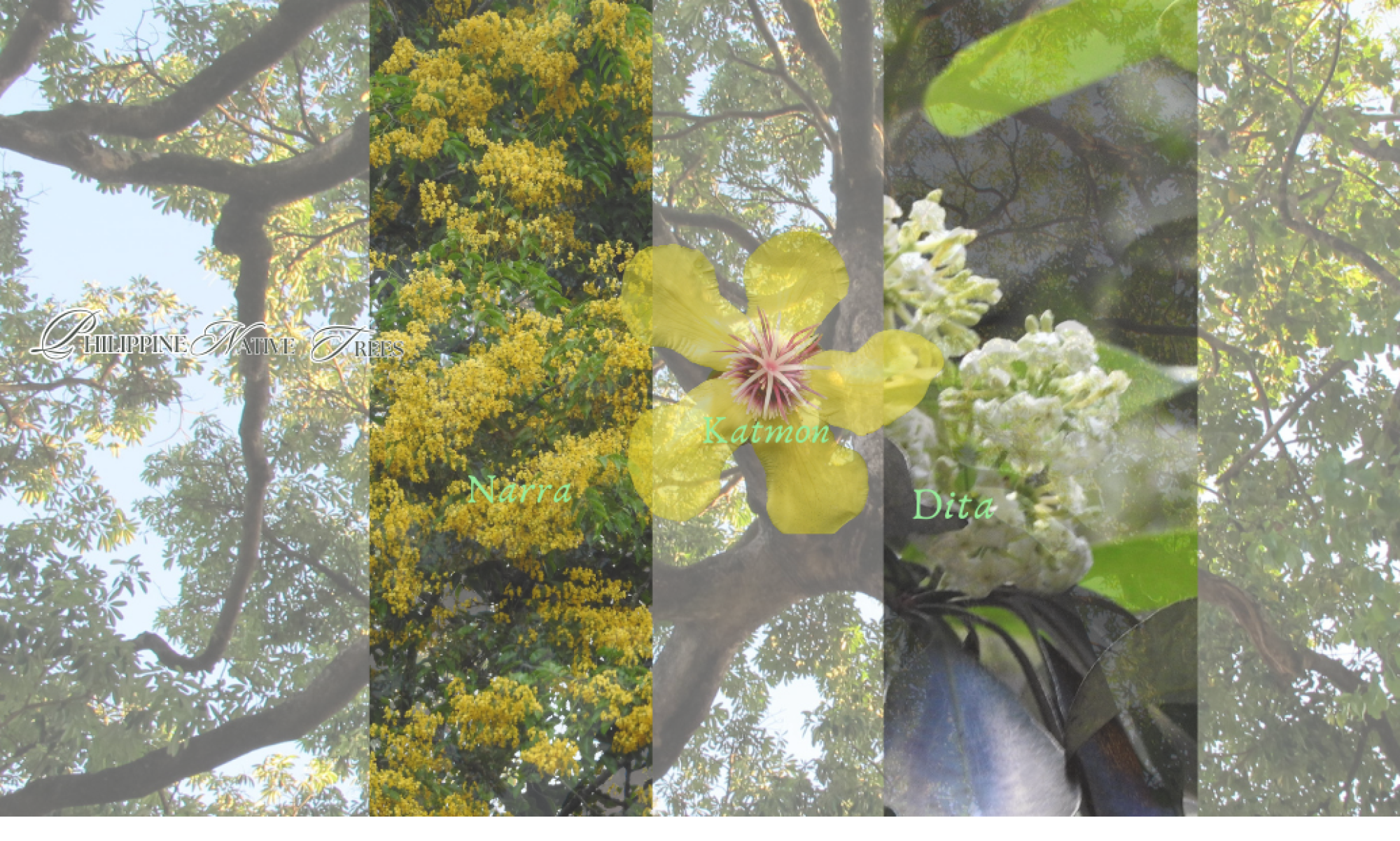
After the AAB workshop, lunch break, and awarding of plaques to sponsors and partners, the program continued with an orientation on Philippine Native Trees (PNT). Green Convergence’s PNT program is a book project that documents indigenous trees through technical descriptions and personal anecdotes, with its first three volumes featuring over 370 native trees and 10 palms in total. It also includes PNT Books for children, designed to nurture awareness and appreciation among the youth for the country’s native trees.

WORKSHOP ON AKO ANG BUKAS (AAB)

Dr. Angelina P. Galang,  Program Director of the AAB Program and Founding Trustee of Green Convergence, opened the workshop with her talk, “Climate Change, the Ecological Paradigm, and the Seven Environmental Principles,” which she described as having a global scope following the previous day’s regional and national discussions. She emphasized the need for an ecological paradigm, a mindset that respects and listens to nature, and continued on to enumerate the seven environmental principles or EPs. There are (1) nature knows best, (2) all forms of life are important, (3) everything is connected to everything else, (4) everything changes, (5) ours is a finite earth, (6) everything must go somewhere, and (7) nature is beautiful and we are the stewards of God’s creation. Except for EPs 4 and 7, these principles were adopted from American biologist Barry Commoner. Using an anecdote about her “kasambahay” who unknowingly overconsumed water and energy while complaining about the heat, Dr. Galang illustrated how everyday actions contribute to climate change. She traced humanity’s evolution from hunting and gathering to modern industrialization, showing how each stage deepened environmental degradation and contributed to issues such as plastic pollution, biodiversity loss, reclamation, and consumerism. Through audience participation, she linked these problems to the environmental principles, emphasizing that human-induced changes are rapid compared to nature’s slow and small shifts. She concluded by reminding participants that while human progress is irreversible, sustainability requires mindfulness and harmony with nature to achieve the global goal of climate neutrality by 2050.

Agnes de Jesus, Chief Sustainability Officer of First Philippine Holdings and Business Task Force Head of the AAB program, delved deeper into climate change and the importance of using tools such as carbon footprint calculators as the first step toward climate action. She described climate change as a long-term, human-induced shift in weather patterns caused by GHG emissions from industries and daily activities, noting that the Philippines’ main emission sources are energy, agriculture, waste, and industry. De Jesus highlighted the urgency of meeting the Paris Agreement’s goal of limiting global warming to 1.5°C amid rising national temperatures that have reached up to 57°C in recent years, stressing that the country only has five to six years left before reaching its carbon budget limit. She explained that while the Philippines has yet to set a net-zero target, new goals will be discussed in COP 30, and government policies, including SEC requirements on carbon emissions reporting, are already pushing companies to act. Introducing the AAB GHG calculator, she explained how it localizes emission tracking across various sectors and guides users through identifying emission sources (Scopes 1–3), setting boundaries, and estimating outputs. She shared case studies from government, corporate, and community-level trainings, showing how the tool can lead to effective interventions. Concluding her talk, De Jesus emphasized the global decarbonization goal of a 45% emission reduction by 2030 and net zero by 2050, discussed the mitigation hierarchy (avoid, minimize, reduce, remove, and offset) and ended with the AAB call for a “quantum leap to climate neutrality 2050” by singer-songwriter Joey Ayala.

Prof. Milagros “Miles” S. Serrana, Program Leader of the AAB Program, facilitated the workshop on the AAB greenhouse gas (GHG) emissions calculators, building on the concepts discussed by Dr. Galang and Agnes de Jesus. She guided participants through the AAB household GHG calculator web app, explaining how to set proper boundaries, input accurate activity data, and interpret results. Participants then used the web app to compute their own carbon footprints in a “mini game,” where a VSU Economics student won for having the lowest footprint at 61 kgCO₂e. Prof. Serrana next demonstrated the AAB entity-level GHG calculator using sample university data, clarifying how to categorize emissions under Scopes 1, 2, and 3. She reminded participants to acknowledge AAB when using the entity-level calculator for their own institutions or organizations.

ORIENTATION ON THE PHILIPPINE NATIVE TREES

Imelda “Ime” Sarmiento, Program Chair of Philippine Native Trees Program, presented “3,600 Philippine Native Trees: Our Natural Heritage,” emphasizing that heritage includes what we inherit, value, and preserve for future generations—particularly our natural heritage of native trees. She highlighted the Philippines’ extraordinary biodiversity, with 3,600 native tree species (67% endemic), surpassing the combined numbers of the UK, USA, and Canada. Sarmiento explained the vital ecological roles of trees and underscored the importance of planting native species, warning that introducing alien trees can harm ecosystems. She shared inspiring stories, such as a “Dita” tree that saved families during Typhoon Ondoy, and debunked misconceptions about “native” species, revealing that many familiar trees and even the national flower, Sampaguita, are non-native. Advocating for decolonizing the nation’s appreciation of local flora, she encouraged the creation of Gardens and Living Museums of Native Trees. Finally, she invited everyone to support native tree planting, share personal stories through Green Convergence’s Philippine Native Trees books, and continue its legacy, and ultimately, value God’s creations as part of preserving our natural heritage.

Jayson Mansibang, Biologist from the University of the Philippines – Diliman and the Jose Vera Santos Memorial Herbarium, discussed “Lost Species: A Conservation and Research Priority in the Philippine Botany.” He began with the “lost spoon” story—symbolizing the legacy of Filipino botanists like Dr. Benito Tan and Mr. Leonard Co—and connected it to the loss of the Bureau of Science Herbarium during World War II, which destroyed invaluable plant specimens and records. Mansibang explained that “lost species” are taxa not documented for a long time, creating a paradox in rediscovery and conservation, similar to Schrödinger’s cat. He also described the Wallacean shortfall, which is defined as gaps in data on species distribution, and stressed the urgent need for taxonomic research, recollection fieldwork, and collaboration with local scientists to recover missing information. He emphasized that taxonomy is the foundation of all biological sciences, and without proper naming, forestry and ecology lose accuracy. Mansibang highlighted rediscovery success stories and challenged participants to locate long-lost Philippine trees such as Syzygium leytense, Wenzelia brevipes, and Heptapleurum leytense. He concluded with key reminders such that every species matters, citizen scientists play a vital role in rediscovery, and lost species present valuable research and conservation opportunities.

TREE PLANTING ACTIVITY

Green SONA 2025 culminated with a tree planting activity. It was led by Dr. Renezita S. Come, the Dean of the Forestry and Environmental Science of the Visayas State University, along with the VSU forestry students. One hundred Philippine native trees were planted in an adjacent community of the University by the event organizers and participants. Native tree planting is a key component of Green SONA and is meant to offset the carbon emissions released because of the event, i.e., greenhouse gases from the organizer and participants’ travel to and from the venue, waste produced, and electricity consumed, among others.


Support local, Eat local: Sustainable environment for safe food emphasized in August 2025 Kamayan forum

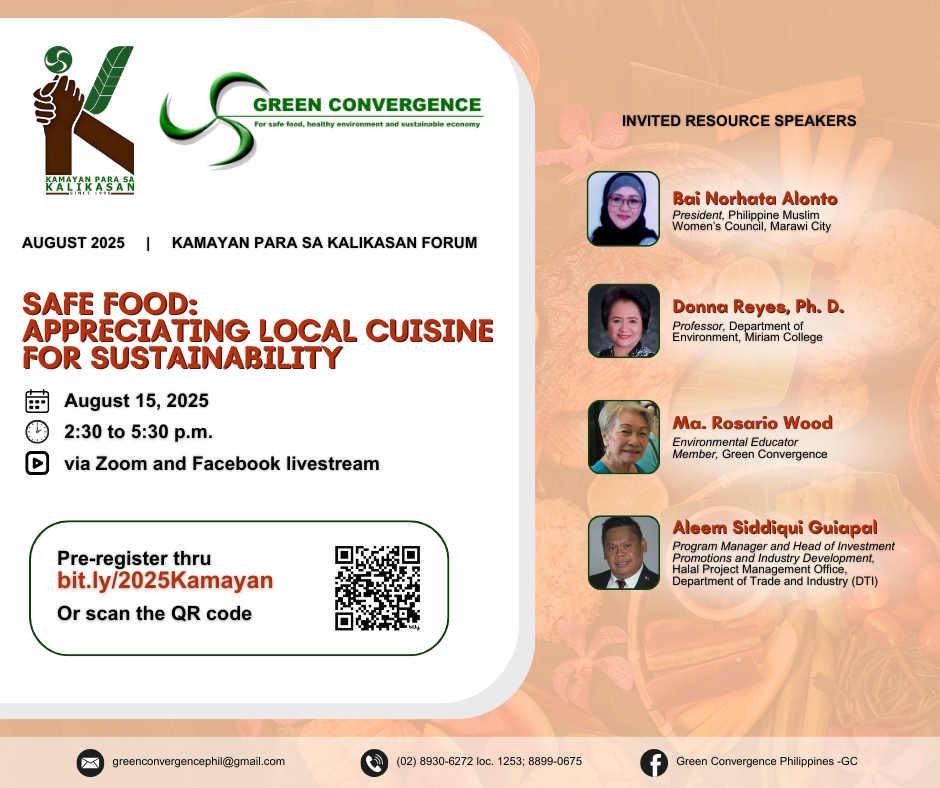
Local cuisines from Luzon, Visayas, and Mindanao, and safe food for sustainability were highlighted in Green Convergence’s 422nd Kamayan Para Sa Kalikasan forum themed “Safe Food: Appreciating Local Cuisine for Sustainability” on August 15, Friday, via Zoom and Facebook livestream.

Green Convergence President Victoria Segovia opened the forum by recognizing healthy, indigenous food as an aid in maintaining agricultural biodiversity, preserving cultural heritage, supporting local farmers and gatherers, and reducing carbon footprint from importing food.

Distinctive features of Halal food

Kickstarting the discussions, the Philippine Muslim Women Council President Bai Norhata Alonto talked about Halal food as more than just adherence to Islamic guidelines but a holistic system and approach to consumption. It is now a growing trillion-dollar Halal industry in which the Philippines has participated in among other Muslim and non-Muslim countries.

Halal food, with “Taib” at the heart of Halal philosophy which is Arabic for “wholesome,” “pure,” or “good,” considers the cleanliness, safety, and health benefits of the food to the human body; hence the ethical ways in which they are prepared and consumed, noting organic farming practices, minimization of food waste, and prioritization of animal welfare.

Alonto emphasized that Halal is not limited to dietary restrictions, such as the known misconception that it is merely the absence of pork, but a comprehensive world view that promotes a responsible relationship with the environment, regardless of religious differences.

“By embracing the principles of ‘Taib,’ rejecting wasteful consumption, and upholding the highest standards of animal welfare, we can see that Halal is and has always been a path to an eco-friendly and sustainable way of life,” Alonto said.

Appreciating Ilocano cuisine and heritage

Also on food sustainability, Miriam College Professor and Kannawidan Foundation, Inc. Board Member Dr. Donna Paz Reyes presented the Ilocano Cuisine and how Ilocanos eat, prepare, and consume food, derived from her authored book, “Salimetmetan To Gameng: Protecting and Preserving the National Heritage of Ilocos Norte.”

Reyes recognized Ilocanos as ‘ultimate ecologists’ and rethought the local term “kuripot,” meaning thrifty, from an environmental perspective, specifically, from a low-carbon lifestyle as climate change mitigation and adaptation.

Mentioning abundance of agriculture in Ilocos Norte, Reyes shared that Ilocano cuisine is essentially vegetable-based, such as the famous pinakbet, dinengdeng or inabraw which is a dish that considers recycled food as its main ingredient is leftover fish, Ilocano salad which is a vegetable salad with KBL (kamatis, fish-based bagoong, lasona) as a dip, and more.

She also shared meat-based Ilocano cuisine, such as those that are from the “kalding” or goat, where all edible parts of the kalding are utilized—bones and meat for kaldereta, skin for kilawen, and innards for papaitan—noting the importance of avoiding food waste.

Other delicacies were also shared, such as tupig, made from glutinous rice, which was related to the rice production in the province wherein their rice supply can sustain their population; bukto or ipon, an indigenous river fish, which was said to be protected by a municipal ordinance for sustainability; bios, eggs of red ants; and abal-abal, May beetles.

At the core of these dishes, Reyes emphasized Ilocanos’ environmental values, as they patronize eating local food in season, avoid waste by cooking viands using leftovers and eating all edible parts of plants and animals, cultivate backyard farms, prioritize good health, forward environmental education through trainings, and conserve natural habitats and food baskets.

Western Visayan gastronomy and sustainability

Onto Western Visayan cuisine, Member of Green Convergence and environmental educator Ma. Rosario Wood glanced across the provinces of Region 6 or Panay island—Aklan, Antique, Capiz, Guimaras, Iloilo, and Negros Occidental—and highlighted the vast ecosystems that supply their food.

Wood detailed that the major industries in the region include agriculture, noting the wide variety of fruit species especially in Iloilo, tourism, milling for sugar cane, and aqua culture, including home locked aqua culture, such as tilapia, hito, and dalag.

She also showcased a variety of cuisines across the region, such as laswa, ginataang labong, kansi, KBL (kadyos, baboy, langka), binakol, native chicken inasal, pancit molo, batchoy, many seafood dishes, and more, which Wood essentially associated with the availability of food under controlled amounts and the locals’ resourcefulness by growing food in their own spaces.

Promotion of Halal Industry

Subsequently, Program Manager and Head of Investment Promotions and Industry Development from the Halal Project Management Office of the Department of Trade and Industry (DTI), Aleem Siddiqui Guiapal, shared his insights on the discussions, saying that the cuisines can be converted into Halal production—it is a matter of compliance and introduction of systems that adhere to Halal food preparation, as Alonto had mentioned earlier.

“As far as the market is concerned, those who are already in the business of food or Halal food preparation, pwede pa i-strengthen ‘yung opportunity na makapagdistribute ng [Halal] market sa mga komunidad,” Guiapal said, noting the huge Muslim community in the Philippines at around ten to 12 percent, which is the third biggest Muslim population in Southeast Asia.

Guiapal also shared that there are ten government agencies, as well as companies and corporations, active in the Halal program. Under DTI, there is non-interest financing attached to the Small Business Corporation, certification programs, Halal testing with the help of the Department of Science and Technology (DOST), trainings with the Philippine Trade and Training Center and TESDA, inclusion of Halal 101 in the curriculum of Mindanao State University, and support for cooperatives by the DK P.O. Fulfillment Company Inc. (DKPO).

Furthermore, Guiapal said that, through this promotion, they are continuing their target of generating around 230 billion in trade and investment revenue for the campaign for a Halal-friendly Philippines.

Closing the forum, Green Convergence Trustee Dr. Angelina Galang summed up the August Kamayan discussion on local cuisine and Halal food production as an emphasis on the important relation of food to the environment.

“Our environment should be sustainable, so that our food can be accessible [and] affordable, giving us the nutrition that we need. […] When we heed to the principles of sustainability, then we also heed the challenge of climate change,” Dr. Galang remarked.

The next Kamayan forum was announced to be on September 19, 2025. Likewise, participants were invited to the forthcoming annual State of Nature Assessment (Green SONA) themed “Ecosystems Integrity: A Must for Philippine Sustainability,” to be held on September 3 to 4, 2025, at the RDE Hall of the Visayas State University, Baybay City, Leyte. Pre-registration details are posted on Green Convergence’s official Facebook page.

Kamayan Para Sa Kalikasan is a monthly initiative organized by Green Convergence that enables non-government organizations (NGOs) and government representatives, the media, students, teachers, church groups, and concerned citizens to discuss, analyze, and create solutions to pressing environmental issues in the country.

For those interested to be a member of Green Convergence, visit these links to register: bit.ly/gcindividual or bit.ly/gcnetorg.

#GreenConvergence #KamayanParaSaKalikasan #SafeFood #AppreciatingLocalCuisine #FilipinoCuisine #Sustainability


GC, AKP, NMP spearhead climate change, carbon footprint calculation seminar-workshop

In conjunction with the “Katumbalikwasan” exhibit, Green Convergence (GC), through its Ako Ang Bukas (AAB) Advocacy Program, kickstarted the first seminar-workshop session on greenhouse gas (GHG) accounting titled “Climate Change and Your Carbon Footprint” last July 21, 2025, at the National Museum of Fine Arts in Manila.

GC President Victoria Segovia opened the session and acknowledged that collaborating with museums in serving as a platform for addressing climate change issues is important.

As partners in the initiative, Senior Museum Researcher of the National Museum of the Philippines (NMP) Zoology Division Rolly C. Uriza said on behalf of the OIC – Director II of the National Museum of Natural History, Maileen P. Rondal that the collective climate action will help foster partnership and establish commitment towards significant progress.

On the other hand, the National Coordinator of Aksyon Klima Pilipinas (AKP), John Leo Algo, reiterated the vital role of the Katumbalikwasan exhibit in showing the interconnectedness of people, climate, and nature.

The Katumbalikwasan exhibit was launched last April 28, 2025, and can be viewed at the National Museum of Natural History for the whole year.

Moreover, as one of the sponsors of the seminar-workshops, Philippine Business for Social Progress (PBSP) Grant Management and Implementation Manager Amanda Bacani also delivered her welcome remarks and highlighted their intent to help businesses in their decarbonization efforts. Sponsors also include the First Philippine Holdings (FPH) and the Philippine Network for Educators on the Environment (PNEE).

AAB Program Director and GC Trustee Dr. Angelina Galang started the session-proper by discussing the seven environmental principles and their fundamental link to GHG accounting.

Dr. Galang highlighted the interconnectedness of ecosystems and how human activities have deviated from natural processes, leading to environmental degradation. With this, she urged to consider these principles in personal and collective actions to address environmental challenges.

On the renewable energy (RE) landscape in the Philippines, Senior Science Research Specialist of the National Renewable Energy Board Technical Services Management Division of the Renewable Energy Management Bureau (REMB) Angelica Delos Santos highlighted the country’s progress in installing RE projects, achieving 3,753 megawatts since 2009, as well as the target to increase the share of RE to 35% by 2030 and 50% by 2050.

Delos Santos also discussed investor-friendly policies such as 100% foreign ownership and offshore wind promotion, consumer programs such as net metering and green energy options, and upcoming RE auctions and voluntary remarketing of RE certificates.

Subsequently, FPH Chief Sustainability Officer Agnes de Jesus discussed climate change in-depth—its impacts and how GHG accounting can help mitigate these. She highlighted the Philippines’ commitment to reducing emissions under the Paris Agreement and introduced the AAB calculators as tools to raise awareness and determine the households’ and entities’ emissions. She discussed the GHG emissions’ boundaries, mitigation hierarchy and strategies, and carbon offsetting to meet the 2030 and 2050 climate targets.

NMP Zoology Division Senior Museum Researcher Merlyn F. Geromiano shared the museum’s commitment to the 13 Sustainability Development Goals (SDGs), and showcased their research initiatives to study the effects of climate change on biodiversity. She reiterated the importance of the use of a carbon footprint calculator to raise awareness about climate change.

The workshop on the use of the entity and household-level AAB calculators was led by AAB Program Leader Milagros Serrana. She gave a brief walk-through of the calculator. With the use of dummy data for schools and a manufacturing company, she demonstrated how to input data and how the calculator presents graphically the results which show the users’ hotspots.

Participants of the first session were from diverse sectors—mostly from businesses and academic institutions; socio-civic organizations, government offices, and more.

The next session will be on September 29, 2025, at the same venue. Interested participants may register through this link: bit.ly/GCAABSeminarWorkshop2025.

Ako Ang Bukas (or “I am the future”) is a movement with a central campaign, “Quantum Leap NOW: Climate Neutrality 2050.” It seeks to involve all sectors and levels of society nationwide in taking urgent, concerted action to address the climate crisis facing the country and the world.

Be part of a bigger change by signing the pledge and joining the AAB program through this link: bit.ly/AKOANGBUKAS. Moreover, calculate your carbon footprint using the AAB household GHG calculator through this link: aab-household-ghg.web.app.

Interconnectedness of health, livelihood, environment highlighted in July 2025 Kamayan forum on indigenous food

Benefits of indigenous food and heirloom rice production were spotlighted during Green Convergence’s 421st Kamayan Para Sa Kalikasan forum themed “Rediscovering Indigenous Food” on July 18, Friday, via Zoom and Facebook livestream.

Opening the discussion, Green Convergence President Victoria Segovia first expressed the contrast of today’s time to the past in terms of food growing activities—how people patronize fast food more and are alienated from organic farming practices, compared to before when people showed deep reverence for the environment to provide food for their nourishment.

“The globalization of the food economy makes food just another commodity to be traded rather than a vehicle for cultural expression and nourishment for the hungry,” Segovia said.

Indigenous foods are foods, plants, and animals that organically live and survive in certain geographic locations according to certain weather conditions.

In line with this, the Chairman of the Social Action Committee of Sta. Teresita Parish in Tupi, South Cotabato, Ernesto Pantua Jr., shared their program on indigenous food for health, livelihood, and environment, where they aim to make healthy and ecologically sustainable food available for Christian communities and Indigenous Peoples (IPs).

The program was initiated upon identifying core problems through their diocese vicariates—concerns regarding conventional farming, unemployment, insufficient income, and insufficient health food for families.

The program started with a three-day seminar with various dioceses, where they were introduced to indigenous food, to which Pantua attested to seeing the benefits of eating indigenous food on their physical and mental health.

Learning through the seminar, he shared some indigenous food choices for liver health, such as togue, labong, and coconut palm; for stomach, spleen, and pancreatic health—eggplant, ampalaya, and sayote; for lung and large intestinal health—monggo, kadiyos, and sitaw; for heart and small intestinal health—malunggay, alugbati, and saluyot; and for kidney and reproductive health—kamote, gabi, and ube.

Program Officer of the Social Action Center of Zambales (SACZ), Loy Arueza, also shared their program on empowering farmers through indigenous rice production and promotion of social enterprise, which started in 2015.

Arueza said that this program was conducted with the environment in mind, given that indigenous rice production is organic farming, as well as an advantage to health, given that a lot of those who attend mass in their diocese have diabetes and hypertension.

In terms of farming production and profitability, they strengthen their systems through prioritizing use of tradition, improving seed varieties through heirloom rice seed exchange, formulating organic fertilizers, and developing climate-resilient production systems using System of Rice Intensification (SRI).

The program also aims to support farmer-led producers and businesses through direct marketing (house-to-house, church-to-church, schools, and online selling), establishing market-based systems with Kadiwa programs and even malls, and increasing consumers’ awareness about the indigenous rice market.

To ensure the sustainability of their indigenous rice production, Arueza shared that they engage with local government units (LGUs) to create local ordinances on promoting and adapting organic agricultural programs, strengthen participation in local development bodies, access Market and Credit at government agencies, and form the Self-help Group (SHEG) approach introduced by Caritas Philippines.

Moreover, they also work closely with stakeholders, such as the LGU, certain government agencies, One Million Lights Philippines, and even academic institutions like President Ramon Magsaysay State University and Ateneo de Manila University, and share their best practices, both locally and internationally.

Discussing the underdeveloped market of indigenous food and rice species due to globalization, greatly affecting the supply and demand, especially for farmers, Pantua emphasized the need for education for awareness of the health benefits from indigenous food, specifically with switching to unpolished rice.

“Makikita natin sa Facebook, sa media, na ang prevalence ng hypertension, diabetes, [and] cancer is the result of our food—’yan ang isang malaking factor kaya diyan tayo magsimula,” Pantua said, in relation to education on indigenous food.

In line with this, Arueza then emphasized the need to support farmer groups for sustainability in their production and even their profit.

Regarding the concern about the accessibility and affordability of heirloom rice in the market, parallel to the health benefits that come with shifting to unpolished rice, Pantua suggested incentivizing farmers and even consumers who switch to organic.

On the other hand, Arueza said that government support is weak with regard to organic programs compared to those who engage in conventional farming.

“Mas mabuti sana kung hindi lang machineries ang nakukuha ng organic farmers mula sa gobyerno kundi binhi, pera, o organic fertilizer din, kasi burden ‘yon sa mga magsasaka ng organic,” Arueza expressed, linking it to the concern on accessibility and affordability of heirloom rice.

Summing up the discussions in the forum, Green Convergence Trustee Dr. Angelina Galang reiterated the “nature knows best” environmental principle and concluded that patronizing local food means keeping the environment healthy and natural. It also brings out good health and livelihood.

“If we all realize that indigenous food is good for the environment and for our health, we will patronize it. If we patronize it, farmers will be encouraged to grow them. Hopefully, prices will go down, more people will buy, more farmers will plant, and more people will be healthy,” Dr. Galang remarked as she closed the forum.

Kamayan Para Sa Kalikasan is a monthly initiative organized by Green Convergence Philippines that enables non-government organizations (NGOs) and government representatives, the media, students, teachers, church groups, and concerned citizens to discuss, analyze, and create solutions to pressing environmental issues in the country.

For those interested to be a member of Green Convergence, visit these links to register: bit.ly/gcindividual or bit.ly/gcnetorg.

#GreenConvergence #KamayanParaSaKalikasan #RediscoveringIndigenousFood #IndigenousFood #Sustainability

PART 1

PART 2

GC, AAB continue decarbonization efforts with FPH through GHG accounting seminar-workshop

Green Convergence (GC), through its Ako Ang Bukas (AAB) Advocacy Program, held a seminar-workshop on greenhouse gas (GHG) accounting for the First Philippine Holdings (FPH) suppliers last June 16, 2025 at the Rockwell Business Center in Pasig City, with around 300 participants in attendance.

In his opening remarks, FPH and First Gen Corporation Procurement Head Adrian Anthony Co said that it is imperative that they, along with their partners, vendors, and suppliers, collaborate, following the pending requirement of the Securities and Exchange Commission (SEC) for publicly listed companies to quantify their carbon emissions.

“Our aim is twofold; Not only to prepare FPH for SEC’s compliance requirement to report our vendors’ emissions, but more importantly, to empower and assist each and everyone of our valued suppliers, vendors, and partners,” Co emphasized.

He also highlighted the importance of participating in the capacity-building workshop on GHG accounting in moving towards sustainable business practices.

As foundation, GC Trustee and AAB Program Director Dr. Angelina Galang tackled the seven environmental principles: (1) Nature knows best, (2) All forms of life are important, (3) Everything is connected to everything else, (4) Everything changes, (5) Ours is a finite Earth, (6) Everything must go somewhere, and (7) Nature is beautiful and we are the stewards of God’s creation.

Dr. Galang mentioned that these principles are the qualitative framework, while GHG accounting is the quantitative counterpart, in making corporate decisions in terms of climate action.

A significant discussion in Dr. Galang’s presentation was the excessive use of plastics, destroying the balance of nature, which was then echoed by First Gen Corporation’s Quality, Environment, and Safety Compliance Assurance Manager Engr. Patrick Correa.

Engr. Correa shared that FPH has started implementing its Single-Use Plastic (SUP) Policy since June 1 this year, given the global concern on plastic pollution and, ultimately, FPH’s commitment to decarbonize.

The SUP Policy simply implies that single-use plastics such as disposable plastic cups, drinking straws, coffee stirrers, plastic labo or thin-film sando bags, PET bottles and other plastic containers for beverages, and plastic packaging from delivery of purchased items are prohibited on FPH premises.

He also called for engagement of their suppliers for alternative packaging, noting the inevitability of the use of some single-use plastics, especially in terms of manufacturing processes.

“The challenge for all of us [is] to think of our children, the next, and the future generation. The choices that we make will determine our tomorrow,” Engr. Correa said, amplifying the need for GHG emission reduction efforts.

FPH Chief Sustainability Officer Agnes de Jesus then talked about the impacts of climate change, our Nationally Determined Contributions’ (NDCs) 75% reduction goal in line with the Paris Agreement, and the plan of the government to require submission of the carbon footprint of publicly listed and unlisted enterprises in a phased manner.

Linking these, De Jesus introduced the use of GHG emission calculators to aid not only in complying with the requirement for submission of GHG emissions report, but also to gauge how entities should mitigate their GHG emissions.

In terms of mitigation, she also introduced the mitigation hierarchy, which entities can use as reference—avoidance (zero energy, zero emissions), minimize, reduce, and remove (efficient activities mean less energy, less emissions), and the natural or man-made carbon offset as last resort.

Following De Jesus’ introduction to GHG accounting, AAB Program Leader Prof. Milagros Serrana ran through the AAB entity-level GHG calculator and led the workshop on how to use it.

Attendees were provided with dummy data for an electronics manufacturing company to accompany the calculator workshop.

Attendees attentively engaged in the workshop, making the exchange of insights productive with some expressing the big help that the AAB entity-level GHG calculator will provide them and their companies in their decarbonization efforts.

Ako Ang Bukas (or “I am the future”) is a movement with a central campaign, “Quantum Leap NOW: Climate Neutrality 2050.” It seeks to involve all sectors and levels of society nationwide in taking urgent, concerted action to address the climate crisis facing the country and the world.

Be part of a bigger change by signing the pledge and joining the AAB program through this link: bit.ly/AKOANGBUKAS. Moreover, calculate your carbon footprint using the AAB household GHG calculator through this link: aab-household-ghg-web.app.

June 2025 Kamayan on organic agriculture as answer to food security

Green Convergence organized its 420th Kamayan Para Sa Kalikasan forum themed “Organic Agriculture: Answer to Food Security?” on June 20, Friday, via Zoom and Facebook livestream, highlighting the need to value organic farming amidst climate disruption.

Kickstarting the forum, Green Convergence President Victoria Segovia acknowledged organic agriculture both as a return back to the basics and a step forward, inviting innovation, scientific expertise, and deep respect for indigenous traditions.

She also recognized the Filipino farmers who have ‘borne the weight of systematic neglect, paid the least while feeding the Filipinos, displaced for the sake of development, and silenced in decisions that affect their lives and lands.’

“If we want a truly sustainable future, we must recognize that food justice is social justice, and this means demanding policies that uplift our farmers,” Segovia emphasized.

Representing Director Bernadette San Juan of the Department of Agriculture-National Organic Agriculture Program (DA-NOAP), Dale Russeth Gabanes, an agricultural journalist and the Development Management Officer of the DA-NOAP, then discussed the brief history of organic agriculture in the Philippines and what programs are in place in line with it.

He explained that from 2011 to 2021, the only system present for recognition of organic farms and/or farmlands is third-party certification, which were supported by group certifications and subsidies.

Then from 2022 onwards, the government support shifted to the Participatory Guarantee System (PGS), which promotes a participatory and localized system for small-scale farmers.

Small-scale farmers are those farmers with lands not more than five hectares.

Moreover, Gabanes introduced the 12 core strategies for DA-NOAP’s proposed reforms, saying that, prior to 2023, DA-NOAP’s responses were only primarily driven by farmers’ requests, therefore the action plans were short-term.

These core strategies include: (1) Policy development with 46 resolutions being monitored, (2) Consumer awareness, advocacy, and promotions, (3) Capacity-building for local government units and farmer groups, (4) Youth internship program, (5) Support to PGS, (6) OA marketplace, (7) Organic agriculture livelihood program, (8) Support for production of certified organic inputs and (9) establishment of local seed centers, (10) Irrigation network services, (11) Animal dispersal, and (12) Continuous research and development.

From the farmers’ perspective, Dr. Charito Medina, founding member and former National Coordinator of Magsasaka at Siyentipiko para sa Pag-unlad ng Agrikultura (MASIPAG), said that nongovernmental organizations (NGOs) and farmer groups have long pushed for and patronized organic agriculture even before government stepped in, integrating economic, socio-cultural, and political dimensions of food production through “agroecology.”

However, there have been challenges in its full adoption, such as its framing in the Organic Agriculture Act as a “profit-centered” practice, not considering soil health, consumer involvement, equity, and others.

In addition, Medina said that the complexity and bureaucracy of certification is a concern, with nine of ten of Filipino farmers being small-scale, causing farmers’ disinterest and revert to status quo, which is perpetuation of conventional chemical farming.

“We should focus on small-scale farmers if you want to go beyond the framing that organic agriculture is not only for profit or business but, more importantly, for inclusive rural development,” Medina said, noting that 32% to 36% of farmers are in rural areas and among the ‘poorest of the poor’ are farmers and fisherfolk.

Medina also pointed out that, referring to the five-hectare scale that DA-NOAP mentioned, Filipino farmers are mostly small-scale with 89% having three hectares or less; 57% having only one hectare or less—hence the repeated emphasis of focusing on small-scale farmer-inclusive programs and policies.

On the other hand, inspired by Pope Francis’ encyclical Laudato Si’ and technological innovation, Fr. Benigno Beltran, Chief Empowerment Optimist of Veritas Social Empowerment, Inc., shared their Laudato Si E-Commerce “Farm to Table” platform, which allows for products to be sold online to organic farming patrons.

Relating to this, Fr. Beltran highlighted the need for small-scale Filipino farmers to learn how to network and collaborate, especially in the era of the global digital economy, and how to integrate it with sustainability initiatives and farming systems towards food security and environmental resilience.

He also shared their educational efforts in helping farmers become “agripreneurs” and empowering women to foster economic growth and sustainability, mentioning a collaboration with the Polytechnic University of the Philippines (PUP) for a program to teach teenage mothers who did not finish college how to market.

Fr. Beltran concluded that, through these initiatives, there is a need to combine ethical values with innovative practices to address poverty, environmental degradation, and social injustice.

Concluding the June forum, the President of the Philippine Network of Educators on Environment (PNEE) and a Trustee of Green Convergence Dr. Cecilia Gascon recognized organic agriculture not only as a method of cultivation, but also a movement for justice and sustainability, in her closing remarks.

“For organic agriculture to be just, it must benefit the marginalized while remaining sustainable,” Dr. Gascon said, taking into account also the importance of collaboration amid the food crisis caused by climate change.

The June Kamayan forum started with a prayer, remembering past Green Convergence trustees and dear friends who passed away: Liberty Talastas Bituin on June 11 and Sylvia Mesina on June 13.

The next forum was announced to be on July 18, 2025.

Kamayan Para Sa Kalikasan is a monthly initiative organized by Green Convergence Philippines that enables non-government organizations (NGOs) and government representatives, the media, students, teachers, church groups, and concerned citizens to discuss, analyze, and create solutions to pressing environmental issues in the country.

For those interested to be a member of Green Convergence, visit these links to register: bit.ly/individual or bit.ly/gcnetorg.

#KamayanParaSaKalikasan #OrganicAgricultureAnswerToFoodSecurity #OrganicAgriculture #GreenConvergence #Sustainability #EnvironmentalProtection


Green Convergence, AAB hold GHG calculation seminar-workshop with PBSP

Green Convergence, in collaboration with Philippine Business for Social Progress (PBSP), held a seminar-workshop on greenhouse gas (GHG) accounting titled “Watt’s Up?: The Basics of Green Energy and Decarbonization” last May 28, 2025 at Citynet Central in Mandaluyong City.

The event was held in line with PBSP’s decarbonization efforts. As the largest business non-governmental organization (NGO), PBSP equips its members with the knowledge and tools to effectively mitigate climate change.

PBSP’s Grant Management and Implementation Manager Amanda Bacani said that climate change impacts businesses. She emphasized the advantages of “greening” the business, like going into renewable energy. Among the benefits are cost savings and consumer appeal.

As a framework for businesses’ decision-making on future actions, AAB Program Director and Green Convergence Trustee Dr. Angelina Galang discussed the seven environmental principles, most of which were adapted from the American biologist Barry Commoner: (1) Nature knows best, (2) All forms of life are important, (3) Everything is connected to everything else, (4) Everything changes, (5) Ours is a finite Earth, (6) Everything must go somewhere, and (7) Nature is beautiful and we are the stewards of God’s creation. Dr. Galang said that transgressions of these principles have brought about global warming, and eventually to our present state of “global boiling.”

Emphasizing interdependence and our dependence on nature, Dr. Galang remarked, “In spite of our intelligence [and] our technologies, ultimately, we still depend on nature—even businesses, which get their materials [and] fuels from nature.”

Delving deeper into the climate issues, the First Philippine Holdings’ (FPH) Chief Sustainability Officer and AAB Program’s Business Sector Head Agnes de Jesus discussed the global trajectory of GHG emissions and how it negatively impacts the planet.

Citing scientific studies, she said that the progressing global heating up to 4.40C can make the Philippines and the other countries along the equator uninhabitable. Considering that the emissions and temperature today is ten to 20 times higher than the last mass species extinction, there is the possibility that the same would occur, unless everyone takes action.

Thus, the Paris Agreement obliges all entities from countries down to organizations and individuals to target a 45% reduction in their GHG emissions by year 2030, and to be net zero by year 2050. De Jesus congratulated PBSP’s members and suppliers in attendance for being years ahead of the possible government requirement for small and medium enterprises (SMEs) to submit their carbon footprint for audit.

De Jesus then introduced GHG calculators as a basis for climate action, notably the AAB entity-level and household GHG calculators.

She then discussed the mitigation hierarchy—avoidance (zero energy, zero emissions), minimize, reduce, and remove (efficient activities mean less energy, less emissions), and the natural or man-made carbon offset as last resort.

De Jesus hoped that the GHG emissions audit is a process “to mobilize everyone and embrace the fact that we should act now.”

For the last part of the seminar-workshop, AAB Program Leader Milagros Serrana went into the details of the AAB entity-level GHG calculator and guided the attendees on how to use it.

A workshop followed where the participants tried out the entity calculator with the use of a logistics company dummy data. Some participants were also able to input their company’s data, making the subsequent sharing more productive.

The link to the AAB household GHG calculator web app was shared to the attendees to enable them to do carbon audits of their own household. Dummy data for a manufacturing company was also shared online for the attendees to work on as a take-home exercise.

Overall, the attendees shared that they found the seminar-workshop helpful and inspiring, as they embark into their own company’s and household’s GHG emissions accounting.

Ako Ang Bukas (or “I am the future”) is a movement with a central campaign, “Quantum Leap NOW: Climate Neutrality 2050.” It seeks to involve all sectors and levels of society nationwide in taking urgent, concerted action to address the climate crisis facing the country and the world.

Be part of a bigger change by joining the AAB program through this link: bit.ly/AKOANGBUKAS. Moreover, the AAB household GHG calculator can be accessed through this link: aab-household-ghg-web.app.

Operation Baklas: Post Election

Upcycling of campaign waste materials, highlighted in May 2025 Kamayan forum

In line with the recently concluded May 2025 midterm elections, government agencies and organizations discussed the disposal of campaign materials in the May 2025 Kamayan Para Sa Kalikasan forum, “Operation Baklas: Post Election,” organized by Green Convergence on May 16, Friday, via Zoom and Facebook livestream.

According to Director Frances Aguindadao Arabe, National Coordinator of the Commission on Elections’ (COMELEC) Task Force Baklas and the Vice Head of the Committee on Environmentally Sustainable Elections, 665,780 tarpaulins have been taken down nationwide as of May 10, 2025.

COMELEC issued 15,398 notices to remove campaign materials nationwide to midterm election candidates, allotting three days to comply, as it may be filed as an election offense. This notice is in line with COMELEC Resolution No. 11111, which ensures environmentally sustainable elections.

A complaint center was also established to give show cause orders to candidates who violate orders to take down campaign materials. As of date, 82 cases have been filed for disqualification due to failure to follow show cause orders.

On disposal, Dir. Aguindadao Arabe said that COMELEC is working closely with the EcoWaste Coalition. They are also in talks with another private entity that recycles plastic waste; however the tarpaulins are still undergoing toxicity tests before recycling and repurposing.

Furthermore, COMELEC is also in talks with the Quezon City and Marikina City governments, noting their efficient disposal systems for the left-behind campaign materials. Other local government units are also said to be involved in the initiatives to collect and repurpose the materials.

As COMELEC’s partner in Operation Baklas, National Coordinator of EcoWaste Coalition Aileen Lucero discussed the steps taken in upcycling the collected campaign materials, along with its advantages and disadvantages.

Upcycling campaign materials can be a “stop gap” for plastics entering the environment, create job or business opportunities, serve as an avenue for creative expression, and aid in cost savings.

On the other hand, disadvantages include the costly demand of materials and equipment needed to upcycle, as well as time and effort; the durability and lifespan of end products; and, most especially, exposure to toxic chemicals.

Lucero said EcoWaste submitted 42 tarpaulin samples to SGS Laboratories for confirmatory analysis, and all samples were found to have exceeded the 100 ppm (parts per million) safety standard.

Cadmium was also discovered in the tarpaulin samples. Cadmium is said to be highly toxic, and exposure to it can cause cancer, renal, gastrointestinal, and neurological problems, and other health concerns to humans—even plants and animals, especially aquatic animals—when ingested.

With this, Lucero said that they make sure upcycled products from campaign materials have no direct link with food: bags, book or notebook covers, bookmarks, envelopes, and others that are mostly used in school.

Lucero then amplified their calls for trash-free elections in the future, emphasizing the responsibility of candidates in using environmentally acceptable materials and conducting post-election clean-up drives and other carbon offsetting activities.

“‘Yung iniiwan na electoral waste, nagiging responsibilidad ng ating mga LGUs na dapat hindi naman sila ‘yun,” Lucero said, adding that this causes a shift in the use of public funds.

The Department of Environment and Natural Resources (DENR) is also actively conducting Operation Baklas, following a directive to the Environmental Management Bureau (EMB) and its regional offices to lead the collection, repurposing, reusing, and recycling of campaign materials together with LGUs.

DENR Litigation and Prosecution Division Chief Atty. Karren Cecile Panopio-Lofranco said that DENR actively shares through social media “EcoTips” that people can do to upcycle left-behind campaign materials.


Atty. Panopio-Lofranco also mentioned that DENR has been closely working with civic, non-governmental groups and organizations like Green Convergence to ensure proper roll-out of Operation Baklas.

Moreover, President of the Philippine Network of Educators for the Environment (PNEE) and Trustee of Green Convergence Dr. Cecilia Gascon shared in the forum that the Southern Luzon State University (SLSU) will be actively involved in Operation Baklas.

In coordination with the Office of the Mayor of Quezon Province, SLSU will mobilize this initiative along with nine of their satellite campuses, ensuring the youth’s active participation in civic and environmental activities.

“Operation Baklas exemplifies how youth-driven civic action can contribute to a cleaner community and a more sustainable electoral culture. With strong partnerships and proactive execution, this initiative can set a model for other towns seeking a post-election environmental recovery,” Dr. Gascon expressed.

On repurposing plastic waste, Executive Vice President of Alpha Distinct Development Solutions, Inc. (Alpha DDSI) Michelle Tañada shared that, as recipients of the Department of Science and Technology Industrial Technology Development Institute’s (DOST-ITDI) agriculture and plastic waste wood composite technology, tarpaulins can be turned into “agriwaste tiles.”

“Whole year-round, may eleksyon o wala, this [repurposed plastic waste] is something that us, the Filipinos, can also use in our daily lifestyle,” Tañada said, expressing pride in Filipino technology.

Director of Zero Waste Philippines and Board Secretary of Green Convergence Clarissa Magsarili closed the forum, reiterating the need for ecological awareness and how it teaches the importance of recycling and upcycling waste.

Furthermore, the next Kamayan forum was announced to be on June 20, 2025.

Kamayan Para Sa Kalikasan is a monthly initiative organized by Green Convergence Philippines that enables non-government organizations (NGOs) and government representatives, the media, students, teachers, church groups, and concerned citizens to discuss, analyze, and create solutions to pressing environmental issues in the country.


#KamayanParaSaKalikasan #OperationBaklasPostElection #OperationBaklas #GreenConvergence #Sustainability #EnvironmentalProtection #Halalan2025 #MidtermElections2025