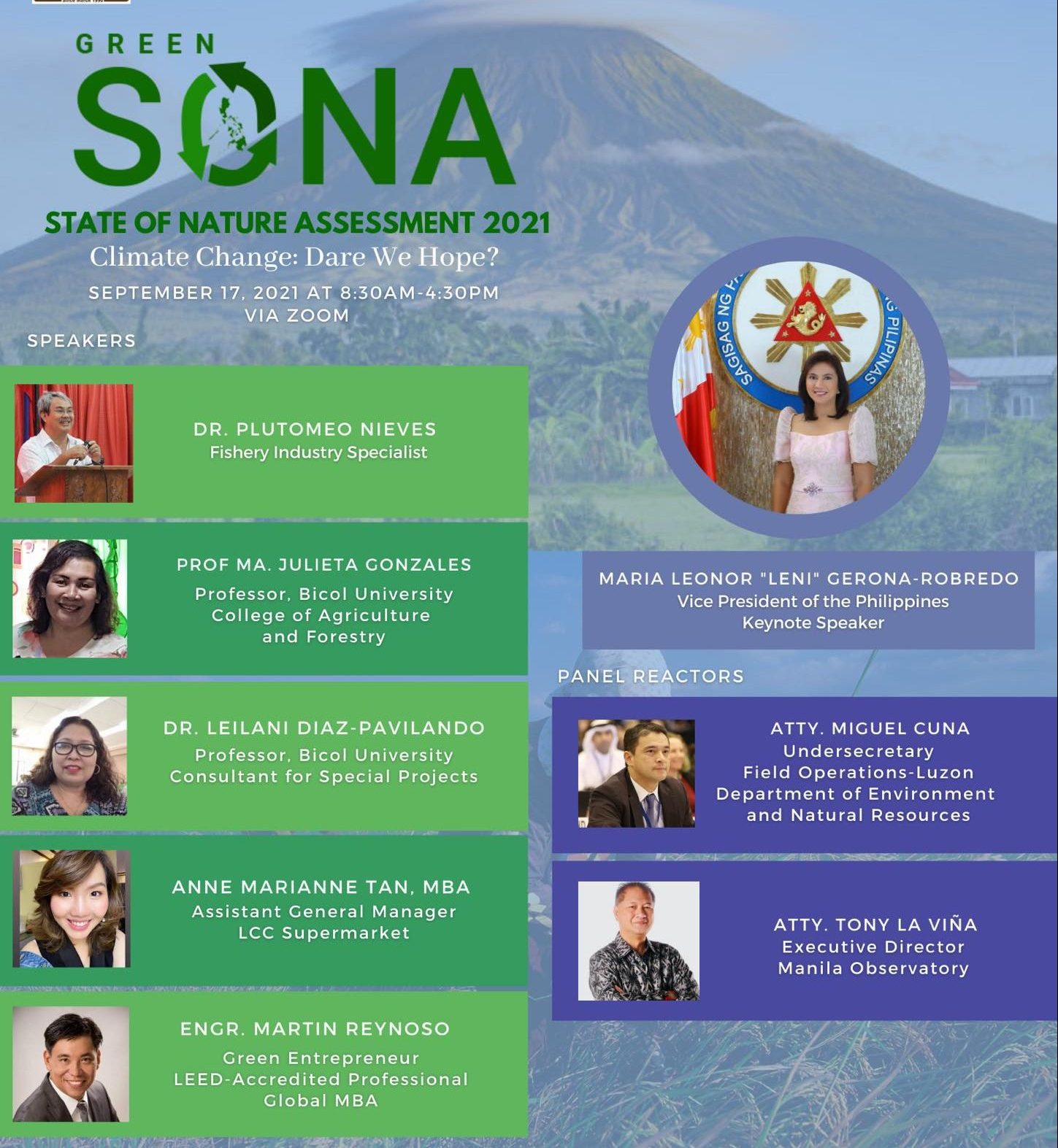
State of Nature Assessment 2021: “Climate Change: Dare to hope”

Year after year, rapidly rising global temperatures are wreaking havoc on the Earth’s climate system, posing a serious threat to Nature and all of humankind. Scientific assessments have established that global warming has worsened steadily since the Industrial Revolution, due to concentrations of heat-trapping greenhouse gases emitted into the atmosphere by human activities such as the burning of fossil fuels, mindless consumerist lifestyles, and unsustainable development practices. For the sake of human survival, a universal call is repeatedly echoed about the
need for expert scientists, world leaders, government and private entities, and the general citizenry to unite in seeking sustainable solutions to the climate crisis.

We invite you to travel with us online as Kamayan Para sa Kalikasan Forum visits Bicol, the local lens from which we are going to spotlight this year’s State of Nature Assessment (Green SONA 2021), entitled, “Climate Change: Dare We Hope?” Join the discussions and learn how you can contribute to implementing sustainable solutions and achieving Climate Neutrality by 2050. Mark the date: September 17, 2021 from 8:30AM to 4:30PM.

You can access our Livestream at this link:

https://fb.watch/gdUYkQJ8Si/

State of Nature Assessment 2020 Resolutions

STATE OF NATURE ASSESSMENT
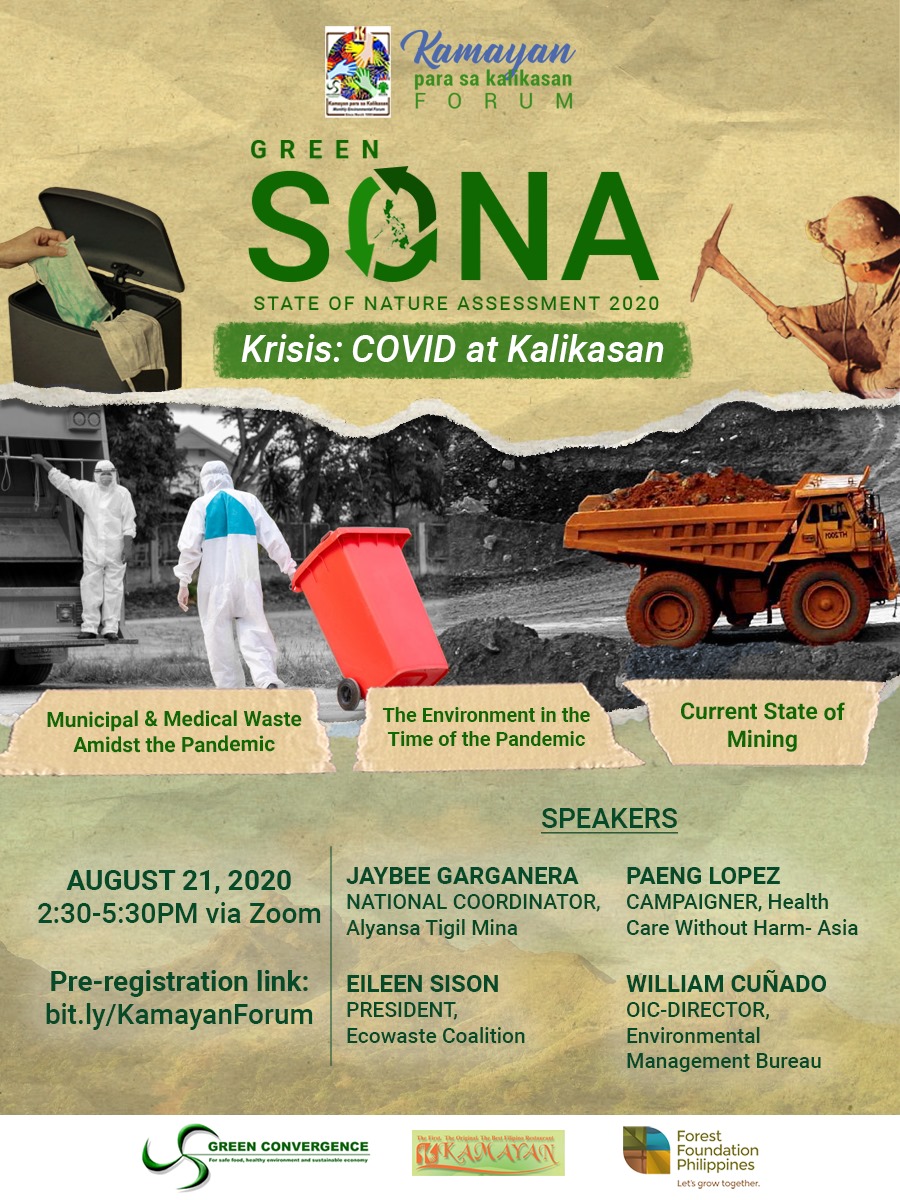
Krisis: COVID at Kalikasan
August 21, 2020

RESOLUTIONS

Whereas the Philippines is a country gifted with rich natural resources considered as among the most remarkable in the world and has unique topographies teeming with biodiversity;

Whereas the rich geographical ecosystems of the Philippines provide ecological services to the people and protect them and other life forms from the impact of climate change;

Whereas our country’s characteristic of being mountainous mitigates impacts of stronger typhoons brought about by climate change;

Whereas the world, the Philippines not exempted, is now challenged with COVID-19 pandemic that has claimed lives and drastically affected economy due to the imposition of needed lockdowns and community quarantine to prevent community transmission of the disease;

Whereas the use of disposable protective gadgets such as face masks, face shields, personal protective equipment (PPE) have been mandated as precautionary measures to manage community transmission of COVID-19;

Whereas municipal and medical wastes are increasing due to the disposal of protective gadgets against COVID-19;

Whereas the increasing volume of waste generated, consequently increased disposal fees, thereby diverting hospital budget to address COVID-19;

Whereas healthcare facilities have existing protocols that have been proven effective in the management and disposal of infectious waste way before COVID-19;

Whereas waste collectors, as frontliners, need provision for hazard pay and guaranteed availment of regular employee benefits, considering their work exposure in the disposal of infectious waste;

Whereas talks in Congress have been ongoing to use incineration to address the mounting volume of infectious waste;

Whereas RA 8749 or The Philippine Clean Air Act of 1999 bans incineration due to the emission of dioxin and other toxic substances that pose hazards to health and ecosystems;

Whereas RA 8749 mandates instead the use of non-burn technologies to address infectious waste;

Whereas mining projects that were suspended or cancelled by then Secretary Gina Lopez due to environmental violations or non-compliance with contractual obligations, are now recommended to be re-opened as part of the economic recovery/stimulus program in response to COVID19;

Whereas the impact of mining on the environment and human lives has been proven to be devastating and threatens our geographic ecosystems, biodiversity and watersheds that protect us from the impact of climate change and provide good quality of life for all;

Whereas a better normal must be conceptualized to ensure the health of people, other creatures, and that of our ecosystems, to bring about an ecological sustainable environment for present and future generations to enjoy;


We, the participants of the 2020 State of Nature Assessment with the theme, “Krisis: COVID at Kalikasan” held this August 21, 2020 via Zoom, call on the government to:

CRITICALLY evaluate and RE-THINK the re-activation of mining sites all over the country;

REJECT the idea that mining and river-dredging are stimulus activities for economic recovery amid COVID-19;

BAN open-pit mining as promised by President Duterte since 2016;

ENACT the Green Bills pending in Congress including new laws on Minerals Management, Sustainable Forest, National Land Use, Indigenous Conservation Areas, Freedom of Information and Defending Human Rights Defenders;

STOP any plan to legalize the use of incineration;

PROMOTE instead zero waste lifestyle;

BAN single-use plastics and OPT for reusable and washable PPEs;

ENFORCE the ban on incineration found in Section 20 of RA 8749 or Philippine Clean Air Act of 1999 and instead MANDATE the use of non-burn technologies to address and manage infectious waste;

CREATE a comprehensive database on best practices in treating special wastes with the use of non-burn technologies;

EMPOWER and ASSIST the health care industry and people to practice and promote ecological solid waste management through strict compliance of segregation at source, and environmentally-friendly management of infectious waste;

MANDATE hazard pay and regular employee benefits (SSS, Philhealth, Pag-ibig) to waste collectors of infectious waste;

PROVIDE people-centered, environment-friendly and country-based programs and solutions to address COVID-19;

For our part as members of civil society, we resolve to:

ENSURE that natural environment is not compromised and human lives not endangered;

SUPPORT local government units that oppose mining;

OPPOSE the implementation of environmentally destructive projects such as the use of incineration and continued operations of large-scale mining, and other environmentally destructive projects;

LOBBY for the government to adopt an ecological paradigm in conceptualizing a  “Better  Normal” plan to ensure that similar occurrences of this pandemic are avoided or managed properly ensuring no additional health hazards to people and the environment;

PROMOTE Laudato Si as blue print for moving forward to a better normal;

RAISE AWARENESS among the people especially the youth, for them to become champions of ecological sustainable development;

PROMOTE behavioral change and create a culture that promotes care for the environment;

UNITE to protect the environment and SYNERGIZE our actions that are socially inclusive, economically sustainable, and environmentally beneficial; and lastly,

AFFIRM God’s gift of life and UPHOLD the integrity of creation.
Krisis: Covid at Kalikasan

2020 will always be remembered as the COVID-19 pandemic year. It is a year filled with worry for public health and safety, hardships for frontliners, and so much more. The fight against the pandemic led to lockdowns and strict social distancing measures. As a result, the world saw a standstill in human activities- even those that are destructive to the environment. News of bluer skies and cleaner air were reported across the globe.

However, can we really consider this a win for mother nature? Or have we just turned a blind eye to new and old environmental threats amidst the pandemic? While the Philippines addresses the health crisis, it may soon face new issues such as management of all the waste produced during the pandemic, or even long-time issues such as significant developments in the mining situation of the country which have gone unnoticed by many.

Philippine environmental defenders converged in 2019 Green SONA

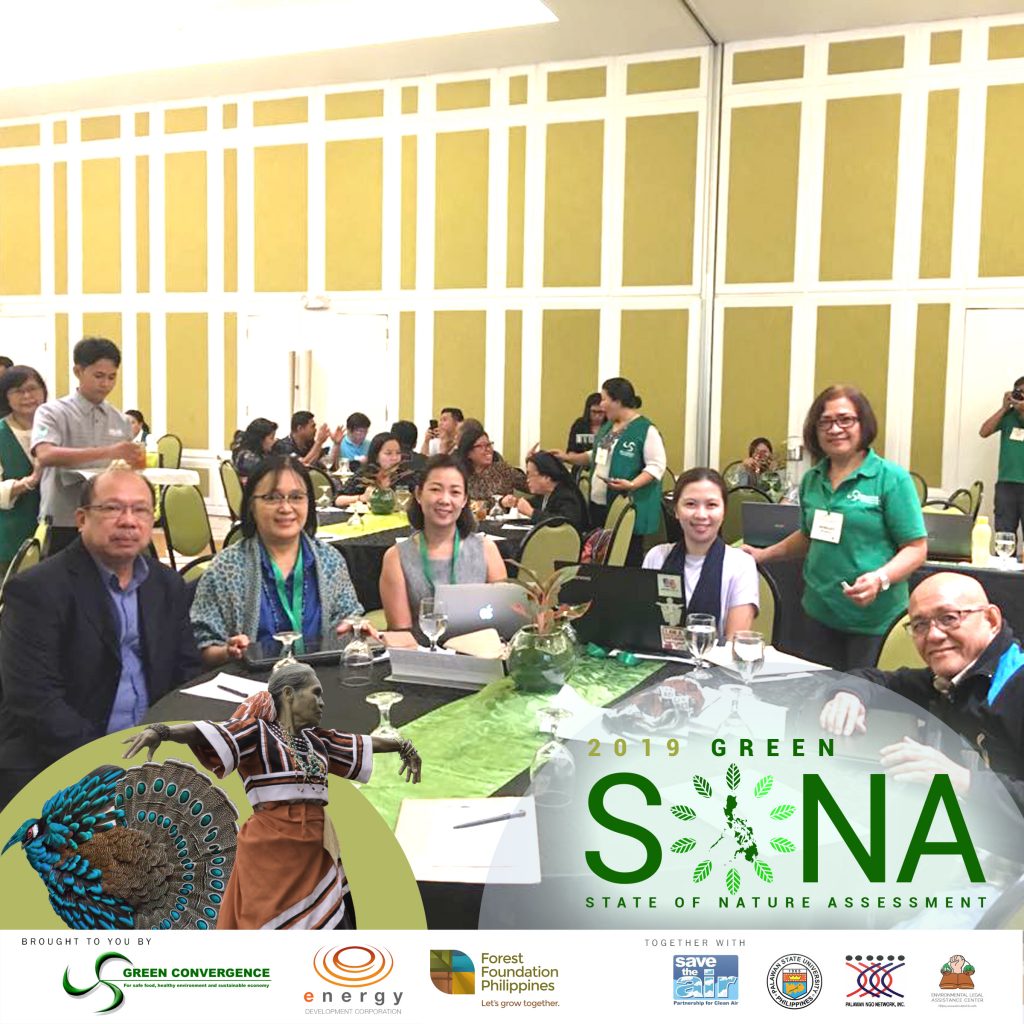
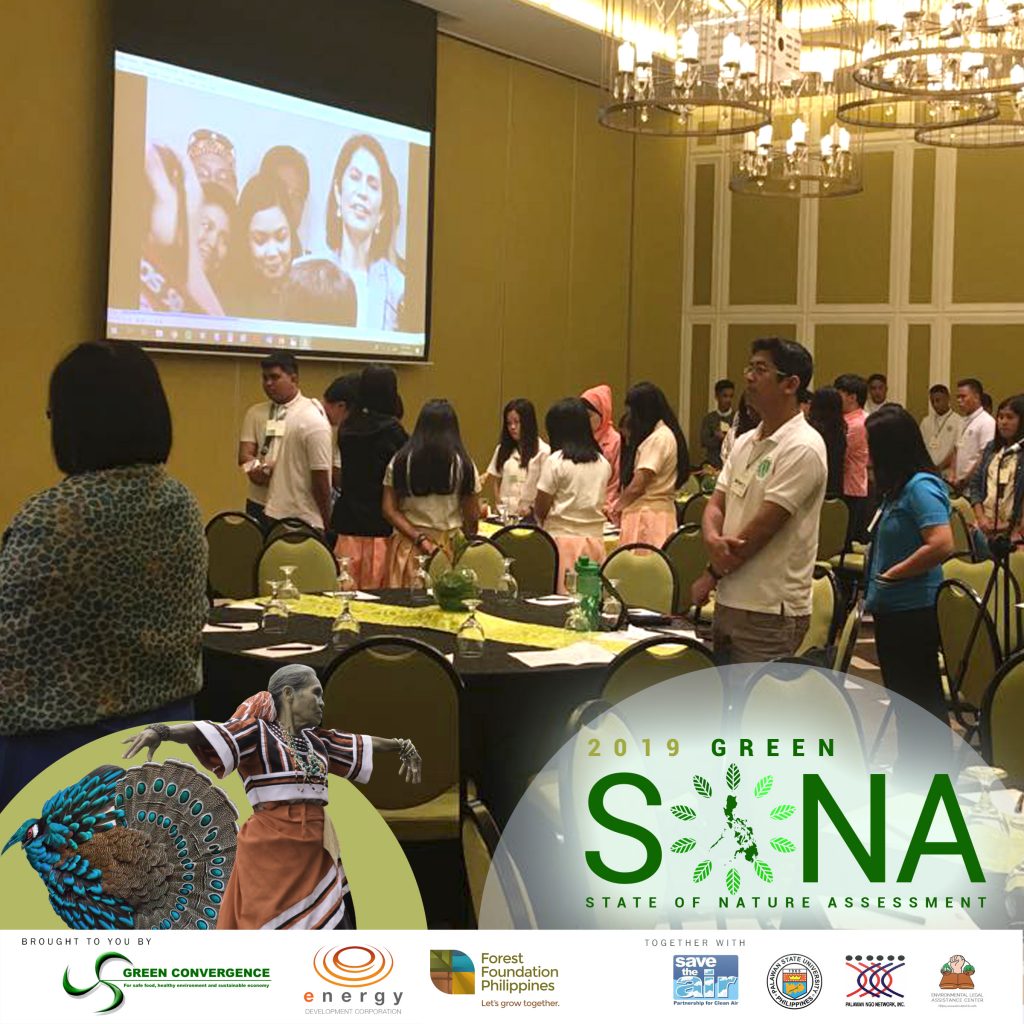
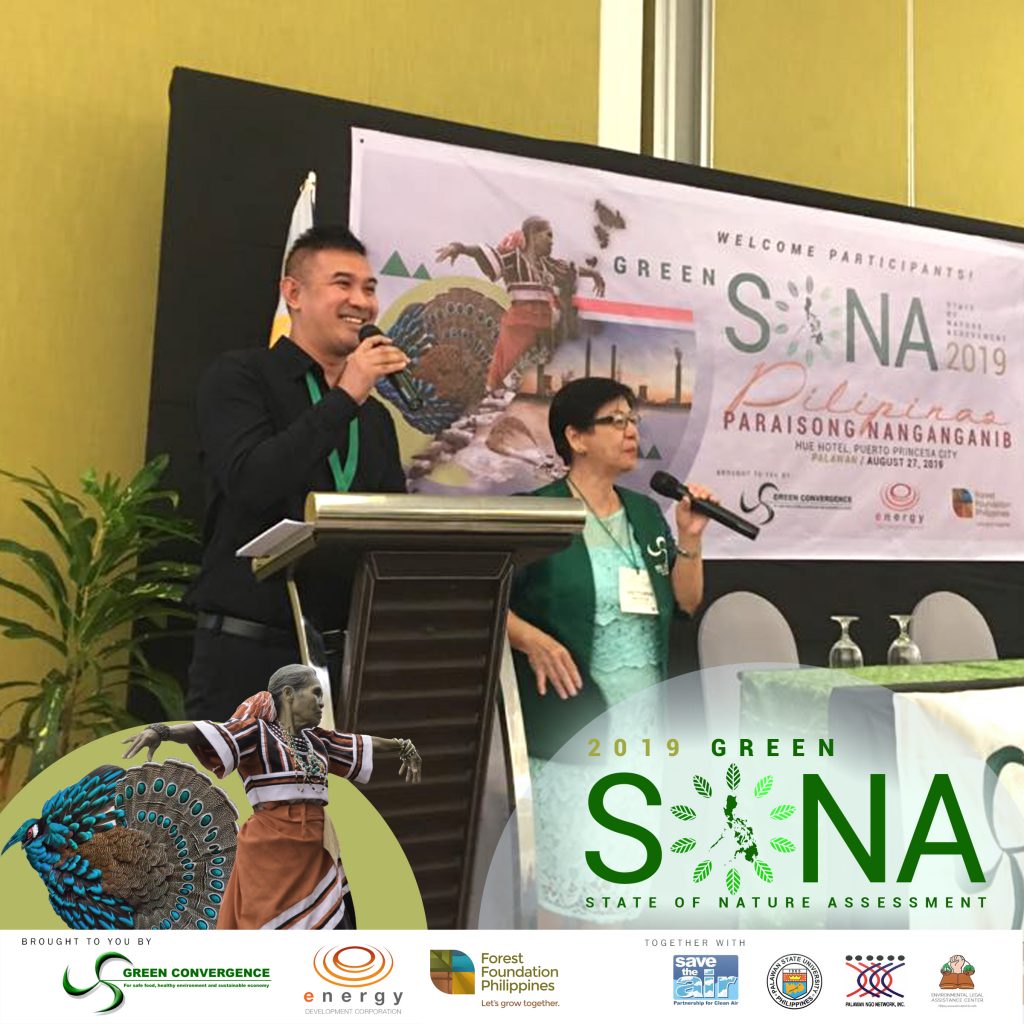
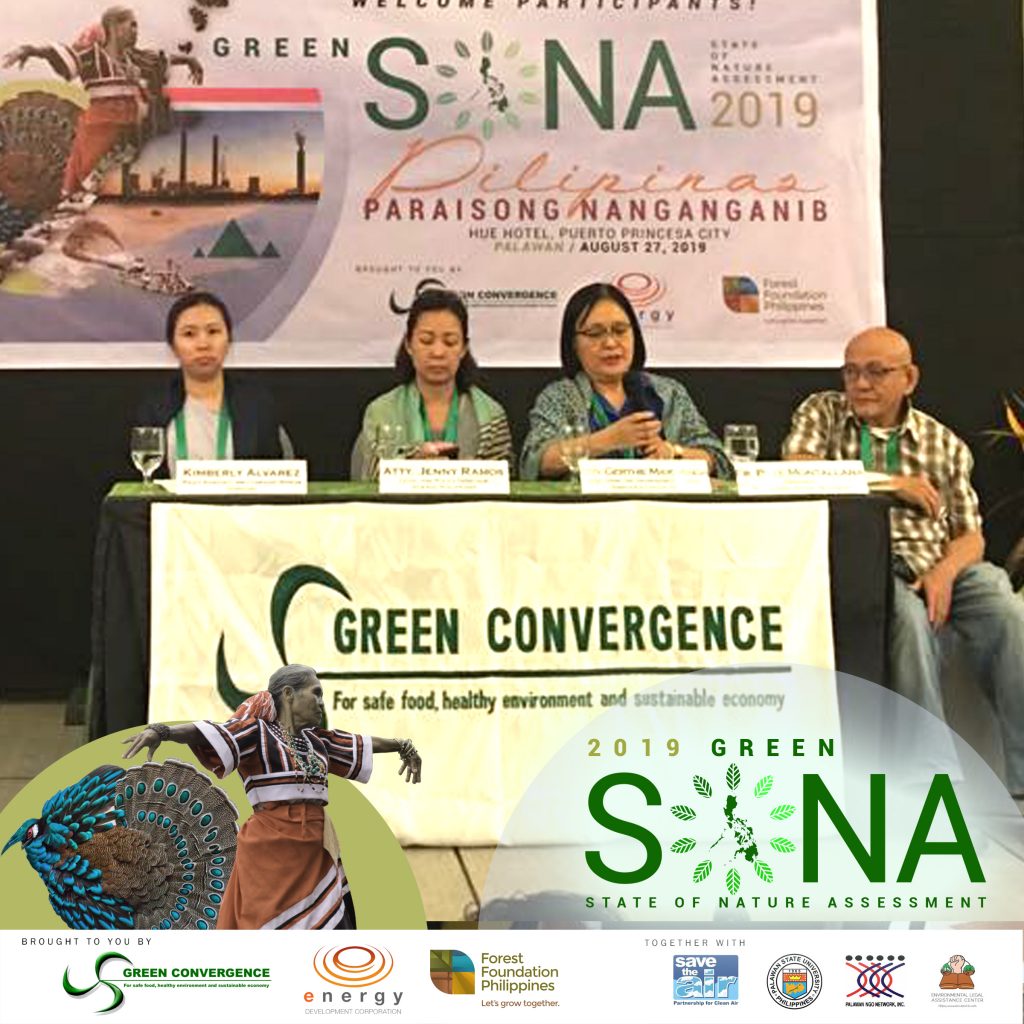
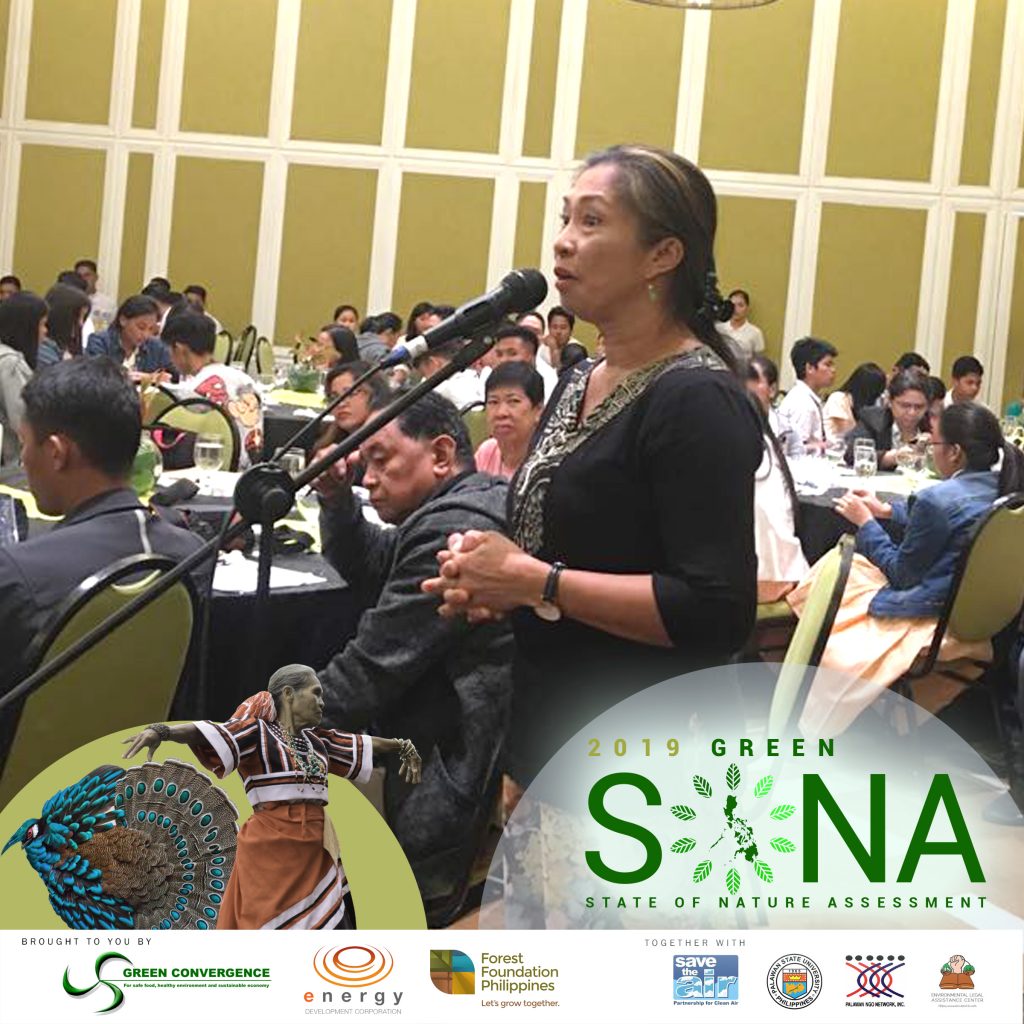
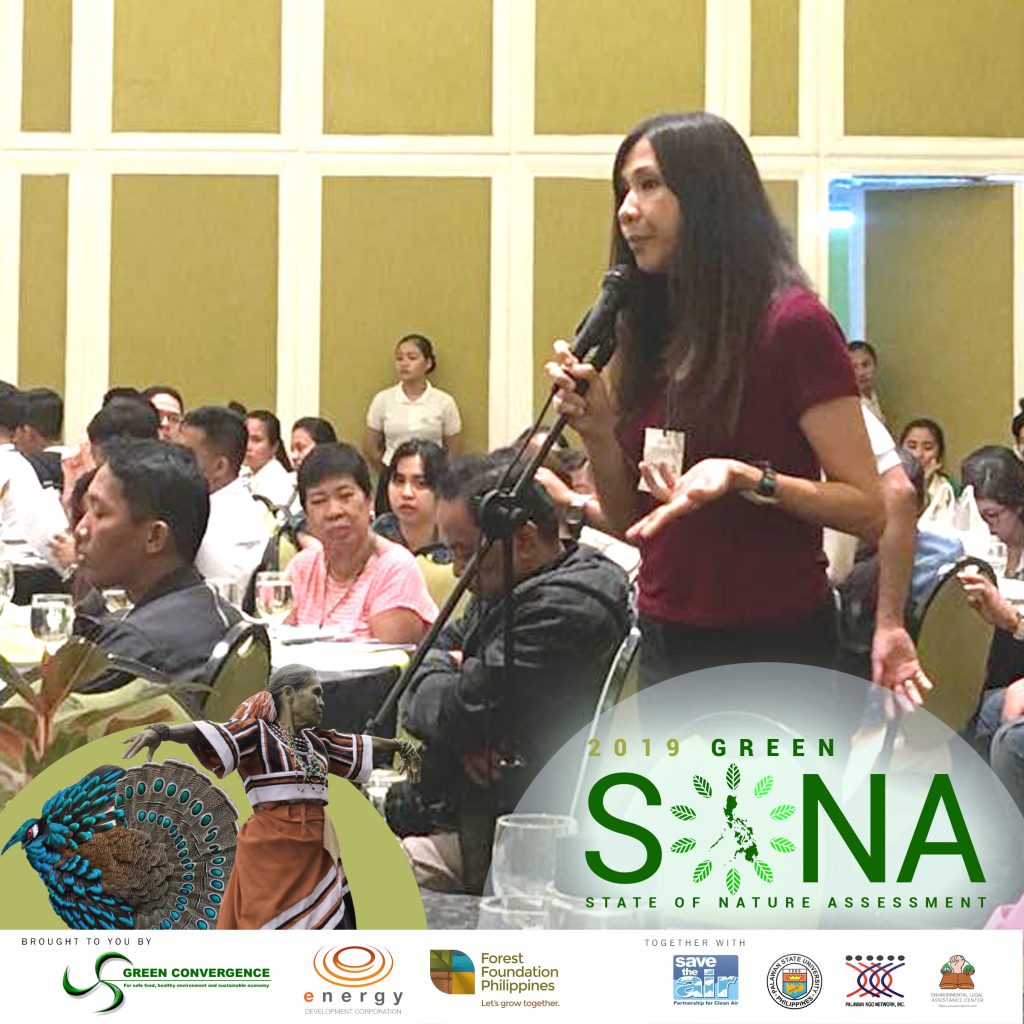
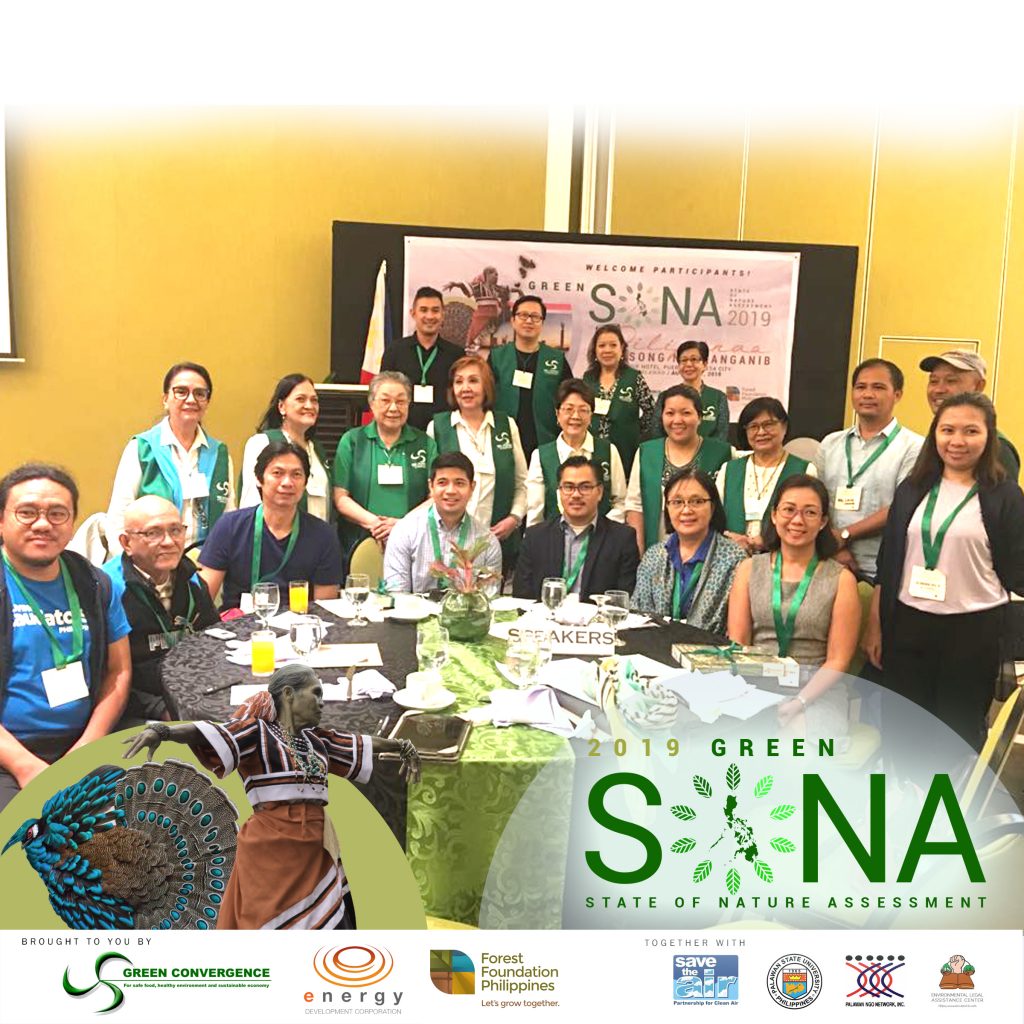
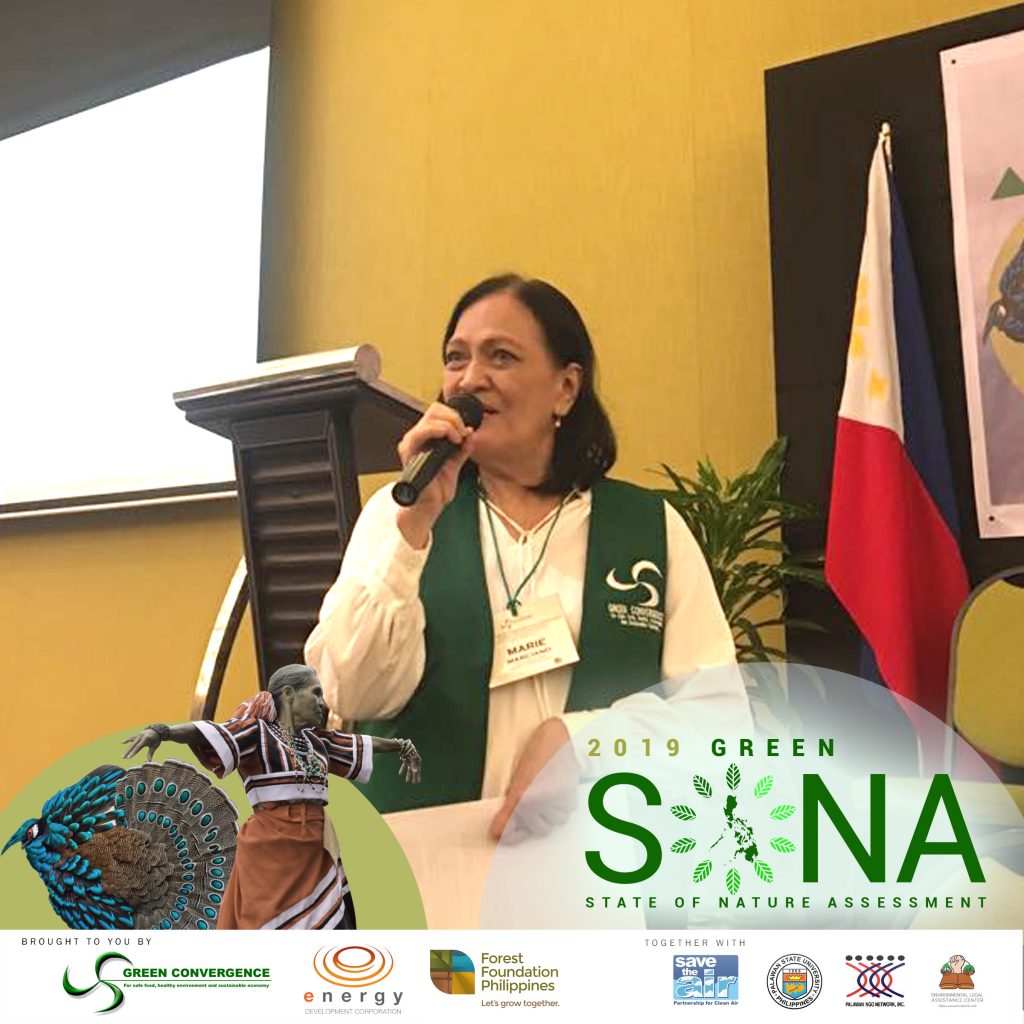
Green Convergence together with the Energy Development Corporation (EDC) and the Forest Foundation Philippines, and with the support of Partnership for Clean Air, Palawan State University, Palawan NGO Network, Inc. (PNNI), and the Environmental Legal Assistance Center (ELAC) held the 2019 State of Nature Assessment (#GreenSONA): Pilipinas, #ParaisongNanganganib at the Hue Hotel, Puerto Princesa City on August 27, 2019. An environmental tour in three learning sites in Puerto Princesa City, namely, Bacungan Mangrove River, Puerto Princesa City Landfill, and PNNI Office was conducted after the event on August 28, 2019.

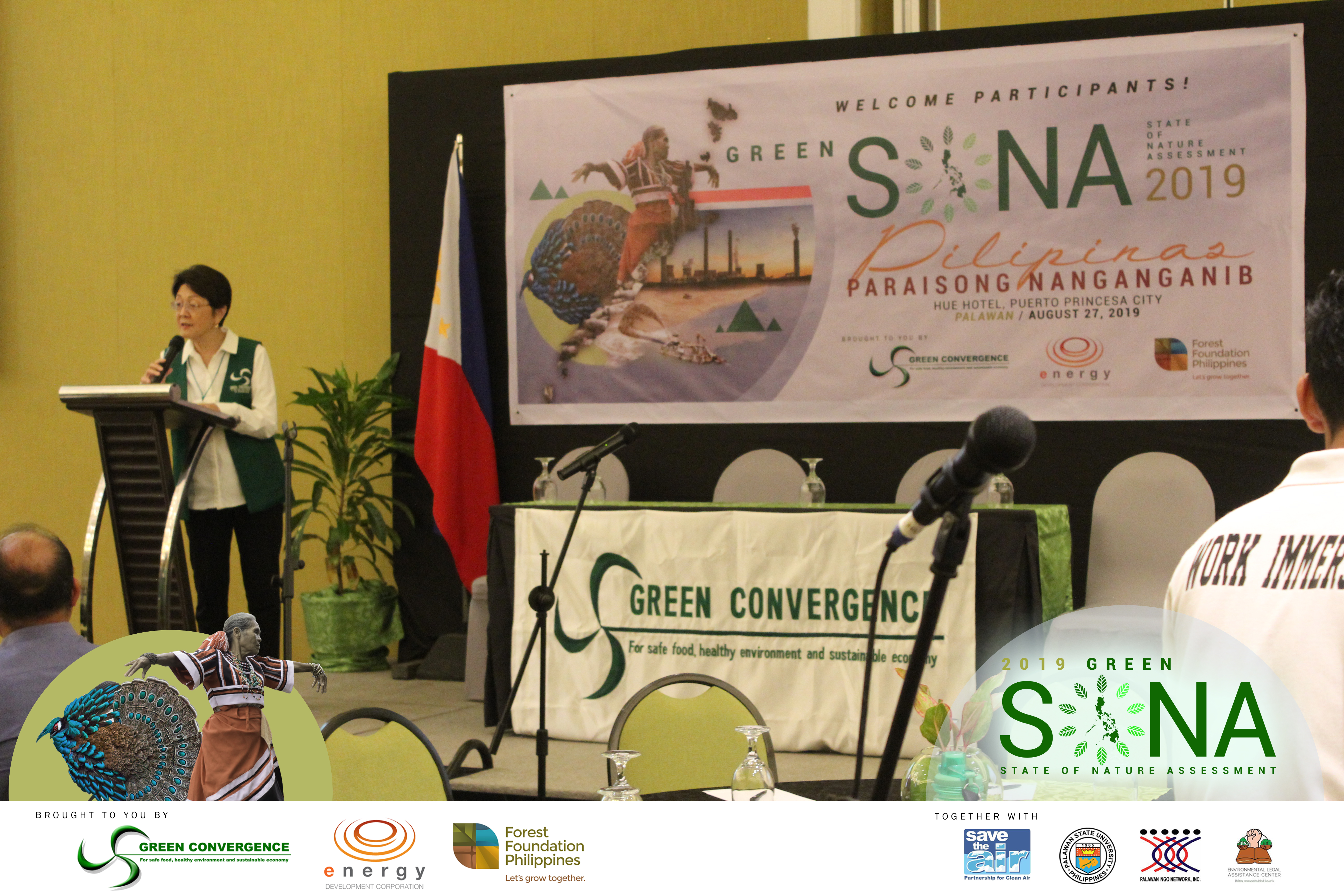
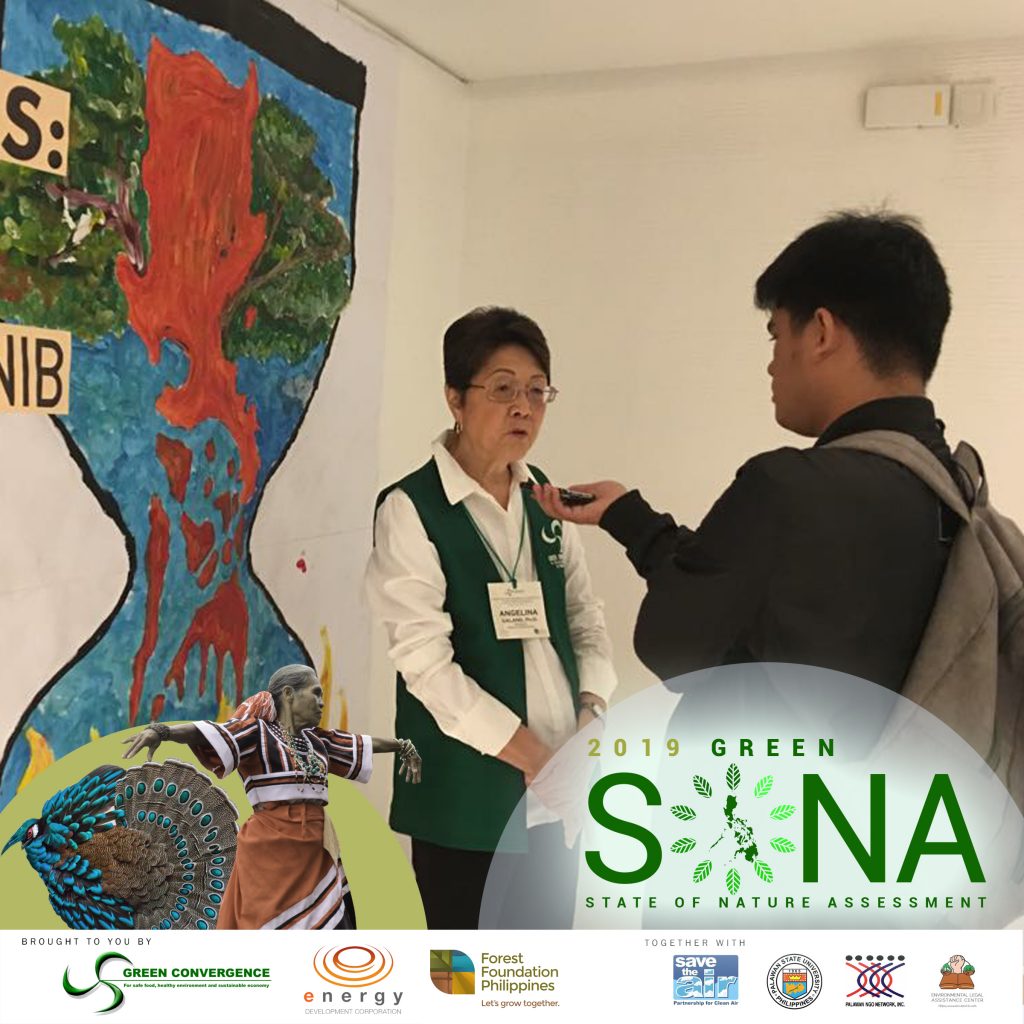
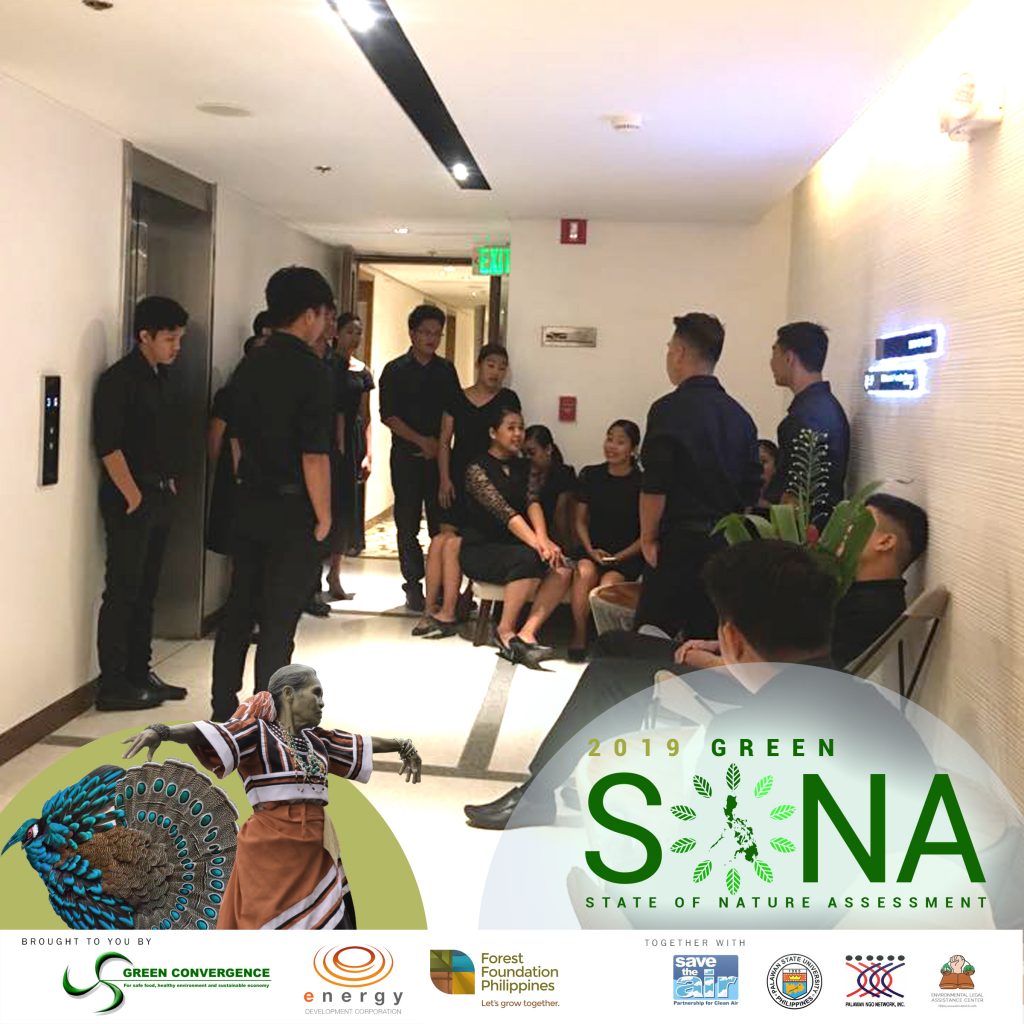
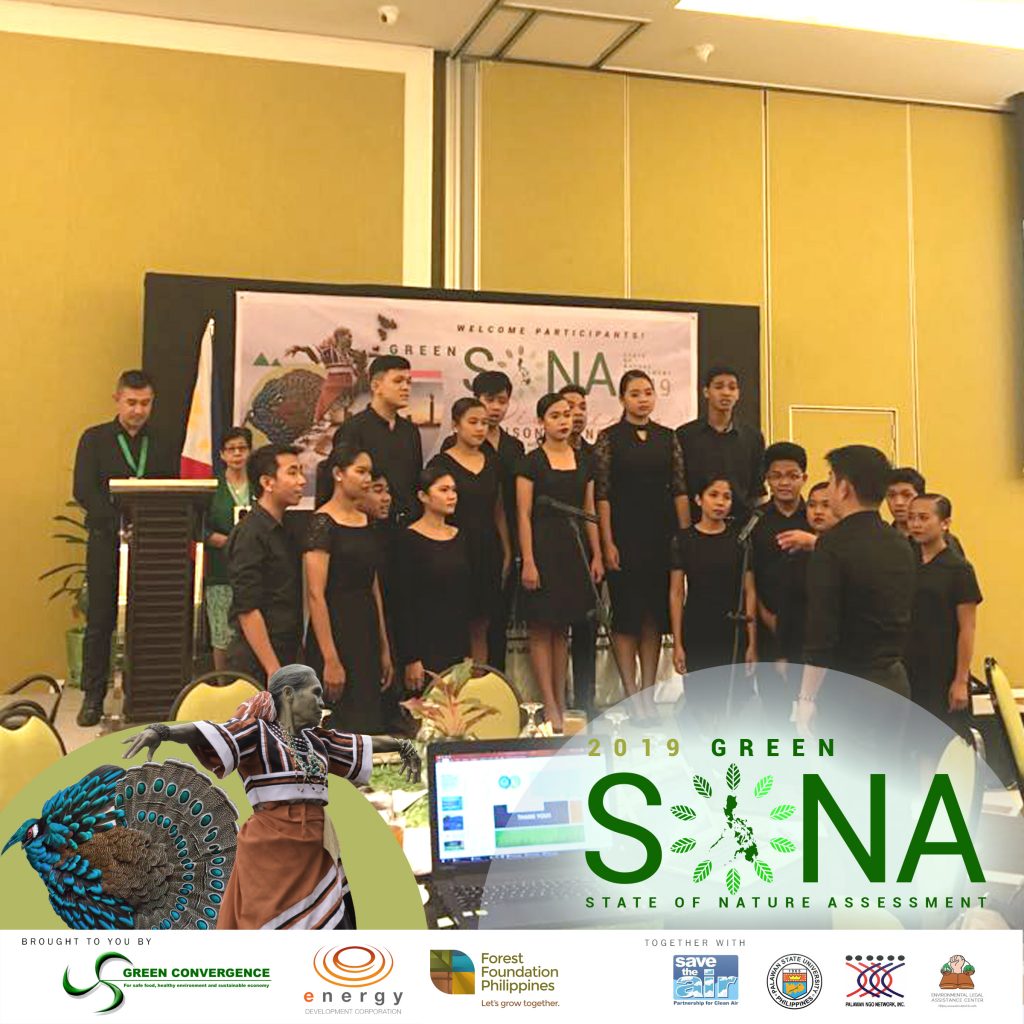
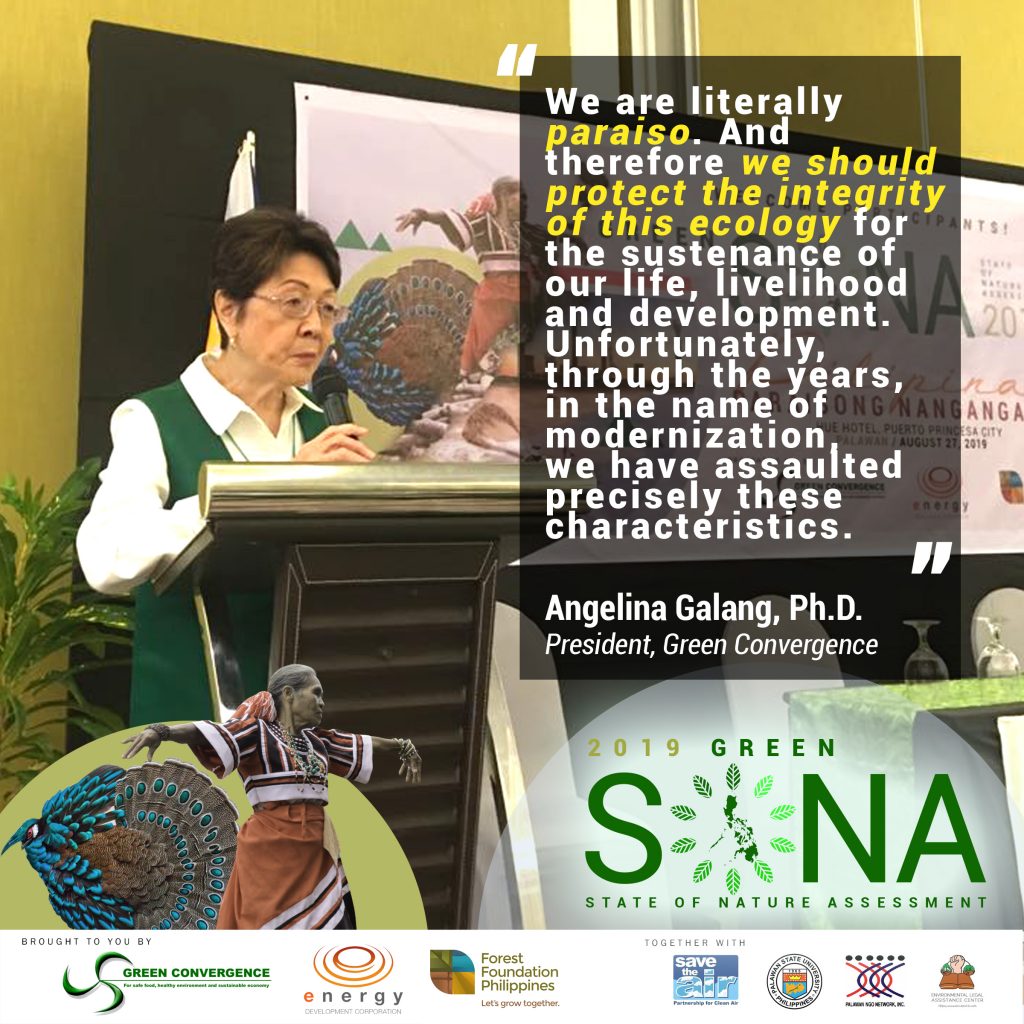
The Green SONA commenced with the National Anthem and Invocation led by singers from the Palawan State University. An opening number featuring songs in Cuyonon and Filipino languages were also performed by the group. Their performances were shortly followed by an orientation to the Green SONA by Green Convergence President Angelina P. Galang, Ph.D. In her message, she emphasized that “We are literally paraiso. And therefore we should protect the integrity of this ecology for the sustenance of our life, livelihood and development. Unfortunately, through the years, in the name of modernization, we have assaulted precisely these characteristics.”

Green Convergence President Angelina P. Galang, Ph.D. orients everyone about what the annual State of Nature Assessment or Green SONA is all about.


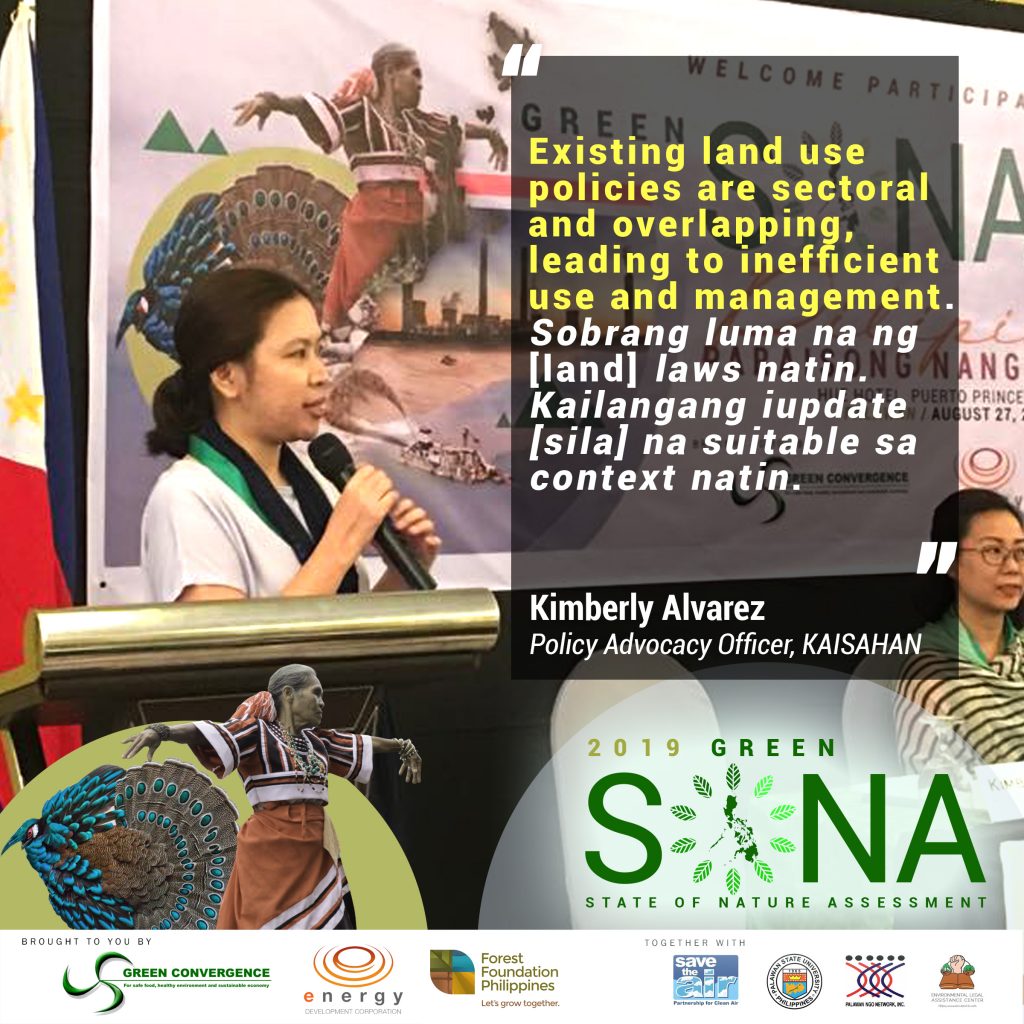
The first part of the annual assessment of the national environment dealt with its threats. Kimberly Alvarez, Policy Advocacy Officer of Kaisahan tungo sa Kaunlaran ng Kanayunan at Repormang Pansakahan or Solidarity Towards Countryside Development and Agrarian Reform (also known as Kaisahan) discussed the negative implications brought about by the lack of land use policy in the country. She mentioned, “Existing land use policies are sectoral and overlapping, leading to inefficient use and management. Sobrang luma na ng [land] laws natin. Kailangang iupdate [sila] na suitable sa context natin.”

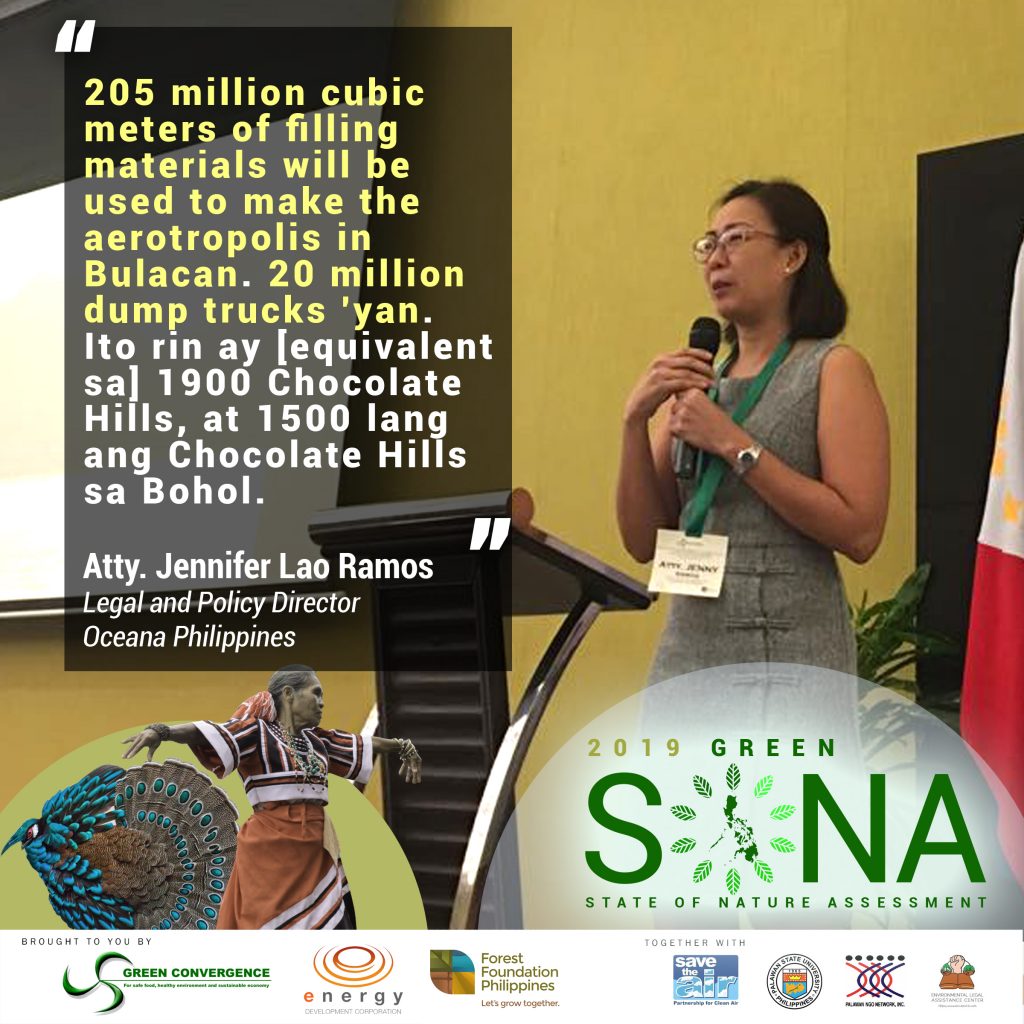
Alavarez’ report was followed by Atty. Jennifer Lao Ramos’ presentation on the impacts of reclamation activities to marine biodiversity. She stressed that reclamation should not be the operative word used for the activity, and it must be “dump and fill.” She cited the planned aerotropolis in Bulacan as an example, “205 million cubic meters of filling materials will be used to make the aerotropolis in Bulacan. 20 million dump trucks ‘yan. Ito rin ay [equivalent sa] 1900 Chocolate Hills, at 1500 lang ang Chocolate Hills sa Bohol.”

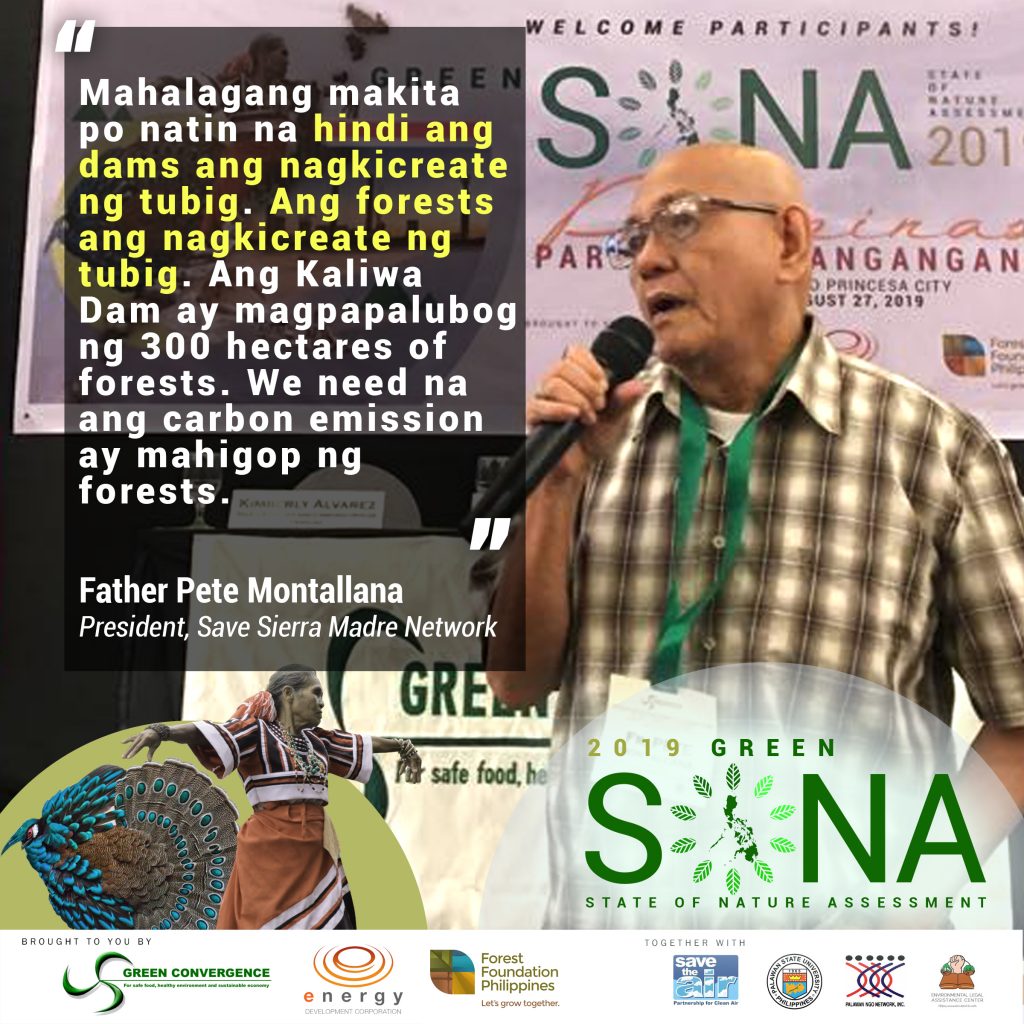
Father Pete Montallana, Executive Director of Save Sierra Madre Network, on the other hand, was the one to talk about the dangers with large dams, with focus on the controversial Kaliwa Dam to be built in the Sierra Madre Mountain Range region. He reminded the audience that, “Mahalagang makita po natin na hindi ang dams ang nagkicreate ng tubig. Ang forests ang nagkicreate ng tubig. Ang Kaliwa Dam ay magpapalubog ng 300 hectares of forests. We need na ang carbon emission ay mahigop ng forests.

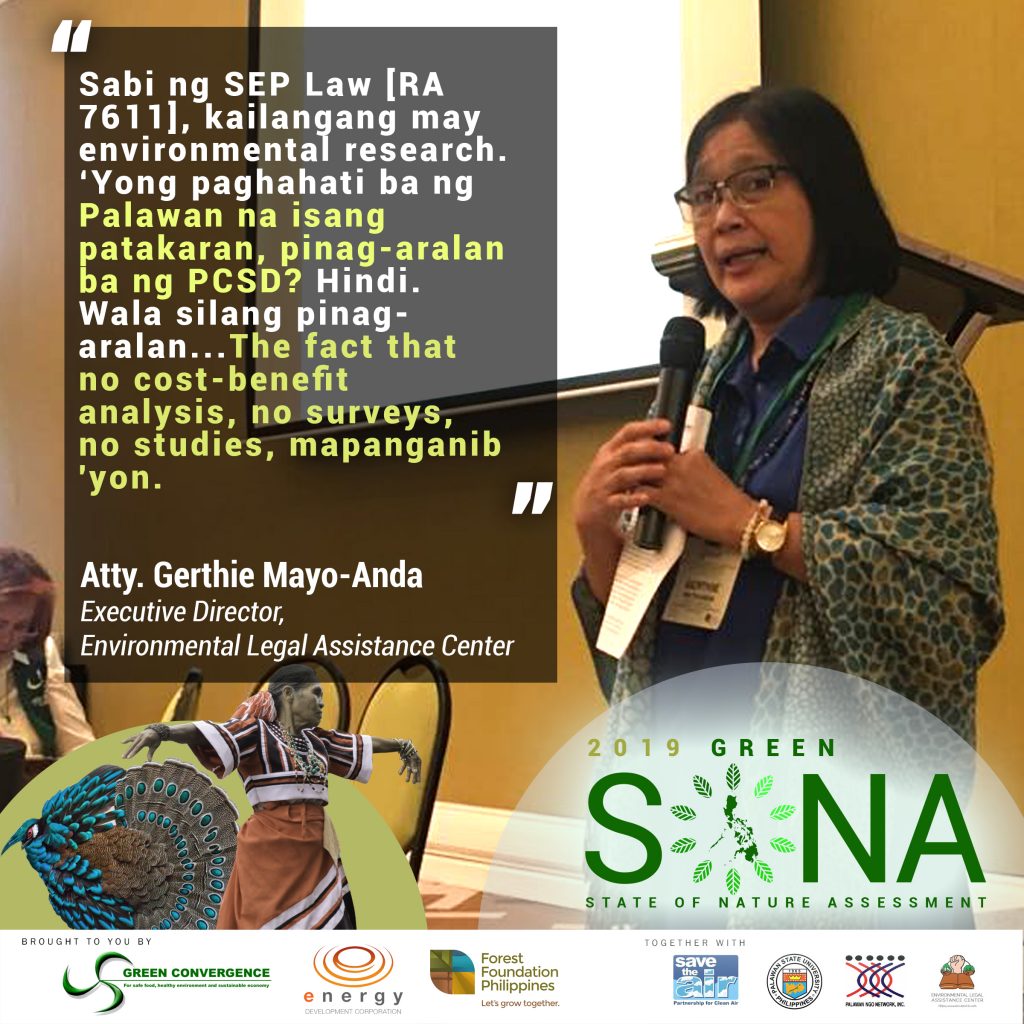
The session then moved to talk about an important local issue in Palawan that can affect the environment in a national scale. Atty. Gerthie Mayo-Anda, Executive Director of the Environmental Legal Assistance Center on the division of Palawan into three separate provinces emphasized, “Sabi ng SEP Law [Strategic Environment Plan for Palawan o RA 7611], kailangang may environmental research. ‘Yong paghahati ba ng Palawan na isang patakaran, pinag-aralan ba ng PCSD [o Palawan Council for Sustainable Development]? Hindi. Wala silang pinag-aralan…The fact that no cost-benefit analysis, no surveys, no studies, mapanganib ‘yon.” She further exclaimed that the division will turn Palawan into a lost ecological frontier.

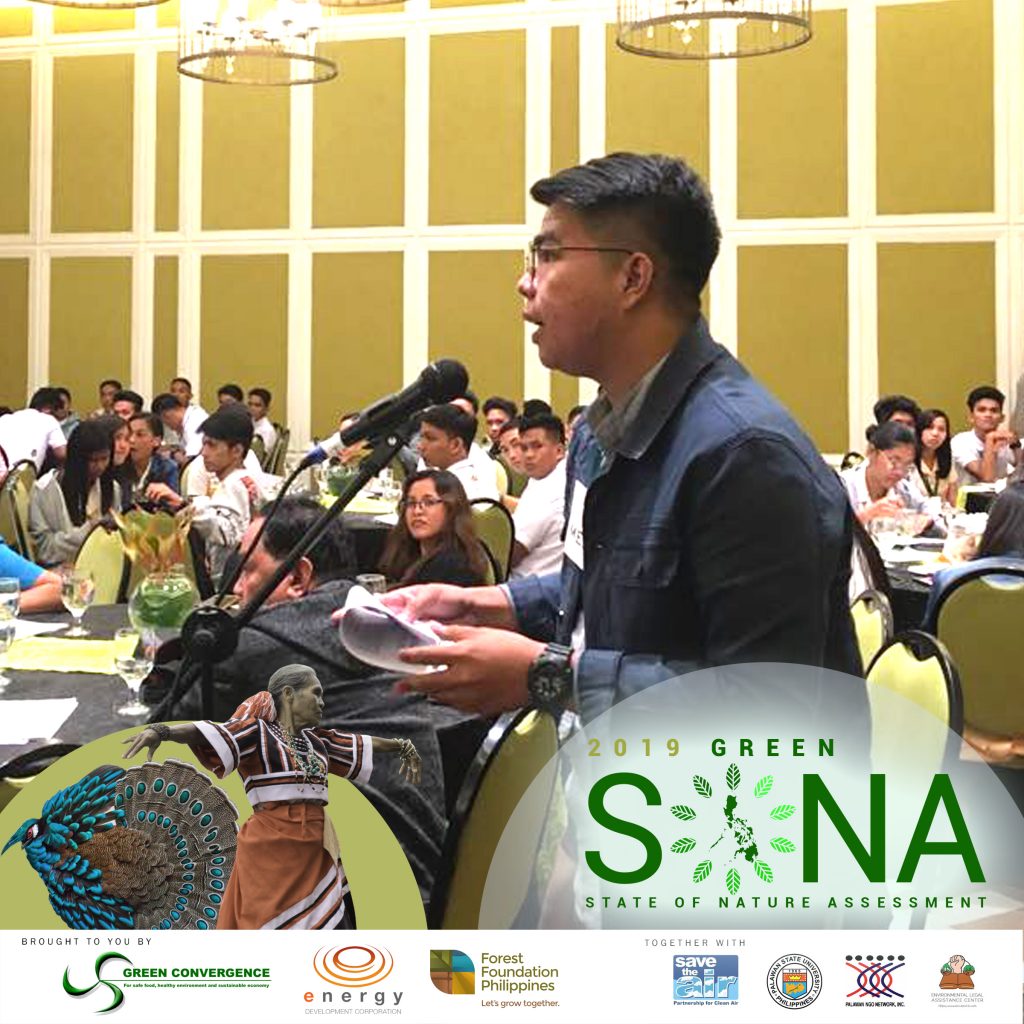
An open forum was held after the first four speakers delivered their talks.

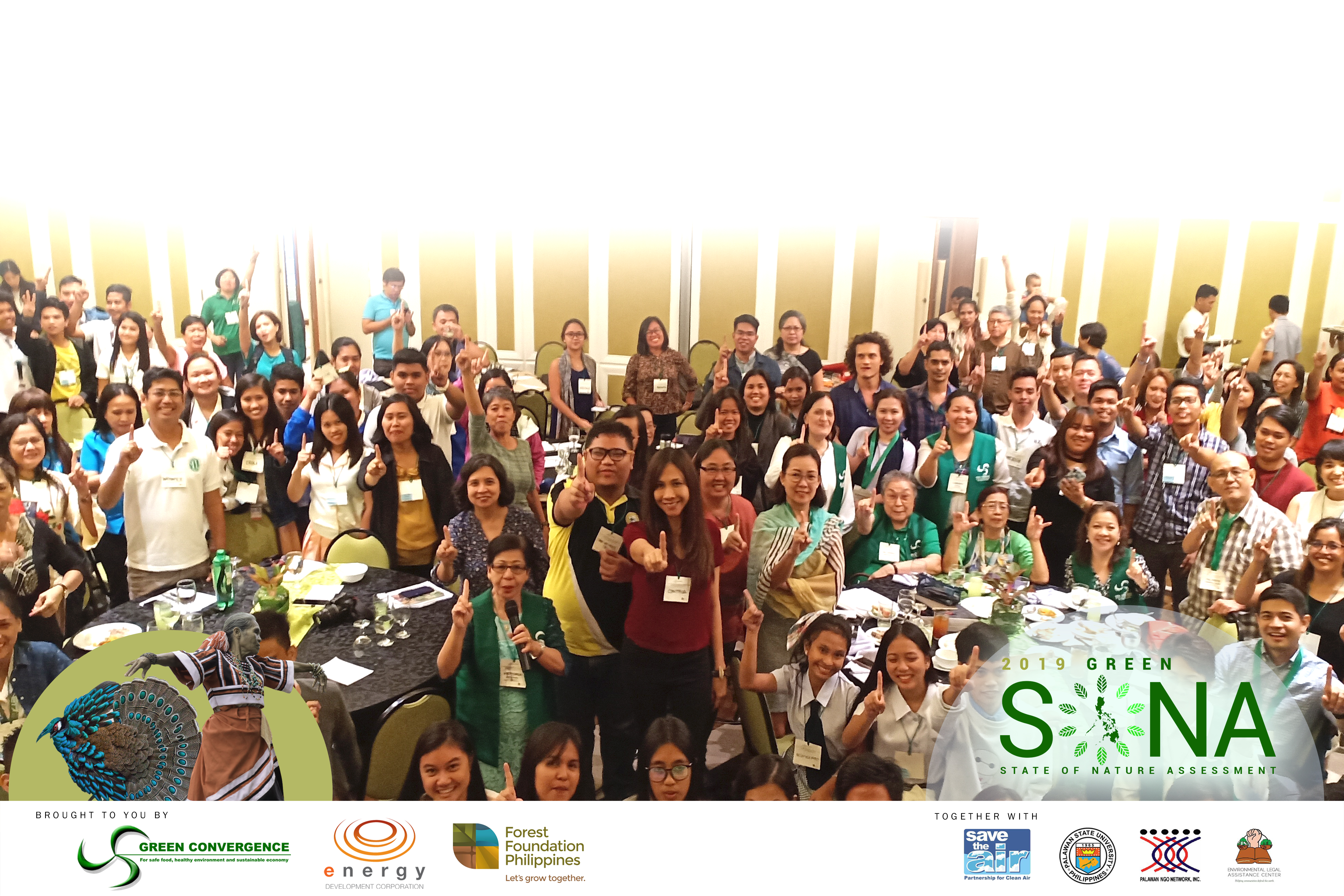
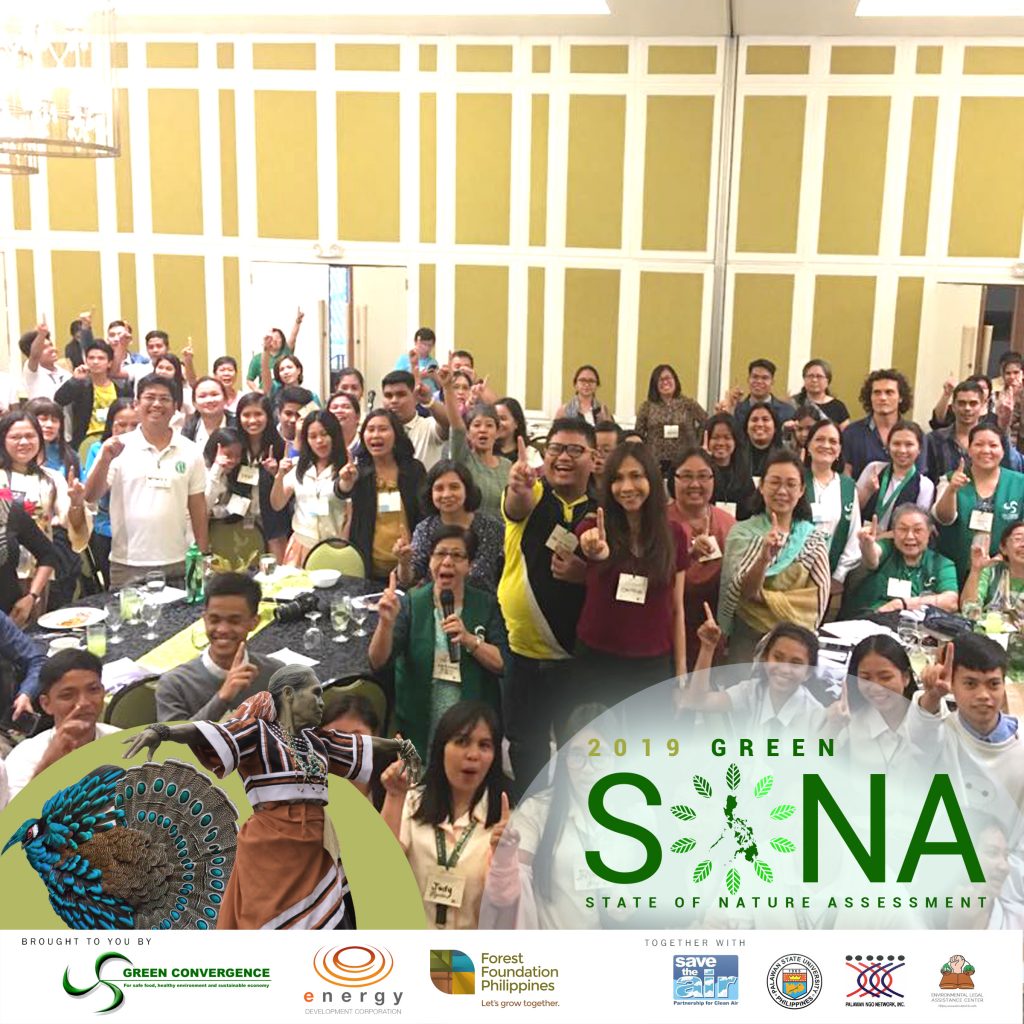
Participants of Green SONA 2019 shout, “One Palawan!” in support of the ongoing campaign of the province’s environmental defenders to protect the nationally significant ecosystem of Palawan from greedy political ambitions of some.


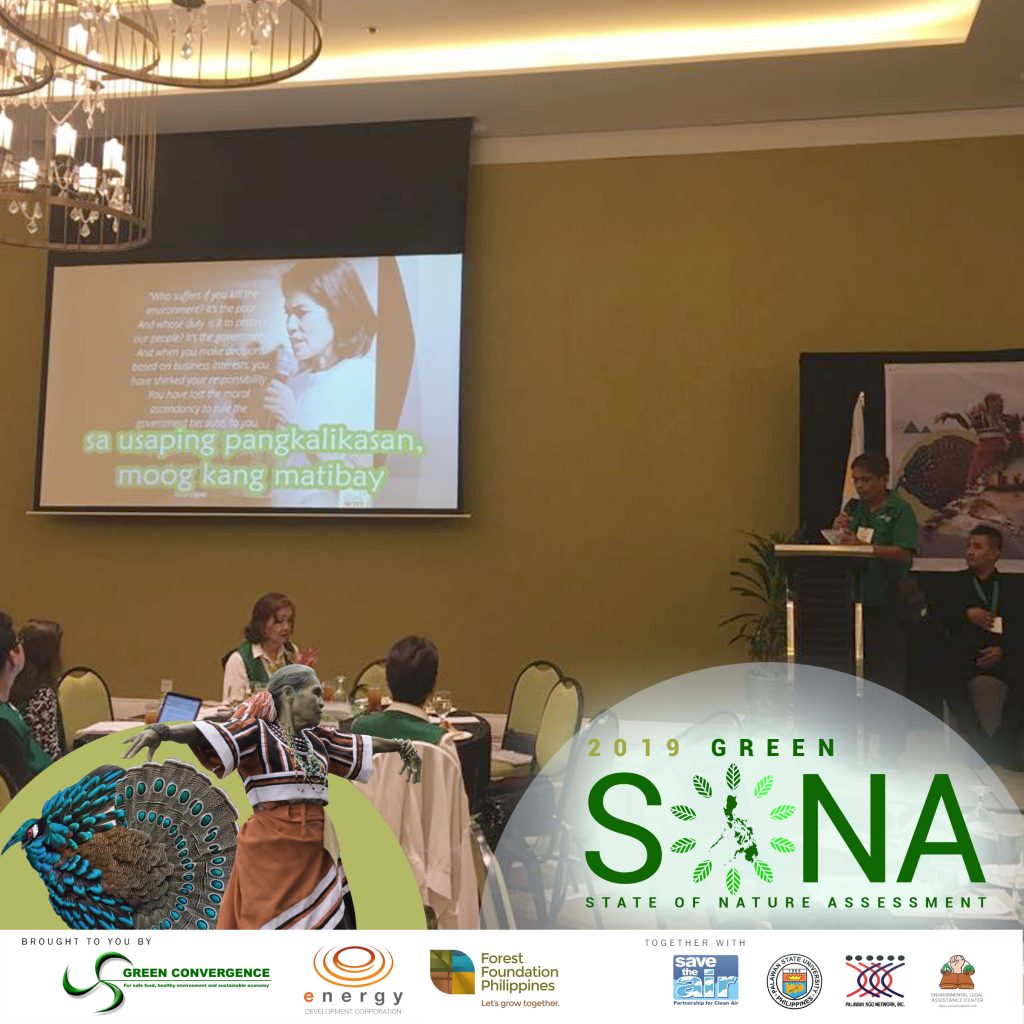
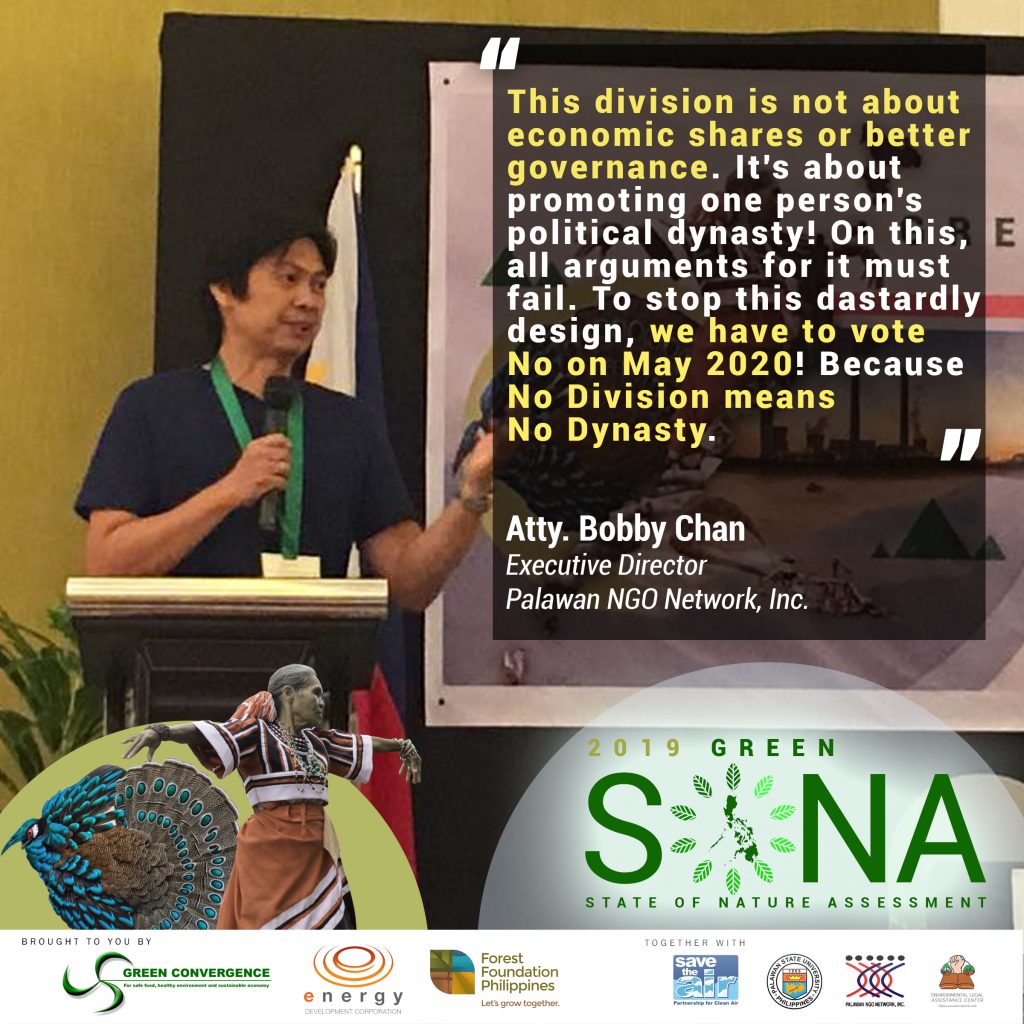
For the second part of the assessment, the environmentalists then evaluated the status of government programs related to the environment. Prominent Executive Director of PNNI, Atty. Bobby Chan was tasked to talk on the status of the enforcement of the Expanded National Green Program and Forest Laws in the Philippines. He reminded the participants that any policy will not be successful if the personal interests of a few overwhelm the interests of the public. He connected his presentation with the division of Palawan and said, “This division is not about economic shares or better governance. It’s about promoting one person’s political dynasty! On this, all arguments for it must fail. To stop this dastardly design, we have to vote no on May 2020! Because no division means no dynasty.”

Energy Development Corporation’s Assistant Vice President Miko de Vera shared the advocacy of his company to promote renewable sources for the country’s energy needs. Unfortunately, many barriers have to be overcome. He pointed out that, “The good news is, in many parts of the world, coal plants are being shut down. The bad news is, in the Philippines, we’re going for the opposite direction.”

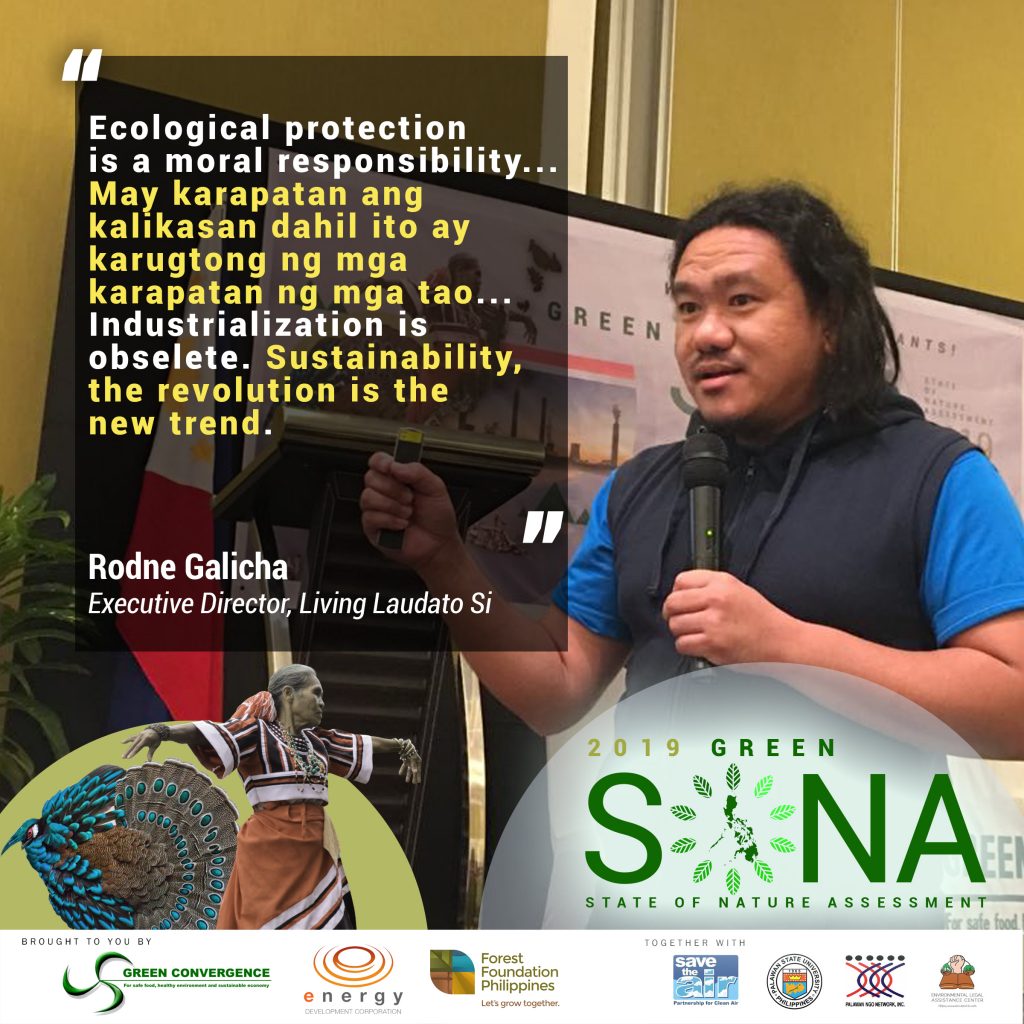
Finally, for the last report on the state of the Philippine environment, Living Laudato Si Executive Director Rodne Galicha encouraged the audience that should divest from companies and institutions that contribute to the further destruction of the environment. He noted that, “Ecological protection is a moral responsibility…May karapatan ang kalikasan dahil ito ay karugtong ng mga karapatan ng mga tao…Industrialization is obselete. Sustainability, the revolution is the new trend.”

Similar to the first part of the assessment, an open forum followed the speeches of the speakers. After this, Department of Environment and Natural Resources (DENR) MIMAROPA Regional Executive Director Henry Adornado, Ph.D. was asked to react to the reports and assessments delivered by the speakers, as well as the questions raised by the members of the audience. He assured everyone that, “In every management plan that we do, we [will] ensure that NGOs are invited.”

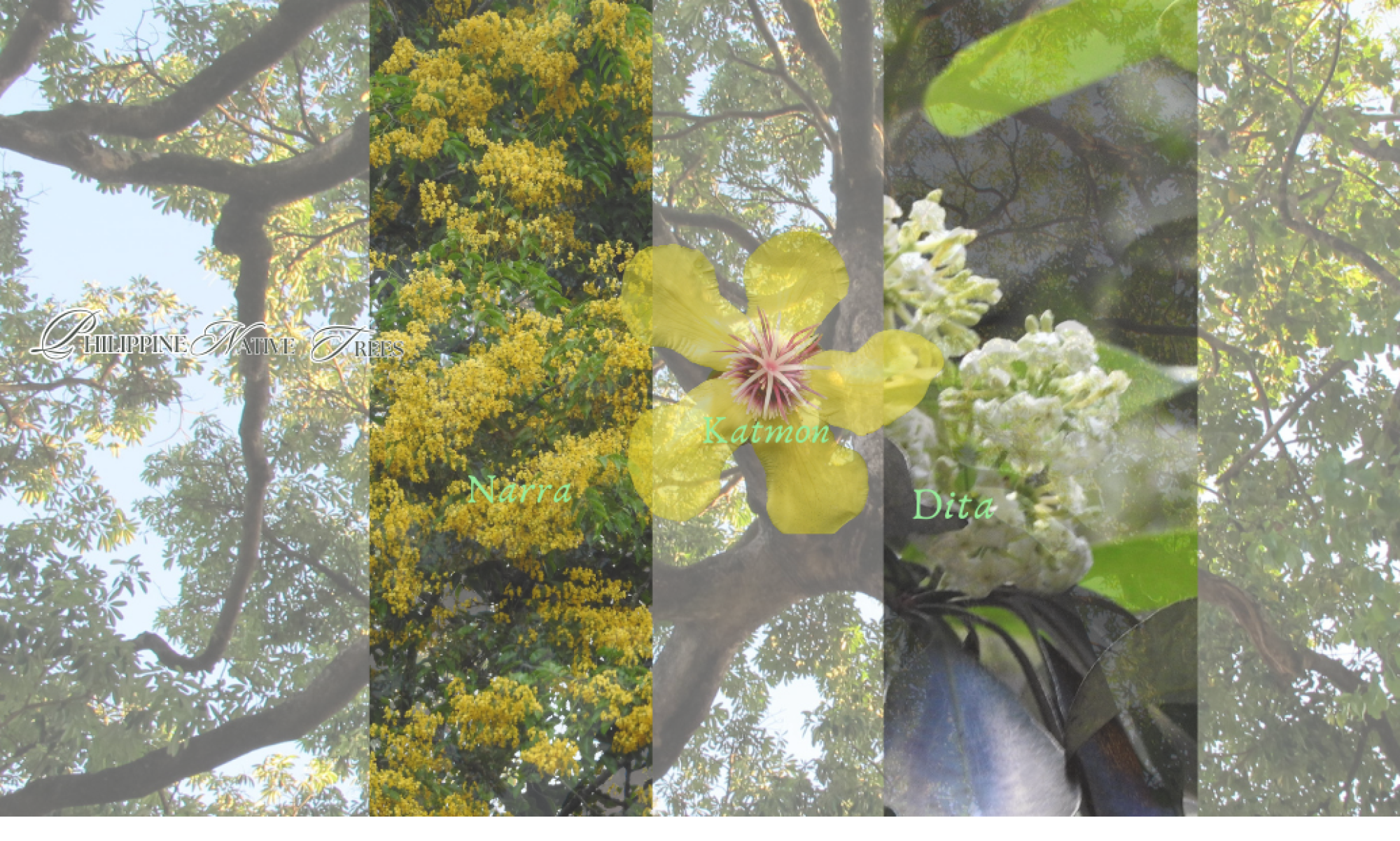
Upon the presentation of Imelda Sarmiento, Green Convergence Philippine Native Trees Program Head, of the Children’s Book Project featuring the Philippine native trees, Green Convergence Vice President delivered the resolutions of the annual Green SONA. It was immediately followed by a closing message by Atty. Louie Cascara, Legal Counsel of Palawan State University who spoke in behalf of the University President Ramon Docto, Ph.D

Green SONA 2019 was hosted by Victoria Segovia, a member of the Board of Trustees of Green Convergence, and Cris Ecaldre, a Faculty member at the Palawan State University. Green SONA is an annual gathering of the members of civil society organizations, the academe, the Church, the media, the indigenous communities, and other sectors to assess the state of the Philippine environment.

You must be logged in to view this content. Free Virtual Library Registration Here

Environmental groups renew call for sustainable dev’t paradigm in PH

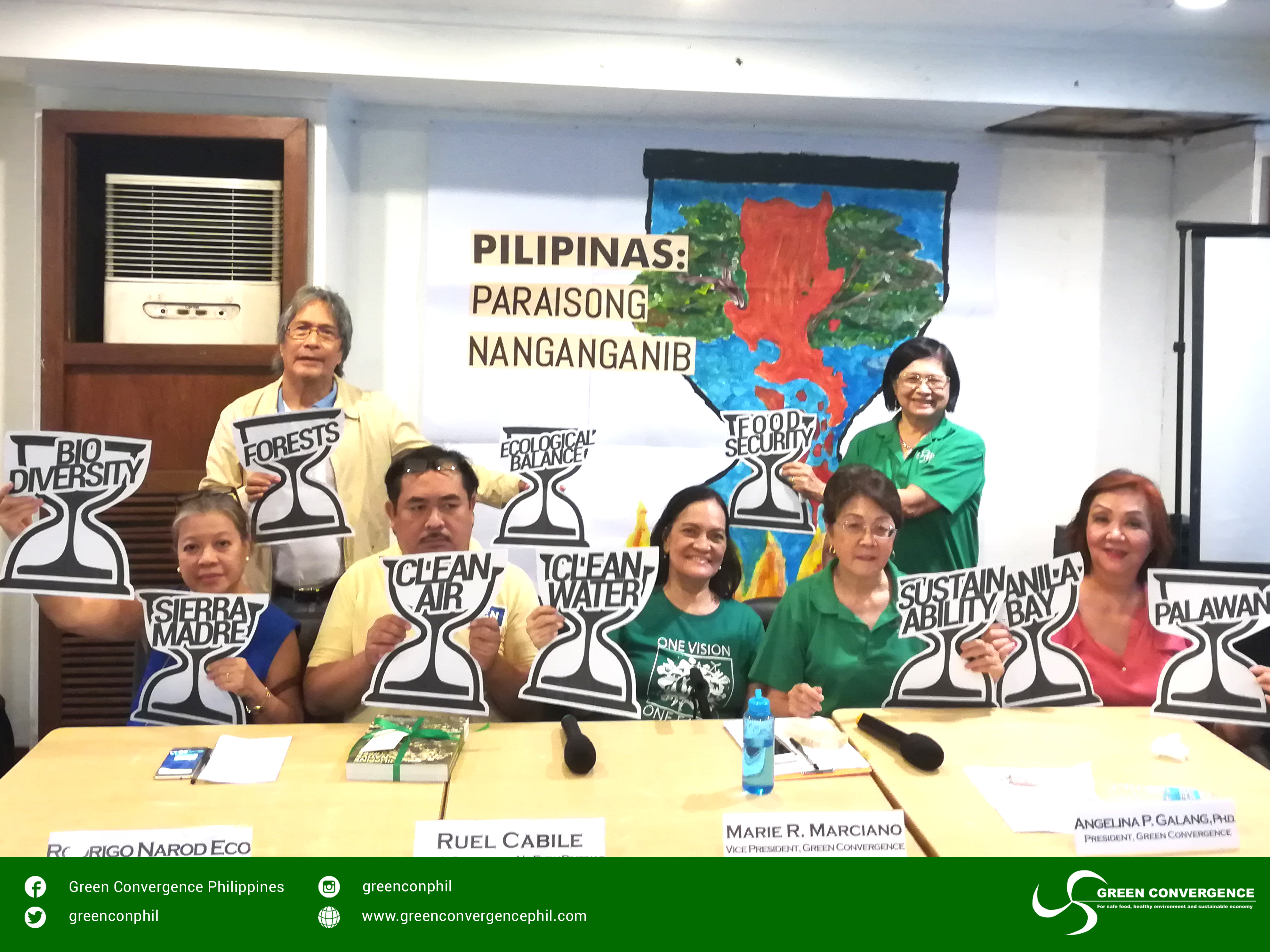
Environmental Coalition Green Convergence held the 353rd installment of the monthly Kamayan Para sa Kalikasan Forum about the pressing environmental concerns that the Philippines is facing on August 16, 2019 (Friday) at Kamayan Restaurant, EDSA, Mandaluyong City.

“There are programs of the government which Filipinos should be deciding on. But in the recent past, we are suddenly confronted with actions of China and with intrusions of the Chinese who are putting up or will be involved in mega projects in our country,” asserts Dr. Angelina Galang, President of Green Convergence.

Galang mentioned (1) the absence of a national land use policy, (2) large-scale reclamation activities especially in Manila Bay, (3) the construction of large dams especially the Kaliwa Dam, and (4) the division of Palawan into three separate provinces as actions of the government that are of urgent environmental concern.

These are also topics to be discussed in the upcoming annual State of Nature Assessment (Green SONA) with the theme “Pilipinas, Paraisong Nanganganib” to be held on August 27, 2019 at the Hue Hotel, Puerto Princesa City, Palawan, she explained.

The repercussions of large-scale reclamation to the country’s environment was further discussed by Rodrigo Narod Eco, a researcher from UP Diliman.

“There is no such as a natural disaster,” Eco asserted, “a natural phenomenon only becomes a disaster if it intersects with human activities,” implying that reclamation in Manila Bay will lead to disasters.

If reclamation activities continue in Manila Bay, “Dagdag harang sila sa tubig! ([Reclaimed lands] are added barriers to the flow of water!),” he remarked. This is especially dangerous if a 4-meter high storm surge hits the area.

Biodiversity in Manila Bay will also be negatively affected, considering that fish eggs and larvae of major fish species for food can be found in its shallow waters. Proposed land reclamation projects are exactly in these areas which could endanger the metropolis’ food security.

Eco called for rehabilitation of the Manila Bay, not reclamation for it will not only affect the marginalized communities in the area, such as the fisher folks and the urban poor, but also the entire metropolitan populace.

On the other hand, No Burn Pilipinas Regional Campaigner Ruel Cabile presented the myths of waste-to-energy through incineration and provided suggestions to achieve sustainability by properly managing municipal wastes.

A tribute to environmental champion and founder of Concerned Citizens Against Pollution (COCAP), the late Ester Perez de Tagle was also given. Perez de Tagle advocated against the Japan-Philippines Economic Partnership Agreement (JPEPA) in 2006 and for the promotion of the Euro-4 fuel in the country.

Since March 1990, Kamayan Para Sa Kalikasan Forum has become an institutionalized platform that enables NGO and government representatives, the media, students, teachers, church groups, and concerned citizens to discuss pressing environmental issues in the country. This month’s forum is organized by Green Convergence and is supported by Kamayan Restaurant EDSA with the assistance of the Forest Foundation Philippines.

You must be logged in to view this content. Free Virtual Library Registration Here

Green SONA tackles “environmental monsters”

By SHERWIN DE VERA via Northern Dispatch Weekly

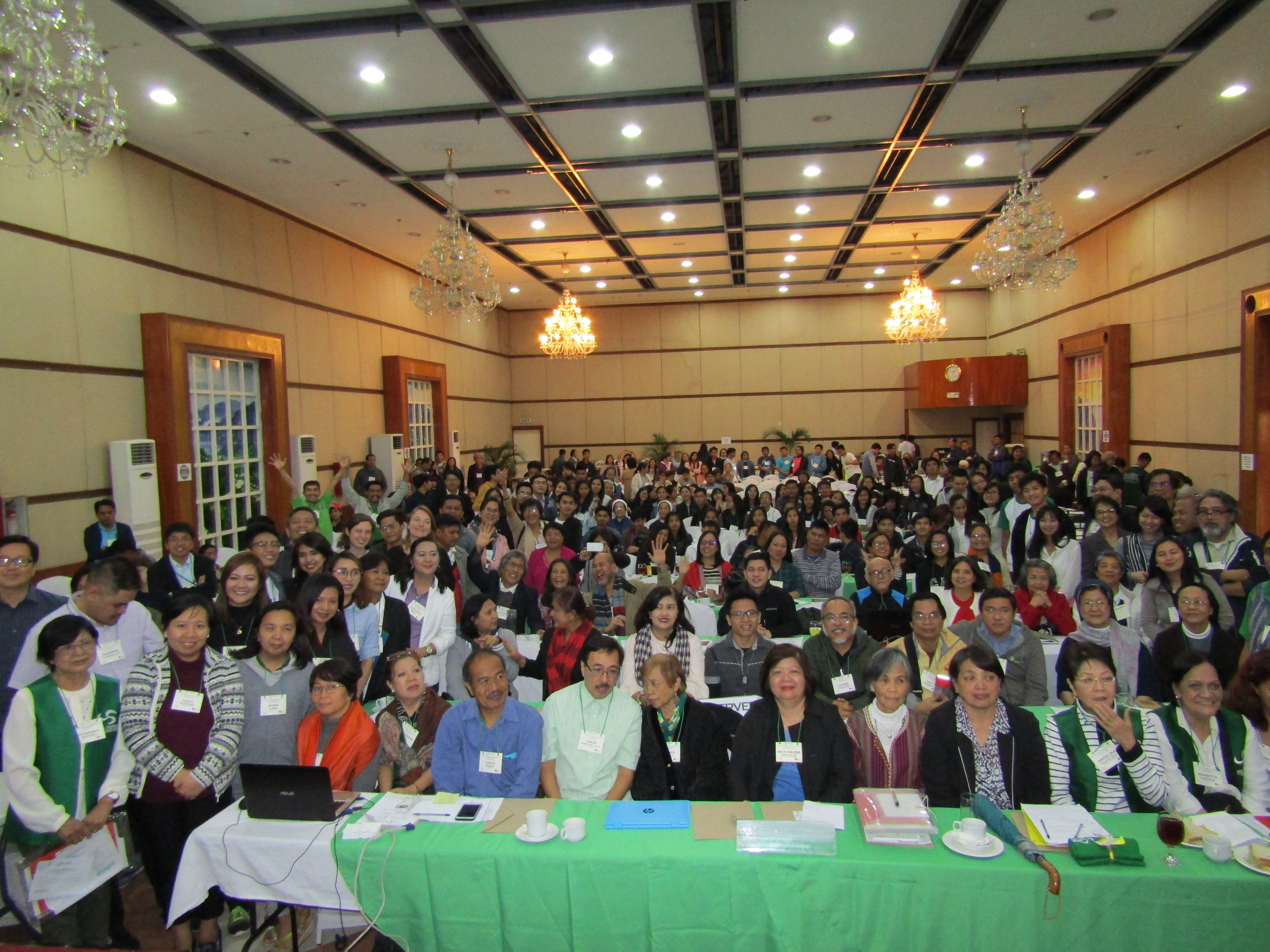
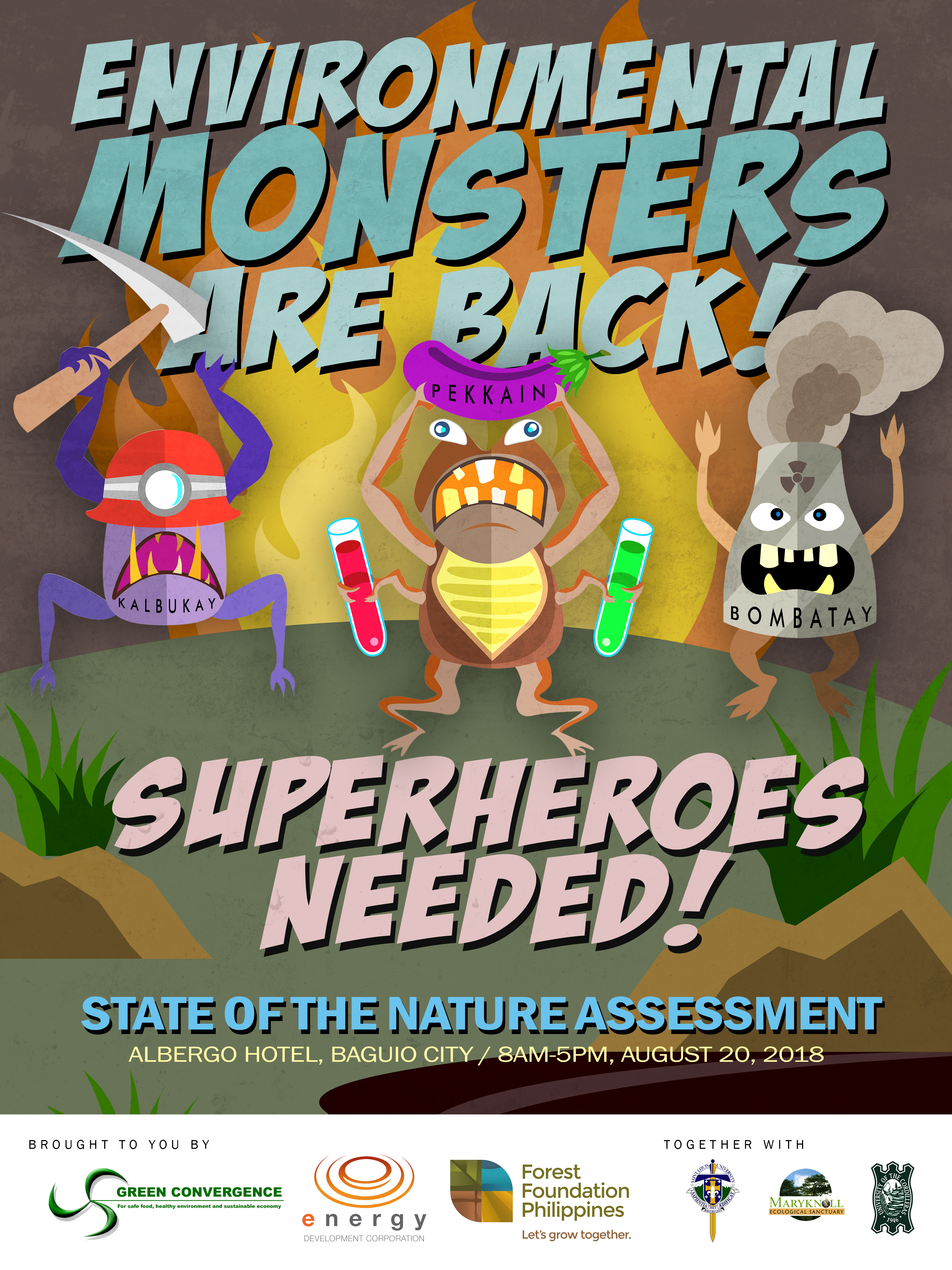
BAGUIO CITY — Environmental advocates across the country gathered at Hotel Albergo in this city on Monday, August 20, for the annual State of the Nature Assessment (Green SONA) organized by Green Convergence (GC). This year’s theme, “Environmental monsters are back; Superheroes needed!” underscored the call for action to protect the environment.

FIGHT THE ‘MONSTERS’. Institutions and environmental advocates converged at Hotel Albergo in Baguio City on August 20 for the State of the Nature Assessment or Green SONA, an annual activity organized by Green Convergence. Delegates cropped a resolution affirming their commitment to fight “environmental monsters” promoted by the government. Photo by Sherwin De Vera

The group’s president, Dr. Angelina Galang, said the activity does not only provide venue to review the state of the environment but also explain why there are technologies that environmental advocates reject.

Speakers discussed the dangers posed by genetically modified organisms (GMO), incineration and nuclear power, and large-scale mining and giant dams to the ecosystem. They also explained the flaws of present environmental laws and government programs related to their topics.

Unsafe power sources

“The environment and people’s health take primacy over the planned revival of the Bataan Nuclear Power Plant, and the use and promotion of waste-to-energy (WtE),” stressed Dr. Jorge Emmanuel.

He shared studies made by international institutions and by the panel of experts commissioned by the Philippine government from 1986 to 1992. The findings said BNPP is unsafe and dangerous for operation, and too costly to repair.

Emmanuel added that management of radioactive waste from nuclear power plants remains to be a top problem and threat worldwide.

He also criticized the government’s promotion of WtE that runs contrary to Clean Air Act (RA 8749) and the law on solid waste disposal (RA 9003) pointing WtE is actually incineration, prohibited under the two legislations.

Emmanuel a former Chief Technical Advisor of the United Nations Development Program on global health-care waste projects underscored that WtE plants produce a variety of pollutants, such as dioxins, that include 2,3,7,8-tetrachloro-dibenzo-p-dioxin, known as the most toxic compound.

He said dioxin levels released in varying levels over time and the government “has no capability to continuously monitor dioxins in the environment.”

Go organic

Instead of encouraging commercialization of genetically modified organisms (GMOs), the government should instead seriously promote organic agriculture. This was the theme discussed by Dr. Chito Medina of Magsasaka at Siyentipiko para sa Pag-unlad ng Agrikultura (MASIPAG).

“Organic farming does not only focus on the being technical of ‘being organic’ but should consider the issue of social justice,” said Medina, adding, “the problem is organic farming is still budding in the country yet the government is already nipping it down by stressing more on regulations.”

He said there are already 62 GMOs approved for commercial use since December 2002 but only two seeds for commercial planting, Bt Corn and RR Corn, were given the go signal so far. Others are contained in imported consumer products and animal feeds use in large farms.

“The problem with GMOs besides health safety is its narrow genetic adaptation instead of targeting it to adapt to broader environmental challenges,” explained Medina in mixed English and Filipino.

Citing studies conducted worldwide, Medina elaborated the detrimental health and environmental effects of Bt and RR Corn. He explained that chemicals found in GM crops cause tumors, cancers, autism, birth defects and other diseases.

His institution is also fighting the approval of golden rice for commercial production. The GM crop designed to produce beta-carotene is set for final field testing in San Mariano, Isabela and Batac, Ilocos Norte.

He said proponent conducted no tests to ascertain the crop’s safety, only field trials for its agronomic traits that also failed to produce favorable results.

Continuing forest lost

The head of Forest Foundation Philippines (FFP), Atty. Jose Canivel, discussed the situation of the country’s forest cover and reforestation efforts.

“We are planting billions worth of seedlings under the National Greening Program (NGP) but we continue to lose our old growth forest, and mature and seed bearing native trees,” the lawyer said.

He lamented that despite having more than 3000 woody plants in the Philippines, the Department of Environment and Natural Resources is mainly planting Mahogany, Gmelina and Falcata, all introduced and exotic species.

Canivel also shared that according to their study, seedlings utilized for the program mainly comes from six large nurseries mostly owned by individuals with connections in the department.

A key problem, according to him, is the absence of a forest management framework. Forest policy that is in effect is Presidential Decree 705 that focuses mainly on the creation and management of forest for industrial purposes.

FFP has lobbied for the Forest Resources Management Bill since the 13th Congress, but it has yet to pass the committee level.

“What we have been lobbying for 20 years is for us to have an appropriate forest policy for our present condition,” he said.# nordis.net

Green SONA calls for eco-heroes to take action

By climaterealityph | Aug 21, 2018

Environmental advocates convened in the 2018 State of Nature Assessment or the “Green SONA” held last 20 August at the Albergo Hotel, Baguio City.

The gathering is an annual event for assessing the performance of the government in environmental conservation and sustainable development and empowering civil society to take action.

This year’s Green SONA revolved around environmental threats exacerbated by climate change and how they must be addressed, especially those of which had low awareness.

“All environmental issues are directly or indirectly implicated in climate change,” said Dr. Angelina Galang, President of Green Convergence. “Climate change is the most observable result, but it is also the ultimate result of our impacts on the planet.

Among the issues tackled include nuclear energy and incineration, genetically modified organisms, mining and the construction of dams, forest preservation, and sustainable tourism.

While some of these issues have been especially targeted by the Duterte administration such as poor mining and tourism practices, others such as incineration and GMOs have not received as much attention nationally.

Despite the continuing struggles in harmonizing economic growth with environmental protection, Galang praised the efforts of individuals and organizations working together to promote sustainable development.

“Looking back, we see that our efforts have born fruit. I’m talking about the men, women, old and young individuals who are working passionately to save our planet,” she remarked.

Galang also noted the endeavors of the national and local government units to achieve sustainability. However, their campaigns are allegedly unsound and may actually lead to further environmental degradation and adverse socioeconomic impacts.

“There are viable, better alternatives. It is just that the worst alternatives that are now being promoted,” she said.

Ultimately, the Green SONA highlighted the most powerful solution to all environmental issues: the human will, especially in governance.

“The solutions are found not in man-made technology, but in our humanity; a change of heart among us human beings,” said Dr. Gaudelia Reyes, Head of the Center for Environmental Management and Sustainable Development.

The Green SONA was organized by the Green Convergence, a coalition of environment advocacy organizations and individuals campaigning for sustainable development.

Group to assess state of environment

by Hanna C. Lacsamana via Baguio Midland Courier


Green Convergence Philippines will hold the annual State of the Nature Assessment (Green SONA) with the theme “Environmental monsters are back; Superheroes needed!” on Aug. 20, 8 a.m. at Albergo Hotel, Baguio City.

This year’s forum is expected to tackle how genetically modified organisms (GMOs), nuclear power, and large-scale mining and giant dams are unfolding and destroying the environment.

In a statement, Green Convergence president Angelina Galang said, “Technologies that we totally reject include GMOs, which intrude nature in the most basic unit of life, the gene and nuclear power, which likewise disturbs the basic unit of matter, the nucleus.”

She added that programs like large-scale mining and giant dams remove and disturb whole ecosystems, forests, rivers and coastal ecosystems, and contribute immensely to climate change.

Speakers from different government and non-government groups including Negros Oriental Gov. Roel Degamo, Chito Medina of MASIPAG, Jaybee Garganera of Alyansa Tigil Mina, and Atty. Jose Andres Canivel of the Forest Foundation Philippines are invited to talk about the threats of said “environmental monsters” to the country’s environment, and the best green alternatives for them, specifically renewable energy, organic agriculture and reforestation.
Energy Sec. Alfonso Cusi, Tourism Sec. and agri-tourism advocate Bernadette Puyat, Environment Sec. Roy Cimatu, and Climate Change Commission Sec. Emmanuel de Guzman are expected to react on the issues and alternatives.
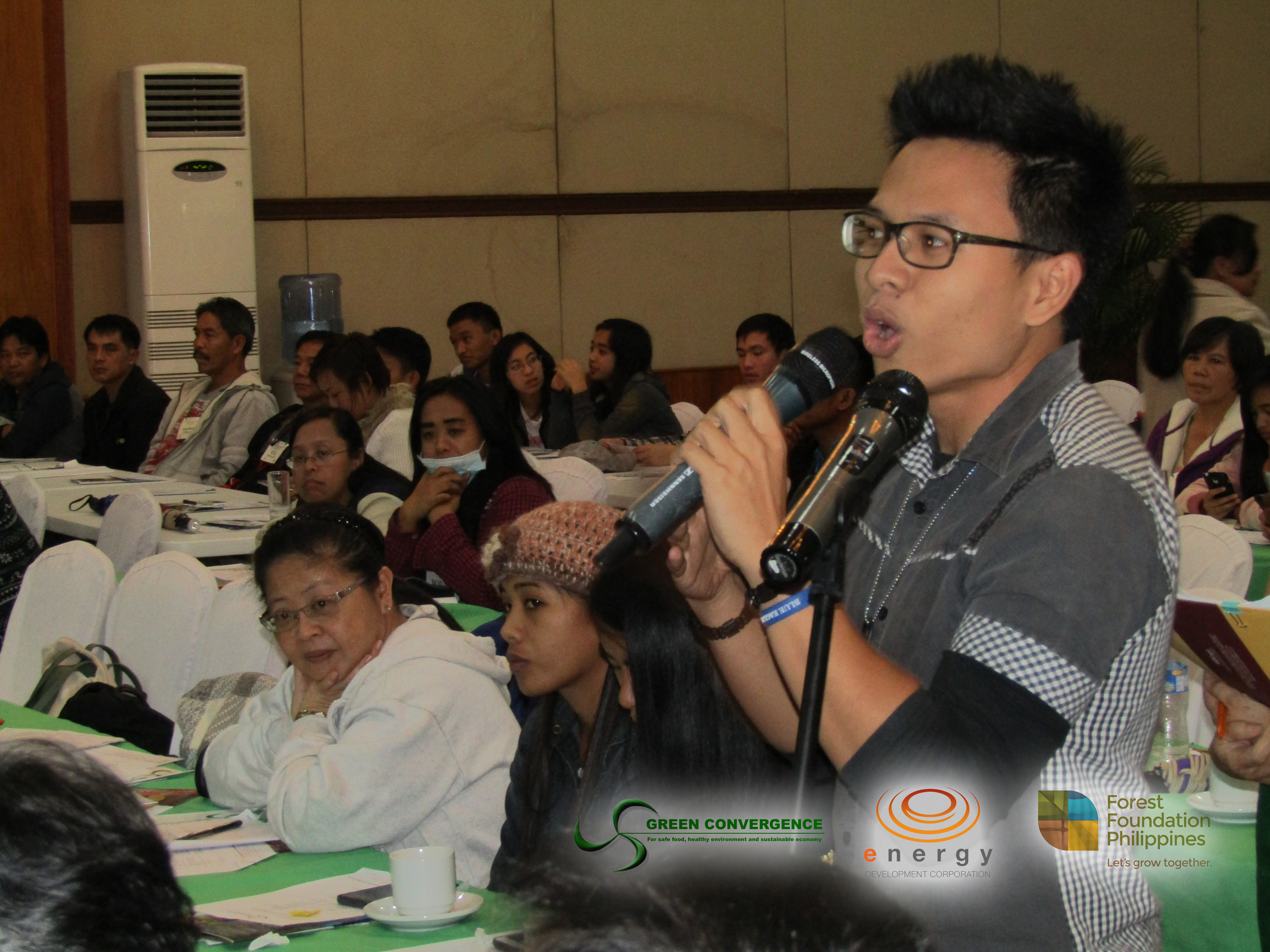
Green SONA 2018 is also organized by the Energy Development Corporation and the Forest Foundation Philippines and will be participated in by members of the Maryknoll Ecological Sanctuary, Saint Louis University, University of the Cordilleras, and other environmental groups and advocates.