

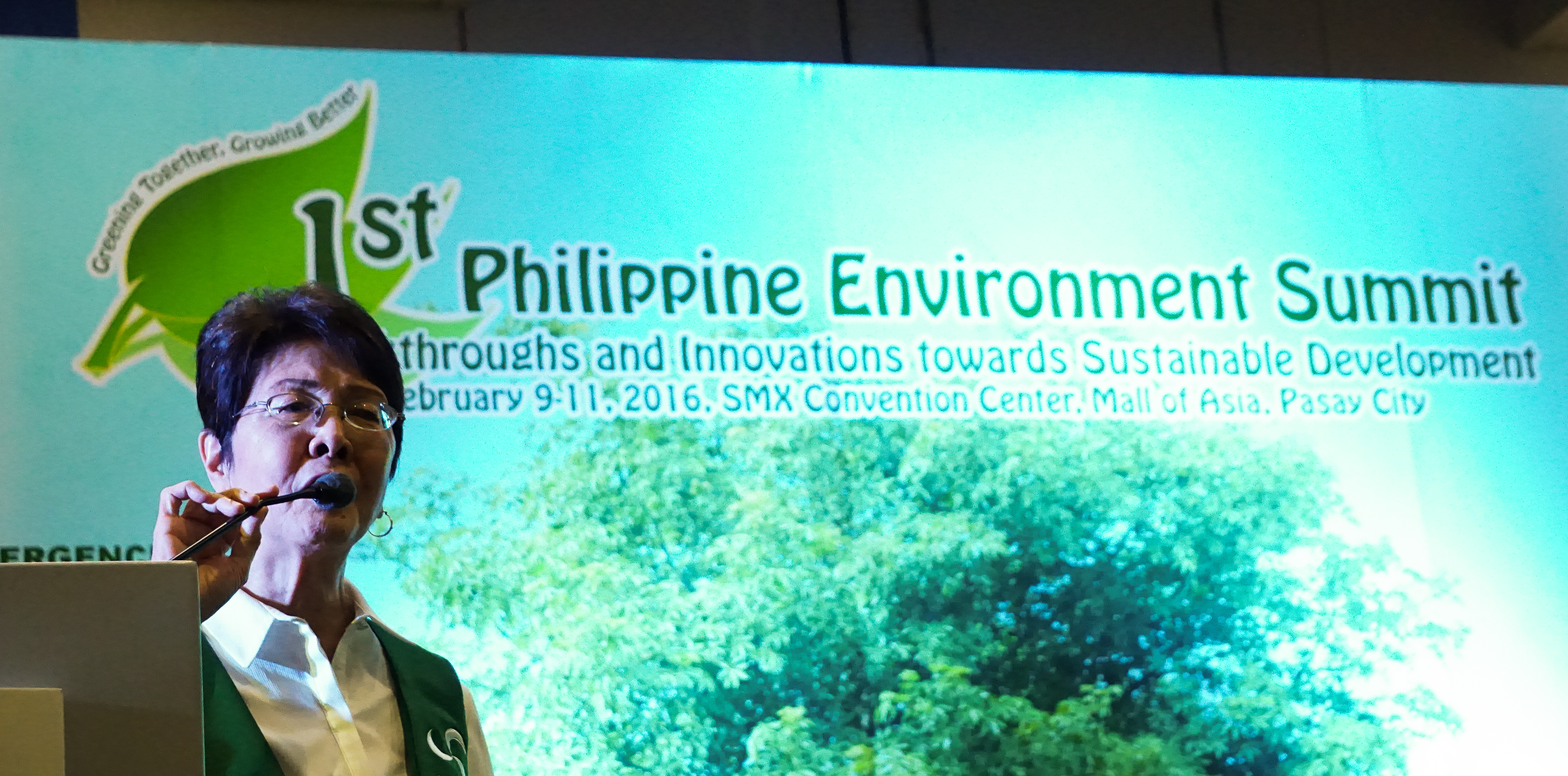
10M in 10 recognizes partners in Negros Island

PIA, 7th January 2019 via BigNewsNetwork.com

DUMAGUETE CITY, Dec. 15 (PIA) — The 10 Million Trees in 10 Years for Greener Negros Movement (10M in 10) celebrated its 3rd year milestone by recognizing its partners in Negros Island who helped propagate trees over the last three years.

The 10M in 10 is a private-sector led movement that aims to inspire, unite, and encourage community stakeholders and the public to plant, grow, and protect 10 million years in 10 years in Negros Island.

Some 100 individuals from the local government units, national government agencies, academe, academe, business and private sector groups, and non-government organization sector participated in the activity held Dec. 12 at Perpetual Help Community Cooperative Inc., (PHCCI).

Energy Development Corporation (EDC) Senior Manager and Head of Reservior and Project Management Division Engr. Vicente Omandam and Green Convergence for Safe Food, Health Environment and Sustainable Economy President Dr. Angelina Galang, who were the special guests of the event, presented the plaques and certificates of recognition to 10M in 10 partners who were cited during the event.

The first award was given in recognition to the organization’s partners who planted more than 10, 000 trees this year.

The recipients were Department of Environment and Natural Resources – Community Environment and Natural Resources Offices (DENR – CENRO) of Dumaguete City, DENR-CENRO of Cadiz City, City Environment and Natural Resources Office of Tanjay City, Mangrove Sea Grasses Vital Synergy, Cartronix and Logistics Transport Corp., New Bian Yek Commercial Inc., Protected Area Rangers of Tanjay City, Bacolod City Water District, National Irrigation Administration in Negros Occidental, Department of Education (DepEd) – Division of Bago City, Municipal Agriculturist Office of Valencia, Negros Oriental, City Environment Management Office of San Carlos City, and the Local Government of Hinoba-an.

Also recognized were partners who were able to achieve at least 85 percent survival rate of their planted trees.

The recipients were Mr. Rene Vendiola, Mr. Eduardo Baptista, Bacolod City Water District, Barangay Unit of Atipulan and ENRO of Bago City, Negros Oriental State University, St. Paul University Dumaguete, Municipal Agriculturist Office of Sibulan, DENR-CENRO of Cadiz City, Barangay Unit of Pahanocoy, Dumaguete City Water District, ENRO of Sipalay City, ENRO of Tanjay City, Tanjay Protected Area Rangers, and Mosser Environment Corp.

In his message, Omandam congratulated the partners and cited the collaboration of different sectors in promoting a greener Negros and mitigating climate change.

“Through our continuous synergy, may we all be able to witness the improvement in the island’s ecosystems revitalize its biodiversity, and create communities that are resilient to the effects of climate change,” he said.

During the activity, 10 M in 10 Forest Restoration Management Officer Francis Dilig shared an update on the status of the program in Negros Island based on their Monitoring and Evaluation (ME) reports.

Based on the data he presented as of December 2018, there are already 40 sites with ME results.

Twenty-one of these are in Negros Oriental while the remaining 19 are in Negros Occidental.

Said figure translates to around 656 hectares of land covered by the greening program.

Twelve of these lands are privately-owned while the rest are government-owned.

Currently, there are 101 identified species of native, endemic, and exotic forest trees and fruit bearing trees planted in these sites.

The survival rate of these trees are pegged at 0 to 100 percent while the mean or the average survival rate is at 66.97 percent and the median or the middle value of the range of 82.5 percent.

Dr. Angelina Galang, the keynote speaker of the event, encouraged 10M and 10 Movement and their partners to pursue this initiative for sustainable development.

“I think the examples shared will be inspiring and will encourage people to plant trees. The spirit of healthy competition will encourage people to join the planting. If Negros will look into itself that you are doing something good, it will inspire other people,” Galang said. (ra/PIA7-Negros Oriental)
Green Convergence exec bucks coal plants in Negros

By Mary Judaline Partlow  December 13, 2018, 6:55 pm via Philippine News Agency

DUMAGUETE CITY – The head of the Green Convergence, a coalition batting for safe food, healthy environment and a sustainable economy, is urging local government officials and the people of Negros to reject the entry of coal-fired power plants in the island.

“I hope the people will clamor that it should not proceed,” said Angelina Galang, Ph.D., the president of Green Convergence, in an interview on Wednesday here, referring to the application for the establishment of a coal-fired power plant in Negros Occidental.

According to her, Negros Island (comprising the provinces of Negros Oriental and Negros Occidental) is rich with renewable sources of energy, and when complemented with efforts such as organic farming and massive greening/tree planting projects, it can become carbon negative in the future.

“Because coal is a big culprit in global warming, and you have renewable energy, so why go into coal?” she said.

And the whole Philippines can also go renewable, according to her, “because we have a lot of wind, solar, geothermal (power) and we have barely scratched the surface for solar,” she said.

Galang cited the 10 Million in 10 Years for a Greener Negros Movement (10M in 10) as a “big contribution” to the Paris Agreement on greenhouse gas emissions mitigation.

“It is very much a big contribution to bring down carbon emission, just as the other programs that I had also mentioned earlier,” she said, referring to organic farming, among others.

According to her, “fossil fuels are a contributor to climate change and global warming.”

“But by going geothermal and going solar, you are reducing your carbon source. And by planting trees, you are increasing your carbon sink,” she said.

“I don’t know if Negros might already be (carbon) neutral because you are emitting less and absorbing more. Meaning you are contributing more to solving the problem than being part of the problem,” she added.

Galang was the key speaker during the 3rd year anniversary celebration of the private sector-led 10M in 10, with the geothermal power leader Energy Development Corporation as its proponent, in ceremonies held in Dumaguete.

She also congratulated Negros Oriental for its firm stand in opposing coal plants in the province. (PNA)

Thermal waste-to-energy tech, unsafe says environmental scientist

Plastic trash.


BAGUIO CITY – An environmental scientist and former United Nations Development Program (UNDP) consultant said the waste-to-energy (WtE) program promoted by the government is unsafe for the public and environment.

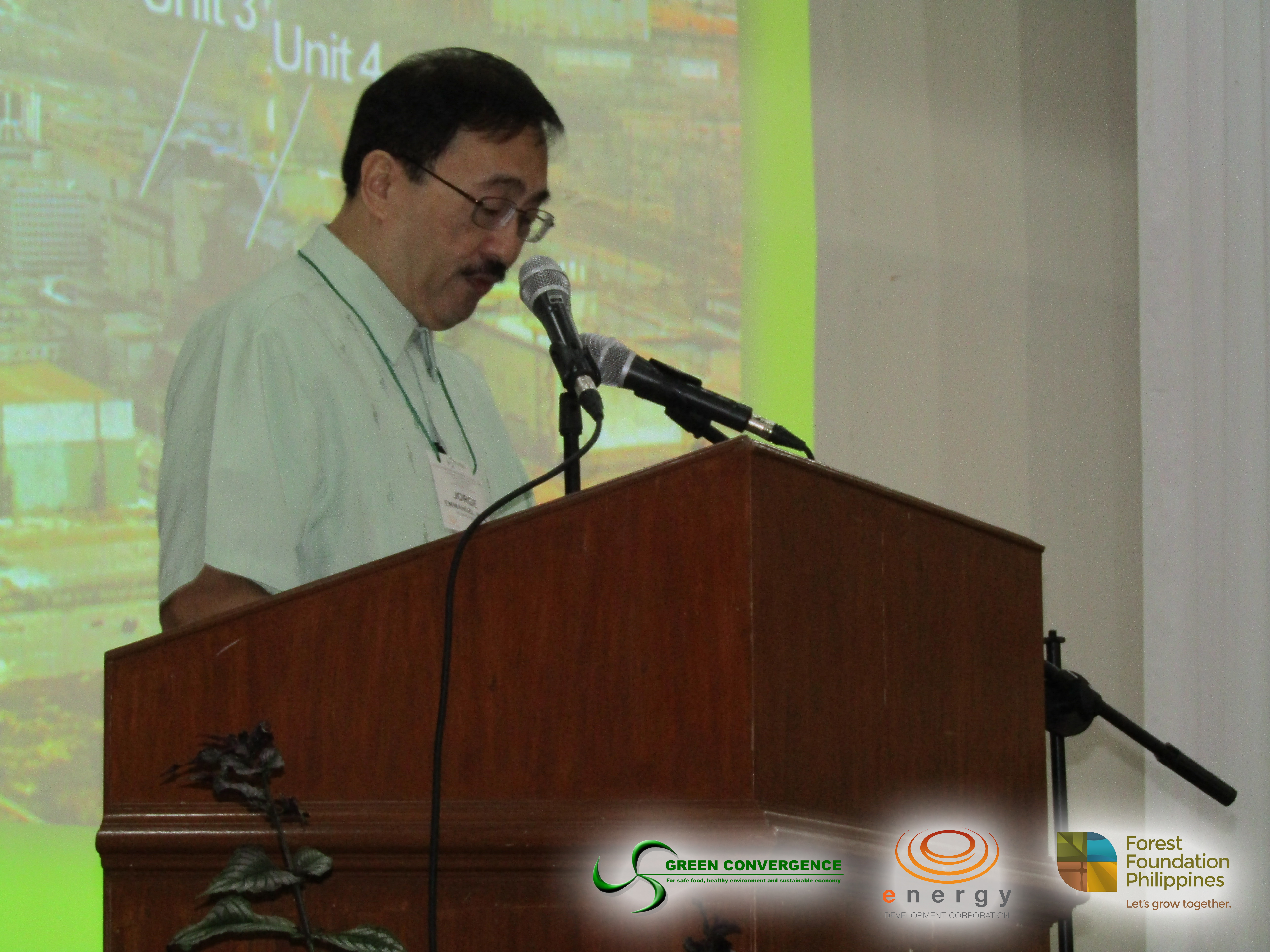
In his talk during the State of the Nature Assessment at Albergo Hotel, Baguio City on August 20, Dr. Jorge Emmanuel, underscored that the people’s health and environment must come first when considering technologies for power generation.

“WtE does not make waste disappear but turns them into toxic ash and pollutants in the air,” he said, adding that, “toxic particulates and gases are concentrated to pollution reduction devices that also require special handling and disposal.”

Emmanuel, who worked as the Chief Technical Advisor of the UNDP on Global Healthcare Waste Projects explained “clean incinerators” are fallacies. He added that the government’s promotion of WtE runs contrary to Clean Air Act (RA 8749) and the law on solid waste disposal (RA 9003g) that prohibits use of incinerators.

He said toxic pollutants are released in varying levels overtime including the deadly dioxin variety — 2,3,7,8-tetrachloro-dibenzo-p-dioxin — and he claims that “[the government] has no capability to continuously monitor dioxins in the environment.”

Environmentalists and many scientists here and abroad have criticized thermal waste treatment and disposal facilities billed as WtE as nothing new, but incinerators attached to boilers and turbines to harness the generated heat to produce power.

There are currently 12 WtE plants in Northern Luzon with a capacity of 87 megawatts according to the Department of Energy December 2017 record. Two are located in Region 1.

The Pepsi Biomass Plant in Rosario, La Union managed by Sure PEP, Inc. is installed but not operational and non-compliant with its reporting obligation based on DoE’s latest report.

A facility set to rise in Brgy. Nagpanaoan, Santa, Ilocos Sur costing P1.16 billion will generate 10MW. Upon operation, the plant will employ 30 individuals and consume 86 tons and 200 tons of municipal solid waste and agricultural waste respectively.

In his first State of the Nation Address, President Duterte said his administration will pursue waste-to-energy technology for power generation and waste management program. The Department of Environment and Natural Resources (DENR) in August 2017 called WtE a “win-win solution” and “smart alternative” to the country’s garbage problem.

Legalizing the use of incinerators is also on the way in the House of Representatives through House Bill 6893 which seeks to amend RAs 8749 and 9003. When passed, the legislation will allow the use of thermal and other treatment technologies to dispose or utilize municipal and hazardous wastes for fuel.  (TNM/Sherwin De Vera)

Negros Oriental Bats For Renewable Energy, Vows Against Coal In ‘Green SONA’

By Featuresdesk (ICG) on August 22, 2018 via Page One

The achievements and continuing initiatives of the province of Negros Oriental toward renewable energy (RE) were the major highlights of this year’s State of Nature Assessment (SONA), organized by non-profit environmental group Green Convergence in partnership with the Forest Foundation of the Philippines and leading renewable energy producer Energy Development Corporation (EDC).

Negros Oriental Governor Roel Ragay Degamo, who was among the guest speakers during the day-long event held in Baguio City on August 20, prefaced his message with an unequivocal statement that he is “an advocate of clean, renewable energy” as “a humble representative of the peace-loving and nature-loving people of Negros Oriental.”

The annual conference, also dubbed “Green SONA,” has been held since 2007 and brings together stakeholders from various sectors such as civil society, private business, academe as well as the government to engage in dialogue to address vital environmental issues.

No to coal

During his speech, Degamo reiterated his province’s stance against fossil fuels in power generation, calling to mind Executive Order No. 9 that he signed in March this year mandating the use of clean and renewable energy in all 19 municipalities and six cities of Negros Oriental.

“This means that our local government will no longer issue any permit, authorization or endorsements that support development and operation of coal-fired and fossil-fuel power plants,” he explained. “The province is committed not to use coal as an energy source because of its impact on the environment, on health and global climate.”

Degamo issued his strongest statement yet against coal, saying it is “incredibly dirty.”

Referring to opposition that his move toward RE has received: “Their argument is true and simple: Coal-fired [power] is cheap. My answer is truer and simpler: Environmental destruction is so expensive. It is never negotiable,” stated Degamo.

Nature-rich province

A first-class agricultural province located in the Central Visayas Region with a population of around 1.4 million, Negros Oriental has a total land area of more than 5,000 square kilometers comprised of 19 municipalities and six cities covered by three congressional districts.

“We are bestowed with beautiful tourist destinations that are nature-based,” said Degamo, highlighting further that beneath the fertile soil along the Cuernos de Negros mountain ranges rests one of the province’s most valuable natural resources, which is a vast geothermal field being effectively tapped to produce electricity.

To date, a total of 222.5 MW of electricity is being produced by Negros Oriental’s two geothermal power plants that is owned and operated by geothermal leader Energy Development Corporation in the municipality of Valencia.

Degamo noted that while the generated capacity of the geothermal plants is currently more than enough to supply the power demands of the province, “due to interconnectivity, our power requirement is not stand-alone. It is included and dependent on the power requirements of the whole Visayas grid,” he explained.

Renewable energy expansions

Degamo revealed how he recognizes the need to tap other RE sources despite having relied on geothermal energy for the past 30 years. A 213,292-square-meter solar power plant in Bais City was inaugurated in 2016, generating 24,205 MWh of electricity annually and supplying more than 10,000 households in the region. He reported that the solar plant saves up to 14,838 tons of carbon dioxide emissions every year.

In 2015, Silliman University in Dumaguete City entered into a partnership with a Filipino-American energy group for what was dubbed as “the largest school-based solar power project in Southeast Asia” that powers the 62-hectare campus with 1.2 MW of solar power.

Degamo also bared the Department of Energy’s upcoming hydroelectric power projects in Negros Oriental—three separate facilities in the municipality of Amlan with a total capacity of 5.5 MW, with target testing and commissioning date of the first two in December 2020 and the final one in December 2025.


Wind Energy

Renewable Energy (RE) has a net benefit to electricity consumers. As of the end of 2015, there are already 393 megawatt wind farms and 144 megawatt solar power plants operating in the country. Based on the Energy Regulatory Commission’s approved Feed- in Tariff (FIT), rates for solar (P9.68/kWh) and wind (P8.53/kWh) have already gone down by 10% and 13% respectively. The few run-of-river hydro projects have come in due to permitting problems. Similarly biomass is beset with feedstock risks. The RE projects, usually located in the countryside, will bring financial benefits to its host communities, mitigate carbon emissions and create jobs.


You must be logged in to view this content. Free Virtual Library Registration Here

Carbon Neutral Industries thru Biomass

Biomass as legally defined in Republic Act 9513 is a non-biodegradable organic material originating from naturally occurring or cultured plants, animals and microorganisms. Biomass is a cleaner source of energy compared to coal. It emits less pollution and Green House Gases (GHGs) thus helps mitigate climate change.

There are drivers and challenges in developing biomass power plants in the country. It has a higher pre-development and overall cost per megawatt. It takes longer to secure funding from financial institutions due to risk aversion standard. Feedstock supply chain is not yet well established. Though biomass technology is also not familiar yet in the country and only 250 megawatts is allocated to it, biomass has great potential in the Philippines. There are 14 hectares of alienable and disposable land for biomass plants which can yield 4,000 megawatts. An example of this is the 23.5 megawatts Biomass Power Plant in CARAGA, Mindanao.

The biomass energy project is seen to contribute to the power requirement of more than 100,000 homes. It can generate direct employment for more than 50 plant personnel, 2,000 plantation farmers and workers including the thousands of other indirect employment. An estimate of 20,000 metric tonnes of carbon dioxide can be captured per year from the plantations. Biomass is said to be not only ecofriendly but an answer to climate change. It can also create livelihood. We can likewise save on foreign exchange because it can displace up to 90% of coal imports and can remove subsidy in missionary routes being charged to all electricity consumers.


You must be logged in to view this content. Free Virtual Library Registration Here