Last February 19, 2021, Green Convergence held its 368th Kamayan Para sa Kalikasan Forum entitled “Youth for the Environment”.
Speakers Mitzi Jonelle Tan of Youth Advocates for Climate Action Philippines (YACAP), Natasha & Isabella Tanjutco of Kids for Kids, and Jeff Estela of Youth Strike 4 Climate Philippines shared their experiences as environmental advocates and what drove them to pursue such advocacy at a young age.
Climate action, Nature-based solutions, and intergenerational cooperation was highlighted throughout the forum.
Urban farming was the subject of the 365th session of the monthly Kamayan Para sa Kalikasan Forum held last November 20, 2020 through an online webinar hosted by Green Convergence.
Environmental Lawyer Ipat Luna showed her rooftop garden to the forum participants and shared some of her planting endeavors. “I raised a lot of dapdap for streetside planting. I just bought a kilo of seeds pero sa palagay ko maraming puno’y pakikinabangan natin from that.”
As means of disaster preparedness, Atty. Luna shared that “kahit nabagyuhan at pinabayaan mo [ang garden], it’s still going to give you something. It’s not much pero kung alam mo may value, nakakatuwa rin…I will never run out of camote tops and regular sweet basil.”
“This is good disaster preparedness.” she added.
“Policy wise, I think the important thing is for LGUs to support home gardening not just by giving seeds not just by programs that they roll out, but actual technical support and subsidies.” said Atty. Luna.
Carol Galvez of Pitak Project shared the workings of her farm in La Union which promotes regenerative living. “Sa farm ang mantra namin is ‘Build, build, build healthy soil’. That is our wealth. We measure our wealth by how far we’ve regenerated the soil and how much capital we invest back into the land. That is the essence of regenerative living.”
“Rather than increasing the quantity of a certain form of capital, regenerative systems develop the quality of capital. Ang current extractive economy requires ever increasing quantities of capital. That is cancer.”
“Unless the system can be transformed, this will likely lead to overall collapse”, she added.
“Maraming benefits [ang regenerative living]” said Galvez. “It promotes biodiversity, climate change mitigation. We are resilient during disasters. Nung lockdown, may tanim kami.”
“My point here is we have a choice. We have to choose to regenerate our planet. Let us stop destroying our ecosystems…Let us restore our ecosystems and help build a more equitable world for the future generations to come. I am telling you it is possible.” she concluded.
“It’s really innate for us to get attracted to pretty things or green things. Lalo nang ngayong pandemic, we crave for the outdoors and we want to be outside, and no other color will represent the outdoors like green” shared tourism planner Chen Mencias.
When Mencias started her urban garden, she noted “dumami yung mga ibon and insects. Dumami yung butterflies, bees, beetles.”
“Nung isang araw lang, nakakita ako ng Oriole, which is not very common sa urban area.” she added.
“Kaya kailangan pa rin sa urban area ang green spaces kasi it really provides a place for relaxation and communing with nature” she concluded.
Since March 1990, Kamayan Para Sa Kalikasan Forum has become an institutionalized platform that enables NGO and government representatives, the media, students, teachers, church groups, and concerned citizens to discuss pressing environmental issues in the country. This month’s forum is organized by Green Convergence and is supported by Kamayan Restaurant EDSA with the assistance of the Forest Foundation Philippines.
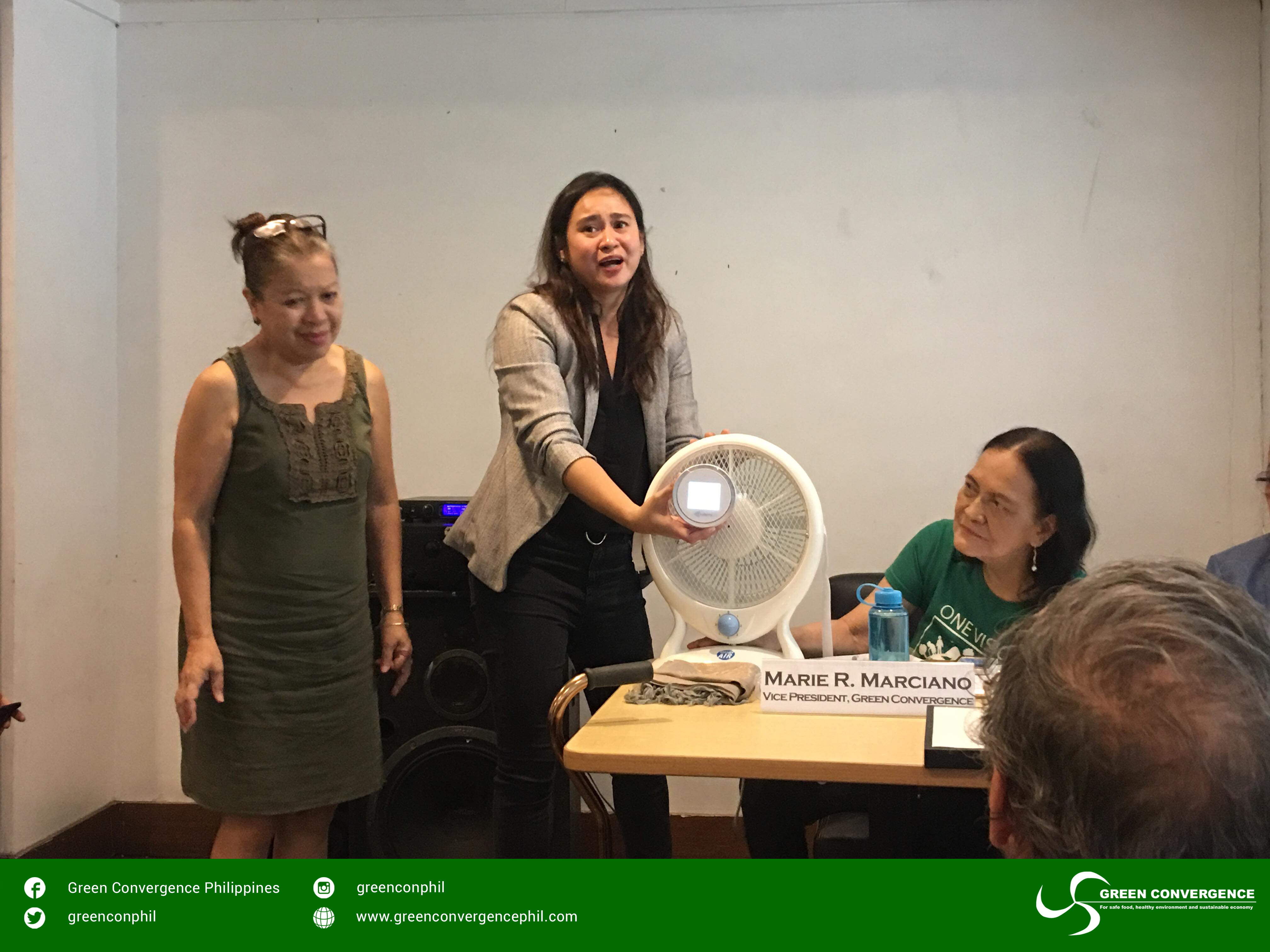
The state of air quality and the need for expansion of green spaces in Metro Manila was the subject of the 355th monthly Kamayan Para sa Kalikasan Forum held on October 18, 2019 (Friday) at Kamayan Restaurant, EDSA, Mandaluyong City.
In a 2012 report by the World Health Organization, “Every year, around 7 million premature deaths [in the world] are caused by air pollution,” said Lyrio Woldring of Smart Air Philippines, “One in four deaths in the Philippines are attributed to air pollution,” she added.
Woldring emphasized that while the right type of masks are effective in protecting people from the worst impacts of air pollution, she was disappointed that the government was not treating the problem as a health concern. She remarked, “We have a campaign for polio, for dengue, why not for air pollution?”
Meanwhile, Quezon City Mayor Joy Belmonte’s representative, Patrick Alzona of the city’s Environmental Protection and Waste Management Department (EPWMD), spoke about the LGU’s plans to promote green spaces.
Alzona said that as the “lung” of Metro Manila, “Quezon City aims to implement the ‘Green Pedestrian Corridor’ in an attempt to increase the city’s green spaces to 25% of its total land area,” adding further that the City Mayor “wants to create a department solely for climate change and sustainability,” possibly the first of its kind among LGUs.
Asked about the young trees in plant boxes recently destroyed by the government along some streets, Alzona explained that they are treated as “collateral damage” of the national government’s road clearing operations. “They can be replanted,” he said further.
In the discussion, Negros Occidental’s Nordson Forest Park owner Atty. Nordy Diploma passionately declared that government inaction on environmental problems and non-compliance with environmental laws must never be tolerated.
Diploma converted 40 hectares of his land to a forest park for the benefit of his community, instead of using it for business.
“Trees are still the best absorbent of carbon dioxide,” asserted Dr. Angelina Galang, Green Convergence President, as a final reminder to the audience and the LGUs about the importance of trees, particularly the native ones, in combating air pollution.
Since March 1990 Kamayan Para Sa Kalikasan Forum, held every 3rd Friday of each month, has become an institutionalized platform that enables NGO and government representatives, the media, students, teachers, church groups, and concerned citizens to discuss pressing environmental issues in the country. The forum is organized by Green Convergence and is supported by Kamayan Restaurant EDSA, with the assistance of the Forest Foundation Philippines.
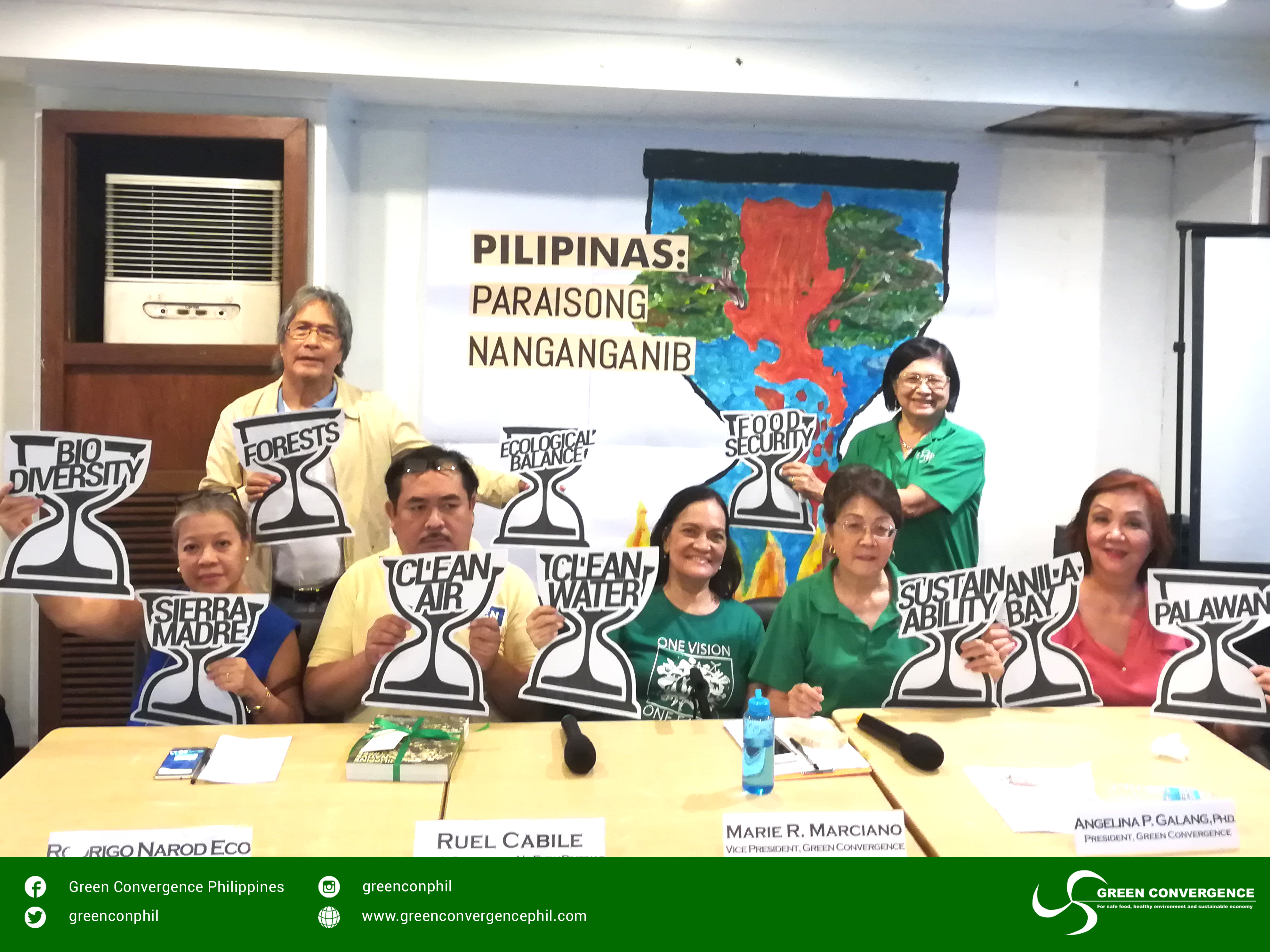
Environmental Coalition Green Convergence held the 353rd installment of the monthly Kamayan Para sa Kalikasan Forum about the pressing environmental concerns that the Philippines is facing on August 16, 2019 (Friday) at Kamayan Restaurant, EDSA, Mandaluyong City.
“There are programs of the government which Filipinos should be deciding on. But in the recent past, we are suddenly confronted with actions of China and with intrusions of the Chinese who are putting up or will be involved in mega projects in our country,” asserts Dr. Angelina Galang, President of Green Convergence.
Galang mentioned (1) the absence of a national land use policy, (2) large-scale reclamation activities especially in Manila Bay, (3) the construction of large dams especially the Kaliwa Dam, and (4) the division of Palawan into three separate provinces as actions of the government that are of urgent environmental concern.
These are also topics to be discussed in the upcoming annual State of Nature Assessment (Green SONA) with the theme “Pilipinas, Paraisong Nanganganib” to be held on August 27, 2019 at the Hue Hotel, Puerto Princesa City, Palawan, she explained.
The repercussions of large-scale reclamation to the country’s environment was further discussed by Rodrigo Narod Eco, a researcher from UP Diliman.
“There is no such as a natural disaster,” Eco asserted, “a natural phenomenon only becomes a disaster if it intersects with human activities,” implying that reclamation in Manila Bay will lead to disasters.
If reclamation activities continue in Manila Bay, “Dagdag harang sila sa tubig! ([Reclaimed lands] are added barriers to the flow of water!),” he remarked. This is especially dangerous if a 4-meter high storm surge hits the area.
Biodiversity in Manila Bay will also be negatively affected, considering that fish eggs and larvae of major fish species for food can be found in its shallow waters. Proposed land reclamation projects are exactly in these areas which could endanger the metropolis’ food security.
Eco called for rehabilitation of the Manila Bay, not reclamation for it will not only affect the marginalized communities in the area, such as the fisher folks and the urban poor, but also the entire metropolitan populace.
On the other hand, No Burn Pilipinas Regional Campaigner Ruel Cabile presented the myths of waste-to-energy through incineration and provided suggestions to achieve sustainability by properly managing municipal wastes.
A tribute to environmental champion and founder of Concerned Citizens Against Pollution (COCAP), the late Ester Perez de Tagle was also given. Perez de Tagle advocated against the Japan-Philippines Economic Partnership Agreement (JPEPA) in 2006 and for the promotion of the Euro-4 fuel in the country.
Since March 1990, Kamayan Para Sa Kalikasan Forum has become an institutionalized platform that enables NGO and government representatives, the media, students, teachers, church groups, and concerned citizens to discuss pressing environmental issues in the country. This month’s forum is organized by Green Convergence and is supported by Kamayan Restaurant EDSA with the assistance of the Forest Foundation Philippines.
Environmental coalition Green Convergence held the 347th installment of the monthly Kamayan Para sa Kalikasan Forum last February 15, 2019 at Kamayan Restaurant, EDSA, Mandaluyong City. Resource speakers included Lou Arsenio of Ecobricks Philippines, Chairman Rolly Datiles of Barangay Bagumbuhay, Quezon City and Juvy Serafin of the Solid Waste Management Division of the Department of Environment and Natural Resources.
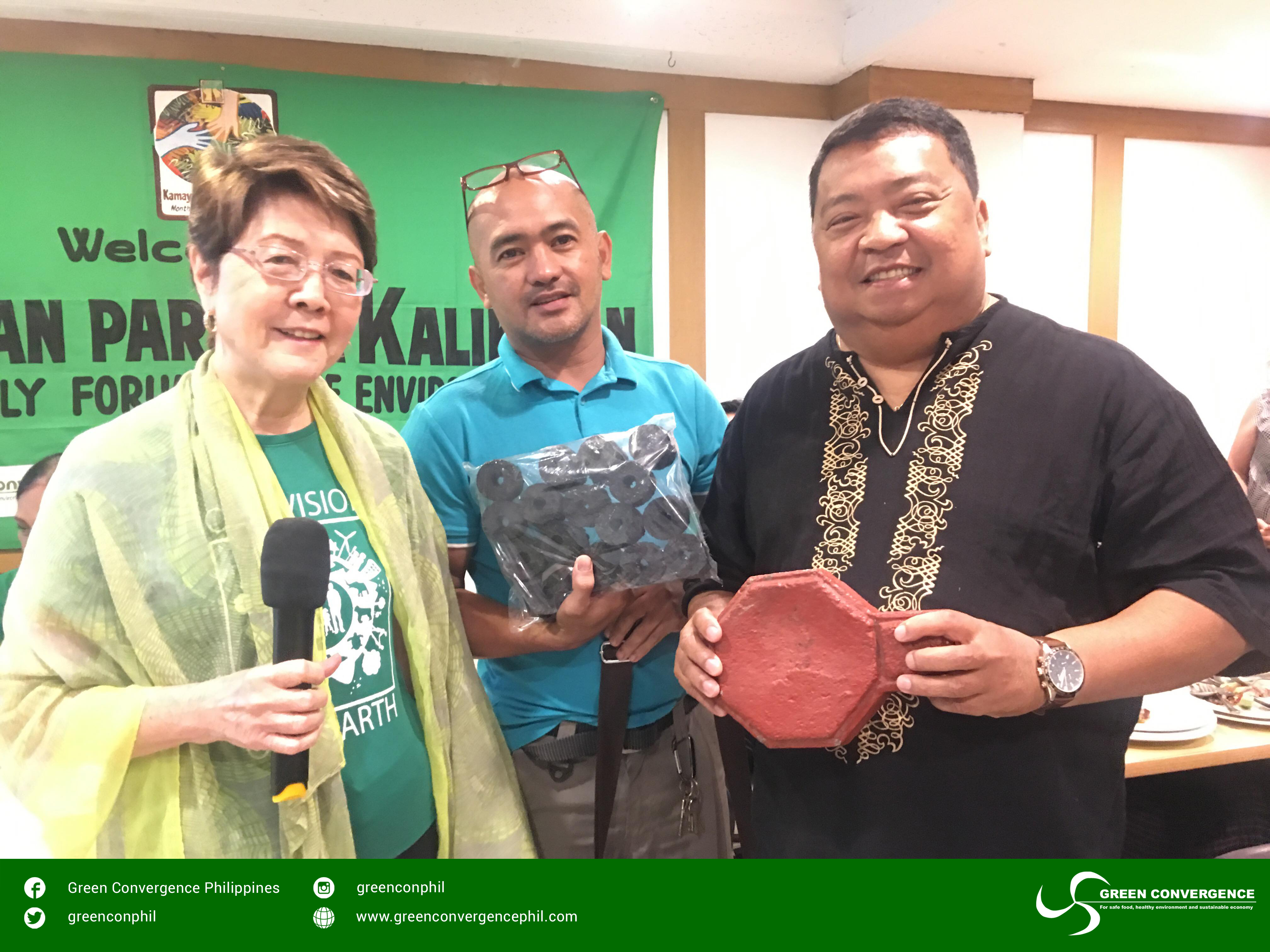
Dr. Angelina Galang (left) with Barangay Bagumbuhay Captain Rolly Datiles (right). Capt. Datiles is successful in implementing the ecological solid waste management law in his barangay with the ecobrick project that he innovated.
The forum scrutinized the two versions of ecobricks – (1) plastic bottle containers stuffed with dry plastic wastes which are used as filler bricks in building systems and (2) actual hollow blocks that are stronger than the former and are made by mixing wet cement and shredded plastic wastes.
Arsenio stressed that the said first version is supposed to be hard as a brick. “Dapat may proper training ang paggawa nito [ecobricks] dahil kung mali ang pagkakagawa, mahirap po itong ayusin (There should be a proper training for making ecobricks because if they are wrongly made, it would be difficult to fix them),” she followed.
On the other hand, Datiles explained that his community’s way of doing the second version is by processing non-biodegradable residual plastic wastes and mixing them with cement to be transformed into tiles and bricks. He presented the 4 E’s that supported his community’s ecobrick initiative and made their ecological solid waste management program successful:
“First you need education for the awareness campaign of the problem and proposed solutions. Second you need engineering so you would have proper equipment for realizing the solution. Third is enforcement. There needs to be a barangay ordinance for the program. Finally, economic sustainability where each household gain economic rewards by participating in the program.”
Serafin lauded the efforts of Chairman Datiles and mentioned, “Kung effective lang talaga ang management ng waste at the barangay level, wala sanang problema sa basura (If waste management is just effective at the barangay level, there could’ve been no problem with wastes).”
She further noted that “Ang dapat atakehin ay ang behavior ng mga tao…lifestyle kasi ng mga tao ngayon is convenience kaya management po ang approach natin (People’s behavior should be tackled…since our lifestyle is now is focused on convenience, that’s why our approach for this is management).”
Datiles said that the problem with wastes is global but the solution must be local. His barangay was also once like Payatas, heavily faced with waste problems. “Inimplement lang po namin ang RA 9003 [Ecological Solid Waste Management Act] na sinuportahan din ng aming [Quezon City] LGU…may City Ordinance No. 1203 po kasi na nagbibigay incentives sa mga barangay na may maayos na solid waste management program (We just implement RA 9003 which is supported by our LGU…there is City Ordinance No. 1203 that gives incentives to the barangays that have good solid waste management programs),” he shared.
However, Arsenio clarified that ecobricks are just a temporary solution. “Ang ecobricks na isinusulong namin ay para lang sa gardening at low walls kaya hindi naman siya kakalaban sa Building Code (The ecobricks that we promote are only for gardening and low walls, that’s why it would not go against the Building Code),” she claimed.
This contrasts with Datiles’ version, “Nagpatest kami sa UP at pumasa naman ang strength ng aming ecobricks…at may mga contractor na bumibili sa amin (We underwent a test at UP and the strength of our ecobricks passed…and we already have contractors that buy from us).”
Serafin discussed that “Kung nagproduce po tayo ng wastes, saan po mapupunta iyon? Ang DENR ay sumusunod sa waste management hierarchy kung saan ang first preferred option po natin ay waste avoidance…nasa efficiency po ‘yan ng LGUs (If we produce wastes, where will they go to? The DENR follows the waste management hierarchy where the first preferred option is waste avoidance…its efficiency lies on the LGUs)” implying that waste-to-energy initiatives like incineration depends on the LGUs’ effectiveness in solid waste management.
Dr. Angelina Galang, Green Convergence President concluded that “We have to look into our individual actions…take it upon ourselves to make them (LGUs) do their job properly. Management is the thing. These options are all open to us but we have to choose what is doable.”
Now on its 29th year, Kamayan Para sa Kalikasan Forum has become an institutionalized platform since March 1990 that enables NGO and government representatives, the media, students, teachers, church groups, and concerned citizens to discuss pressing environmental issues in the country. This month’s forum is supported by Kamayan Restaurant EDSA with the assistance of the Forest Foundation Philippines.
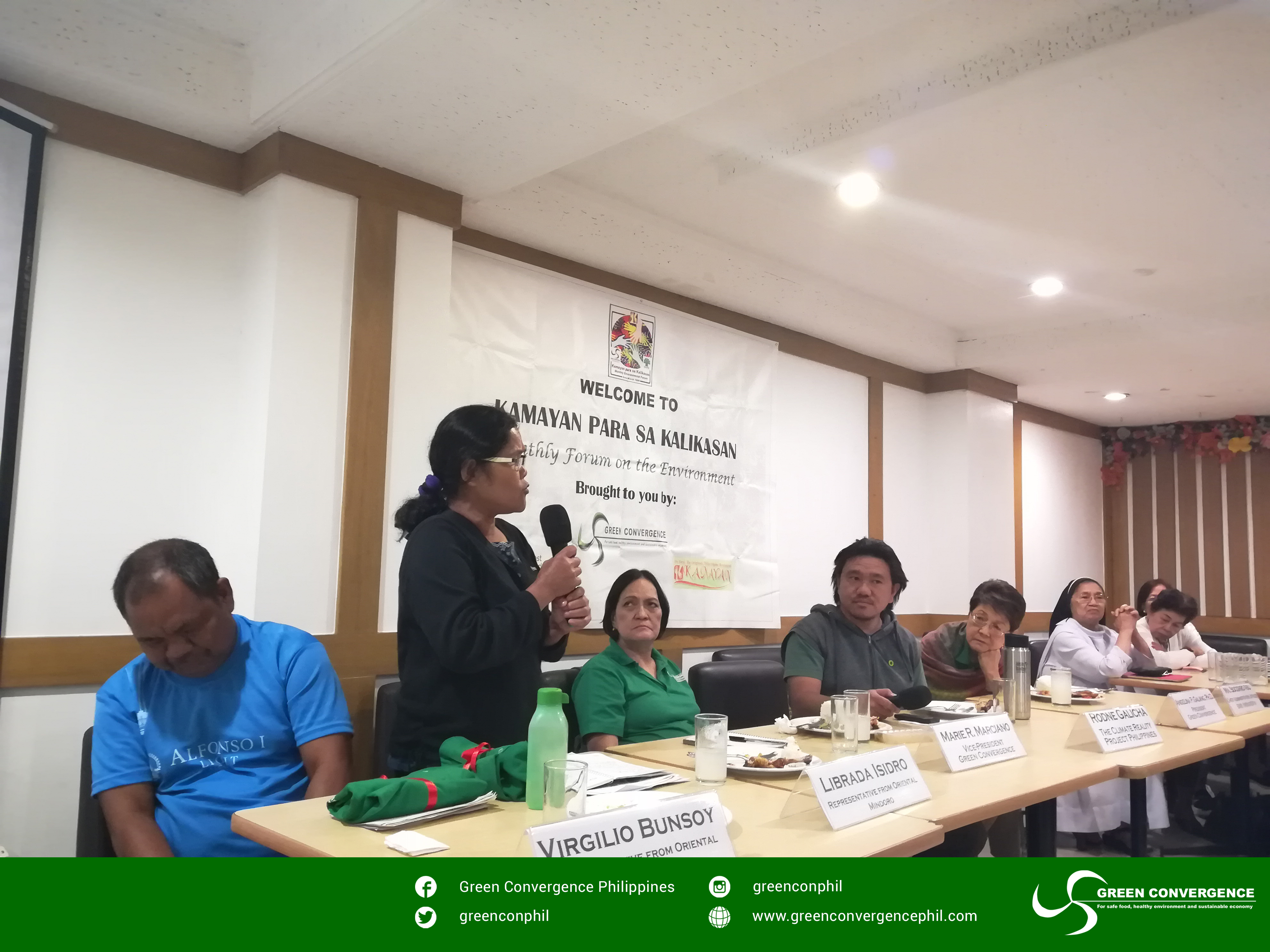
Environmental coalition Green Convergence held “Landslides: Today’s Recurrent Nightmare,” at its monthly Kamayan Para sa Kalikasan Forum. Resource speakers included Rodne Galicha of Climate Reality Philippines and Mangyan representatives from Mindoro Virgilio “Ka Mot” Bunsoy and Alangan tribe leader Librada “Ka Badang” Isidro. They discussed the current environmental situation of Mindoro and the disasters that it regularly experiences related to flooding and landslides caused by mining and mountainside blasting.
Galicha showed the rich biodiversity of Mindoro by presenting a map showing its key biodiversity and important bird areas. Unfortunately, when overlaid with the location of mining areas, it revealed overlaps causing many concerns for its natural landscapes. Citing the cause of recurrent massive landslides in the island, Galicha explained that in mining, drilling is done to know the mineral deposits undernealth; but it is common sense that if mountain blasting is added, landslide will naturally occur since one drilled hole can trigger other existing holes to cause a landslide.
Ka Mot said that mountain blasting in the island is currently being done to give way to the construction of the 8-MW Santa Clara hydro power plant project that will supply the island’s electricity needs; however, he pointed out that there was no mention of any mountain blasting in the Memorandum of Agreement among the Mangyan communities, the local government and the company in-charge of the hydro plant. When he verified this with the engineer in-charge, he was informed that mountain blasting is needed to finish the tunnel on its target deadline.
Aggravated by typhoon Nona in 2015, mountain blasting has caused several landslides forcing Oriental Mindoro Governor Alfonso Umali Jr., to halt the project in 2016. Mangyan leader, Ka Badang painfully recalls that when typhoon Nona struck, the river overflowed, flooding devastated their community. Their crops were destroyed and 200 families in one community were left homeless.
“Ang lupa at bundok ay katumbas ng aming buhay. Ang bundok po, ito ay aming pinakabangko dahil dito kami kumukuha ng aming ikinabubuhay,” Ka Badang passionately shared how the IPs see nature during the 346th Kamayan Forum.
Angelina Galang, Green Convergence President, explained that a hydropower plant, though seemingly a better alternative to fossil fuels, may be a false solution when it is not appropriate to the ecology of the place. This is why it is essential to include the indigenous inhabitants in consultations and decisions because they intimately know the area.
Ka Badang recommended to consider solar power as an alternative source of energy for their area because of its relatively less environmental impact. She also asked for legal support so they can easily voice out and stand for their rights over their ancestral lands.
“Landslides: Today’s Recurrent Nightmare,” was held last January 18, 2019 at Kamayan Restaurant, EDSA, Mandaluyong City. Now on its 29th year, it is the 346th forum of Green Convergence, institutionalized to provide a platform for civil society, government, and media to discuss pressing environmental issues of the country. This month’s forum is supported by Kamayan Restaurant EDSA with the assistance of Forest Foundation Philippines.
October 23, 2018 at 09:30 pm by Rex Arcadio R. San Diego II via Manila Standard
Is cheaper fuel the answer?
While there is a clamor for more affordable fuels to address inflation, it might be wise for the government and the public to consider its health impacts.
Speakers and participants to the recent Kamayan para sa Kalikasan Forum in Quezon City were one in this conclusion.
Environment Undersecretary Juan Miguel T. Cuna noted that while the intention to address inflation is noble, there is a need to review, even reconsider the approach due to a number of reasons―both legal and medical.
“We cannot regress and compromise air quality,” Cuna pointed out.
The Land Transportation Franchising and Regulatory Board’s recent approval to increase jeep, and bus fares in November was met with public displeasure.
The Department of Energy’s response is to reintroduce Euro-2 grade fuels―a move that runs contrary to the provisions in the Clean Air Act.
The highest concentration of pollution in Metro Manila is in EDSA, making it a dangerous place for hundreds of thousands who travel, work, study or stay along the thoroughfare.
“We might be killing, penalizing ourselves by regressing in terms of fuel quality. Why regress when we know that lower quality fuels can result in more health problems for the public,” Rene Pineda, president of Partnership for Clean Air, noted.
The group Green Convergence has written the Department of Health to take part in the discussion concerning the health impacts of the transition from Euro-4 to Euro-2.
Records of the Department of Environment and Natural Resources show that despite the presence of many vehicles that are not Euro compliant, air quality in Metro Manila has improved, “though not yet in the targeted levels as set in the parameters by law.”
“The law states that only Euro 4 fuels should be used and sold in the market. And we have actually upgraded our standards. We should do everything we can to sustain that position in view of the health impacts of reintroducing Euro-2 diesel fuels,” Cuna explained.
Since 2016, only Euro-4 fuels are allowed to be marketed in all gasoline stations, and all engines that have been imported, manufactured and installed in vehicles are required to be Euro-4 compliant as mandated by the Clean Air Act.
Euro-2 maybe cheaper, but it is a lower standard fuel that has been proven to be less safe in view of the pollutants it releases into the atmosphere.
Cuna said that while the Energy Department is tasked “to determine fuel mixes,” the DENR is the lead agency when it comes to implementing the Clean Air Act.
“The DOE’s plan may sound good, but it should only be a temporary stop-gap response. A thorough review maybe needed before this issuance is made national,” Cuna added.
The DOE released the order endorsing the return of Euro-2 fuels last August 10, which violates the provisions of the Clean Air Act which requires all fuels to be compliant with Euro 4 standards.
“The DOE in effect usurps the authority of the law, Congress and the DENR, by issuing the order, by technically amending the Clean Air Act thru a department order that goes against the mandates of the law,” Pineda noted.
Pineda added that selling dirty fuel in effect invalidates the Clean Air Act, and thus distorts and disregards the efforts of the DENR to do its job of cleaning the air.
“We cannot adopt a simple ‘business as usual attitude’ and continue improving air quality. There has to be consultation with all stakeholders,” Pineda said.
Cuna lamented that the Energy Department may have overlooked the efforts of the DENR to improve air quality in the DOE’s desire to make fuel prices affordable to the public.
The World Health Organization has declared that diesel exhaust fumes are cancerous and in response, a number of European cities have banned petrol and diesel cars as green initiatives spread across continents.
To date, other countries have transitioned to Euro 5, and no other country produces euro 2 engines.
Cuna attributed this to the hard work of policy makers led by the DENR’s Environmental Management Bureau, who in coordination with different groups, have installed 20 monitoring stations in the National Capital Region and key cities throughout the Philippines to monitor the production of particulate matter (PM5) in the atmosphere, most of which are traced as products of motor vehicles.
Dr. Angelina P. Galang, Green Convergence Convenor said that there is the need to help the poor, but warned that the DOE’s move will bring about environmental problems that will compromise the health of the public.
“We should not go back to the old days when vehicles contribute a lot to air pollution,” said Galang.
BAGUIO CITY – An environmental scientist and former United Nations Development Program (UNDP) consultant said the waste-to-energy (WtE) program promoted by the government is unsafe for the public and environment.
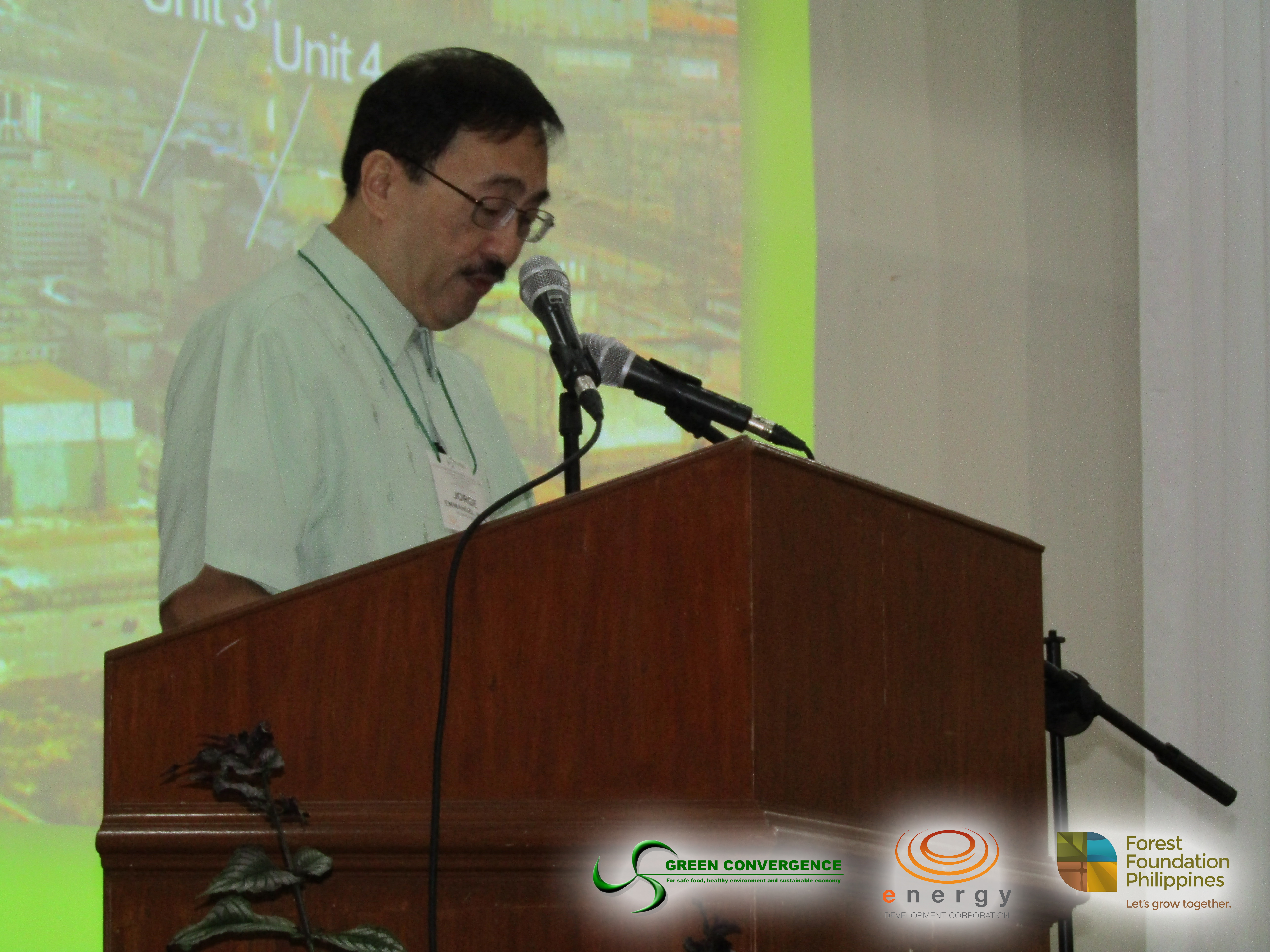
In his talk during the State of the Nature Assessment at Albergo Hotel, Baguio City on August 20, Dr. Jorge Emmanuel, underscored that the people’s health and environment must come first when considering technologies for power generation.
“WtE does not make waste disappear but turns them into toxic ash and pollutants in the air,” he said, adding that, “toxic particulates and gases are concentrated to pollution reduction devices that also require special handling and disposal.”
Emmanuel, who worked as the Chief Technical Advisor of the UNDP on Global Healthcare Waste Projects explained “clean incinerators” are fallacies. He added that the government’s promotion of WtE runs contrary to Clean Air Act (RA 8749) and the law on solid waste disposal (RA 9003g) that prohibits use of incinerators.
He said toxic pollutants are released in varying levels overtime including the deadly dioxin variety — 2,3,7,8-tetrachloro-dibenzo-p-dioxin — and he claims that “[the government] has no capability to continuously monitor dioxins in the environment.”
Environmentalists and many scientists here and abroad have criticized thermal waste treatment and disposal facilities billed as WtE as nothing new, but incinerators attached to boilers and turbines to harness the generated heat to produce power.
There are currently 12 WtE plants in Northern Luzon with a capacity of 87 megawatts according to the Department of Energy December 2017 record. Two are located in Region 1.
The Pepsi Biomass Plant in Rosario, La Union managed by Sure PEP, Inc. is installed but not operational and non-compliant with its reporting obligation based on DoE’s latest report.
A facility set to rise in Brgy. Nagpanaoan, Santa, Ilocos Sur costing P1.16 billion will generate 10MW. Upon operation, the plant will employ 30 individuals and consume 86 tons and 200 tons of municipal solid waste and agricultural waste respectively.
In his first State of the Nation Address, President Duterte said his administration will pursue waste-to-energy technology for power generation and waste management program. The Department of Environment and Natural Resources (DENR) in August 2017 called WtE a “win-win solution” and “smart alternative” to the country’s garbage problem.
Legalizing the use of incinerators is also on the way in the House of Representatives through House Bill 6893 which seeks to amend RAs 8749 and 9003. When passed, the legislation will allow the use of thermal and other treatment technologies to dispose or utilize municipal and hazardous wastes for fuel. (TNM/Sherwin De Vera)
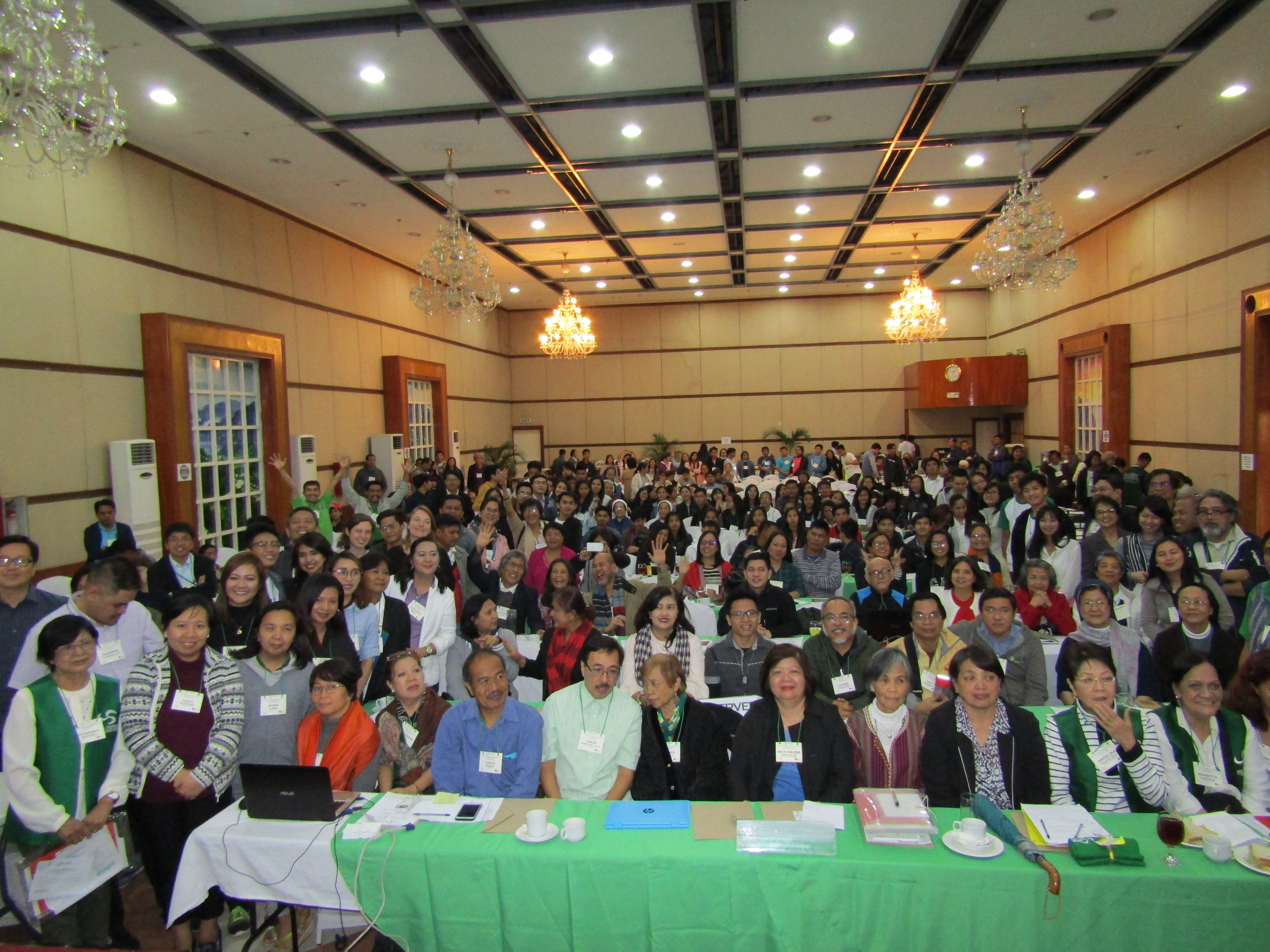
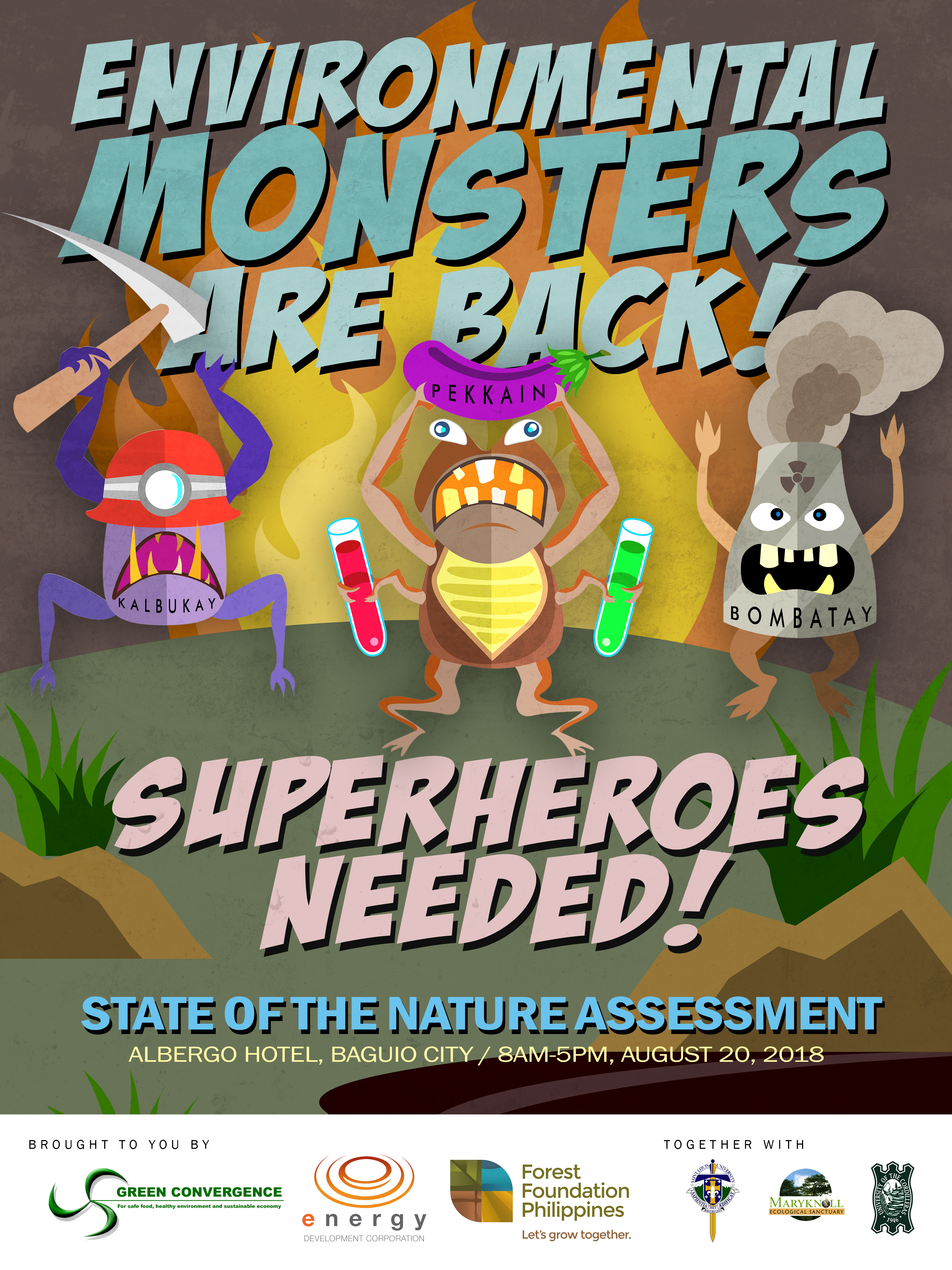
BAGUIO CITY — Environmental advocates across the country gathered at Hotel Albergo in this city on Monday, August 20, for the annual State of the Nature Assessment (Green SONA) organized by Green Convergence (GC). This year’s theme, “Environmental monsters are back; Superheroes needed!” underscored the call for action to protect the environment.
FIGHT THE ‘MONSTERS’. Institutions and environmental advocates converged at Hotel Albergo in Baguio City on August 20 for the State of the Nature Assessment or Green SONA, an annual activity organized by Green Convergence. Delegates cropped a resolution affirming their commitment to fight “environmental monsters” promoted by the government. Photo by Sherwin De Vera
The group’s president, Dr. Angelina Galang, said the activity does not only provide venue to review the state of the environment but also explain why there are technologies that environmental advocates reject.
Speakers discussed the dangers posed by genetically modified organisms (GMO), incineration and nuclear power, and large-scale mining and giant dams to the ecosystem. They also explained the flaws of present environmental laws and government programs related to their topics.
Unsafe power sources
“The environment and people’s health take primacy over the planned revival of the Bataan Nuclear Power Plant, and the use and promotion of waste-to-energy (WtE),” stressed Dr. Jorge Emmanuel.
He shared studies made by international institutions and by the panel of experts commissioned by the Philippine government from 1986 to 1992. The findings said BNPP is unsafe and dangerous for operation, and too costly to repair.
Emmanuel added that management of radioactive waste from nuclear power plants remains to be a top problem and threat worldwide.
He also criticized the government’s promotion of WtE that runs contrary to Clean Air Act (RA 8749) and the law on solid waste disposal (RA 9003) pointing WtE is actually incineration, prohibited under the two legislations.
Emmanuel a former Chief Technical Advisor of the United Nations Development Program on global health-care waste projects underscored that WtE plants produce a variety of pollutants, such as dioxins, that include 2,3,7,8-tetrachloro-dibenzo-p-dioxin, known as the most toxic compound.
He said dioxin levels released in varying levels over time and the government “has no capability to continuously monitor dioxins in the environment.”
Go organic
Instead of encouraging commercialization of genetically modified organisms (GMOs), the government should instead seriously promote organic agriculture. This was the theme discussed by Dr. Chito Medina of Magsasaka at Siyentipiko para sa Pag-unlad ng Agrikultura (MASIPAG).
“Organic farming does not only focus on the being technical of ‘being organic’ but should consider the issue of social justice,” said Medina, adding, “the problem is organic farming is still budding in the country yet the government is already nipping it down by stressing more on regulations.”
He said there are already 62 GMOs approved for commercial use since December 2002 but only two seeds for commercial planting, Bt Corn and RR Corn, were given the go signal so far. Others are contained in imported consumer products and animal feeds use in large farms.
“The problem with GMOs besides health safety is its narrow genetic adaptation instead of targeting it to adapt to broader environmental challenges,” explained Medina in mixed English and Filipino.
Citing studies conducted worldwide, Medina elaborated the detrimental health and environmental effects of Bt and RR Corn. He explained that chemicals found in GM crops cause tumors, cancers, autism, birth defects and other diseases.
His institution is also fighting the approval of golden rice for commercial production. The GM crop designed to produce beta-carotene is set for final field testing in San Mariano, Isabela and Batac, Ilocos Norte.
He said proponent conducted no tests to ascertain the crop’s safety, only field trials for its agronomic traits that also failed to produce favorable results.
Continuing forest lost
The head of Forest Foundation Philippines (FFP), Atty. Jose Canivel, discussed the situation of the country’s forest cover and reforestation efforts.
“We are planting billions worth of seedlings under the National Greening Program (NGP) but we continue to lose our old growth forest, and mature and seed bearing native trees,” the lawyer said.
He lamented that despite having more than 3000 woody plants in the Philippines, the Department of Environment and Natural Resources is mainly planting Mahogany, Gmelina and Falcata, all introduced and exotic species.
Canivel also shared that according to their study, seedlings utilized for the program mainly comes from six large nurseries mostly owned by individuals with connections in the department.
A key problem, according to him, is the absence of a forest management framework. Forest policy that is in effect is Presidential Decree 705 that focuses mainly on the creation and management of forest for industrial purposes.
FFP has lobbied for the Forest Resources Management Bill since the 13th Congress, but it has yet to pass the committee level.
“What we have been lobbying for 20 years is for us to have an appropriate forest policy for our present condition,” he said.# nordis.net
Green Convergence Philippines will hold the annual State of the Nature Assessment (Green SONA) with the theme “Environmental monsters are back; Superheroes needed!” on Aug. 20, 8 a.m. at Albergo Hotel, Baguio City.
This year’s forum is expected to tackle how genetically modified organisms (GMOs), nuclear power, and large-scale mining and giant dams are unfolding and destroying the environment.
In a statement, Green Convergence president Angelina Galang said, “Technologies that we totally reject include GMOs, which intrude nature in the most basic unit of life, the gene and nuclear power, which likewise disturbs the basic unit of matter, the nucleus.”
She added that programs like large-scale mining and giant dams remove and disturb whole ecosystems, forests, rivers and coastal ecosystems, and contribute immensely to climate change.
Speakers from different government and non-government groups including Negros Oriental Gov. Roel Degamo, Chito Medina of MASIPAG, Jaybee Garganera of Alyansa Tigil Mina, and Atty. Jose Andres Canivel of the Forest Foundation Philippines are invited to talk about the threats of said “environmental monsters” to the country’s environment, and the best green alternatives for them, specifically renewable energy, organic agriculture and reforestation.
Energy Sec. Alfonso Cusi, Tourism Sec. and agri-tourism advocate Bernadette Puyat, Environment Sec. Roy Cimatu, and Climate Change Commission Sec. Emmanuel de Guzman are expected to react on the issues and alternatives.
Green SONA 2018 is also organized by the Energy Development Corporation and the Forest Foundation Philippines and will be participated in by members of the Maryknoll Ecological Sanctuary, Saint Louis University, University of the Cordilleras, and other environmental groups and advocates.