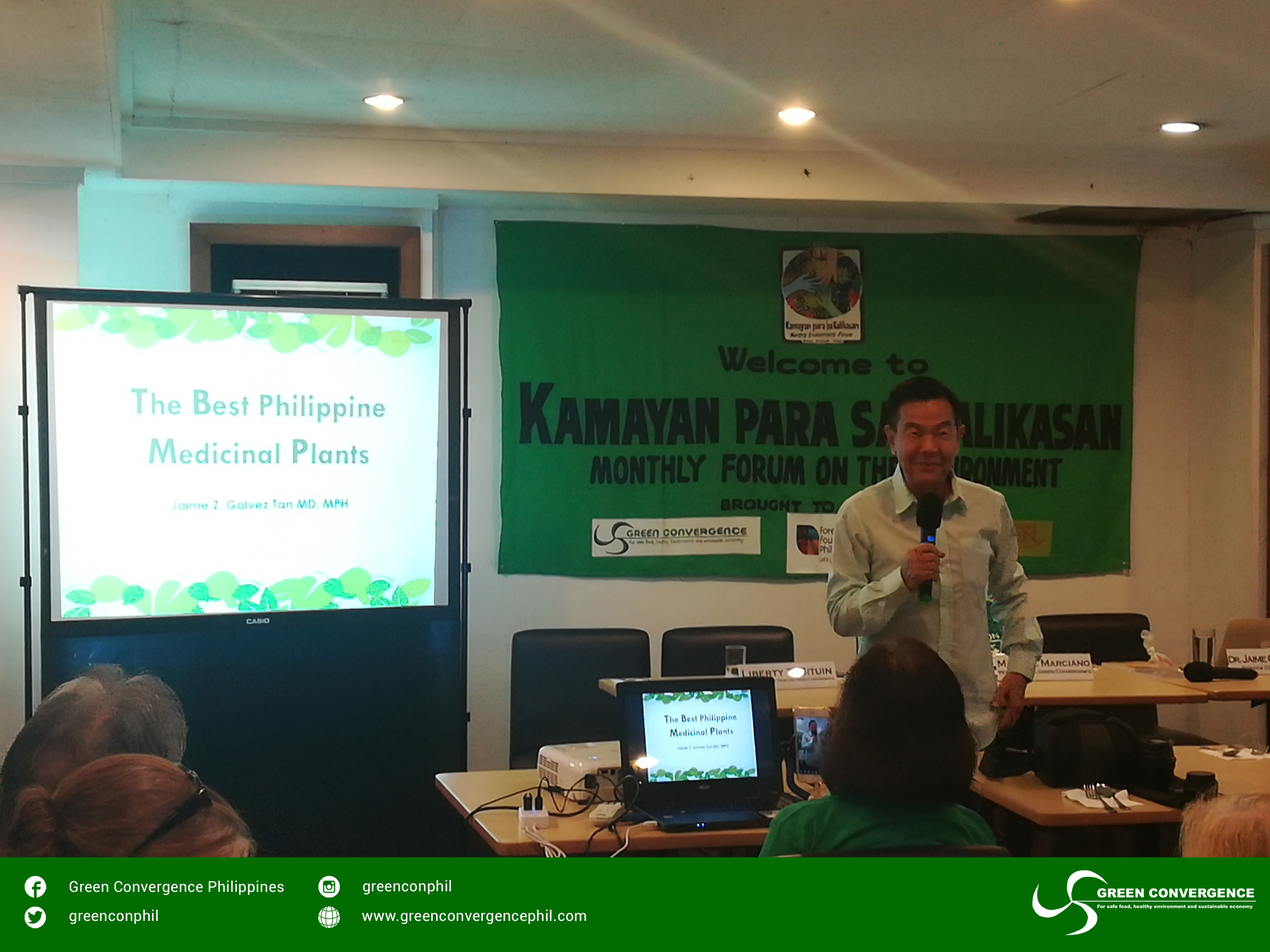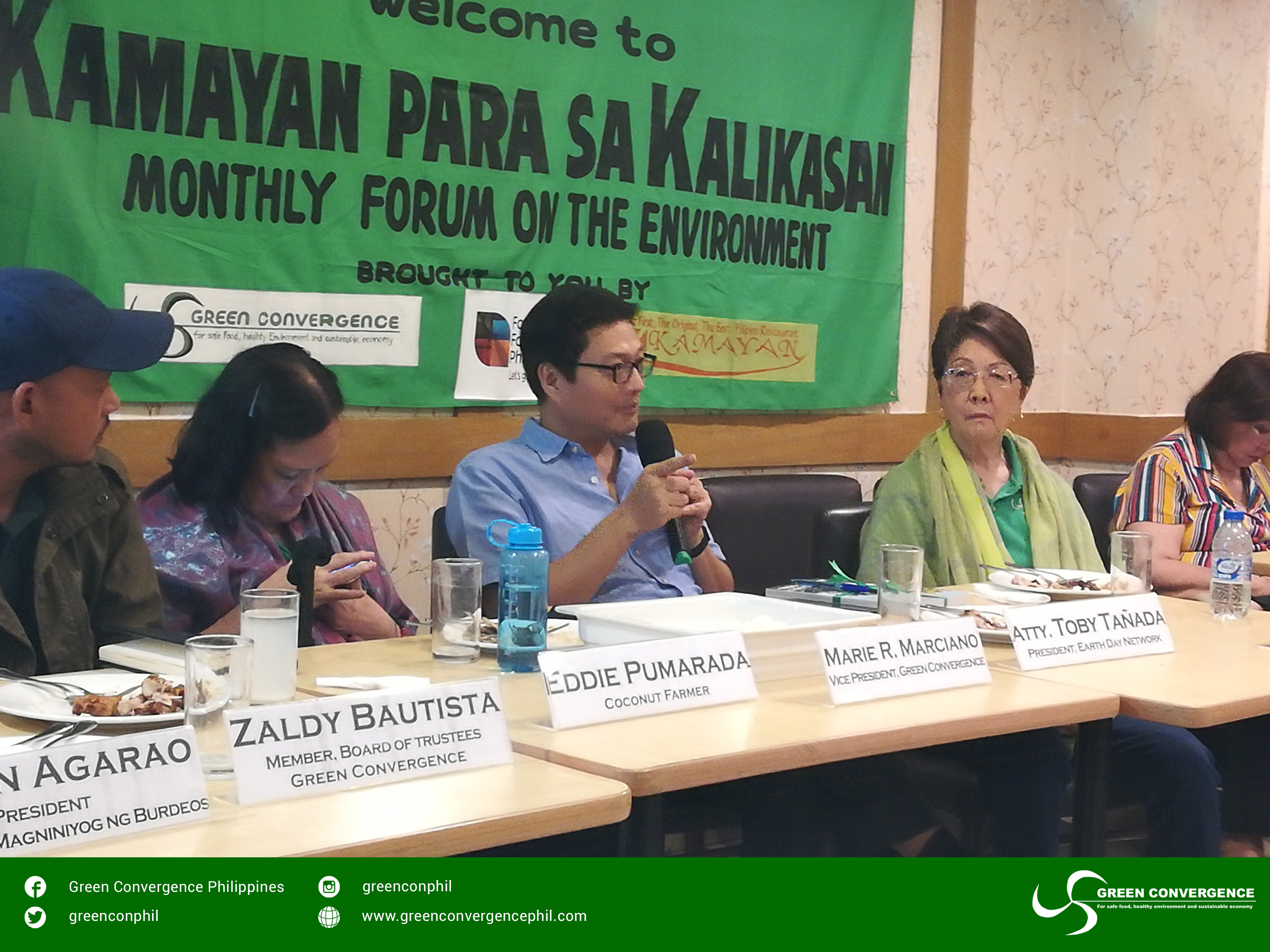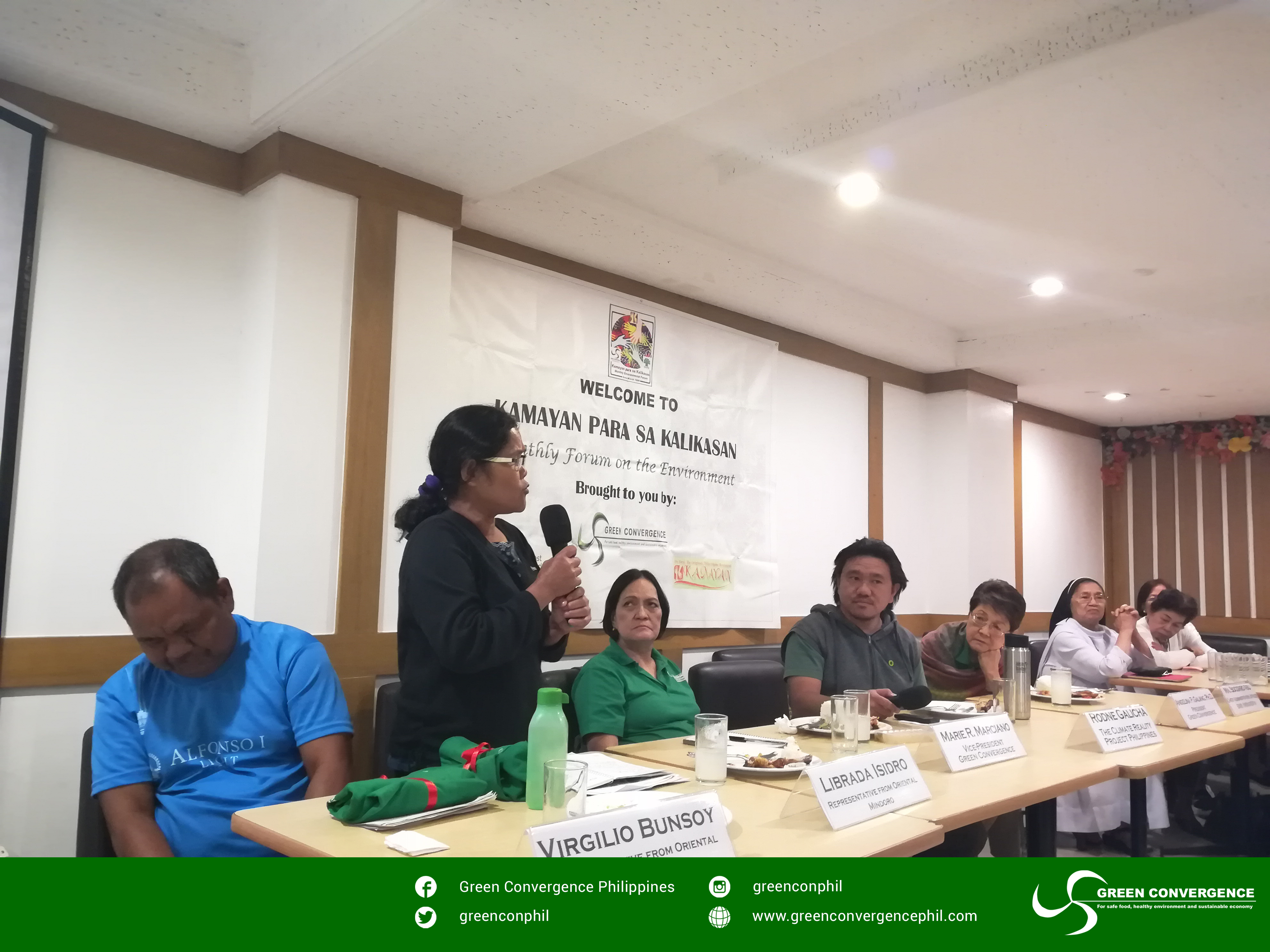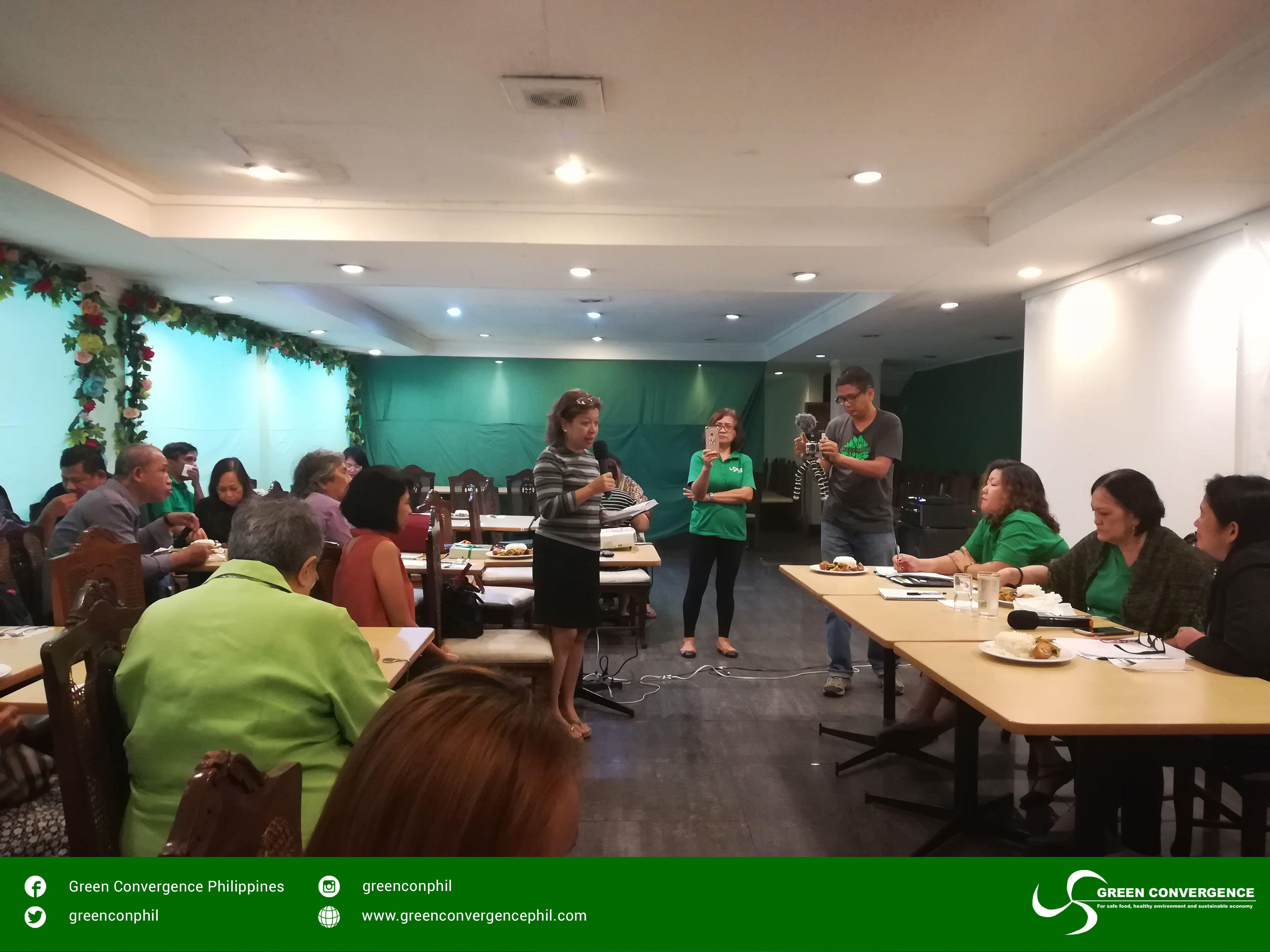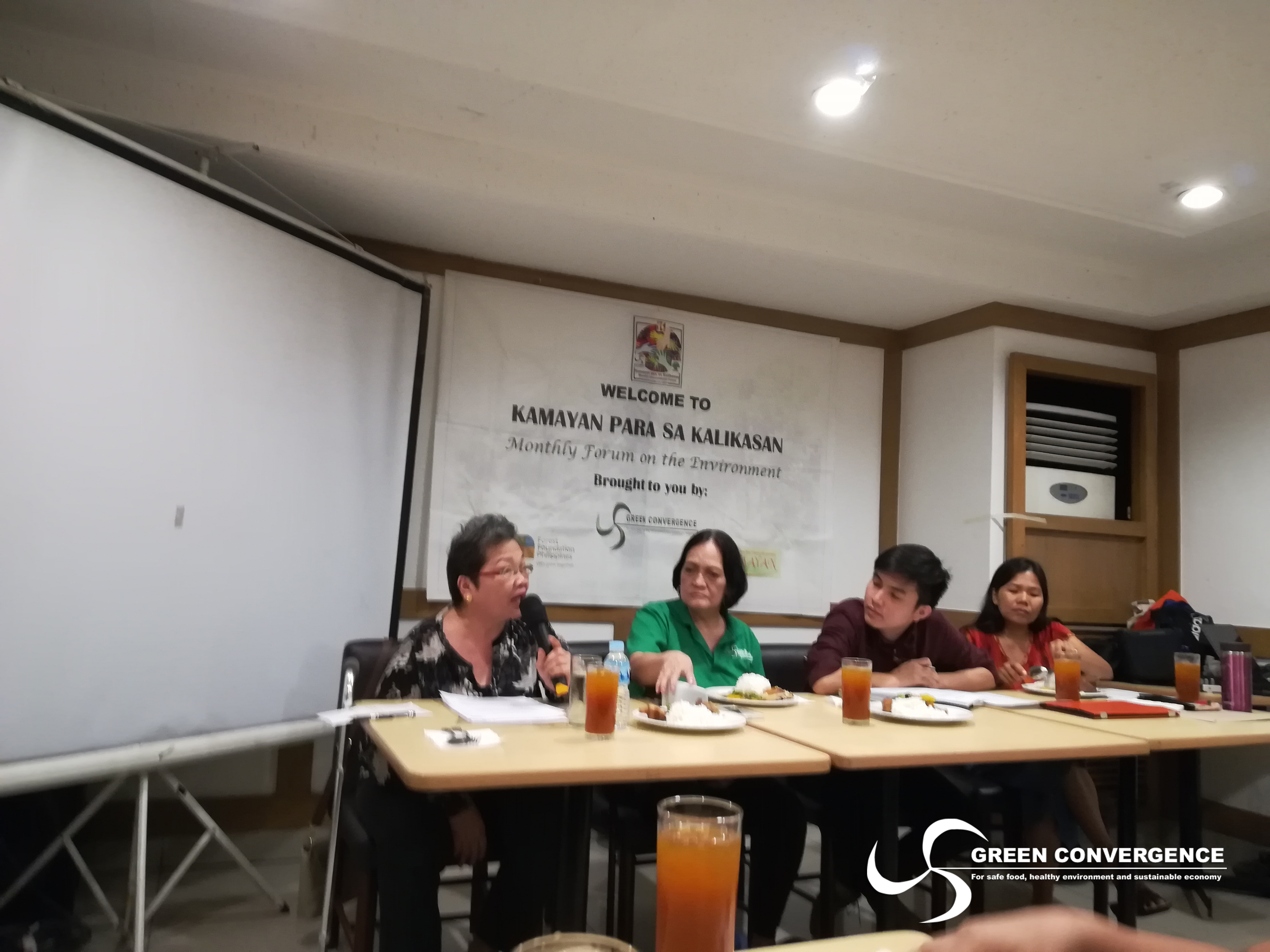

For its Christmas offering, last Dec. 18, 2020, Kamayan para sa Kalikasan focused on the native Pine Tree and endangered endemic tree species.  The resource speakers were Atty. Allan Barcena, Head of Corporate Social Development of Energy Development Corporation (EDC) and Ronino Gibe, Forester and Social Program Officer of the same company.

Atty. Barcena discussed the Benguet Pine that is dominant in Benguet but also grows in other parts of the Cordillera like Mt. Province, Ifugao, Kalinga, Abra and also in Nueva Vizcaya, Ilocos Norte and Ilocos Sur.  There are actually 2 kinds of native pine trees in the Philippines : The Mindoro Pine and the Benguet Pine.  If people want to see them, some are still located in Timberland, San Mateo;  in Crosswinds, Tagaytay; Benguet Pine Station in La Mesa Nature Reserve, Caloocan; and Benguet Pine Park in Bukidnon.

These pine trees offer the following benefits:

  • Medical experts recommend asthma victims to walk under pine trees in the morning because the trees release terpenes, responsible for the smell of pines that help clean the lungs.
  • The needles can be boiled as tea and drank to cure upper respiratory tract ailments.
  • These trees provide serenity and serve as inspiration to artists. They have enhanced the creativity of visual artists, writers, musicians as seen in the art works that they have produced.

Our native pine trees also offer economic benefits.  They serve as lumber for construction, and are used to make furniture, wood carving and novelty items.  Currently, they are not included in the endangered list of IUCN; but its population is dwindling especially in Baguio.   Congressman Mark Go filed a bill in the House of Representatives seeking a 10-year moratorium on tree-cutting in Baguio City; however, the bill has not passed.

Ronino Gibe, on the other hand, presented other native trees that can be planted and used as Christmas trees.  He also discussed EDC’s BINHI Program.

As background, Mr. Gibe informed the participants that the Philippines is one of the 17 megadiverse countries.  It has high total number of species and high endemic species; however, it is also part of the top 10 most threatened. That’s why the National Greening Program was established and a total log ban was imposed.

Native trees are those indigenous to a given area in geologic time.  This includes trees that have developed and occurred naturally.  They were not introduced by humans. In a Lexicon of Philippine Trees published in 2003, it stated that there are 3,084 native tree species in the Philippines.  800 of these are endemic and around 929 found also in other countries.  But in current studies done by UPLB, our native tree species has gone up to 4,000.

If the Philippines has many native tree species, why are we planting exotic species? Unfortunately, many are not aware of the existence of endemic species.  Through the BINHI project of EDC, they’ve decided to concentrate and prioritize 96 endemic species that are endangered.  These were selected based on the following criteria:  Biodiversity, ecological factors, and demand due to high economic value, superior mechanical strength, and high aesthetic value.  They used a grading system for all 800 endangered species and those with 60-100% average were the 96 species that they have focused on.  They intend to mainstream all these 96 species from Luzon to Mindanao.  They launched the program last 2008 and currently have 186 partners in different regions throughout the Philippines.

He enumerated 3 criteria why they prefer to plant native trees:

1) These species can easily adapt to the environment since they are native;

2) They are typhoon resilient;  and

3) They are the habitat of native fauna.  They contribute to biodiversity.

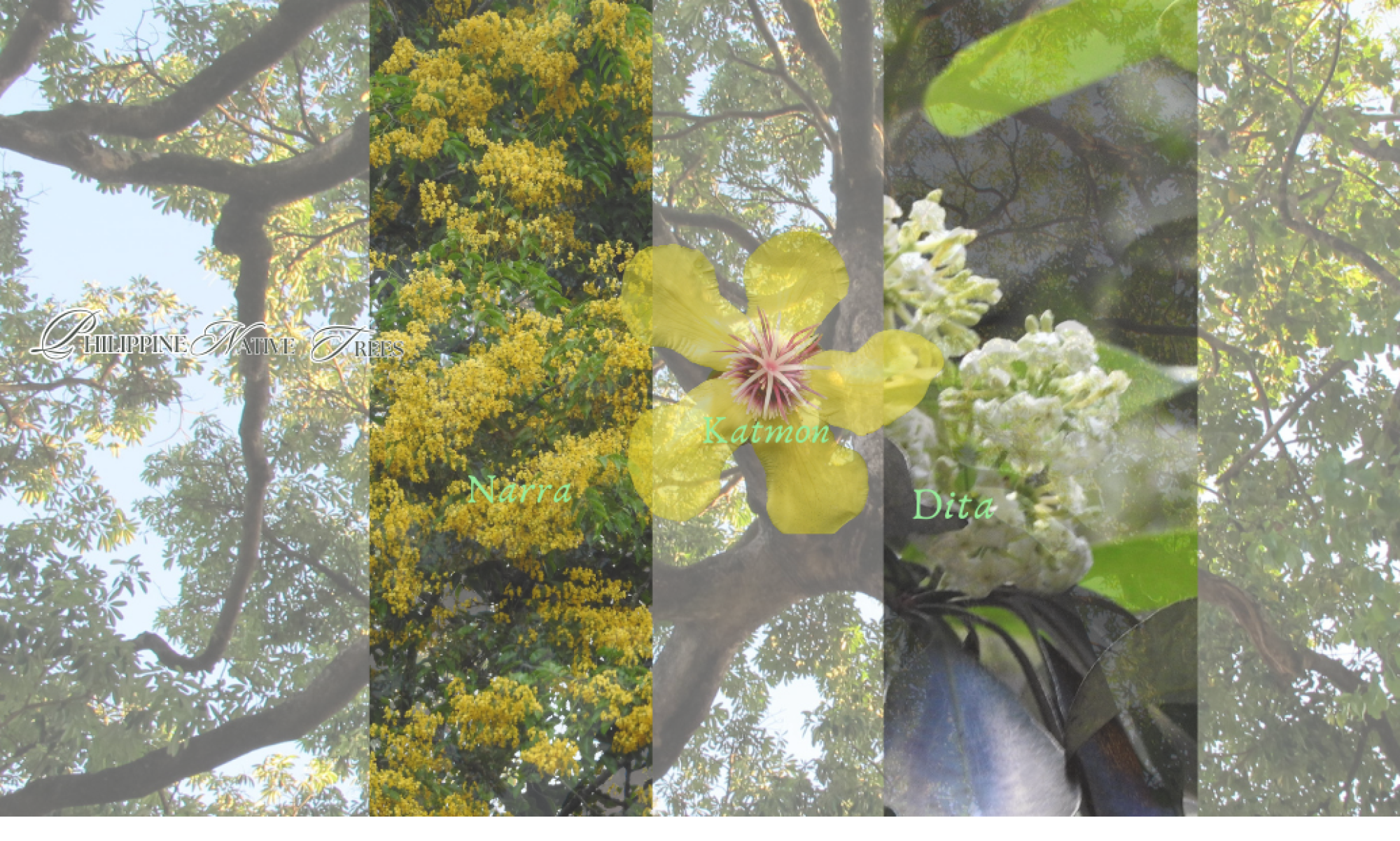
Exotic species kill the understory because of the acidity of their leaves that are prolific in regenerating.  During typhoon Rolly, most of the fallen trees were exotic.   He presented a list of exotic trees that must be avoided.  These are: Mahogany, Ipil-ipil, Firetree, Mangium, Gmelina, Palo santo, rain tree/acacia, Golden Shower, Teak, Palawan Cherry, Kakauate, and African Tulip.  These are the exotic varieties that have proliferated in our country.  They were brought for commercial purposes and used by landscape artists in their profession.  In contrast, he showed native trees that can compete with the enumerated species:  Siar, Banaba, Malabulak, Narra, Rarang, Salingbobog.

Mr. Gibe also showed photos of native trees that can be alternative to Christmas trees. They flower and bear fruits during the Christmas season. They are resilient, best for urban landscaping, have high economic value and are critically threatened.  These are:

  • Bagauak Morado, also known as fireworks. It bears flowers throughout the year;
  • Malakatmon found in Bataan, Aurora and Palawan. They are relatively small that grows to around 3-5 meters tall, except for the species in Palawan.  Their flower changes color from yellow to gold to red.
  • Molave is typhoon resilient. It flowers from August to January. The flowers turn from purple to yellow.
  • Philippine Teak blooms flowers from September to December. It is usually found in Batangas and Mindoro. The leaves are small compared to the species in Taiwan. Its flowers turn from pink to purple.
  • Igem-Dagat is used as Christmas tree in Batanes. This cannot be cut because it is endangered. People in Taiwan make these into bonsai. They grow in coastal areas.
  • Mapilig is from the Bicol region. It flowers in November. It is one of the hardest wood; unfortunately it is critically endangered.
  • Almaciga is made into Christmas décor because of its cones. It is found in Samar.

Mr. Gibe also listed 5 steps in conserving species:

  • Conduct tree inventory and documentation – take note of mother trees that can be the source for seeds and wildlings.
  • Establish Mother Trees.
  • Protect the selected habitat.
  • Advocate through documentation, publication and conduct orientation seminars

EDC was tapped by the Botanical Conservation International – IUCN, as the first and only Philippine Implementing partner for its Global Tree Assessment Initiative (GTA).  EDC has assessed 800 Philippine endemic species with 489 published.  EDC is propagating 96 species of the most endangered premium trees in the Philippine forest.

They go into partnership using these criteria:

  • Sustainability of the area is ensured.
  • The area is accessible to the public to enhance awareness raising activities.

To those interested in procuring native tree seedlings, they are available in EDC Nurseries located in Ormoc, Leyte; Valencia, Negros Oriental; Albay, Bicol Region; Kidapawan, North Cotobato; Pantabangan, Nueva Ecija; and in Antipolo near Eugenio Lopez Center for Metro Manila.  Varieties depend on what is being propagated. They are open to partnering with organizations. They can help in providing technical expertise in setting up nurseries for big projects.

Some of the common challenges that they’ve encountered in their “tree growing and tree nurturing” programs are:

  • Ensuring that prospective partner organizations are well organized and stable;
  • Choosing the appropriate species for the location. They usually do soil analysis to match it with appropriate species to grow. This ensures good mortality rate.
  • Appropriate timing for growing plants with the planting plan. Growth of seedlings in nurseries must coincide with the planting season, which is during the rainy season.
  • Maintenance & protection of seedlings need time and resources during its 3-5 years growing stage.

Mr. Gibe narrated their experience in propagating Kaladis Narig in Sibugay, Zamboanga.  There was only 1 existing standing tree.  But in partnership with DENR and the local LGU, it is now reported to have 11 standing trees. Last August 2020, the Kaladis Narig species was declared as heritage tree to protect it from being cut and harvested.

As parting words, Mr. Gibe recommended 4 easy steps to participate in saving native trees:

  • Join the discussion with like-minded organizations that advocate Philippine Native Trees;
  • Take photos and inquire from experts before buying or collecting trees;
  • Visit native tree parks and arboretum and read books on native trees
  • Grow, nurture and advocate native trees only.

Green Convergence to LGUs: ‘Invest in green spaces!’

The state of air quality and the need for expansion of green spaces in Metro Manila was the subject of the 355th monthly Kamayan Para sa Kalikasan Forum held on October 18, 2019 (Friday) at Kamayan Restaurant, EDSA, Mandaluyong City.

In a 2012 report by the World Health Organization, “Every year, around 7 million premature deaths [in the world] are caused by air pollution,” said Lyrio Woldring of Smart Air Philippines, “One in four deaths in the Philippines are attributed to air pollution,” she added.

Woldring emphasized that while the right type of masks are effective in protecting people from the worst impacts of air pollution, she was disappointed that the government was not treating the problem as a health concern. She remarked, “We have a campaign for polio, for dengue, why not for air pollution?”

Meanwhile, Quezon City Mayor Joy Belmonte’s representative, Patrick Alzona of the city’s Environmental Protection and Waste Management Department (EPWMD), spoke about the LGU’s plans to promote green spaces.

Alzona said that as the “lung” of Metro Manila, “Quezon City aims to implement the ‘Green Pedestrian Corridor’ in an attempt to increase the city’s green spaces to 25% of its total land area,” adding further that the City Mayor “wants to create a department solely for climate change and sustainability,” possibly the first of its kind among LGUs.

Asked about the young trees in plant boxes recently destroyed by the government along some streets, Alzona explained that they are treated as “collateral damage” of the national government’s road clearing operations. “They can be replanted,” he said further.

In the discussion, Negros Occidental’s Nordson Forest Park owner Atty. Nordy Diploma passionately declared that government inaction on environmental problems and non-compliance with environmental laws must never be tolerated.

Diploma converted 40 hectares of his land to a forest park for the benefit of his community, instead of using it for business.

“Trees are still the best absorbent of carbon dioxide,” asserted Dr. Angelina Galang, Green Convergence President, as a final reminder to the audience and the LGUs about the importance of trees, particularly the native ones, in combating air pollution.

Since March 1990 Kamayan Para Sa Kalikasan Forum, held every 3rd Friday of each month, has become an institutionalized platform that enables NGO and government representatives, the media, students, teachers, church groups, and concerned citizens to discuss pressing environmental issues in the country. The forum is organized by Green Convergence and is supported by Kamayan Restaurant EDSA, with the assistance of the Forest Foundation Philippines.

You must be logged in to view this content. Free Virtual Library Registration Here

Green Convergence to PH gov’t: ‘Invest in native medicinal plants!’

Environmental Coalition Green Convergence held the 352nd installment of the monthly Kamayan Para sa Kalikasan Forum about the future of the Philippine native medicinal plant industry on July 19, 2019 (Friday) at Kamayan Restaurant, EDSA, Mandaluyong City.

Former Department of Health Secretary Dr. Jaime Galvez Tan discussed that “Around 1500 medicinal plants from more than 13,500 plant species in the Philippines of which more than 3500 are considered indigenous.”

Unfortunately, Galvez Tan stressed, “Only 120 medicinal plants have been scientifically validated for safety and efficacy.”

“Only 10 medicinal plants have been promoted by DOH since 1993 and Philippine Institute for Traditional and Alternative Health Care since 1997,” he added.

Because of this slow promotion of the country’s medicinal plants, an estimated PhP 1.2-billion sales only were attributed to them, compared to PhP 138-billion sales of synthetic drugs. Both records were in 2013.

In fact, Dr. Francis Gomez explained, in mid-1990s to 2000s, medicinal plants had low acceptance from medical doctors due to perceptions that they are associated with ‘Quiapo herbs,’ quack, and backwardness.

“Even Philippine Medical Association stated that herbal medicines are not medicines,” Gomez exclaimed.

Gomez is the CEO and President of New Marketlink Pharmaceutical Corporation, the company behind Lagundex, made of a medicinal plant, whose success was due to persistent education campaign nationwide.

Galvez Tan noted that education campaign on Philippine medicinal plants must continue.

He presented the best medicinal plants that the country possesses: the best vegetable is malunggay (Moringa oleifera), the best spice is luyang dilaw (Curcuma longa), the best grass is takip-kuhol (Centella asiatica), the best palm is coconut (Cocos nucifera), the best stem is makabuhay (Tinospora rumphi), the best flower is ylang-ylang (Cananga adorata Lam), and the best nut is pili (Canarium ovatum Engl.).

All of which have medicinal properties that improve the health conditions of human beings, he stressed.

On the other hand, Igorot and Green Convergence Board Member Liberty Bituin argued that everything in our forests is good for our health. “From fresh air, to the fresh waters, to the stones, to the trees, and all the medicinal plants,” she enumerated, “they are all components of the indigenous ways of improving our health.”

Green Convergence President Dr. Angelina Galang called for the Philippine government to invest in the country’s natural resources and for the civil society to strengthen their campaign for this to be realized.

Since March 1990, Kamayan Para Sa Kalikasan Forum has become an institutionalized platform that enables NGO and government representatives, the media, students, teachers, church groups, and concerned citizens to discuss pressing environmental issues in the country. This month’s forum is organized by Green Convergence and is supported by Kamayan Restaurant EDSA with the assistance of the Forest Foundation Philippines.

You must be logged in to view this content. Free Virtual Library Registration Here

Environmental group echo farmers’ call: ‘Protect PH coconut industry!’

Environmental Coalition Green Convergence held the 351st installment of the monthly Kamayan Para sa Kalikasan Forum about the state of the Philippine coconut industry and alternatives to help the coconut farmers on June 21, 2019 (Friday) at Kamayan Restaurant, EDSA, Mandaluyong City.

Quezon Province’s Samahan ng Magniniyog ng Burdeos President Edison Agarao stressed, “Among the challenges being faced by the coconut farmers are the lowering of coconut product price, market inaccessibility, stiff competition versus other oil products especially palm oil, inaccessibility to technology, and lack of government support.”

The negative state is further aggravated when President Rodrigo Duterte vetoed the Coco Levy Law, one of his campaign promises when he was just running for presidency.

“The campaign for the Coco Levy Bill has gone a long way,” said Atty. Atty. Toby Tañada, President of Earth Day Network, who is one of the major advocates of the policy, “but our farmers were fooled by false promises of this administration.”

Tañada called for a new bill that will immediately address low copra prices. He also encouraged, “Buying from farmers’ cooperatives and [profit] will be used for higher value coco products.”

He also said that the Coco Levy Fund campaign must not stop, and emphasized that “Coconut farmers should not only be the beneficiaries of the coco levy fund, they should likewise be participants in the growth and development of the coconut industry.”

Green Convergence Board Member and coconut farmer himself, Zaldy Bautista introduced intercropping as a way to increase the current income of coconut farmers.

It is a multiple cropping practice that involves growing two or more crops in proximity. Due to profit-oriented agriculture, the method has lost its relevance to farmers.

Madalas na itong ginagawa noong unang panahon ng ating mga ninuno,subalit hindi lang ito masyadong napahalagahan ng ibang mga magsasaka (This has often been done by our ancestors ever since, but this is not given importance by some farmers),” he explained.

Dr. Angelina Galang, Green Convergence President emphasized that the fight for food security is intertwined with the environmental struggle. She mentioned that achieving the ideal future for our common home is achieving the ideal future of the poor.

Since March 1990, Kamayan Para Sa Kalikasan Forum has become an institutionalized platform that enables NGO and government representatives, the media, students, teachers, church groups, and concerned citizens to discuss pressing environmental issues in the country. This month’s forum is organized by Green Convergence and is supported by Kamayan Restaurant EDSA with the assistance of the Forest Foundation Philippines.

You must be logged in to view this content. Free Virtual Library Registration Here

GC to PH gov’t: ‘Respect rights of IPs; no to false environmental solutions!’

Environmental coalition Green Convergence held “Landslides: Today’s Recurrent Nightmare,” at its monthly Kamayan Para sa Kalikasan Forum. Resource speakers included Rodne Galicha of Climate Reality Philippines and Mangyan representatives from Mindoro Virgilio “Ka Mot” Bunsoy and Alangan tribe leader Librada “Ka Badang” Isidro. They discussed the current environmental situation of Mindoro and the disasters that it regularly experiences related to flooding and landslides caused by mining and mountainside blasting.

Galicha showed the rich biodiversity of Mindoro by presenting a map showing its key biodiversity and important bird areas. Unfortunately, when overlaid with the location of mining areas, it revealed overlaps causing many concerns for its natural landscapes. Citing the cause of recurrent massive landslides in the island, Galicha explained that in mining, drilling is done to know the mineral deposits undernealth; but it is common sense that if mountain blasting is added, landslide will naturally occur since one drilled hole can trigger other existing holes to cause a landslide.

Ka Mot said that mountain blasting in the island is currently being done to give way to the construction of the 8-MW Santa Clara hydro power plant project that will supply the island’s electricity needs; however, he pointed out that there was no mention of any mountain blasting in the Memorandum of Agreement among the Mangyan communities, the local government and the company in-charge of the hydro plant. When he verified this with the engineer in-charge, he was informed that mountain blasting is needed to finish the tunnel on its target deadline.

Aggravated by typhoon Nona in 2015, mountain blasting has caused several landslides forcing Oriental Mindoro Governor Alfonso Umali Jr., to halt the project in 2016.  Mangyan leader, Ka Badang painfully recalls that when typhoon Nona struck, the river overflowed, flooding devastated their community.  Their crops were destroyed and 200 families in one community were left homeless.

“Ang lupa at bundok ay katumbas ng aming buhay. Ang bundok po, ito ay aming pinakabangko dahil dito kami kumukuha ng aming ikinabubuhay,” Ka Badang passionately shared how the IPs see nature during the 346th Kamayan Forum.

Angelina Galang, Green Convergence President, explained that a hydropower plant, though seemingly a better alternative to fossil fuels, may be a false solution when it is not appropriate to the ecology of the place. This is why it is essential to include the indigenous inhabitants in consultations and decisions because they intimately know the area.

Ka Badang recommended to consider solar power as an alternative source of energy for their area because of its relatively less environmental impact.  She also asked for legal support so they can easily voice out and stand for their rights over their ancestral lands.

“Landslides: Today’s Recurrent Nightmare,” was held last January 18, 2019 at Kamayan Restaurant, EDSA, Mandaluyong City. Now on its 29th year, it is the 346th forum of Green Convergence, institutionalized to provide a platform for civil society, government, and media to discuss pressing environmental issues of the country. This month’s forum is supported by Kamayan Restaurant EDSA with the assistance of Forest Foundation Philippines.

You must be logged in to view this content. Free Virtual Library Registration Here

Green Convergence’s Galang: “Update PH communal forest policy!”

Environmental Coalition Green Convergence held the 345th installment of the monthly Kamayan Para sa Kalikasan Forum last December 21, 2018 at Kamayan Restaurant, EDSA, Mandaluyong City. Resource speakers included forester Amie Rabang of the Forest Management Bureau and Liberty Talastas-Bituin, a member of the indigenous people in the Cordilleras.  They discussed Communal Forest and the status of its implementation.

Rabang stated that “there are 649 assigned communal forests all over the Philippines designated through Memorandum of Agreements between LGUs and the DENR.”

“In our experience in the Cordilleras, several areas not declared as communal forests are sustainably developed that provides livelihood while sustaining the area’s ecological integrity,” asserted Talastas-Bituin.

Rabang declared that “most of the assigned communal forests are disestablished by the DENR because they no longer provide timber.” She further added that “communal forests were conceptualized in 1995 with the main objective of providing timber for the country.”

Talastas-Bituin emphasized that “it is important that LGUs should conduct regular consultative meetings with the communities in the formulation of forest management plans to effectively use and protect these forests.”

Rabang seconded and further explained that communal forests should be included in the land use plans of the local governments.

The Local Government Code grants local government units (LGUs) the right to plan and manage identified communal forests.  We also have the Community-Based Forest Management Program, where a production-sharing agreement between the Department of Environment and Natural Resources and participating people’s organizations (POs).  for 25 years, renewable for another 25 years provide tenurial security and incentives to co-develop, co-utilize and co-manage specific portions of forest lands (DENR Administrative Order No. 96-29).

Realizing that these programs need to be modified to be attuned to the current environmental situation Green Convergence President Angelina Galang concluded that “it is urgent that government updates its policy on communal forests to avoid misuse and overuse of these identified forest lands.” She further highlighted the importance and critical role of forests as mitigation and adaptation instruments to protect us from devastating effects of climate change.

Now on its 29th year, Kamayan Para sa Kalikasan Forum has become an institutionalized platform since March 1990 that enables NGO and government representatives, the media, students, teachers, church groups, and concerned citizens to discuss pressing environmental issues in the country. This month’s forum is supported by Kamayan Restaurant EDSA with the assistance of the Forest Foundation Philippines.

You must be logged in to view this content. Free Virtual Library Registration Here

Kamayan emphasizes forests’ role to greenhouse gas reduction

JUNE 15, 2018, Mandaluyong City – The 339th installment of the monthly Kamayan Para Sa Kalikasan Forum tackled the sustainable nationally determined contributions (NDCs) of the Philippines in its commitment to help reduce the global greenhouse gases as per the Paris Agreement of 2016.

Dr. Rowena Boquiren of the Haribon Foundation pointed out that the massive degradation of forests along with the rapid construction of greenhouse gas-emitting industries such as coal power plants and mining leads to the increase of the Philippines’ national contributions to the global greenhouse gases.

Sino ba ang mga nagdedeforest at naglelevel down ng mga bundok? Paano makakabawas ng GHGs (global greenhouses gases) kung fina-fasttrack ang coal power plants?” she exclaimed.

(“Who are causing the deforestation and the flattening of mountains? How can we reduce GHGs if the there is a speedy construction of coal power plants?”)

She also questioned the commitment of the Climate Change Commission regarding urgent matters like this explaining that civil society organizations are ready to be of assistance.

Gusto naming makasama sa consultation sa NDCs. Marami kaming gustong imungkahi. Pero hindi pa ito nangyayari. Wala daw kasi ang CCC (Climate Change Commission)” Boquiren claimed.

(“We wanted to join the consultation for NDCs. We have so many things to suggest. But this has never happened. CCC has not been present.”)

Dr. Rowena Boquiren of Haribon Foundation (first from left) discussed the role of forests in addressing the problems caused by greenhouse gases together with Alex Alonzo of the Climate Change Commission (second from right) and Sr. Elizabeth Carranza of the Urgent Initiative (first from right).

“The pillars of the NDCs start with political commitment which is the support of the highest level of government, then scientific evidence and stakeholder engagement,” Alex Alonzo, representative of the Climate Change Commission said in his presentation.

A member of the audience, Randy Oliva of Green Convergence questioned the agency not being urgent enough to address issues on climate change in the country considering that they’re the main force in-charge to do so in the government.

“As per EO 174, CCC has influence over inventory accounting on NDCs. The Philippines is actually ahead of other countries, even developed ones when it comes to the institutional aspect of climate change mitigation. Other countries’ governments would have to engage with all their agencies to get climate change data,” Alonzo responded.

Dominant pa rin ang issue ng political economy sa bansa natin. Climate change is triggered by anthropogenic destructions like monocapitalism, neoliberalism and even imperialism. Cultural revolution is needed to change our postcolonial mentality,” Boquiren said giving insights as to the limited capacities of the commission.

“The issue of political economy is still dominant in our country.”

This was in agreement with Sr. Elizabeth Carranza’s remarks that fossil fuel industries financed by developed countries as being largely responsible of global warming.

“The Philippines is one of the most vulnerable countries in the world to the impacts of climate change. Using Pope Francis’ Laudato Si, we call for ecological conversion and change in lifestyle in our country” she said.

Further emphasizing the urgency of NDCs, Boquiren mentioned that “Global temperatures will rise to 2.6 to 3.1 degrees Celsius by 2100. We have to be critical on the appropriations for each sector for the NDCs.”

Sr. Elizabeth Carranza of the Global Catholic Climate Movement (GCCM) Pilipinas and the Urgent Initiative, Alex Alonzo of the Climate Change Commission, and Dr. Rowena Boquiren of the Haribon Foundation served as speakers of the discussion.

Kamayan Para sa Kalikasan Forum is a monthly event of Green Convergence sponsored by Kamayan Restaurant EDSA and the Forest Foundation Philippines which aims to be an avenue for the public sector to have an exchange on environmental education.

Green Convergence for Safe Food, Healthy Environment and Sustainable Economy is a coalition of networks, organizations and individuals working for a development paradigm that addresses the need for social and economic upliftment, while preserving life-supporting water, air and land for generations to come.

Its other projects include the annual State of Nature Assessment or the Green SONA and the biennial Philippine Environment Summit where it recognizes the best environmental practices of local government units through the LGU Eco Champions.


You must be logged in to view this content. Free Virtual Library Registration Here

Why native trees?

Published February 7, 2018, 10:00 PM, By Flor G. Tarriela via Manila Bulletin

At a recent typhoon that hit Metro Manila on the way to Tagaytay, I noticed many fallen trees, Acacia and Tulip trees. Later I found out these fallen trees were actually “alien” trees and not native to the Philippines.

But wonder of wonders in typhoon Ondoy, a Dita tree stood tall and saved 36 lives in Quezon City! The Dita tree, like most native trees is a survivor tree. I’m happy that a few years back, FINEX together with MNTC Rod Franco had the project of greening NLEX with Dita trees, now fully grown.

What’s with native trees?  Native trees adapt naturally to its local surrounding such as the micro-organism in soil, thus more resilient, that they don’t topple easily.  Just like us locals, we don’t get upset stomach immediately from drinking local water or eating local food as foreigners do.

Mr. Oscar Lopez, Chairman Emeritus of Lopez Holdings, says that sometime back, the Philippines had 94% cover with forests. In 1945 it was still 66% or 2/3 covered.  Where are we today?  So sad, the loss of forest cover is so fast that it is less than 7% with only 3% in unspoiled condition.

The Philippines is so blessed; despite our terrain of less than 1% of the world’s land area, we have more than 5% of the world’s flora.  “Per hectare, our country probably harbors more species than any other place on earth” says Dr. Angelina Galang of Green Convergence.  The Philippines has 3,600 identified native trees, 67% are endemic, meaning found only in the country.  However even this biodiversity is being lost at an alarming rate.

Imee Sarmiento of Hortica Filipino Foundation was the guest speaker on Philippine Native Trees at the MAP Agribusiness forum chaired by Ramon Ilusorio, Chairman Emeritus of Multinational Investment.  She spoke passionately about our native trees, how beautiful and majestic are the flowering (Bagawak Morado, Butat, Ilang-Ilang, Banaba, Balai Lamok, etc.) and fruiting (Katmon, Pili, Bignay, etc.) trees. Oh! how I love to have them in my garden.

She also talked about the wood trees. We don’t really have Philippine Mahogany.  Instead, Imee said that Bagtikan, Lauan, Tangile, Guyo, Yakal, Apitong are what is known as Philippine Mahogany. She says that Mahogany which is alien to the Philippines, may be good for commercial purposes (grow and cut) but to make it a permanent forest, forget it!  No insects will thrive such as what happened to the Bohol Mahogany man made forest. The tarsiers didn’t know what hit them.  So where have all these trees gone?  They are disappearing fast due to over-harvesting, deforestation, replacement by alien species and even carted away to foreign countries.

Mameng Florento, a plant lover and collector bought a beautiful flowering plant during her Europe travel. Not cheap, only to find out what she bought is our very own native Medinilla Magnifica or Kapa Kapa.

What’s also ironic is that Dr. Jaime Galvez Tan, former Secretary of Health told me that there are about 25 species of cinnamon of which 20 are native to the Philippines.  A little bit of trivia, in Pigafetta’s journal (Magellan’s chronicler), the galleon full of spices, including cinnamon, were sufficient to pay all of Magellan’s debt of 7 galleon ships.  Sri Lanka has only one species and guess who is known for Cinnamon?  Have you heard or seen of Cinnamon native to the Philippines?  Now I want to collect these cinnamons.

Out of the 3,600 native trees, only about 200 native trees have been documented in Imee’s “work of love,” the PHILIPPINE NATIVE TREES 101 and 202.  Volume #3 is coming soon.  Even with volume 3, this represents research on only 10% of the Philippines native trees.  Still, there’s much to do.

An excellent project is the Dr. Lucio C. Tan Legacy Forest to plant 15 Million trees over six years or 2.5 million seedlings per year primarily to protect our forest and address the problem of global warming. Once mature, the 15 million trees that include a variety of timber like Narra, Batino, Manalis, Ipil, etc. and fruit trees like Lipote, Marang, etc.,  shall provide multiple benefits both ecological and socio-economic such as carbon sink, raw material supply, wildlife habitat, improved water quality and quantity, improved ecosystems services and livelihood among others. This can be achieved by planting various species of forest and fruit trees.  It is a sustainable reforestation.  A legacy for future generations.

Federico “Pike” Lopez, Chairman and CEO of Energy Development Corporation (EDC) sent me a book on “BINHI: Tree for the Future”.  Binhi connotes potential and growth. EDC in collaboration with the country’s top botanists have rescued and secured 96 of the most threatened and premium tree species (Yakal, Tindalo, Molave, Alupag, etc.) from extinction.  What a legacy!  Through the Binhi project, it is hoped that more of us will know and appreciate the ecological, economic and cultural value of Philippine native trees to our country.

To see some of these indigenous trees, Ambassador Delia Albert reminded me to visit the Washington Sycip Garden of indigenous trees at the University of the Philippines donated by Zuellig Co.  during the UP centennial.

I’m definitely sold to the idea and importance of native trees.  My husband Ed and I were guests of renowned eco lodge expert Hitesh Mehta in Florida who introduced us to famous landscapist and book author Raymond Jungles.  My surprise is that even across the seas, Raymond advocates and only uses native plants and trees in his landscaping projects.  Yes! Native plants and trees are best in its original natural environment.  Love your own.

As Imee said “God gave us trees for different locations and environments. Let us honor and respect God’s design for it has wisdom and purpose.”

Let us plant now and let us plant native trees!  They are not only beautiful and majestic, they are useful, adapted to our surroundings and survivors!

••••
Ms. Tarriela is Chairman of Philippine National Bank. She was formerly Undersecretary of Finance and the First Filipina Vice President of Citibank N.A.  She is a natural farmer and an environmentalist.

ftarriela@yahoo.com