
By Patricia Bianca S. Taculao via Agriculture Monthly
Life in the Philippines also comes from the sea that surrounds the archipelago. According to the Food and Agriculture Organization of the United Nations, the Philippines ranked 8th among the major fish producing countries in the world in 2012. We had a total production of 3.1 million tonnes of fish, crustaceans, mollusks, and other aquatic animals.
But the country’s ranking has gradually decreased to 12th with the increase of its marine treasures’ prices. The recent issue about the importation of galunggong has also left people wondering if there is a shortage in our fish supply.
Working hand in hand
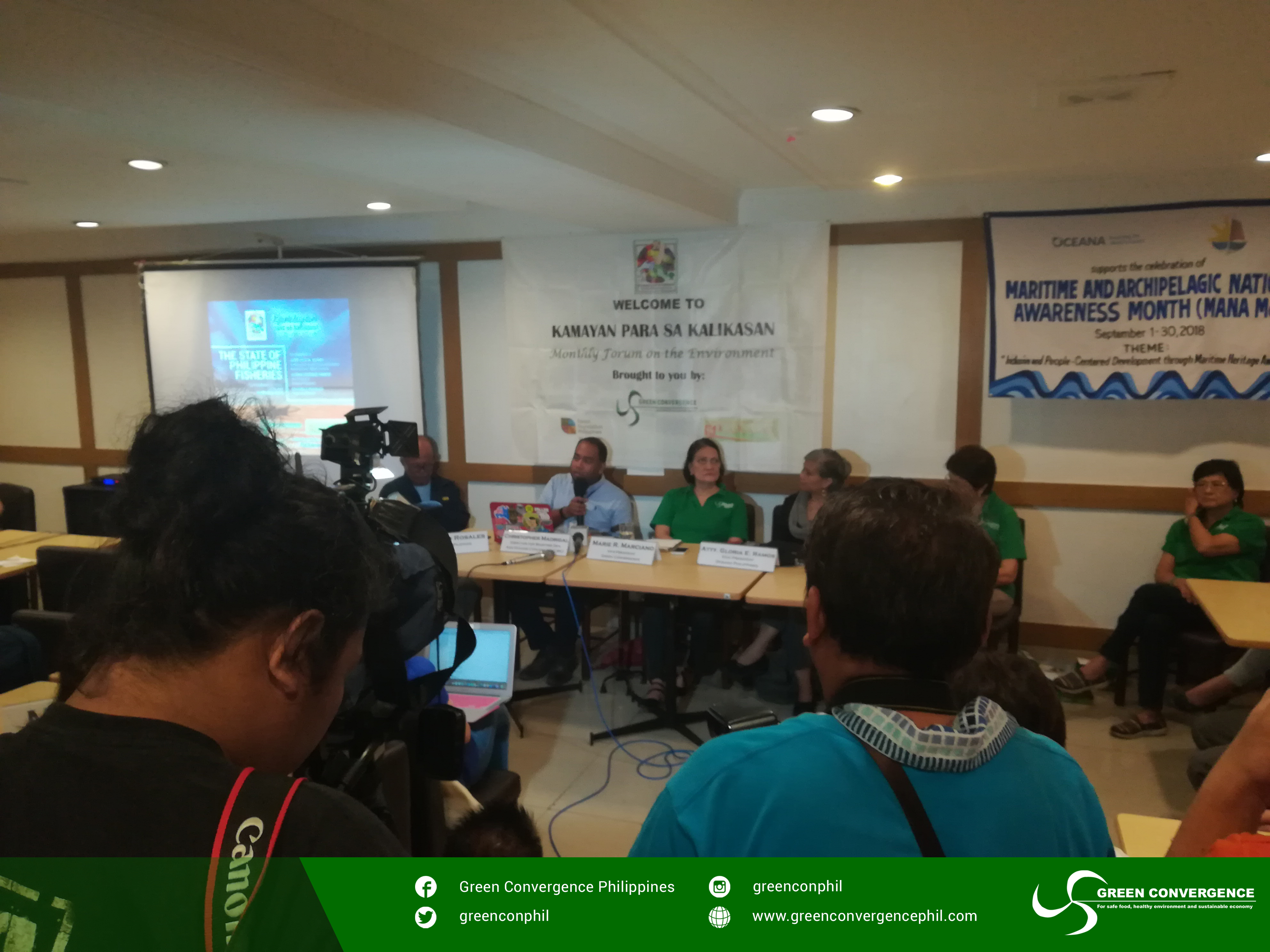
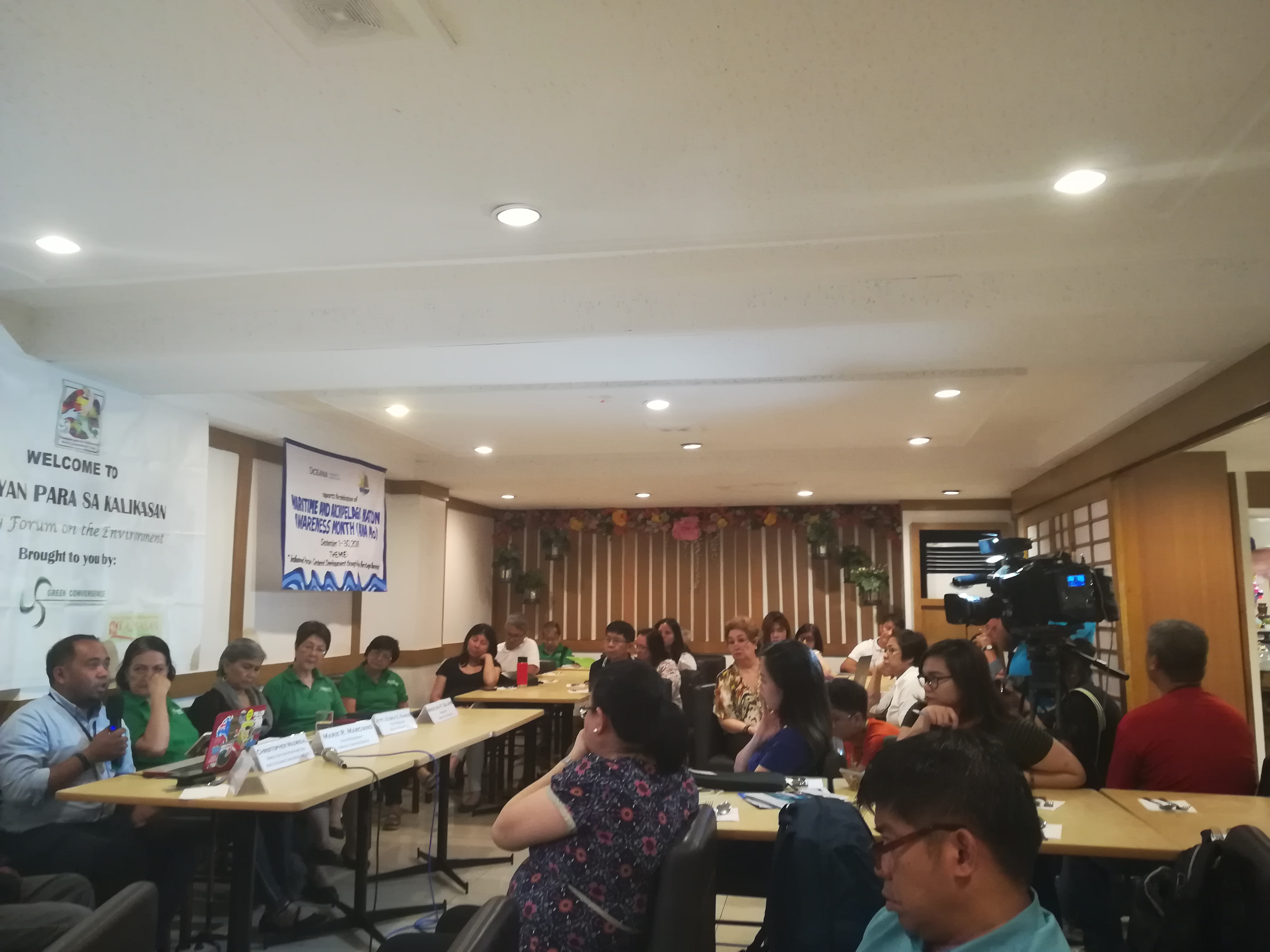
Kamayan Para Sa Kalikasan, the longest running environmental forum in the Philippines, recently held its 342nd session which tackled The State of Philippine Fisheries.
It is hosted by Green Convergence, a non-government organization that addresses social and economic upliftment while preserving natural resources. In partnership with Forest Foundation Philippines and Kamayan, the forum brings in representatives from the government, NGOs, LGUs, and fisherfolk to discuss issues about the country’s waters.

Other than dealing with a timely topic, it also coincides with the celebration of the Maritime and Archipelagic Nation Awareness Month (MANA Mo) this September. Maritime Development and Oceans Concerns director Christopher Madrigal, Oceana Philippines vice president Atty. Gloria Ramos, Manila Bay Clean Up Program of Department of Local and Interior Government project head Carlos Tan, and Pangisda Pilipinas representative Pablo Rosales shared their experiences and expertise.
The issue with our fisheries
One of the issues that plague our country’s fishing spots is also one of the oldest reason: dynamite fishing. Despite the legal actions taken to prohibit destructive fishing, the decline in fishery production is still evident due to the damages that are sustained by coral reefs.
Another problem at hand is commercial fishing. This is the process of catching as many fish as possible to be later sold at a marketable price. These prices, according to Rosales, are cheaper than what the fishermen offer.
With technology that exceeds our own hook and line fishermen, commercial fishing poses a threat to their catch as well as profit.
But in totality, the representatives present during the forum concluded that fisheries in the Philippines are overexploited which leads to the growing scarcity of fish and the dramatic rise of its market price due to demand.
Support and discipline

The Pangisda Pilipinas representative then encouraged his countrymen to support fish products procured from the hard work of local fishermen.
Apart from supporting local, Ramos also calls upon the initiative of the Filipinos to follow and respect maritime laws for a more productive outcome. And, of course, to preserve the marine wonders that the country is blessed with.
Kamayan Para Sa Kalikasan convenes every third Friday of the month with new topics each meeting. The next topic will be confirmed by Green Convergence prior to the forum itself.
The forum is held every third Friday of the month at the Kamayan Restaurant along EDSA and is open for all those who are interested to attend. For more information, visit Green Convergence Philippines on FaceBook at facebook.com/greenconvergencephilippines/.