
First Balfour, vendors address climate change

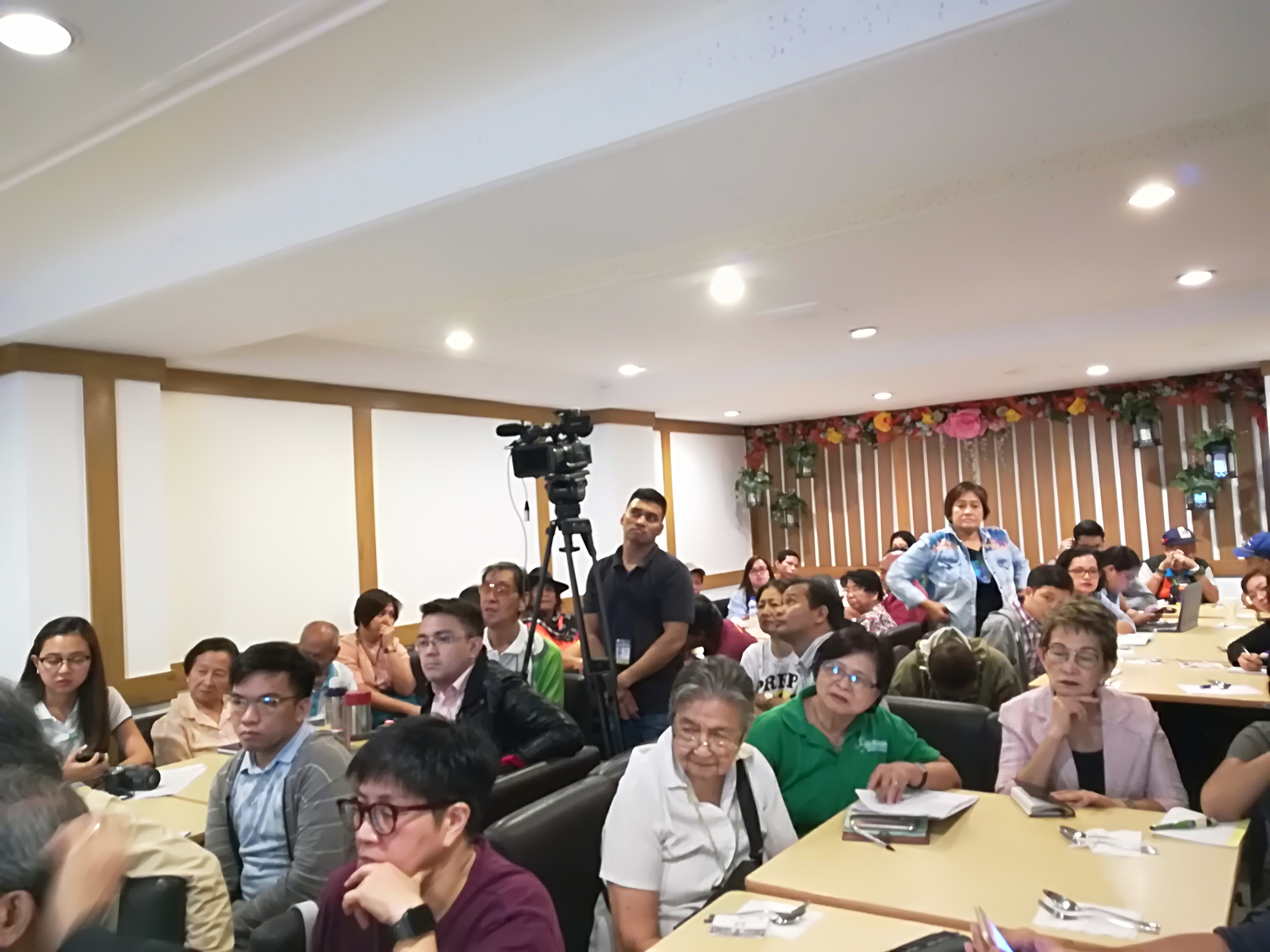
Lopez-led engineering and construction subsidiary First Balfour Inc., and its vendors have agreed to explore measures they can adopt and integrate into their respective business operations as their way of supporting the campaign to help reverse adverse climate change.

The vendors, who belong to First Balfour’s supply chain, bared this plan during a face-to-face First Balfour vendors’ forum early this month.

During the gathering, First Balfour Strategic Business Head Vicente de Lima 2nd highlighted the importance of reaching out to its vendors and other stakeholders as the company’s way of supporting the new Lopez Group-wide mission of forging collaborative pathways for a decarbonized and regenerative future.

Lima noted that “collaboration with the vendors and subcontractors, government, communities, and even with competitors is most important” in dealing with a common threat like climate change.

Discussions at the gathering also focused on the contribution of the construction sector to the issue of climate change.

“Globally, the construction industry is one of the largest consumers of raw materials, and the processing of these materials for use in construction leads to embodied carbon in these materials in large amounts,” said Agnes de Jesus, one of the speakers at the forum who is the chief sustainability officer of First Philippine Holdings (FPH), the Lopez-led parent firm of First Balfour.

As part of its pledge to fight climate change, First Balfour agreed to join a Philippine initiative, called “Ako Ang Bukas Movement” (AAB), which the pro-environment and non-government organization Green Convergence convened in an effort to help the country achieve net-zero carbon emissions by year 2050.

The multi-sectoral AAB has developed a calculator that the Climate Change Commission earlier evaluated and enhanced for quantifying the amount of greenhouse gases (GHGs) an individual or an organization creates. Studies have identified GHGs, like carbon dioxide, as major contributors to climate change.

First Balfour will use the AAB calculator to estimate the company’s greenhouse gas emissions across its value chain. At the forum, AAB shared this calculator with First Balfour’s vendors to help them quantify their own carbon emissions.

Angelina Galang, Green Convergence convenor, explained the significance of the steps that First Balfour and its partners are taking. “Before we can act on the climate crisis, we must know the greenhouse gas footprint we generate,” she said.

During the same forum, the implications of adverse climate change to the construction sector and the business case for the industry to support decarbonization strategies were also explained.

The implications, according to de Jesus, included the risk of business disruptions to the construction projects caused by floods and other calamities associated with climate change, as well as exposure to potential regulations that may be issued to curb the accelerating impacts of the climate crisis.

Reference: https://www.manilatimes.net/2022/12/22/business/top-business/first-balfour-vendors-address-climate-change/1871337

MWSS’ Salamat: ‘I will resign’ if water crisis unsolved

Environmental Coalition Green Convergence held the 354th installment of the monthly Kamayan Para sa Kalikasan Forum about the status of water security in the country on September 20, 2019 (Friday) at Kamayan Restaurant, EDSA, Mandaluyong City.

Energy Development Corporation CEO Federico Lopez explained that the country’s water security problem is part of the ongoing global climate crisis. He said, “Shrinking glaciers will impact freshwater supply…Sea level rise and flooding will intrude aquifers.”

He noted that even without the effects of climate change, Metro Manila is still vulnerable due to very delayed flood control projects. He stressed, “There is a lot of ground subsidence…If water extraction continues.”

On the other hand, retired Lt. Gen. Emmanuel Salamat, Administrator of the Metropolitan Waterworks and Sewerage System (MWSS), in defense of the government’s initiatives said, “Measures have been adopted by MWSS to strengthen Angat Dam which was constructed in 1967 and other water structures to make these earthquake-resilient, for any damage to it will affect water supply, food supply, public safety, and energy resource especially in Metro Manila.”

Salamat promised to resign from his position if his leadership does not solve the water crisis that the metropolis is currently facing.

Alternative solutions were also provided by the forum’s speakers. Lopez recommended that the government must invest in research to develop a technology to utilize the abundant rainwater that the country receives.

Network for Sustainable Water’s Paolo Pagaduan emphasized, “Ang daling sabihin na kailangan nating magpatayo ng bagong ganito, bagong ganyan (It is easy to say that we need to build new this, new that),” when the problem is the people’s excessive consumption of water.

Pagaduan cited Seattle in the United States, where despite the city’s increasing population, water demand stays the same. He exclaimed, “We can reduce consumption to a more manageable level that is acceptable.”

In addition, a tribute to the late environmental champion and former DENR Secretary Gina Lopez was also given. Dr. Angelina Galang of Green Convergence and Dr. Carlo Garcia of the Miriam College Environmental Studies Institute partnered and pledged to plant 65 trees in Barangay Laiban, Tanay, Rizal in honor of the 65 years of life of the champion.

Galang described Lopez, “In the firmament of the environmental movement, she is the supernova, the brightest of all…Probably, a lot of us here became better because of her.”

Siguraduhin natin na ang mga punla, binhi na inilagay niya [Gina Lopez] ay patuloy na magbunga (We must ensure that the seeds she placed must continue to grow),” Jaybee Garganera of Alyansa Tigil Mina said.

“Mining, coal, [and] small island ecosystems; she wanted these issues to be at the forefront of the 2016 elections,” he added.

Since March 1990, Kamayan Para Sa Kalikasan Forum has become an institutionalized platform that enables NGO and government representatives, the media, students, teachers, church groups, and concerned citizens to discuss pressing environmental issues in the country. This month’s forum is organized by Green Convergence and is supported by Kamayan Restaurant EDSA with the assistance of the Forest Foundation Philippines.

You must be logged in to view this content. Free Virtual Library Registration Here

Global warming, ‘urgent concern’ – Green Convergence

Environmental Coalition Green Convergence held the 344th installment of the monthly Kamayan Para sa Kalikasan Forum about the 1.5°C Special Report on climate change of the Intergovernmental Panel on Climate Change (IPCC) on November 16, 2018 (Friday) at Kamayan Restaurant, EDSA, Mandaluyong City.

“The report highlights a number of climate change impacts that could be avoided by limiting global warming to 1.5°C compared to 2°C, or more,” explained Prof. Leoncio Amadore from the UP Institute of Environmental Science and Meteorology.

He explained that even the mere 0.5°C rise in global temperatures in the past 50 years had serious negative impacts to our survival. He said, “[It] has contributed to shifts in the distribution of plant and animal species, decreases in crop yields and more frequent wildfire.”

A 1.5°C or 2°C rise is much worse. Amadore exclaimed, “Coral reefs would decline by 70-90 percent with global warming of 1.5°C, whereas virtually all would be lost with 2°C.”

Rodne Galicha, Living Laudato Si Philippines Convener called for the public to not support corporations that contribute to the worsening of the global climate, including those that produce massive wastes, invests in coal power, and destructive mining.

“We must divest for sustainability and invest in our common home,” stressed Galicha.

On the other hand, Father Pete Montallana, President of Save Sierra Madre Network and now also Convener of the URGENT Initiative shared that Filipino households should be educated to contribute in lessening the impacts of and eventually slowing down global warming.

“A Carbon-Neutral Philippines by the year 2030 through committed Ecological Filipino families,” Montallana mentioned as the Initiative’s main goal.

Green Convergence President Dr. Angelina P. Galang called for everyone to be proactive on the impacts of global warming and to participate in actions to slow it down.

Since March 1990, Kamayan Para Sa Kalikasan Forum has become an institutionalized platform that enables NGO and government representatives, the media, students, teachers, church groups, and concerned citizens to discuss pressing environmental issues in the country. This month’s forum is organized by Green Convergence and is supported by Kamayan Restaurant EDSA with the assistance of the Forest Foundation Philippines.

You must be logged in to view this content. Free Virtual Library Registration Here

Monsters of today: lessons learned from forum on greenhouse gases

2018 07 00 Typhoon Yolanda arriving in the Philippines photo by NASA

By Tricia Buendia, Haribon Membership, edited by Haribon Membership Visibility Committee via Haribon Foundation

Haribon member Tricia Buendia shares this reflection after attending the Kamayan Forum on Philippine NDCs to reduce global greenhouse gases with Green Convergence last June 2018.

Every year monsters visit and haunt the Philippines. We name each one, anticipating its destruction on the country. Each visiting monster passes through, devouring souls and resources. These monsters are our typhoons.

Typhoons get stronger and leave devastating impacts. Though humanity has leaped forward with many innovations, mother nature continues to be ignored, making life difficult for those impacted by these typhoons.

Humans are changing the world… not necessarily in a good way

The 21st century has brought about new technologies, mobile apps, and smartphones. But it also marks the beginning of increased attention on our environment from climate change to the affects of our plastics.

Half of all the plastics ever made were manufactured in the last 13 years, and almost all of it still exists. They sit in landfills or float in oceans disguised as food for hungry animals, making them sick or killing them. Or just as worse, they become part of our food.

Companies produce tons of products and services yet they still neglect and/or violate policies and laws that protect the environment. This results to toxic gases released in the air, various waste discharged in waterways, balding mountains, and other issues which result in natural and man-made disasters. All of this claiming the lives of people, with a high cost of damages to society every year.

Specific cases worth mentioning are Tropical Storm Ondoy (Int: Ketsana) in 2009 and Super Typhoon Yolanda (Int: Haiyan) in 2013. P4.81 billion pesos (or USD $101 million) and P9.46 billion pesos (or USD 177 million dollars) in damages were made respectively, and it took years to rehabilitate, in some areas they are still recuperating today. With the wrath of mother nature, no one can be safe.

Climate change is not only a problem for the Philippines, it is a worldwide concern. Countries all over the world have gathered and made agreements like the Paris Agreement and Kyoto Protocol to stand together and make firm impacts to lessen the affects of climate change.

2018 07 00 Kamayan Forum by Green Convergence

What is being done to combat climate change?

Nationally, organizations are coming together in consortiums to work on common advocacies such as climate change or the protection of the environment. One example is URGENT, where members of different sectors have come together to combine efforts to strengthen ecology, promote climate change education, and create public discourse, with the hope that this results in raised awareness in the general public and the lessening of their carbon footprint.

80 percent of the population are Catholic, so there is potential to promote interest in protecting the environment through the Laudato Si’, Pope Francis’ encyclical letter citing the urgent need of improving our lifestyles for the sake of our shared environment. The church can encourage the public to reflect and act with goodwill to help the planet.

On the side of the government, the Climate Change Commission has continuously worked on climate change mitigation and adaptation policies. It is hoped that these policies will also supplement livelihood opportunities through proper management of our natural resources. The commission is also active internationally in summits and thus aligns local policies with agreements and treaties from the United Nations (eg. United Nations Framework Convention on Climate Change). Non-governmental organizations supplement these actions as well through awareness-raising and facilitating the drafting of policies and bills to strengthen environmental laws.

A bill was filed by Senator Loren Legarda proposing the use of reusable bags and the minimal use of single-use plastic bags, and is currently pending. And recently, a bill by Senator Risa Hontiveros was filed proposing the call of eliminating the use of plastic straws and stirrers in establishments.

It is also important to give attention to forestry, which should not just cover tree species but also the ecological services forests provide for flora and fauna, including human beings. Civil society organizations, in partnership with advocates, scholars, and practitioners, make time to research and share studies and statistics to be disseminated to the public. These are the steps needed to educate the public about the environment and climate change.

Our actions, from our government to our everyday lives, can and will add up

With the subsequent calamities seen today, it is evident that the call to protect the environment and lessen climate change impacts are what is needed in order for the nation to progress. There is a call for local and national leaders take a stand and support in passing laws that protect nature.

It is vital for everyone to take part in simple actions like segregating waste, planting trees, and reducing single-use plastic consumption. These “simple acts” have a sizable influence if every individual in the country, or the world, sustains these habits 365 days a year. Think about the amount of waste we will reduce, and the flora and fauna we will save! — You do the math.

Cimatu urges manufacturers to pay their share in pollution

Environment Secretary Roy A. Cimatu sees the need for a law that would make manufacturers pay up for their share in polluting the environment.

“Perhaps we must consider enacting laws that will make manufacturers pay at least part of the cost of cleaning up the nonbiodegradable packaging that they use,” Cimatu said at the Second Philippine Environment Summit (PES) in Cebu City on Tuesday.

He raised the urgency for such a move, noting all sectors must help address the pollution problem nationwide.

In 2017 the Department of Environment and Natural Resources (DENR) helped 321 local government units properly close and rehabilitate open and controlled dumps around Manila Bay, Cimatu said.

But he said more needs to be done as pollution continues to plague the country.

“Judging from the volume of plastic and other wastes that end up in our rivers, lakes and seas, we have not done enough,” Cimatu said.

The National Solid Waste Management Commission said the country generates about 36 tons of waste daily.

Metro Manila is the country’s top waste-generating region, and produces nearly 8,300 tons of waste per day, or about 3 million tons of waste per year, the commission said.

Republic Act (RA) 9003, or the Ecological Solid Waste Management Act, refers to solid waste as “all discarded household, commercial waste, non-hazardous institutional and industrial waste, street sweepings, construction debris, agricultural waste  and other nonhazardous/nontoxic solid waste.”

A planned amendment to RA 9003 seeks to raise product stewardship among manufacturers nationwide to help minimize pollution from plastic packaging materials.

Senate Environment Committee head Sen. Cynthia A. Villar believes RA 9003 must include provisions on extended producer responsibility (EPR), a stewardship-promoting solid-waste management approach, which makes manufacturers responsible for their goods even after selling these.

“That’s part of amendments I’m planning for RA 9003,” she said at last month’s 2018 Zero Waste Month celebration and Fourth Eco-Waste Management Summit in Metro Manila.

The EPR would include manufacturers’ recovery of sold goods’ discarded plastic packaging materials, so there would be less solid waste and pollution in the country, Villar stated.

Cimatu hailed the conduct of the second PES, from February 20 to 22 this year.

“I commend the organizers of this noble undertaking for their resolve to hold this event,” he said, referring to the DENR and environment group Green Convergence.

PES showcases breakthroughs and advancements in environmental protection and sustainable development.

Through PES, various sectors can share views on common challenges, collaborate on solutions  and replicate success stories.

“Mainstreaming Innovation for Sustainable Development” is the 2018 theme of PES, a biennial event.

Green Convergence President Dr. Angelina Galang said this year’s PES focuses on local initiatives anchored on the triple bottom line concept that takes into account people, planet and profit to achieve business sustainability and profitability.

Profit should not be business’ sole concern, she said.

To be sustainable, Galang said, a business must also consider its social responsibility and environmental impact.

She added sustainable business operations do not deplete natural resources and instead enable present and future generations to avail themselves of their goods and services.

DENR: Number of tourists in Boracay has reached ‘alarming levels’

By Adrian Ayalin, via ABS-CBN NewsPosted at Jan 19 2018 05:58 PM

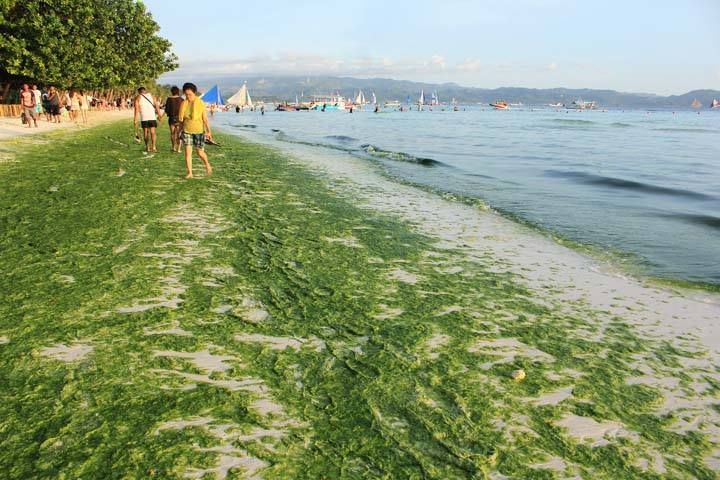
MANILA – The Department of Environment and Natural Resources (DENR) on Friday said the number of tourists in Boracay has reached “alarming levels” as government agencies and the private sector worked on innovations for sustainable development.

Asked about the current status of the popular island resort, DENR Undersecretary Juan Miguel Cuna said the government is in the process of making an inventory of business establishments in Boracay to determine which ones are violating laws and other regulations.

“It is moving towards alarming levels in terms of carrying capacity and solid waste management, which is why as far as we are concerned, the DENR is making an inventory of establishments there,” he said.

Cuna added that the influx of tourists from cruise ships have added to the growing number of visitors to Boracay.

The DENR and the Department of Tourism recently met to address problems in Boracay, which recently experienced severe flooding.

Cuna would not say if business establishments found violating laws and regulations would be dismantled, saying the inventory started during the last administration.

“I’m sure there is still a lot to be done there,” he said.

Cuna was at the press conference for the launch of the 2nd Philippine Environment Summit to be held in Cebu City from February 20 to 22.

The summit will be held in partnership with environment group Green Convergence led by its president Dr. Angelina Galang.

The gathering of environment stakeholders will be a “showcase of programs and projects that positively contribute to the social and economic advancement, while protecting the environment and a call to enhance convergence of the different sectors to level up innovative programs to accelerate the drive towards sustainable development.”

Galang said solid waste management, among others, is on top of the agenda in the summit, citing, for example, the mango industry where zero waste is achievable.

“Not even the seed will be thrown away because you can get flour from the mango seed,” she said.

Among plenary speakers at the event are Environment Secretary Roy Cimatu, Deputy Ombudsman Gerard Mosquera, Energy Development Corporation Chair and CEO Federico Lopez and other prominent personalities from other sectors.

Galang said foremost climate change advocate former US Vice President Al Gore declined to attend the summit but would be sending a video message.