DENR steps up in protecting the environment

Posted at DENR Region 1

The Department of Environment and Natural Resources (DENR) together with the Green Convergence (GC) organized the 2nd Philippine Environment Summit, with the theme “Mainstreaming Innovations for Sustainable Development” held last February 20-22, 2018 at the Waterfront Hotel, Lahug, Cebu City

Around one thousand (1000) partakers came from the academe – educators and students alike, environmental NGOs, from other sectors – church, business, media, and government – national and local. It was a clear demonstration of greening together, growing better, as envisioned by the convener of the event, Green Convergence for Safe Food, Healthy Environment, and Sustainable Economy.

An Inter-religious invocation and the San Diego Sinulog Dance Troupe started the day. They were followed by the opening remarks and keynote address from the representatives of the two convenor organizations – Dr. Angelina Galang, President of Green Convergence and Honorable Secretary Roy Cimatu of the DENR.

Dr. Angelina Galang asked all to work together to achieve the triple bottom line: social justice, economic progress, and ecological integrity. And called on the students to allow their youthful optimism to carry forward these aims on a personal basis by enhancing their awareness and understanding of the environmental impacts of their personal choices. In conclusion, Dr. Galang alerted everyone to actively participate in developing resolutions that will help mainstream innovations to be presented during the Summit.

Hon. Sec. Cimatu shared successful projects of DENR in nine (9) environmental areas, namely: solid waste management, ecotourism, national greening program, water quality, geo-hazard assessment and mapping forest protection, coastal and marine conservation, biodiversity conservation and air quality. He also shared updates on the BORACAY rehabilitation projects and expressed our department’s commitment to support and implement the administration’s target of Boracay clean-up in six (6) months.

Beyond the enforcement of environmental laws, we also need the direct and mass participation of the citizenry in accelerating reforestation, in coastal cleanups, in conserving energy, and in popularizing lifestyles that will enable us to reduce our carbon footprint and enhance our resilience,” Sec. Cimatu said.

The environment summit aims to mainstream innovations and program to promote sustainable development for the environment. It calls the government and every Filipino to unite to build a strong network for the environment’s conservation and protection.

Sen. Grace Poe talks on the right of every Filipino to live in a safe environment and the initiatives of the Senate in promoting a balance ecology during the last day of the summit.

“Importante na ipaglaban natin ang karapatan ng bawat mamayan,” Sen. Poe said.

Green convergence was convened as a multi-sectoral, non-stock, non-profit civic organization for environmental concerns organized to promote synergy of networks, non-organizations, and individuals, in the interest of building a critical mass of citizens that understand the inter-connectedness of issues of food, environment, and sustainable economy. Green convergence also believes that education as the most effective means for confronting the challenges of the future, thus, education shapes tomorrow’s world. (RPAO)
DENR makes renewed call for LGUs on environmental vigilance

CEBU CITY, February 21 (PIA) — Department of Environment and Natural Resources (DENR) Secretary Roy Cimatu called on local government units (LGUs) to be more vigilant against violators of environmental laws.

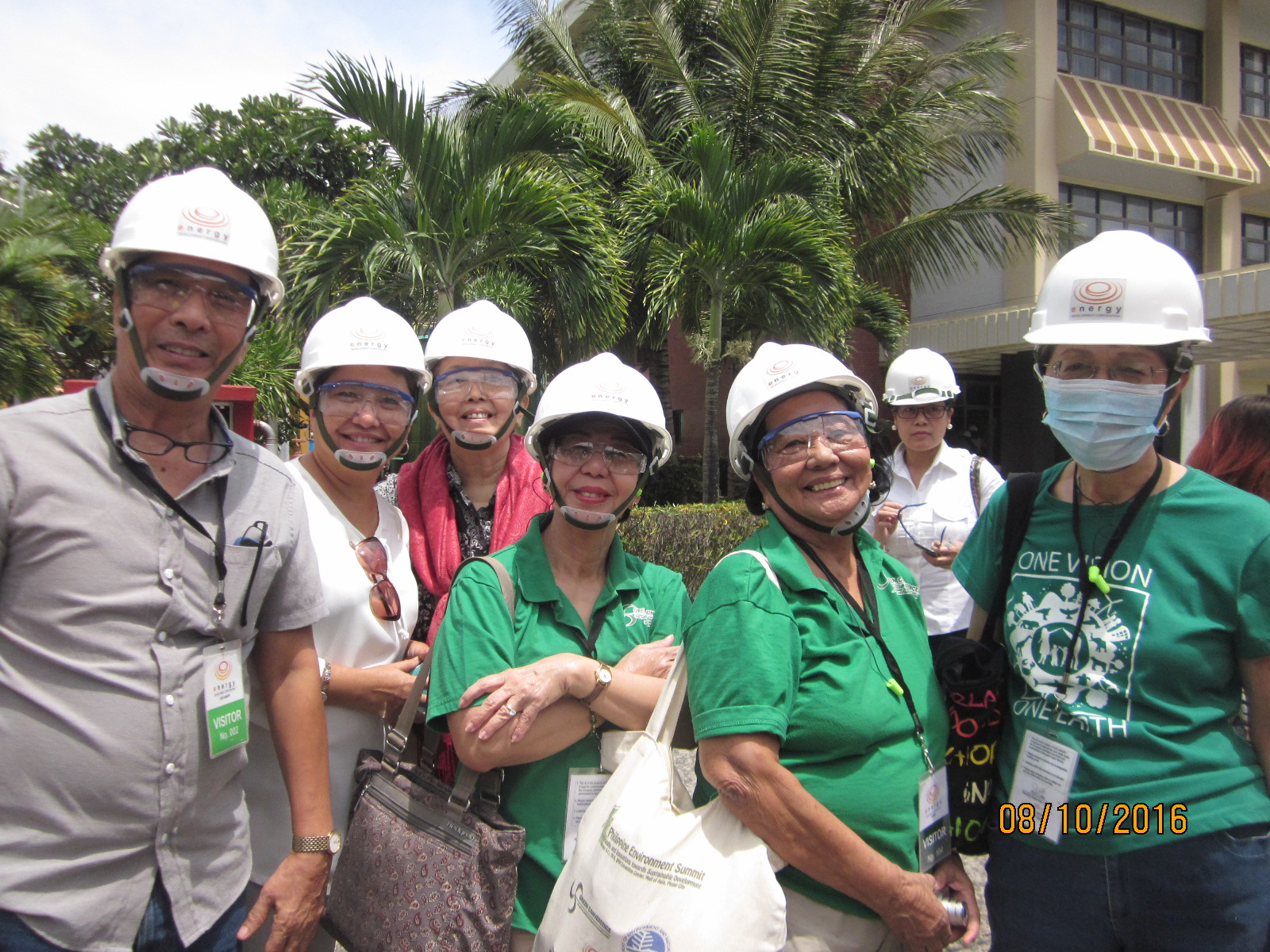
During the first day of the 2nd Philippine Environment Summit held at the Waterfront Cebu, Cimatu asked the over a thousand participants to help in the detection, apprehension, and prosecution of the violators.

“In places that are not declared as protected areas, such as metropolitan or urbanized centers, we depend on the LGUs at all levels, down to the barangay level, to be more vigilant,” Cimatu said.

He also called for the direct mass participation of the citizenry in accelerating reforestation, coastal cleanups, conserving energy, and in popularizing lifestyles that will reduce the carbon footprint and enhance the resilience.

“I must emphasize the need for people’s support. The DENR cannot be everywhere all the time, particularly in environmentally critical areas,” Cimatu said.

Despite this, DENR, he said, was able to exceed its targets three months before the end of 2017.

Dr. Angelina Galang, president of Green Convergence, said that the summit amplifies the call for partners in spreading environmental education.

“We have green schools, green buildings and soon, green churches. We need more partners,” Galang said.

Among the topics discussed in the breakout sessions for first day include Sustainable Plant-Based Manufacturing Industries, Healing the Earth through Environmental Technologies, Organic Agriculture, Effective Strategies for Advocacy, and Solid Waste Management Success Stories. (fcc/PIA7-Cebu)

Cimatu urges manufacturers to pay their share in pollution

Environment Secretary Roy A. Cimatu sees the need for a law that would make manufacturers pay up for their share in polluting the environment.

“Perhaps we must consider enacting laws that will make manufacturers pay at least part of the cost of cleaning up the nonbiodegradable packaging that they use,” Cimatu said at the Second Philippine Environment Summit (PES) in Cebu City on Tuesday.

He raised the urgency for such a move, noting all sectors must help address the pollution problem nationwide.

In 2017 the Department of Environment and Natural Resources (DENR) helped 321 local government units properly close and rehabilitate open and controlled dumps around Manila Bay, Cimatu said.

But he said more needs to be done as pollution continues to plague the country.

“Judging from the volume of plastic and other wastes that end up in our rivers, lakes and seas, we have not done enough,” Cimatu said.

The National Solid Waste Management Commission said the country generates about 36 tons of waste daily.

Metro Manila is the country’s top waste-generating region, and produces nearly 8,300 tons of waste per day, or about 3 million tons of waste per year, the commission said.

Republic Act (RA) 9003, or the Ecological Solid Waste Management Act, refers to solid waste as “all discarded household, commercial waste, non-hazardous institutional and industrial waste, street sweepings, construction debris, agricultural waste  and other nonhazardous/nontoxic solid waste.”

A planned amendment to RA 9003 seeks to raise product stewardship among manufacturers nationwide to help minimize pollution from plastic packaging materials.

Senate Environment Committee head Sen. Cynthia A. Villar believes RA 9003 must include provisions on extended producer responsibility (EPR), a stewardship-promoting solid-waste management approach, which makes manufacturers responsible for their goods even after selling these.

“That’s part of amendments I’m planning for RA 9003,” she said at last month’s 2018 Zero Waste Month celebration and Fourth Eco-Waste Management Summit in Metro Manila.

The EPR would include manufacturers’ recovery of sold goods’ discarded plastic packaging materials, so there would be less solid waste and pollution in the country, Villar stated.

Cimatu hailed the conduct of the second PES, from February 20 to 22 this year.

“I commend the organizers of this noble undertaking for their resolve to hold this event,” he said, referring to the DENR and environment group Green Convergence.

PES showcases breakthroughs and advancements in environmental protection and sustainable development.

Through PES, various sectors can share views on common challenges, collaborate on solutions  and replicate success stories.

“Mainstreaming Innovation for Sustainable Development” is the 2018 theme of PES, a biennial event.

Green Convergence President Dr. Angelina Galang said this year’s PES focuses on local initiatives anchored on the triple bottom line concept that takes into account people, planet and profit to achieve business sustainability and profitability.

Profit should not be business’ sole concern, she said.

To be sustainable, Galang said, a business must also consider its social responsibility and environmental impact.

She added sustainable business operations do not deplete natural resources and instead enable present and future generations to avail themselves of their goods and services.

Why native trees?

Published February 7, 2018, 10:00 PM, By Flor G. Tarriela via Manila Bulletin

At a recent typhoon that hit Metro Manila on the way to Tagaytay, I noticed many fallen trees, Acacia and Tulip trees. Later I found out these fallen trees were actually “alien” trees and not native to the Philippines.

But wonder of wonders in typhoon Ondoy, a Dita tree stood tall and saved 36 lives in Quezon City! The Dita tree, like most native trees is a survivor tree. I’m happy that a few years back, FINEX together with MNTC Rod Franco had the project of greening NLEX with Dita trees, now fully grown.

What’s with native trees?  Native trees adapt naturally to its local surrounding such as the micro-organism in soil, thus more resilient, that they don’t topple easily.  Just like us locals, we don’t get upset stomach immediately from drinking local water or eating local food as foreigners do.

Mr. Oscar Lopez, Chairman Emeritus of Lopez Holdings, says that sometime back, the Philippines had 94% cover with forests. In 1945 it was still 66% or 2/3 covered.  Where are we today?  So sad, the loss of forest cover is so fast that it is less than 7% with only 3% in unspoiled condition.

The Philippines is so blessed; despite our terrain of less than 1% of the world’s land area, we have more than 5% of the world’s flora.  “Per hectare, our country probably harbors more species than any other place on earth” says Dr. Angelina Galang of Green Convergence.  The Philippines has 3,600 identified native trees, 67% are endemic, meaning found only in the country.  However even this biodiversity is being lost at an alarming rate.

Imee Sarmiento of Hortica Filipino Foundation was the guest speaker on Philippine Native Trees at the MAP Agribusiness forum chaired by Ramon Ilusorio, Chairman Emeritus of Multinational Investment.  She spoke passionately about our native trees, how beautiful and majestic are the flowering (Bagawak Morado, Butat, Ilang-Ilang, Banaba, Balai Lamok, etc.) and fruiting (Katmon, Pili, Bignay, etc.) trees. Oh! how I love to have them in my garden.

She also talked about the wood trees. We don’t really have Philippine Mahogany.  Instead, Imee said that Bagtikan, Lauan, Tangile, Guyo, Yakal, Apitong are what is known as Philippine Mahogany. She says that Mahogany which is alien to the Philippines, may be good for commercial purposes (grow and cut) but to make it a permanent forest, forget it!  No insects will thrive such as what happened to the Bohol Mahogany man made forest. The tarsiers didn’t know what hit them.  So where have all these trees gone?  They are disappearing fast due to over-harvesting, deforestation, replacement by alien species and even carted away to foreign countries.

Mameng Florento, a plant lover and collector bought a beautiful flowering plant during her Europe travel. Not cheap, only to find out what she bought is our very own native Medinilla Magnifica or Kapa Kapa.

What’s also ironic is that Dr. Jaime Galvez Tan, former Secretary of Health told me that there are about 25 species of cinnamon of which 20 are native to the Philippines.  A little bit of trivia, in Pigafetta’s journal (Magellan’s chronicler), the galleon full of spices, including cinnamon, were sufficient to pay all of Magellan’s debt of 7 galleon ships.  Sri Lanka has only one species and guess who is known for Cinnamon?  Have you heard or seen of Cinnamon native to the Philippines?  Now I want to collect these cinnamons.

Out of the 3,600 native trees, only about 200 native trees have been documented in Imee’s “work of love,” the PHILIPPINE NATIVE TREES 101 and 202.  Volume #3 is coming soon.  Even with volume 3, this represents research on only 10% of the Philippines native trees.  Still, there’s much to do.

An excellent project is the Dr. Lucio C. Tan Legacy Forest to plant 15 Million trees over six years or 2.5 million seedlings per year primarily to protect our forest and address the problem of global warming. Once mature, the 15 million trees that include a variety of timber like Narra, Batino, Manalis, Ipil, etc. and fruit trees like Lipote, Marang, etc.,  shall provide multiple benefits both ecological and socio-economic such as carbon sink, raw material supply, wildlife habitat, improved water quality and quantity, improved ecosystems services and livelihood among others. This can be achieved by planting various species of forest and fruit trees.  It is a sustainable reforestation.  A legacy for future generations.

Federico “Pike” Lopez, Chairman and CEO of Energy Development Corporation (EDC) sent me a book on “BINHI: Tree for the Future”.  Binhi connotes potential and growth. EDC in collaboration with the country’s top botanists have rescued and secured 96 of the most threatened and premium tree species (Yakal, Tindalo, Molave, Alupag, etc.) from extinction.  What a legacy!  Through the Binhi project, it is hoped that more of us will know and appreciate the ecological, economic and cultural value of Philippine native trees to our country.

To see some of these indigenous trees, Ambassador Delia Albert reminded me to visit the Washington Sycip Garden of indigenous trees at the University of the Philippines donated by Zuellig Co.  during the UP centennial.

I’m definitely sold to the idea and importance of native trees.  My husband Ed and I were guests of renowned eco lodge expert Hitesh Mehta in Florida who introduced us to famous landscapist and book author Raymond Jungles.  My surprise is that even across the seas, Raymond advocates and only uses native plants and trees in his landscaping projects.  Yes! Native plants and trees are best in its original natural environment.  Love your own.

As Imee said “God gave us trees for different locations and environments. Let us honor and respect God’s design for it has wisdom and purpose.”

Let us plant now and let us plant native trees!  They are not only beautiful and majestic, they are useful, adapted to our surroundings and survivors!

••••
Ms. Tarriela is Chairman of Philippine National Bank. She was formerly Undersecretary of Finance and the First Filipina Vice President of Citibank N.A.  She is a natural farmer and an environmentalist.

ftarriela@yahoo.com