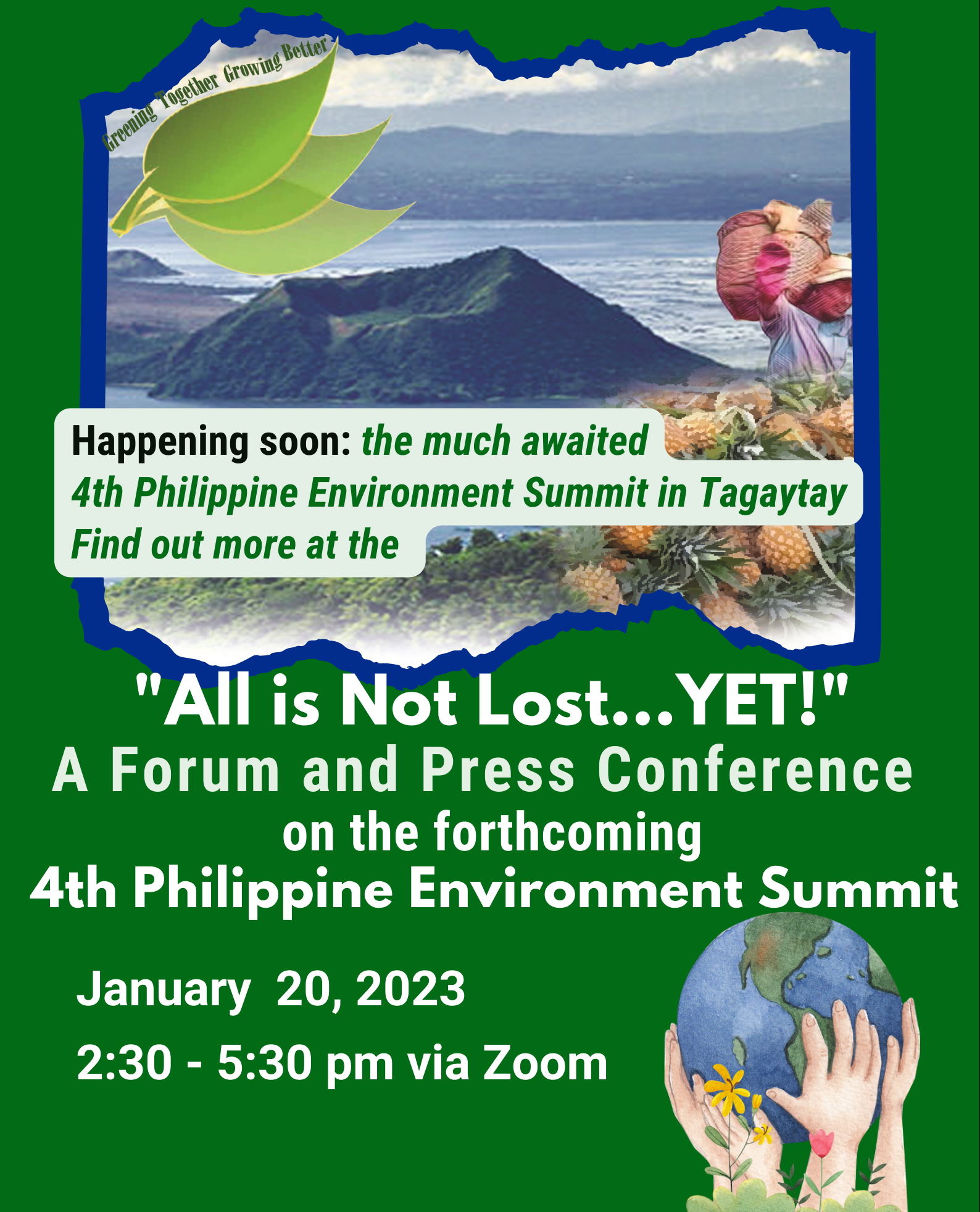
“All is not Lost…YET!” A Forum and Press Conference on the forthcoming 4th Philippine Environment Summit

“Our fragile planet is hanging by a thread. We are still knocking on the door of climate catastrophe. It is time to go into emergency mode – or our chance of reaching net-zero will itself be zero.” – United Nation’s Secretary-General Antonio Guterres

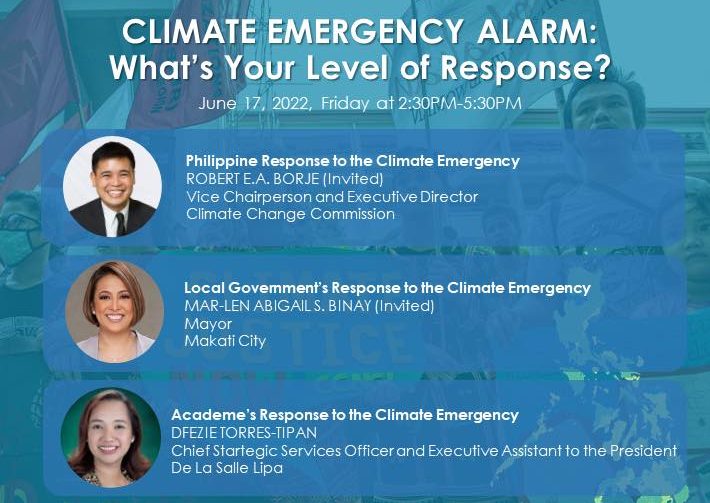
The Philippines needs to go into a path of decarbonization in order to survive the looming global catastrophe our world could face if no action is done today. Green Convergence for Safe Food, Healthy Environment and Sustainable Economy (GC), in partnership with the Department of Environment and Natural Resources (DENR) as co-convener, together with supporters from other sectors is staging the 4th Philippine Environment Summit: “Caring for Earth: Scaling up Solutions to the Climate Emergency.”

How can the Summit help address the climate emergency? What strategies will be showcased that can scale up our response?

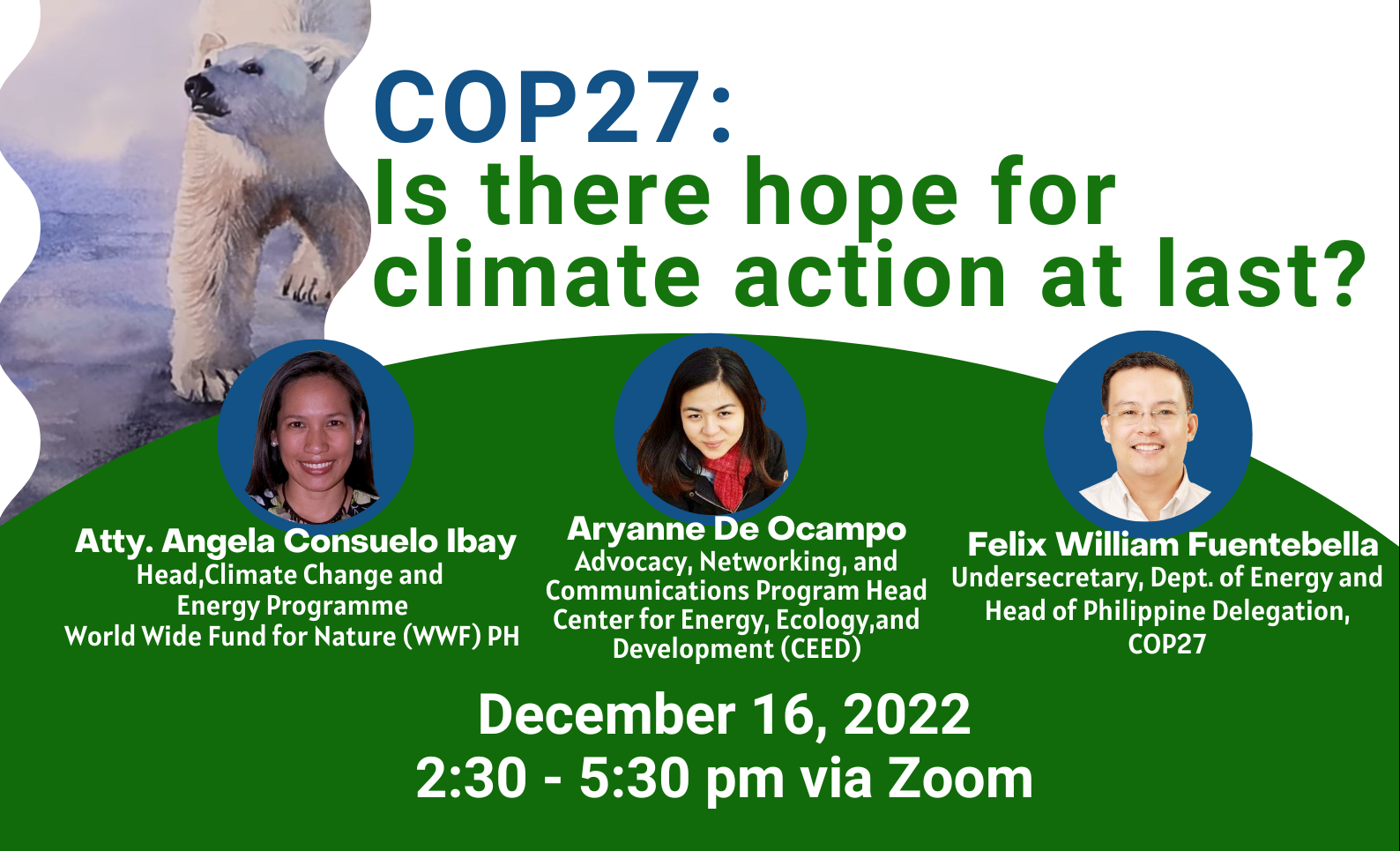
COP 27: Is there hope for climate action at last?

The 27th Conference of Parties to the United Nations Framework Convention on Climate Change (COP27) held in Egypt last November was a test of global resolve to fight climate change. It drew praise and anger. It managed to avoid the worst, but also avoided the best. What are the achievements and failures of COP 27? How far are we from our global efforts on cutting GHG emissions to keep alive our critical goal of limiting global warming to 1.5˚C from pre-industrial levels? Are we headed toward the tipping point? Is there still hope for human survival? How will all these affect our beloved country?

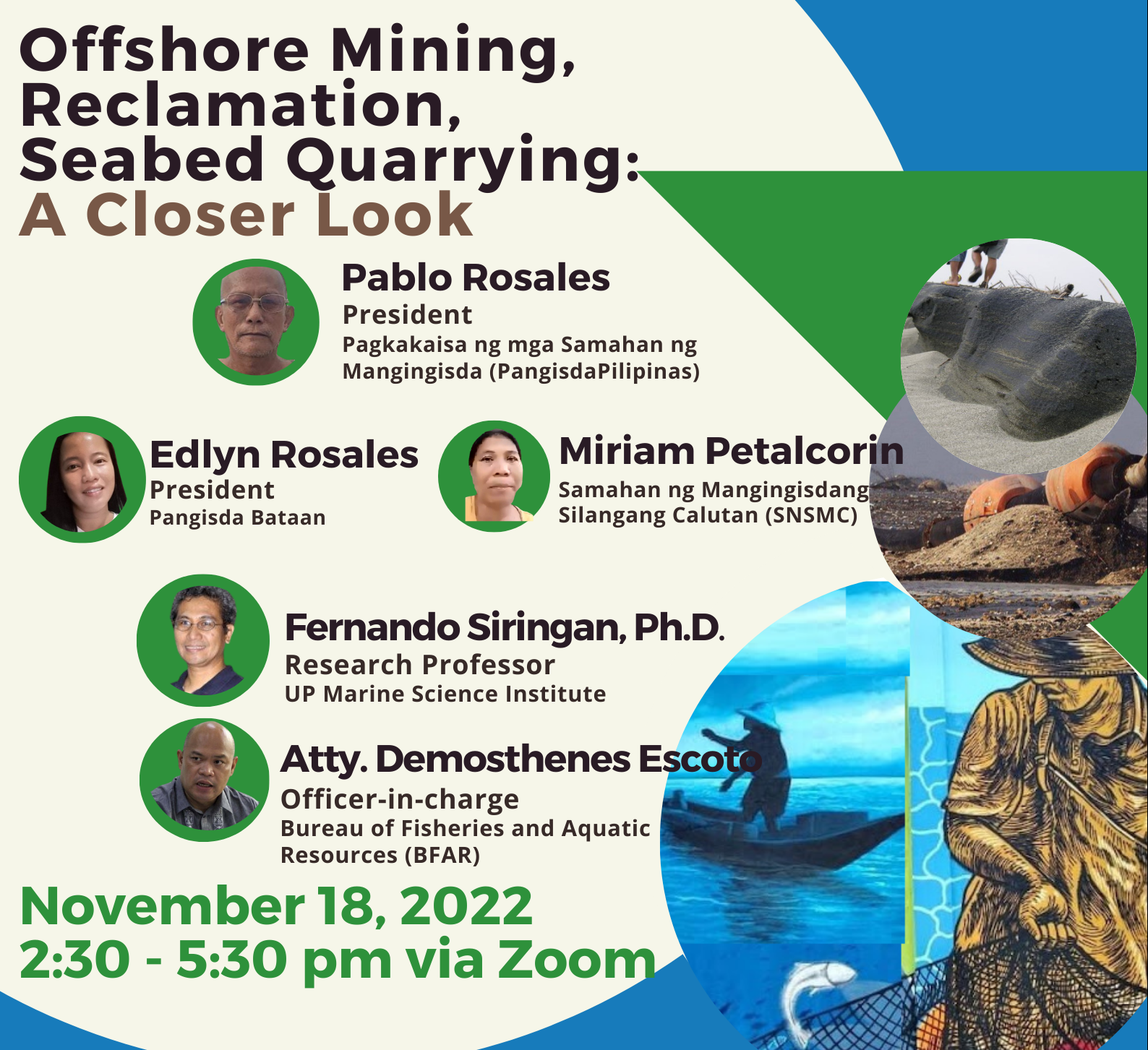
Offshore Mining, Reclamation, and Seabed Quarrying: A Closer Look

Applications for reclamation projects, offshore mining, and seabed quarrying are currently flooding government regulatory bodies following the signing of Executive Order (EO) 130 by then President Duterte last April 14, 2021. It lifted a 9-year ban on new mining agreements supposedly to bring significant economic benefits to the country; however, it also opened the floodgates for new mining projects that could bring serious harm to the environment and, ultimately, the economy.

While such projects go through regulatory processes, as required by various Philippine laws, rules, and regulations, can the existing laws of our land be strictly implemented to ensure mitigation of the massive disturbances to our marine resources and ecosystem functions that offshore mining, reclamation, and seabed quarrying will bring?

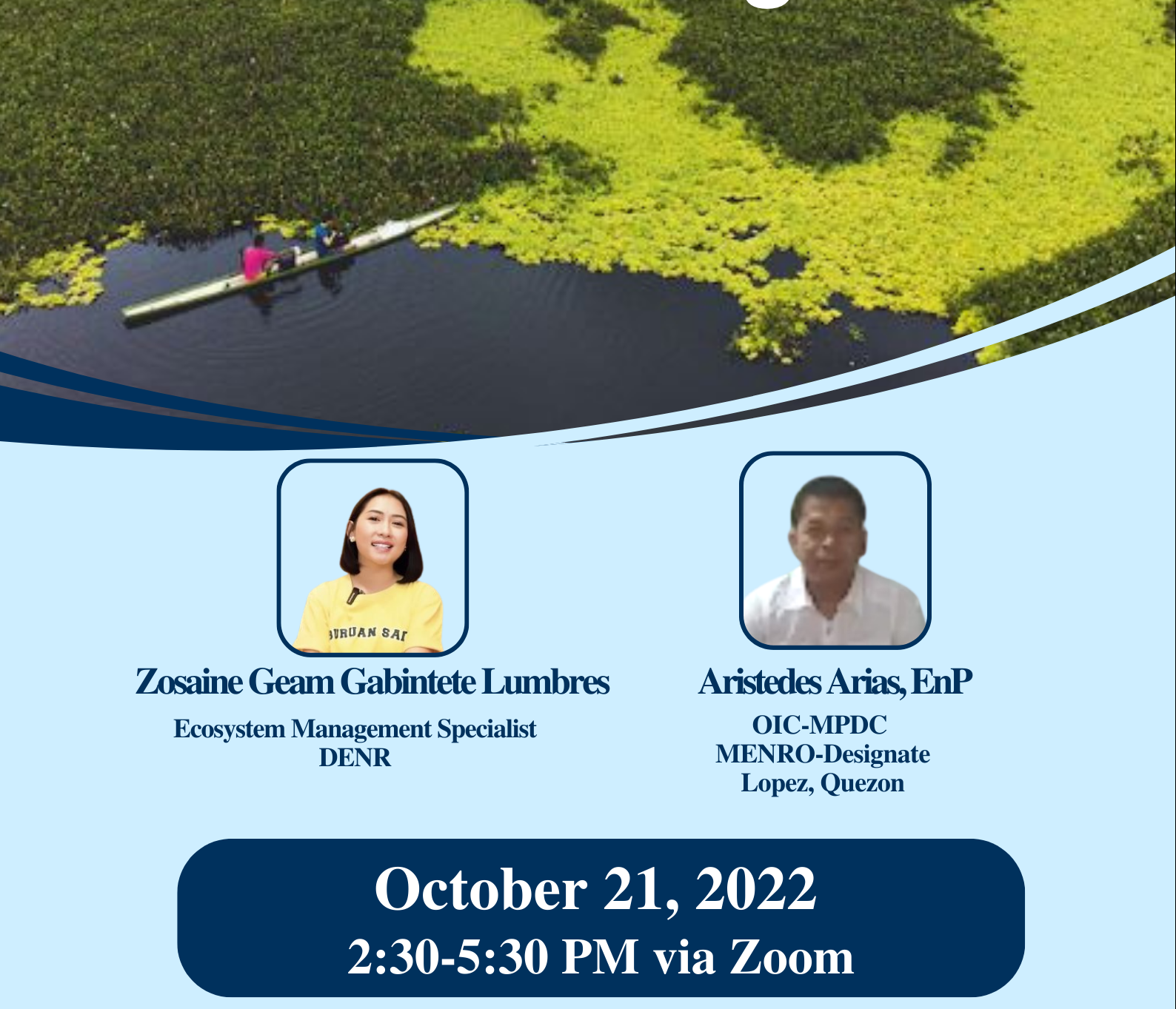
Government Initiatives on Peatland Management

In the September episode of Kamayan Para sa Kalikasan Forum, we began discussions on the Philippine Peatlands, the newly recognized treasure of the Philippines.  Peatlands sequester carbon, thereby reducing greenhouse gas emissions. They absorb huge volumes of water during the rainy season while providing a water supply during the dry season. However, due to their “combustible” nature, particularly when drained for land conversion, they can easily cause fire and haze that not only aggravate climate change but cause an immediate impact on human health and wildlife populations.

To deepen the initial discussions which focused on private-sector initiatives and engagement in the protection of Peatlands, this month’s forum will focus on government programs.

Protecting Peatlands, the Newly Recognized Treasure of the Philippines

While peatlands cover only 3% of the Earth’s land surface, studies show that they can store twice as much carbon as all of the forests on the planet combined, if they are kept in their natural state. The ASEAN region is home to about 27.4 million hectares of peatlands with 2 located in Leyte and in Agusan del Sur of the Philippines.

Learn more about the benefits Philippine Peatlands provide, their present condition, the challenges in their management, and the country’s National Action Plan.

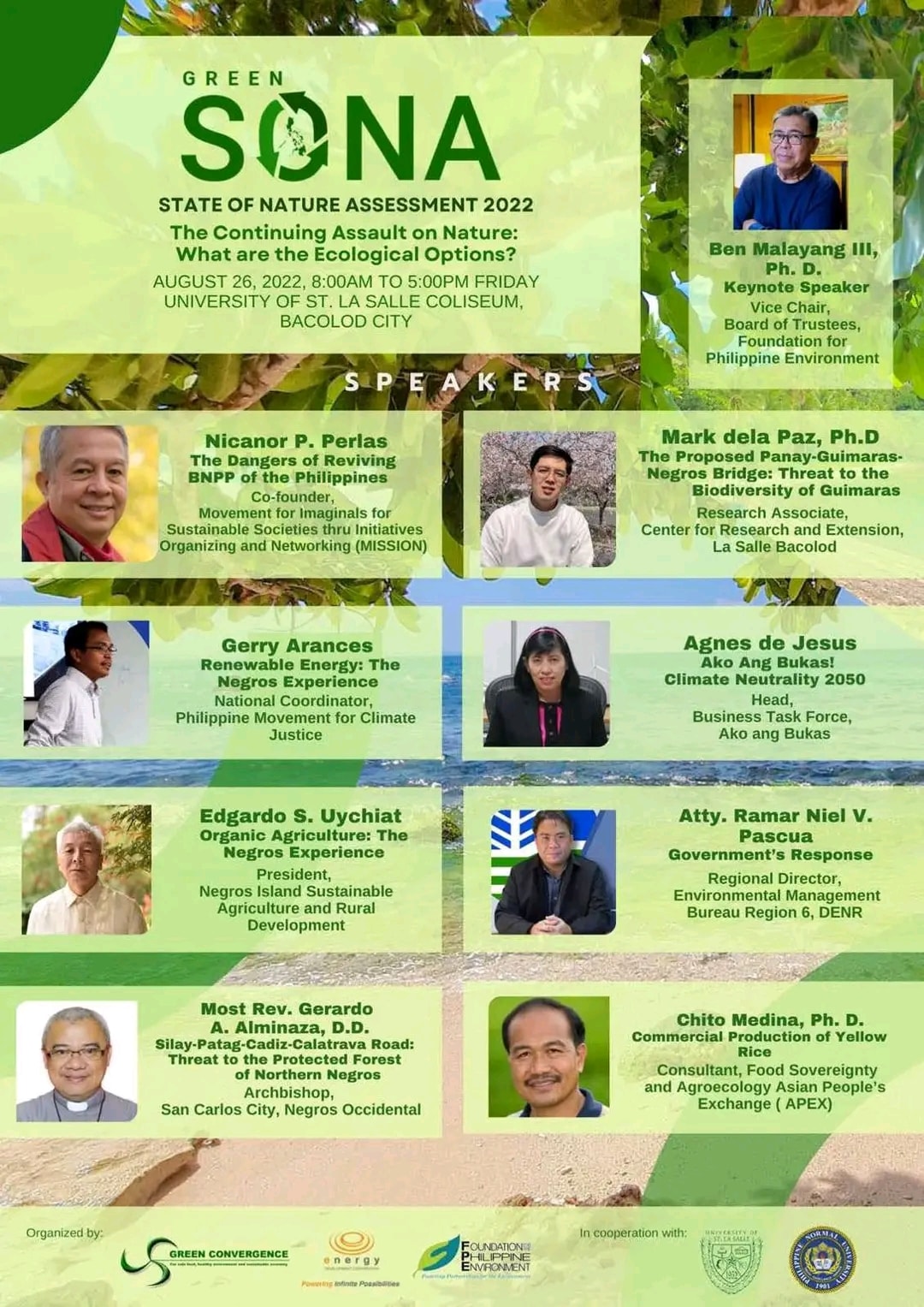
State of Nature Assessment 2022: “The Continuing Assault on Nature: What are the Ecological Options?”

The State of Nature Assessment (Green SONA) is a review of the past year’s developments in the Philippine environment scene.  Green SONA has been held in different parts of the country since 2016, organized by Green Convergence for Safe Food, Healthy Environment, and Sustainable Economy. Its objective is to increase awareness of different national and local environmental issues and awareness that solutions are mutually beneficial at both levels.  

Green SONA 2022 is planned to be held in Bacolod City on August 26, 2022, partnering with the University of St. La Salle Bacolod, Philippine Normal University Visayas, the Social Action Center of the Diocese of Bacolod, among others that will be invited into the partnership.     

Amidst the fears spawned by the global threats of Covid-19 and climate change, the Philippines has had its share of worrying environmental developments in the past year.  Since the Malampaya gas fields will be exhausted in a few years’ time, there are business plans to increase port facilities in Batangas which might greatly impact the Verde Island passageway, the center of marine biodiversity in the world. Moreover, President Duterte signed the executive order which includes the nuclear option in the energy mix for our country. Genetically Modified Yellow Rice was approved for commercial farming. The latter two technologies are precisely rejected by Green Convergence’s Unity Principles. 

Bacolod is a fortuitous choice for Green SONA 2022 because Negros Island is a showcase of alternatives to the above technologies.  Negros is the center of renewable energy and is a leader in organic agriculture in the Philippines. The experience of Negros can greatly influence national policies. 

The Western Visayas Region has its own share of environmental issues, among which are infrastructures that threaten important ecosystems: the Patag-Calatrava Road that runs through the protected forest in Northern Negros, and the proposed Panay-Guimaras-Negros bridge which threatens the critically endangered dolphins in the Iloilo-Guimaras Strait.  Since the biodiversity in other parts of the country is similarly imperiled, a discussion on this will likewise be nationally relevant.   

Further, through Green SONA 2022, we hope to instill commitment at the individual level through the movement Ako ang Bukas which aims for the Philippines to join the global effort to arrive at climate neutrality by 2050.

Official SONA 2022 Proceeding
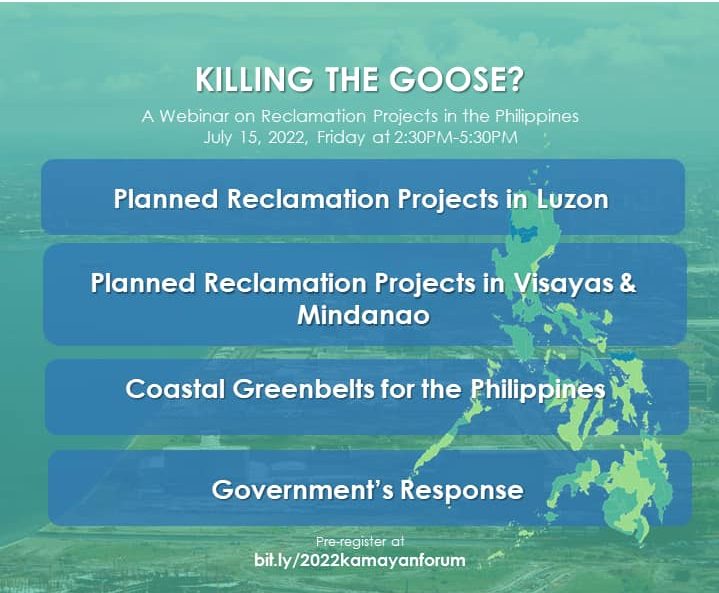
Killing the Goose?

The Philippines, being archipelagic, has a total coastline of 36,289 kilometers with bays and coastal waters covering an area of 266,000 km². Being tropical, our coastal waters harbor mangroves, seagrasses, and coral reefs which are the habitat of fish, crustaceans, mollusks, and other aquatic organisms on which coastal communities and the Filipino nation depend on for a large portion of their food. However, land reclamation programs supposedly meant to increase economic activity, threaten these rich fishing grounds. Are we not killing the goose that lays golden eggs for our country through these “development activities”?